Author name: editor

The Death of Quentin Roosevelt (Pathfinder, 1930)
1930, Pathfinder Magazine, World War One

The Death of Quentin Roosevelt
(Pathfinder, 1930)

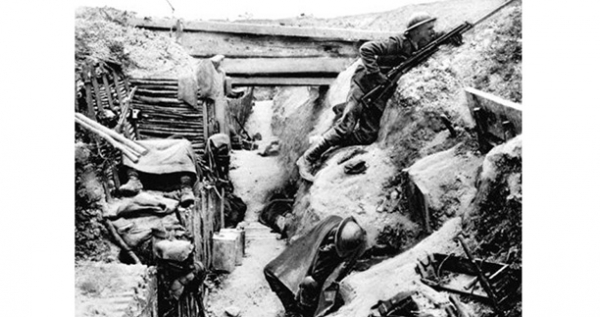
The attached column pertains to a W.W. I image that was erroneously believed by some to show the earthly remains of American fighter pilot Quentin Roosevelt following his crash landing. Numerous veterans chime-in explaining why the gent pictured could not have been the late Lt. Roosevelt, among them was Captain Eddie Rickenbacker.


The picture is provided.

1910: Gains and Losses in Aviation (The Review of Reviews, 1910)
1910, Aviation History, The Review of Reviews Magazine

1910: Gains and Losses in Aviation
(The Review of Reviews, 1910)

Attached are four short articles from The Review of Reviews concerning what had happened in the world of aviation during the summer months of 1910. Of particular concern was the bloody month of July, which happened to be the month in which a large number of pilots met their end. Among the dead was the Honorable Charles Stewart Rolls (b. 1877), Daniel Kinet (b. 1885) and Charles Wachter (dates?). Also lost that summer was the daring aviatrix, Baroness de la Roche (b. 1886, as Elsie Raymonde Deroche). The third and fourth articles list the advances in altitude and endurance records made by such men as Walter Brookings (1889 – 1953), Jan Olieslegers (1893 – 1942), Clifford B. Harmon (dates?) and Count de Lesseps (1882 – 1916).

General Eisenhower

Eisenhower’s D-Day Report
(The Department of the Army, 1945)

The following is an extract from General Eisenhower‘s report on the Allied operations from June 6 through the 26 of August, 1944:

Many factors are woven into warp and woof of this great victory…One was the meticulous care in planning and preparation, another was the fact that we achieved some degree of surprise involving place, timing and strength of attack. The excellence and sufficiency of amphibious equipment, with measures for dealing with beach defenses and obstacles, was also important. In the air, the Luftwaffe has taken a fearful beating. Since June 6, 2378 German aircraft have been destroyed in the air and 1,167 on the ground…

Statistical data concerning the U.S. Army casualties in June and July of 1944 can be read in this article.

Advertisement

Use shortcode [oma_ad position="summary_top"] (or other position) in your theme or widgets to display OMA Promotions here.

David Niven Returns to Hollywood (Rob Wagner's Script, 1946)
1946, Hollywood History, Rob Wagner's Script Magazine

David Niven Returns to Hollywood
(Rob Wagner’s Script, 1946)

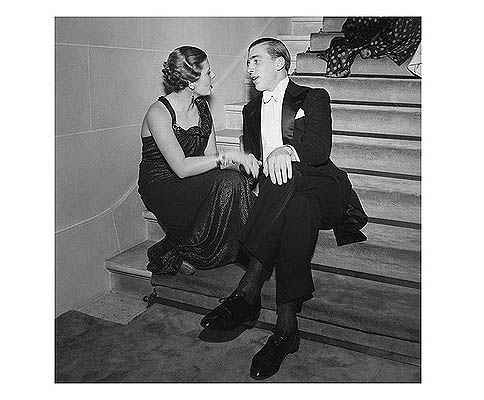
After six years of war British actor David Niven (1910 – 1983) came back to resume his rightful place among the anointed swells of Hollywood. This single page article is interesting and not only touches upon his war years but also his earliest days in North America toiling-away on a series of menial jobs.

He isn’t talkative about what happened to him during that dark period [during the war]. He says his outlook has changed some. Even the gayest and most lighthearted can’t participate in a ghastly war without some mark being left. The fight with the Nazis made David Niven conscious of other things than the drama pages.


Niven’s first post-war film roll was in the Hal Wallis production of THE PERFECT MARRIAGE, co-starring Loretta Young.

Lloyd George on the Nazi Blitzkrieg (Click Magazine, 1940)
1940, Click Magazine, World War Two

Lloyd George on the Nazi Blitzkrieg
(Click Magazine, 1940)

In this article, former British Prime Minister David Lloyd George (1863 – 1945) lambasts the leaders of Britain and France for blundering their way into the Second World War having failed to cut Hitler off at the knees on any number of previous occasions:

It is just over twenty-one years ago that France and Britain signed the Armistice with Germany which brought to an end the bloodiest war in history. They are now fighting essentially the same struggle… It is no use keeping up the pretense that things are going well for the democratic cause. We are suffering not from one blunder, but from a series of incredible botcheries. It is a deplorable tale of incompetence and stupidity.

Lloyd George singled-out Chamberlain with particular contempt, while presenting his thoughts about Hitler and Mussolini, the German Blitzkrieg and Soviet neutrality

David Lloyd George (Vanity Fair, 1916)
1916, Vanity Fair Hall of Fame, World War One

David Lloyd George
(Vanity Fair, 1916)

An article that served to introduce American readers to the new British Prime Minister, David Lloyd George (1863 – 1945), who replaced the incompetent wartime leader Herbert Henry Asquith (1852 – 1928):

People had began to doubt whether or not Mr. Asquith had ‘the will to win’ the necessary determination to make all things work together to that end. There was no doubt in the case of Lloyd George. He had supported credit, he had supplied ammunition, he had inspired general confidence, he had reconciled the irreconcilable. The question arose whether or not the box seat on the coach of state should not be given to him.


The article concentrates primarily on the radical instinct and liberal leanings of Lloyd George, who is often remembered as the Prime Minister who laid the foundations of the British nanny-state.


In 1940 Lloyd George wrote an editorial in which he condemned the leaders of Europe for procrastinating rather than dealing with Hitler when Germany was still weak Click here to read it.

Advertisement

Use shortcode [oma_ad position="summary_top"] (or other position) in your theme or widgets to display OMA Promotions here.

The Czar's Paper (Coronet Magazine, 1941)
1941, Coronet Magazine, Magazines

The Czar’s Paper
(Coronet Magazine, 1941)

This is the story of a news daily that was published between the years 1894 and 1917 and its entire readership could be counted with one finger,the subscriber’s name was Czar Nicholas II of Russia. This unique periodical employed hundreds of correspondents (both foreign and domestic), and although only one printing of each issue was ever run, it cost the Russian taxpayers more than $40,000.00 a day to maintain.


Click here to read another article about the Czar.

Crown Prince Wilhelm Cartoon (Life Magazine, 1919)
1919, Cartoons, Cartoons (WWI), Life Magazine

Crown Prince Wilhelm Cartoon
(Life Magazine, 1919)

Attached is a caroon created in response to the memoir of Crown Prince Wilhelm (1882-1951), which came out earlier that same year (the review is posted on this site), this cartoon was drawn by Gluyas Williamsstyle=border:none (1888-1982) a cartoonist who is largely remembered by current generations for his contributions to THE NEW YORKER as well as his illustrations for a series of books by humorist Robert Benchley. In 1910, Williams served as Editor of ‘The Harvard Lampoon’ and upon graduation a year later began a brilliant freelance career as a cartoonist for ‘The Century Magazine’, ‘Collier’s’ and ‘Judge’ among others.

Click here to read about the woman who entertained the U.S. troops during the First World War.

Advertisement

Use shortcode [oma_ad position="summary_top"] (or other position) in your theme or widgets to display OMA Promotions here.

Britain Buries Her Own (Literary Digest, 1919)
1919, Cemeteries, The Literary Digest

Britain Buries Her Own
(Literary Digest, 1919)

Aside from scanning and posting vast numbers of historic magazine articles, the only other activity that has heightened our sense of inner tranquility has been our various walks through British and Commonwealth World War I graveyards. They are truly unique and beautiful gardens that can be appreciated on a number of different levels and it was not surprising to learn that many of the finest aesthetic minds in Britain had a hand in their creation.


This article, printed six months after the last shot was fired, is about the Imperial War Graves Commission (now called The Commonwealth War Graves Commission) and their plans as to how the dead of the British Empire were to be interred.


Click here to read about a 1920 visit the grave of poet Rupert Brooke.

The Bombers Speak (Coronet Magazine, 1960)
1945, The Enola Gay, Yank Magazine

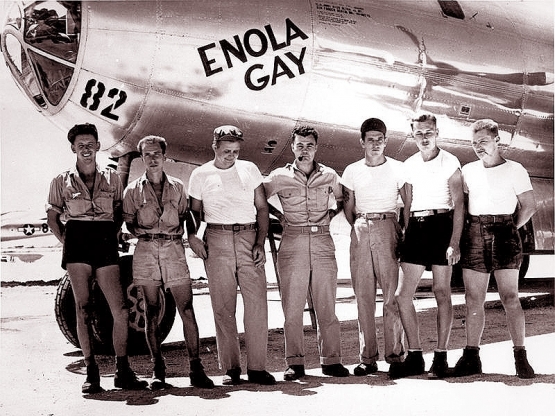
Paul Tibbets of the ENOLA GAY
(Yank Magazine, 1945)

A one page interview with Paul Tibbets (1915 – 2007) and the crew of the ENOLA GAY as they recounted their historic mission over Hiroshima during the closing days of World War Two. Paul Tibbets remained in uniform long after the war and eventually retired as an Air Force General. When he died during the fall of 2007 it was revealed that he preferred there not be a memorial service, nor any marker identifying his grave in order to deprive protesters of a staging ground. His ashes were sprinkled over the North Atlantic.


What if the Atomic Bomb had never been invented? When would the war have ended?
Advertisement

Use shortcode [oma_ad position="summary_top"] (or other position) in your theme or widgets to display OMA Promotions here.

The Cop Who Beat Mickey Cohen (Coronet Magazine, 1960)
1960, Coronet Magazine, Interviews: 1912 - 1960

The Cop Who Beat Mickey Cohen
(Coronet Magazine, 1960)

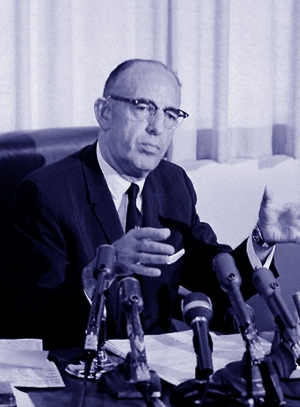
No matter how difficult the truth may seem, it cannot be ignored that between the years 1950 and 1966, criminals residing in the city of Los Angeles felt extremely ill-at-ease and entirely unsafe. This was due, in no small part, to the fact that the police chief of that city was a fellow by the name of William Big Bill Parker (1905 – 1966), a tireless officer who would not suffer hucksters, mobsters, thugs and dope heads with anywhere near the same level of patience enjoyed by today’s senior officers of the LAPD.


The count has been lost in the mists of time as to whether he frustrated more Mafiosi than civil libertarians or whether it was the other way around, but this six page article makes mention of the numerous controversial methods that the Chief deployed in his efforts to protect and serve.


Click here to read a news piece about a Hollywood blackmail scam that Micky Cohen had going in 1949.

Charlie Chaplin's Brother (Motion Pictur Magazine, 1916)
1916, Charlie Chaplin Articles

Charlie Chaplin’s Brother
(Motion Pictur Magazine, 1916)

It must have been a slow news week when the industrious reporters at MOTION PICTURE MAGAZINE opted to write this piece about Sydney Chaplin (1885 – 1965),businessman, aviator, actor,(thirty-four films between 1914 and 1928) and occasional business partner to his younger super-star brother, Charlie:

Charlie Chaplin is small and thin. Sidney is tall and husky. Charlie is dark, with curly hair like a boy. His big brother is light, and looks like a big lumberman. Here is contrast indeed. Their natures are as different as the natures of a flee and a bee. To see them together one would not take them brothers…

Three years after this article was published, Syd Chaplin would started the first domestic airline company in the United States: The Syd Chaplin Airline, Co., which he saw fit to close when the U.S. government began to regulate pilots and all commercial flight ventures.

Advertisement

Use shortcode [oma_ad position="summary_top"] (or other position) in your theme or widgets to display OMA Promotions here.

Lindbergh's Movie Contract (Photoplay Magazine, 1939)
1939, Charles Lindbergh, Photoplay Magazine

Lindbergh’s Movie Contract
(Photoplay Magazine, 1939)

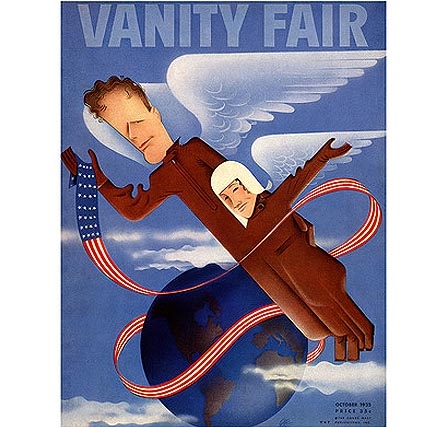
This article originally appeared in a well-known Hollywood fan magazine and was written by Lindbergh’s pal and business partner, Major Thomas G. Lanphier (1890 – 1972). It concerns the story of how one of the most ambitious movies of all times, starring America’s hero, Charles Lindbergh, was not made. The story goes that in 1927, the Lone Eagle signed a $1,000,000.00 Hollywood contract to make a movie about the history of aviation and would not be persuaded to do otherwise by any of his flying-peers, who all tended to believe that no good could come out of it. Slim finally saw the light and was released from his contractual obligations by non other than William Randolph Hearst (1863 – 1951):

Mr. Hearst asked no questions… He brought out the contract and tore it up in Lindbergh’s presence.
You are as much a hero to me, as to anyone else in the world…

Click here to read more articles from Photoplay Magazine.

Interviews: 1912 - 1960

A Child’s Interview With Charles Dickens
(The Literary Digest, 1912)

Kate Douglas Wiggins recalled her childhood train ride in the 1840’s in which she was able to have a chat with one of her favorite author, Charles Dickens (1812 – 1870), as he traveled the United States on a reading tour.

‘Of course, I do skip some of the very dull parts once and a while; not the short dull parts but the long ones.’ He laughed heartily. ‘Now that is something that I hear very little about’ he said’.

Advertisement

Use shortcode [oma_ad position="summary_top"] (or other position) in your theme or widgets to display OMA Promotions here.

Scroll to Top