
Author name: editor

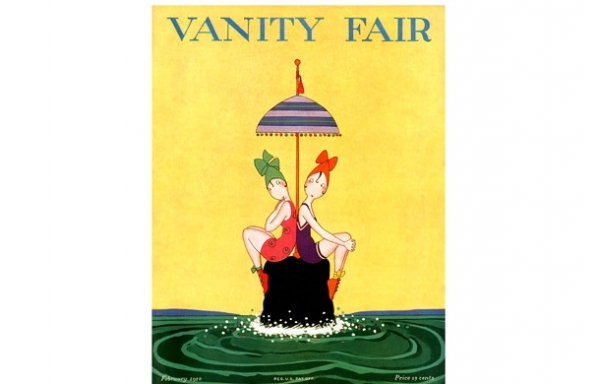
1915, Miscellaneous, Vanity Fair Magazine

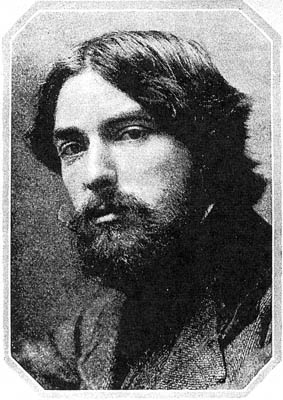
Charles Baudelaire
(Vanity Fair Magazine, 1915)

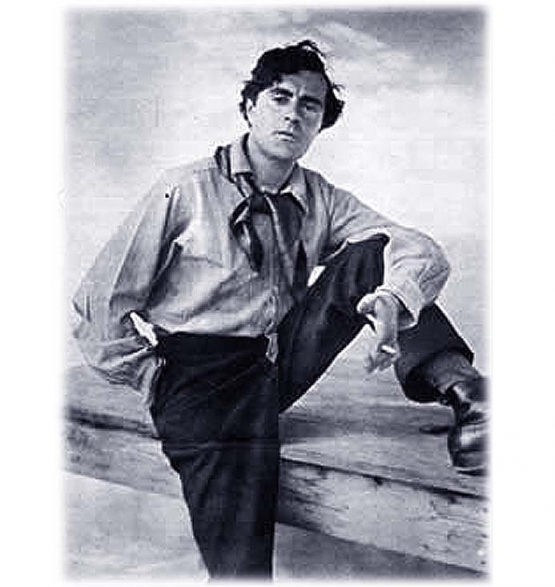
British poet and literary critic Arthur Symons (1865 – 1945) wrote about the Nineteenth Century French poet Charles Baudelaire (1821 – 1867) more as a subject of art rather than an influential wordsmith:

Few modern poets have been more frequently drawn, and few have better repaid drawing, than Charles Baudelaire.

Among the list of artists who created likenesses of the poet were his fellow dandy Edouard Manet (1832 – 1883), the photographer Etienne Carjat (1828 – 1906) and an obscure sculptor named Zachari Astrue, who created the poet’s death mask.

Cedric Gibbons: Production Designer (Creative Art Magazine, 1932)
1932, Creative Art Magazine, Hollywood History

Cedric Gibbons: Production Designer
(Creative Art Magazine, 1932)

Throughout film history there have been many men and women who have toiled in the Hollywood vineyards as art directors, but none have ever matched the level of high productivity as Cedric Gibbons (1893 – 1960). Indeed, he is remembered as the dean of art directors who stood head and shoulders above all others during Hollywood’s Golden Age; between 1912 and 1956 there were hundreds movies that bore his thumbprint – winning Oscars for 39 of them (he was also one of the aesthetes who designed that award).


Illustrated by four photographs of his sets from the early Thirties, the attached article appeared mid-way through his career:

At the Metro-Goldwyn studios in Culver City, just a few short miles from Hollywood, Mr. Gibbons rules supreme as art director. He is at the head of an intricately organized group of technical experts and artisans, numbering nearly two thousand individuals, and is responsible for the artistic investiture and pattern of some fifty or more feature films per annum.


Designs on Film: A Century of Hollywood Art Directionstyle=border:none

A Letter from the Trenches (New York Times, 1915)
1915, Letters, The New York Times

A Letter from the Trenches
(New York Times, 1915)

An interesting letter written during the opening weeks of the war by a Canadian officer stationed with a British Guard regiment. The letter is filled with earnest enthusiasm:

We are all one in aim, in spirit and in that indefinable quality of loyal co-operation which holds together the British Army fighting against enormous odds in France, as it binds together the British Empire by bonds not less strong because they are invisible.

Advertisement

Use shortcode [oma_ad position="summary_top"] (or other position) in your theme or widgets to display OMA Promotions here.

1917, Canadian Immigration, The Atlanta Georgian, Uncategorized

Immigration Restrictions in Canada
(The Atlanta Georgian, 1917)

In 1917 an American newspaper reported that Canada, heeding the protests of it’s most impoverished citizens, moved to restrict the flow of the immigrants to their shores:

The commissioners say that in Canada, as in Australia, there is a strong current of opposition to immigration as it is now carried on, particularly among the wage earners in the cities. It is recognized that the development of the land is of prime consideration and that the tide of immigration into the cities has created a surplus, whereas the rural communities have suffered.

KEY WORDS: Immigration History Canada,Poor Immigrants 1917,Immigration Policy Canada,Canada Immigration, Australia Immigration, History Immigration,North American Immigration History,Canadian Immigration Restrictions 1917

A.E.F. Facts and Deployment Information (Times Literary Supplement, 1921)
1921, Doughboys, The Times Literary Supplement

A.E.F. Facts and Deployment Information
(Times Literary Supplement, 1921)

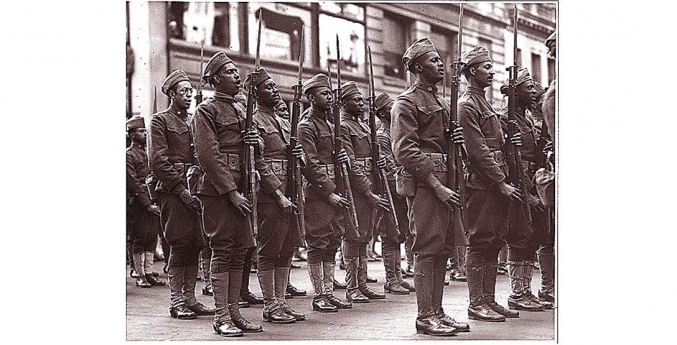
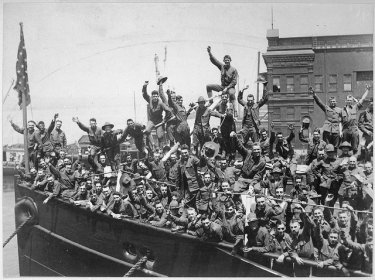
The attached essay reviews a colossal history written by a veteran of the U.S. First Infantry Division, Captain Shipley Thomas: The History of the A. E. F.style=border:none
– for those who are looking for some knowledge concerning what the American Army was up to during the last six months of the War (it was bloodiest period) the review makes for a good read.

Click here to read about the high desertion rate within the U.S. Army of 1910.


Click here to read some statistical data about the American Doughboys of the First World War.

Advertisement

Use shortcode [oma_ad position="summary_top"] (or other position) in your theme or widgets to display OMA Promotions here.

British Snipers on the Western Front (The English Review, 1920)
1920, Snipers, The English Review

British Snipers on the Western Front
(The English Review, 1920)

Written by Major E. Penberthy, former Commandant of the British Third Army Sniping School, this is an account of the training and organization of snipers as they functioned within the British Army at the time of the Great War.

In the early days of the war, when reports of German ‘sniping’ began to be published, it was commonly considered a ‘dirty’ method of fighting and as not ‘playing the game’.

Boris Karloff: Gentle Monster (Collier's Magazine, 1941)
1941, Collier's Magazine, Hollywood History

Boris Karloff: Gentle Monster
(Collier’s Magazine, 1941)

Adorned with photos of the famous movie-monster-actor mowing his lawn and kissing his wife, this COLLIER’S MAGAZINE article tells the tale of how an English boy named William Henry Pratt became a famous Hollywood actor named Boris Karloff (1887 – 1969). This piece was originally conceived in order to promote the actor’s appearance on Broadway in the roll of Jonathan in Arsenic and Old Lace. The writer makes it quite clear to all that the show-biz career did not in any way come easily to Karloff and involved years of truck driving and traveling about performing in summer-stock theaters throughout the whole of North America before he was able to make a name for himself as a bit actor in the silent films of Hollywood.

Click here to read about the vulgar side of Erroll Flynn.

Advertisement

Use shortcode [oma_ad position="summary_top"] (or other position) in your theme or widgets to display OMA Promotions here.

The Experiences of a Bombardier in the Young French Air Corps (Vanity Fair, 1916)
1916, Aviation History, Vanity Fair Hall of Fame

The Experiences of a Bombardier in the Young French Air Corps
(Vanity Fair, 1916)

In this letter from the artist Bernard Boutet de Monvel (1884 – 1949) the fellow explains thoroughly his thoughts and adventures as a bombardier in a Vosin bi-plane; experiences which contrast greatly with his days in the trenches and he writes well on the feelings of loneliness that an aviator can experience at 2000 feet.

For those who are interested in learning about the living conditions and daily life of World War One pilot officers this article can only help you.
Advertisement

Use shortcode [oma_ad position="summary_top"] (or other position) in your theme or widgets to display OMA Promotions here.

Advertisement

Use shortcode [oma_ad position="summary_top"] (or other position) in your theme or widgets to display OMA Promotions here.

'The Philosophy of Auguste Rodin'' (Vanity Fair, 1917)
1918, Modern Art, Vanity Fair Hall of Fame

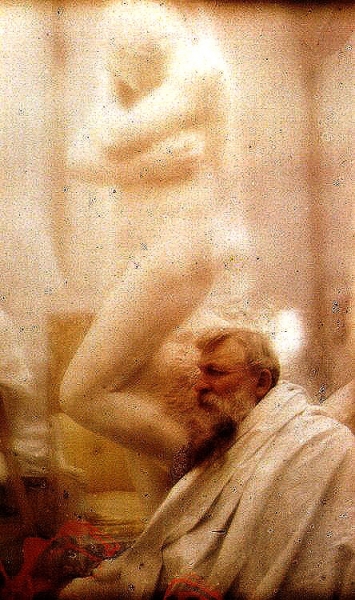
Reminiscences of August Rodin
(Vanity Fair, 1918)

Not long after the death of Auguste Rodin (1840 – 1917) Paris-based artist Stephen Haweis (1878 – 1969) remembered his friendship with the French sculptor:

He loved flattery, as all human beings do, and would listen attentively to rhapsodies from almost anybody, though they do say that a pretty lady got more attention from him than a half-starved journalist.

Rodin proclaimed himself the culminator of one era of sculpture, the inspirer, and nearly the author of another. He was the father of various schools which are lumped under the title of Modern Art.

'Down-With Suffrage!'' (Literary Digest, 1908)
1908, The Literary Digest, Women's Suffrage

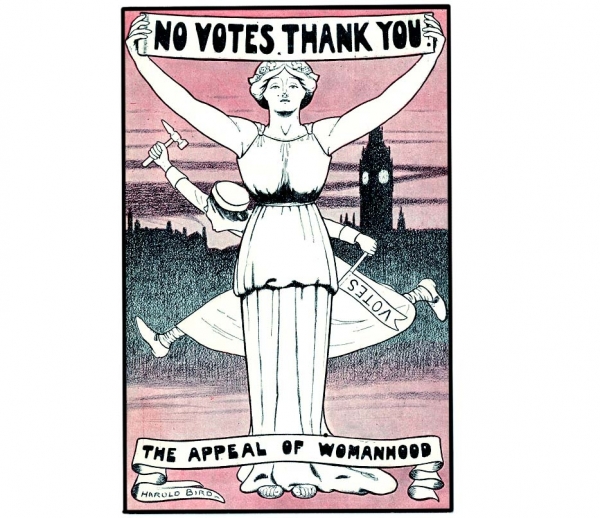
‘Down-With Suffrage!”
(Literary Digest, 1908)

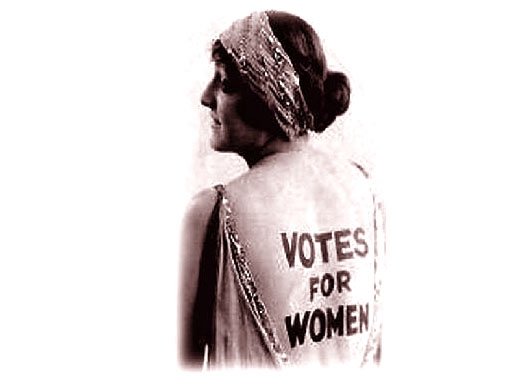
The great meeting held recently in London to launch the Women’s National Anti-suffrage League was made additionally noteworthy by the participation of Mrs. Humphry Ward…

The real reason why women ought not to have the political franchise is the very simple reason that they are not men, and that according to a well-known dictum, even an act of Parliament can not make them men. Men govern the world, and, so far as it is possible to foresee, they must always govern it.

The Evolution of the U.S. Army Web Belt (Outing Magazine, 1918)
1918, Outing Magazine, U.S. Army Uniforms of World War One

The Evolution of the U.S. Army Web Belt
(Outing Magazine, 1918)

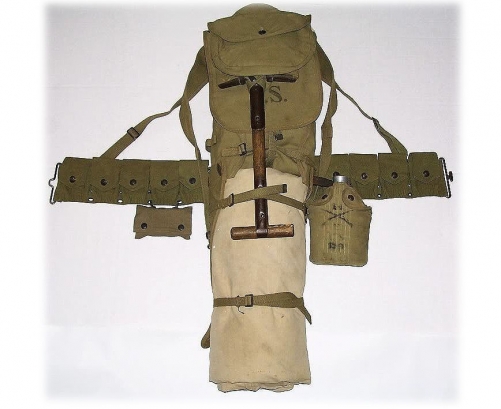
The attached article, How Our Soldiers Carry Their Ammunition, was originally published in a 1918 sporting magazine and gives an account as to how one uniform element unique to the U.S. and British military establishments came into prominence during the earliest years of the Twentieth Century. Written by Paul A Curtis, Jr., the essay describes the difficulties inherit with leather belting, the British need for an alternate material in order to maintain colonial regiments in India and the father of the American web belt, General Anson Mills (1834 – 1924).


When the Doughboys complained, they complained heavily about their uniforms; read about it here.

Advertisement

Use shortcode [oma_ad position="summary_top"] (or other position) in your theme or widgets to display OMA Promotions here.

Scroll to Top