Author name: editor

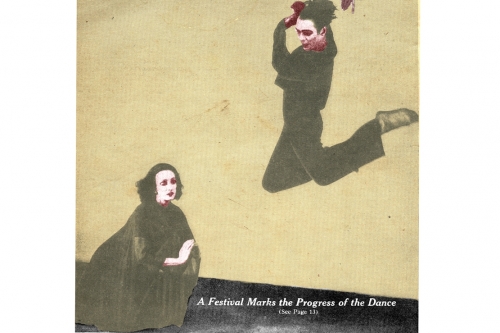
Meet Ann Fish: Conde Nast Illustrator (Vanity Fair, 1919)
1919, Manners and Society, Vanity Fair Hall of Fame

Meet Ann Fish: Conde Nast Illustrator
(Vanity Fair, 1919)

Some ninety-three years ago, Fish was the name scribbled on those unique cartoon illustrations that could be found throughout VOGUE (both American and British) and VANITY FAIR. The editor of American VOGUE between the years 1914 and 1952, Edna Woolman Chase (1877 – 1957) called this English cartoonist brilliant and began running her drawings from her earliest days in that office; her full name was Ann Fish and this article will tell you all we know about her.

This most cosmopolitan of living black-and-white satirists has never stirred from England in all her days. She has never especially extended herself as a spectator of the London life which she so amusingly depicts. She has never gazed on Fifth Avenue.

1910, Foreign Opinions About America, The American Review of Reviews

American Womanhood Slandered
(Review of Reviews, 1910)

Attached is a 1910 article that rambles on for two columns and offers the reader nothing but nasty, vile insulting remarks regarding the character and appearance of American women. The article lays bare the low opinions conceived by an assortment of well-traveled, high-born, hot-headed-Hindus from way-down-East-India-way. AND the abuse of American women and their free press wasn’t enough for them; they had to drag American men into their tirade as well:

The women of your big, vast, young country, I confess, disappoint me…they are less chic, they are tactless, they are ignorant…I understand that some American women make the proposal of marriage. That I do not doubt after watching them make themselves ‘agreeable’ to a man at dinner. I am not surprised that American men do not make love well. The women save them the trouble.

American Ambulance Volunteers in the Service of France (The Stars and Stripes, 1919)
1919, Stars and Stripes Archive, The Stars and Stripes

American Ambulance Volunteers in the Service of France
(The Stars and Stripes, 1919)

A thumbnail history of the United States Army Ambulance Service, which first arrived in June of 1917.

All through the hard French fighting of 1917 the 6,000 American ambulance drivers kept steadily at work in every sector of the French front. It was not until March, 1918, that the first sections of the service found themselves helping in battles with the fighting regiments of their own Army.

Many of the volunteers were college men, such as the poet E.E. Cummings, who wrote an interesting account of his days as an ambulance driver during the war.

Advertisement

Use shortcode [oma_ad position="summary_top"] (or other position) in your theme or widgets to display OMA Promotions here.

Women Win Office in 1916 (The Nation, 1916)
1916, Pamphlet Produced by the National Park Service, Women's Suffrage

Women Win Office in 1916
(The Nation, 1916)

A brief account of the 1916 November elections in the United States and how well women candidates fared, particularly in the West where gains where strongest:

The continued election of women to minor offices may be taken as showing that suffrage has increased the number of those from whom fit choices can be made.

1924 was a very important year for American women in politics…

Bible Collection of President Harry Truman 1950 | President Harry Truman Collected Bibles
1913, Foreign Opinions About America, The Literary Digest

The British View of Religious America
(Literary Digest, 1913)

Christianity in America is divided into two camps. The one is orthodox. It’s orthodoxy is apt to degenerate into the senile attachment to the letter of Scripture…There is a lack of mental breadth, of intellectual enlightenment, about the members of this school which is a little disheartening to one who is in agreement with them on the central matters…The other school seems to have sacrificed almost everything which makes Christianity distinct from a temporary philosophy. It’s members have the bad habit of preaching eugenics or sociology in place of the Gospel. They appear to be afraid of the great epistles and the nobler passages of the Gospels, and are apt to speak in terms which would suggest that there was nothing distinctive in Christianity which can make it an absolute and universal faith.

Modigliani: Appreciated at Last (Art Digest, 1936)
1936, Modigliani Articles, The Art Digest

Modigliani: Appreciated at Last
(Art Digest, 1936)

In his lifetime Amedeo Modigliani‘s (1884 – 1920) was only honored one time with his own solo showing in an art gallery; many of his paintings were given away in exchange for meals in restaurants and he died the death of a pauper in some unglamorous corner of Paris. In the years that followed the art world began to learn about Modigliani bit by bit through art reviews like the one attached herein. Written sixteen years after his death, this is a review of a Modigliani exhibit at the avant-garde gallery of Mrs. Cornelius J. Sullivan in New York City:

C.J. Bulliet (1883 – 1952) in ‘Apples and Madonnas’ declared that Modigliani’s nudes may be ranked ultimately with the great ones of all time – with Giorgione’s ‘Sleeping Venus’, Titian’s ‘Venus Awake’, Goya’s ‘Maja’ (nude and even more impudently clothed), with Manet’s sensational wanton in the Louvre.’

Advertisement

Use shortcode [oma_ad position="summary_top"] (or other position) in your theme or widgets to display OMA Promotions here.

1914, European Royalty, Vanity Fair Hall of Fame

Albert, King of the Belgians
(Vanity Fair, 1914)

A VANITY FAIR article by Ard Choille that recalls the low key visit that Belgium’s Albert I (1875 – 1934) made to the U.S. in 1898 while in the company of his young bride, Elizabeth (1876 – 1965), formerly the Duchess of Bavaria. Published at a time when the Great War was in it’s fourth month, the journalist was mindful of the valiant roll Albert was maintaining as the Commander-in-Chief of the struggling Belgian Army in the face of the German onslaught.

Click here to read about the W.W. I efforts of Prince Edward, the future Duke of Windsor.

American Negros in the Great War (Leslie's Weekly, 1920)
1920, African-Americans, Leslie's Weekly

American Negroes in the Great War
(Leslie’s Weekly, 1920)

This is a World War I article listing many of the patriotic commitments that the African-American community devoted to the 1917 – 1918 war efforts:

The war has transformed the American Negro into the Negro American. Because he has been doing big things for his country his sense of national unity grown; his citizenship became a living reality.

They have contributed 300,000 of their young men to the American Army. Of these 1,000 are commissioned officers of the line…One entire regiment was decorated for bravery and several individual soldiers have been cited for deeds of great valor.

A.E.F. Deployment Compared to B.E.F. Deployment (U.S. Gov. 1931)
1931, Doughboys, The U.S. Government Records

A.E.F. Deployment Compared to B.E.F. Deployment
(U.S. Gov. 1931)

Attached is a graph comparing the amount of time it took for both the British Army and the American Army to have 2,000,000 soldiers on the Western Front during World War One:

The British sent to France many more men in their first year in the war than we did in our first year. On the other hand, it took England three years to reach a strength of 2,000,000 men in France and the United States accomplished it in one half the time.

Advertisement

Use shortcode [oma_ad position="summary_top"] (or other position) in your theme or widgets to display OMA Promotions here.

An Advertisement for W.W. I Officer Boots (Stars and Stripes, 1918)
1918, The Stars and Stripes, U.S. Army Uniforms of World War One

An Advertisement for W.W. I Officer Boots
(Stars and Stripes, 1918)

A black and white illustration showing the sort of British made boot favored by American officers during World War One. A look at the many pictures which depicted the officers of the A.E.F. and it is clear to see that the lace-to-the-knee style of trench boot was much preferred over other varieties. However, many pictures from the closing days of the war tend to also indicate the line officer’s preference for ankle-boots with puttees.

Advertisement

Use shortcode [oma_ad position="summary_top"] (or other position) in your theme or widgets to display OMA Promotions here.

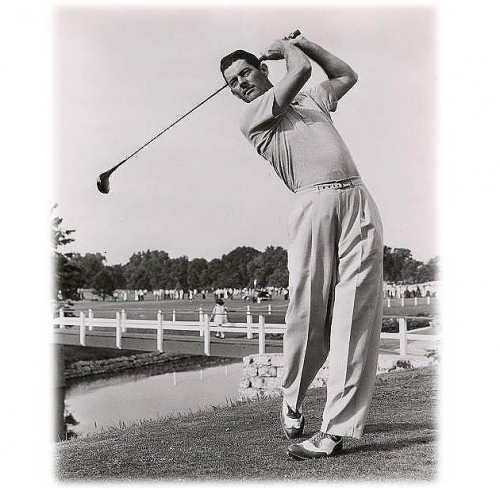
1950s Golf Attire (Gentry Magazine, 1953)
1953, Gentry Magazine, Golf History

1950s Golf Attire
(Gentry Magazine, 1953)

Attached you will find a number of black and white images illustrating the general look for 1950s golfers – and if you’ve been looking for an article that explains the fashion sense of every single retired U.S. President for te past fifty years, you may have found it.

The fashions illustrated herein also provide today’s costume designers with a sense of how retired crooners preferred to look as well.

Advertisement

Use shortcode [oma_ad position="summary_top"] (or other position) in your theme or widgets to display OMA Promotions here.

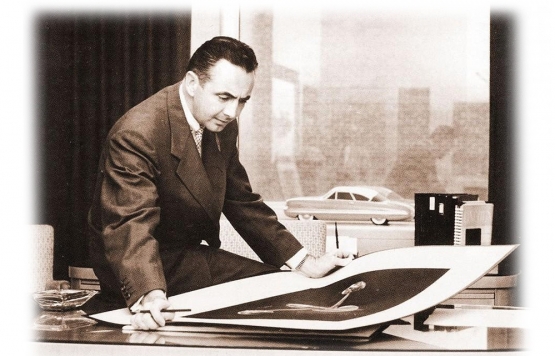
Color Styling and the Cars of the Fifties (Gentry Magazine, 1956)
1950s Cars, 1956, Gentry Magazine

Color Styling and the Cars of the Fifties
(Gentry Magazine, 1956)

A 1956 article by Eugene Bordinat (1920 – 1987), one of Detroit’s grand old men of automotive design; during his reign at Ford, Bordinat oversaw the styling of such cars as the Mustang and the Falcon:

The average American likes to think that he is an independent thinker and a rugged individualist, while actually he is closer to a sheep and follows the herd. He resists change. He wants just enough change in cars so his neighbors will know it is the latest model, but not so much that he has to explain to his friends why he bought the strange contraption…The stylist must consider these factors when he out-lines his advanced thinking on trim and color…he must be sure that the scheme isn’t so radical that it will frighten the color-timid public.

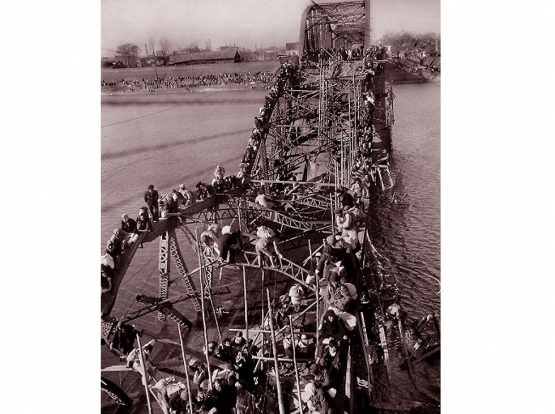
The Fall of Seoul (Dept. of the Army, 1956)
1956, The Dept. of the Army, The Korean War

The Fall of Seoul
(Dept. of the Army, 1956)

The very first engagement of the conflict, when the North Koreans crushed South Korean defenses at the 38th parallel, demonstrated the superiority of the North Korean Army. On June 28, three days after the opening attack, a tank/infantry force leading the main North Korean thrust entered Seoul… In the face of the onslaught, the South Korean Army retreated, leaving most of its equipment behind. Whatever effectiveness it may have possessed was already lost.

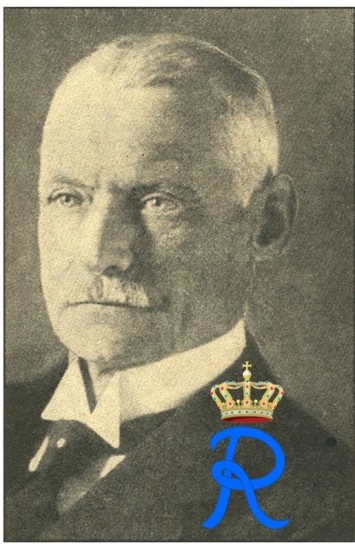
The Bavarians Wanted a King (Pathfinder Magazine, 1949)
1949, Aftermath (WWII), Pathfinder Magazine

The Bavarians Wanted a King
(Pathfinder Magazine, 1949)

An important news item came across the wire in mid-may, 1949:


The delegates from Western Germany’s 11 states gave final approval to the draft of the constitution for the new Federal Republic of Germany.


– but what matter was this to the thousands of Bavarians who were highly distrustful of the new government; they had their own gloried past that was largely due to the royal family known as the House of Wittelsbach:

A strong faction is campaigning for the return to the throne of former Crown Prince Rupprecht. The eldest son of King Ludwig III, deposed in 1918, Rupprecht is a tall, thin man of vast education. He led Bavarian troops under Kaiser Wilhelm. In World War II, he was exiled to Italy. Since then he has been living with his family at Leutstetten Castle on Lake Starnberg near Munich.

If the Bavarian people desire monarchy, I shall respect their desire.


Nice work if you can get it…
Advertisement

Use shortcode [oma_ad position="summary_top"] (or other position) in your theme or widgets to display OMA Promotions here.

Scroll to Top