Author name: editor

Advertisement

Use shortcode [oma_ad position="summary_top"] (or other position) in your theme or widgets to display OMA Promotions here.

The 1922 U.S. Elections: Some Wins But Mostly Defeats (The Literary Digest, 1922)
1922, The Literary Digest, Women's Suffrage

The 1922 U.S. Elections: Some Wins But Mostly Defeats
(The Literary Digest, 1922)

As 1922 came to a close, it seemed that some of the Suffragettes of the old-school had not lost their taste for violence, as the reader will discover in the opening paragraph of this one page article that primarily focused on the defeat of all but one of the women candidates who ran for Federal offices in the 1922 elections. Thirty-three women running for Congressional and legislative seats in New York State went down to defeat and there were no women elected or re-elected from any state for Congress that year. However, the state of Ohio elected it’s first woman to that state’s Supreme Court: Florence E. Allen (1884–1965).

The First Folding Wing Monoplane (Popular Mechanics, 1912)
1912, Aviation History, Popular Mechanics Magazine

The First Folding Wing Monoplane
(Popular Mechanics, 1912)

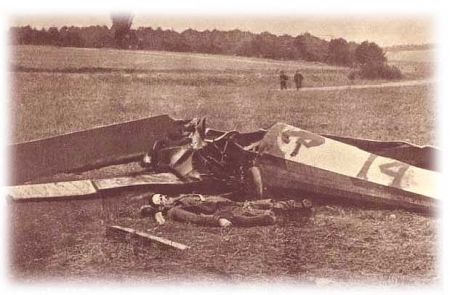
A passing glance at aviation magazines from the early Twentieth Century reveals that that particular sub-culture was very concerned with the ability to allow for trouble-free ground transport of aircraft. There were many magazine articles picturing how biplanes could be deconstructed for this purpose and up until 1912, or so we are led to believe by the editors of Popular Mechanics, the de Marcay-Mooney monoplane was the first flying machine that was able to have it’s wings fold back (much like a bird or a beetle) and when re-set at 90 degrees for take-off, could fly successfully.

Technicolor (Film Daily, 1939)
1939, Film Daily Magazine, Hollywood History

Technicolor
(Film Daily, 1939)

Technicolor – conceived at Boston Tech and born in a rail way car in 1917, attained its majority, properly enough, 28 years later when Dr. Herbert Thomas Kalmus, president and founder, received the 1938 Progress Award from the Society of Motion Picture Engineers at its annual convention.

The story of Technicolor begins in 1915 when Dr. Kalmus and his associates became interested in a color process. Dr. Kalmus’ task was to find a suitable name, and, a Boston Tech man himself, he combined Technique, the engineering school’s class annual, and Color and so was born Technicolor.


Click here to read a about a particularly persuasive and

highly effective W.W. II training film…

Advertisement

Use shortcode [oma_ad position="summary_top"] (or other position) in your theme or widgets to display OMA Promotions here.

Emily Post on Society Language (Photoplay Magazine, 1939)
1939, Hollywood History, Photoplay Magazine

Emily Post on Manners in the Movies
(Photoplay Magazine, 1939)

A 1939 magazine interview with America’s Mullah of manners, Emily Post (1872 – 1960) who was asked to give some criticism on the way etiquette is displayed on screen. She did not hold back; letting Hollywood have both barrels, La Post articulately opined about the poor choice of words the actors are required to spout, how humorously enormous so many of the living room sets always appear to be and how thoroughly inappropriate too many of the costumes are:

According to Miss Post, the worst offense committed against good manners is that of pretentiousness. She says, ‘Good manners are the outward expression of an inward grace. You can’t get them any other way. Probably that is why Shirley Temple, in that very first feature picture of hers, had charm that few can equal.’

Sometimes the mistakes Hollywood makes are not too serious, but usually they are ludicrous, and far too often they set bad examples for millions of ardent movie-goers.

1919, Prisoners of War, The Stars and Stripes

World War One American Prisoners of War
(The Stars and Stripes, 1919)

A brief notice reporting on the number of American Soldiers captured during the First World War. Also listed are the number of Americans who died in captivity as well as the number of prisoners taken categorized by branch of service. Interestingly, the notice states that 281 American Civilians were also taken prisoner.

Interestingly, the notice states that 116 American Civilians were also taken prisoner and we can assume that these Americans were with the Salvation Army, the Jewish Wellfare Board, the Knights of Columbus, etc.


Click here to learn what the Germans thought of American P.O.W.s…

Advertisement

Use shortcode [oma_ad position="summary_top"] (or other position) in your theme or widgets to display OMA Promotions here.

Elihu Root Profiled (Vanity Fair, 1915)
1915, Interviews: 1912 - 1960, Vanity Fair Hall of Fame

Elihu Root Profiled
(Vanity Fair, 1915)

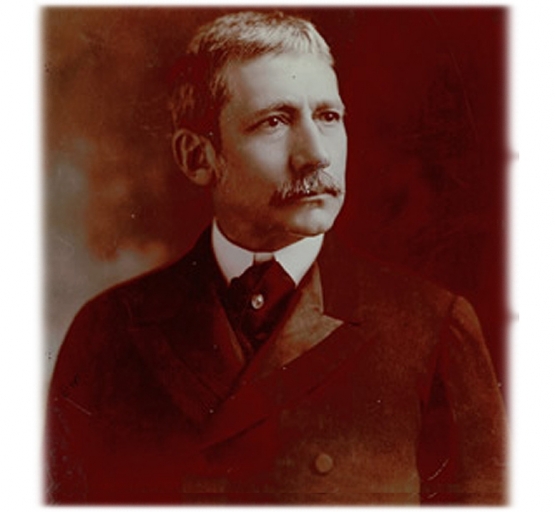
A photograph of Elihu Rootstyle=border:none (1845 – 1937) accompanies these two short paragraphs from the 1915 VANITY FAIR Hall of Fame, in which Root was praised as the ablest lawyer and diplomatic expert in the nation at that time. He is remembered today as the one U.S. Secretary of War (1899 to 1904) who was most instrumental in modernizing the American military in such ways that allowed it to meet the demands that would be meted out during the course of the bloody Twentieth Century.


This small notice is interesting primarily because it lets it be known that the United States was jockying for a spot in the European peace negotiations two years prior to even having troops in the field.Business ethics articles
Film Production
Magazines for kids
Singles
Single
W Magazine
Business ethics articles
Film Production
Magazines for kids
Singles
Single
W Magazine

Business ethics articles
Film Production
Magazines for kids
Singles
Single
W Magazine


European Styles in Cars (Vanity Fair Magazine, 1921)
1921, Cars, Vanity Fair Magazine

European Styles in Cars
(Vanity Fair Magazine, 1921)

One of the special correspondents writing for VANITY FAIR on the subject of motoring was the British novelist Gerald Biss (1876 – 1922), who contributed similar pieces to THE STRAND, TATLER, DAILY MAIL and EVENING STANDARD. In this review, Biss gave his drink-deprived American readers the straight dope as to what they can expect to see from the European car manufacturers of 1921. References are made to the products of the Voisin and Vauxhall Companies and there was some lose talk about electric starters and high-grade tweleve-cylinder cars.

Advertisement

Use shortcode [oma_ad position="summary_top"] (or other position) in your theme or widgets to display OMA Promotions here.

The Thinking of Buckminster Fuller (Coronet Magazine, 1941)
1941, Coronet Magazine, Design

The Thinking of Buckminster Fuller
(Coronet Magazine, 1941)

Bereft of all but one illustration, this five page article delves into the design philosophy of the architect Buckminster Fuller (1895 – 1983) – who was very fond of the word dymaxion:

Fuller argues that the social function of machinery is to eliminate the unpleasant phases of life in the shortest possible space of time. Housing, or ‘shelter’ as he prefers to call it, should be, fundamentally, ‘a machine for living.’

Advertisement

Use shortcode [oma_ad position="summary_top"] (or other position) in your theme or widgets to display OMA Promotions here.

Advertisement

Use shortcode [oma_ad position="summary_top"] (or other position) in your theme or widgets to display OMA Promotions here.

Scroll to Top