Author name: editor

Some British Opinions About the First Talking Movies (Literary Digest, 1929)
Recent Articles, Talkies 1930

Some British Opinions About the First Talking Movies
(Literary Digest, 1929)

Attached are excerpts from a few 1929 British newspapers that condemned all efforts made in Hollywood to produce talking pictures; one snide reviewer went so far as to insist that rather than calling the films talkies, they should be referred to as dummies:

The majority of films in the future will be made stupidly for stupid people, just has been the case with the silent movies for twenty years…


•Read About the First Talkie Movie Star•

Advertisement

Use shortcode [oma_ad position="summary_top"] (or other position) in your theme or widgets to display OMA Promotions here.

VJ Day in Paris (Yank Magazine, 1945)
1945, VJ Day, Yank Magazine

VJ Day in Paris
(Yank Magazine, 1945)

The GIs had managed to keep their VJ spirit bottled up through most of the phony rumors, but when the real thing was announced the cork popped with a vengeance. A spontaneous parade, including jeeps and trucks and WACs and GIs and officers and nurses and enlisted me, snaked from the Red Cross Club at Rainbow Corner down to the Place de l’Opera and back…

The Ronald Reagan-Jane Wyman Crack-Up (Photoplay Magazine, 1948)
1948, Hollywood History, Photoplay Magazine

The Ronald Reagan-Jane Wyman Crack-Up
(Photoplay Magazine, 1948)

A printable article from a 1948 Hollywood fan magazine that illustrated quite clearly how much easier Ronald Reagan had it with the Soviet Union, when compared to his failings with his first bride, Jane Wyman (1917 – 2007). The PHOTOPLAY journalist, Gladys Hall, outlined nicely how busy the couple had been up to that time yet remarked that they had had a difficult time since the war ended, breaking-up and reconciling as many as three times. In 1948 Wyman, who had been married twice before, filed for divorce on charges of mental cruelty; the divorce was finalized in ’49 and the future president went on to meet Nancy Davis in 1951 (marrying in ’52); click here if you wish to read a 1951 article about that courtship.


Historically, Ronald Reagan was the first divorced man to ascend the office of the presidency. Shortly after his death in 2004, Wyman remarked:

America has lost a great president and a great, kind, and gentle man.


Click here read an article about Hollywood’s war on monogamy.

Advertisement

Use shortcode [oma_ad position="summary_top"] (or other position) in your theme or widgets to display OMA Promotions here.

A Spy Within the CPUSA (Pathfinder Magazine, 1949)
1949, Pathfinder Magazine, Spies

A Spy Within the CPUSA
(Pathfinder Magazine, 1949)

These seven paragraphs from THE PATHFINDER magazine served to introduce their readers to Herbert Philbrick (1915 – 1993) and his efforts to expose the subversive elements within the Communist Party U.S.A..


For nine years Philbrick labored as an F.B.I. mole deep within the Cambridge Youth Council, the Young Communist League and the CPUSA until he made good his resignation by serving as a surprise government witness at a conspiracy trial in which numerous high profile American Reds were indicted (among them William Z. Foster, Eugene Dennis, Robert George Thompson, Gus Hall, Henry Winston, and ex-New York councilmember Benjamin Davis).

Highlights of Soviet Espionage: 1949 - 1953 (People Today, 1953)
1953, People Today Magazine, Spies

Highlights of Soviet Espionage: 1949 – 1953
(People Today, 1953)

Well-illustrated, pithy and informative, this article will get you up to speed on some of the espionage triumphs of the Soviet GRU (the military intelligence arm of the former worker’s paradise). The article refers to where their agents trained before their American and Canadian deployments, what they were taught, and how big the GRU was. Of even greater interest were the parts of the article that referred to their Atomic spies and the variety of traitors and turncoats they were able to attract.

Advertisement

Use shortcode [oma_ad position="summary_top"] (or other position) in your theme or widgets to display OMA Promotions here.

Artist of the Ashcan School: John Sloan (Touchstone Magazine, 1919)
1919, Modern Art, Touchstone Magazine

Artist of the Ashcan School: John Sloan
(Touchstone Magazine, 1919)

The editors of TOUCHSTONE MAGAZINE hired one of John Sloanstyle=border:none‘s (1871-1951) groupies to interview him for one of their feature articles. It is an informative interview and there are a number of seldom seen sketches reproduced; the opening paragraphs give one a sense of what 1920s Greenwich Village was like at night, although one comes away feeling that the man could do no wrong. John Sloan’s friend, Robert Henristyle=border:none (1865-1929), when given the chance also failed to make any nasty comments about the painter.

The First Lady's Story (Pathfinder Magazine, 1937)
1937, Eleanor Roosevelt, Pathfinder Magazine, Recent Articles

The First Lady’s Story
(Pathfinder Magazine, 1937)

A column from a 1937 issue of PATHFINDER MAGAZINE included these two seemingly random tales from the life of First Lady Eleanor Roosevelt. The brief remembrance on the second page is a bitter-sweet story about young Eleanor and her mother’s vision of her as a hopelessly plain-looking girl.


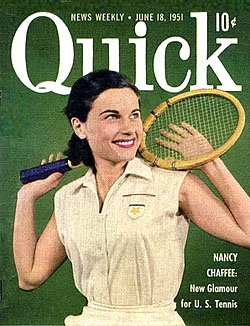
Read a 1951 profile of a future First Lady: the young Nancy Reagan.

Advertisement

Use shortcode [oma_ad position="summary_top"] (or other position) in your theme or widgets to display OMA Promotions here.

Advertisement

Use shortcode [oma_ad position="summary_top"] (or other position) in your theme or widgets to display OMA Promotions here.

A Profile of Guillaume Apollinaire (Vanity Fair, 1922)
1922, Recent Articles, Twentieth Century Writers, Vanity Fair Magazine

A Profile of Guillaume Apollinaire
(Vanity Fair, 1922)

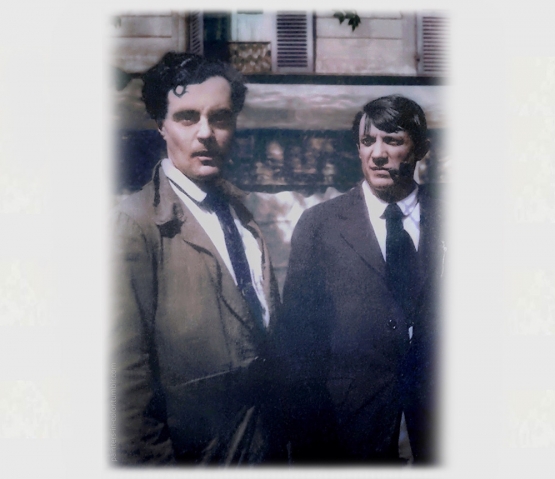
An appreciative essay celebrating the work of Guillaume Apollinaire (born Wilhelm Apollinaris de Kostrowitzky: 1880 – 1918) by the high-brow art critic Paul Rosenfed (1890 – 1946).

For Apollinaire possessed the perfect adjustibility of the born poet. He would have found himself much at home in any environment into which he would have been born, whether it would have been one of pampas and herds and lonely hamlets, or one of concrete, newspapers, war and steel.

General Billy Mitchell: Advocate of American Airpower (American Legion Weekly,1921)
1921, Aviation History, The American Legion Weekly

General Billy Mitchell: Advocate of American Airpower
(American Legion Weekly,1921)

This is one of the editorials written by U.S. Army General Billy Mitchell (1879 – 1936) that only served to annoy the senior army leadership and their civilian overlords in Washington. On these pages General Mitchell made his case for the creation of a unique branch of the military confined entirely to air power that was distinct and independent of the Army. He points out that numerous armies are doing just this and the U.S. would be wise to do the same. He was particularly keen on seeing to it that everyone know that that the Imperial Japanese Army was doing the same thing.

Advertisement

Use shortcode [oma_ad position="summary_top"] (or other position) in your theme or widgets to display OMA Promotions here.

Scroll to Top