Author name: editor

The Art of the Insane Looks Like German Expressionism (Current Opinion, 1921)
1921, Current Opinion Magazine, Modern Art, Recent Articles

The Art of the Insane Looks Like German Expressionism
(Current Opinion, 1921)

The attached article is about a 1921 exhibition displaying the art of the mentally ill; it was organized under the direction of the psychiatric department of Heidelberg University. The exhibition made quite an impact on a number of modernists at the time and it is said that a few of the pieces from the show were later displayed in the 1938 Degenerate Art exhibit that the Nazis launched in an effort to discredit modernism.

Home Front

American Makeup Goes to War
(Click Magazine, 1942)

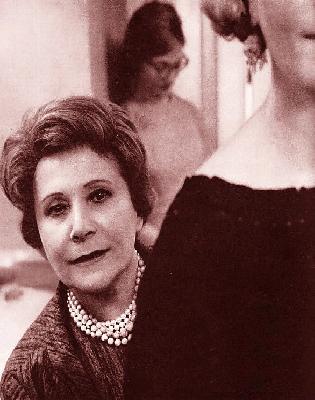
An interesting look at the beauty products used by American women during the Second World War and how that war effected the cosmetic industry. Students of history will be reminded that when a nation commits itself to a state of total war, all available elements within a government’s grasp will be picked over by that country’s military; even makeup.

If you’re following a routine of ‘beauty as usual’ with qualms of conscience, believing that cosmetics and toiletries use materials essential to the war machine, know for certain that if Uncle Sam needed your lipstick for bombs and bullets, he’d have gotten it first.

The U.S. cosmetics industry was effected in many ways, read the article and find out.


Click here to read an article about a popular 1940s hairstyle.


CLICK HERE to read about the beautiful Blonde Battalions who spied for the Nazis…

Advertisement

Use shortcode [oma_ad position="summary_top"] (or other position) in your theme or widgets to display OMA Promotions here.

Humorous Writing by Erik Satie (Vanity Fair, 1922)
1922, Eric Satie Articles, Vanity Fair Magazine

Humorous Writing by Erik Satie
(Vanity Fair, 1922)

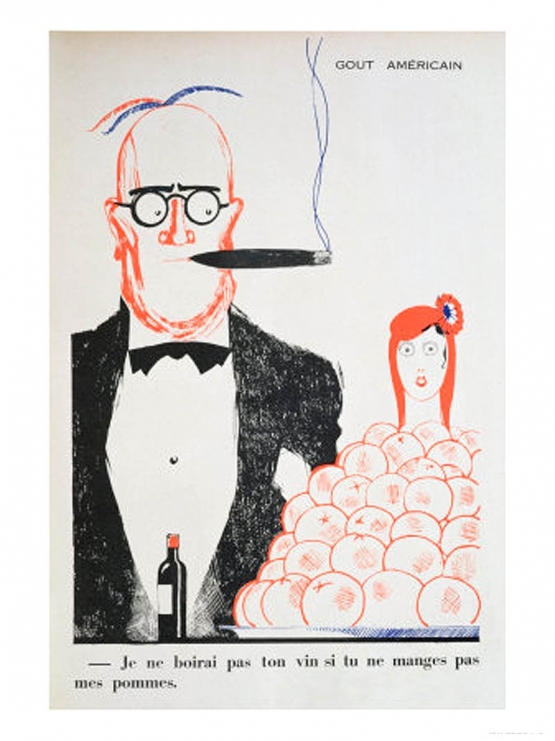
The attached article is yet another among the several tongue and cheek essays that the French composer Eric Satie (Alfred Éric Leslie Satie 1866 – 1925) contributed for the amusement of the fun-loving readers of VANITY FAIR MAGAZINE. Published just three years prior to his death, it is beautifully illustrated, and stands as one solid page of pure silliness in which Satie considered the place of art in the animal kingdom, and concludes that of all the arts, architecture and music are the only two creative endeavors that the creatures of the field ever seem able to embrace:

I know of no literary work written by an animal – and that is very sad.

Wet vs. Dry (Vanity Fair, 1918)
1918, Prohibition History, Recent Articles, Vanity Fair Magazine

Wet vs. Dry
(Vanity Fair, 1918)

If you are looking for a serious report concerning the political battles fought in Congress regarding Prohibition (1919 – 1933), you can keep looking. The attached essay is a humorous parody of that dispute between the Drys and Wets as it existed just months before the ‘Noble Experiment’ began in earnest. By November of 1918, the American newspaper readers had simply overdosed on the redundant writings of assorted war correspondents – and so, with a bit of whimsy, the VANITY FAIR writer George S. Chappell sat down to write about the political war between these two groups using the same journalistic affectations everyone was so heartily sick of. You will also find a mock military map depicting the faux topography in dispute.

1952, Collier's Magazine, Recent Articles, The Cold War

Two Important Rivers in the Cold War Struggle
(Collier’s Magazine, 1952)

Two continents apart, the Yalu and the Rhine wind down to the sea. But in the continuing struggle of freedom against Communism, they share the common roll of destiny.

Of the two rivers, perhaps the Yalu is of more immediate concern, for behind its 500 miles of coursing waters stand the bulk of the Red forces under Red China chief Mao Tse-tung… Few people had heard of the Yalu until the Korean War began. But it gained world-wide prominence in November, 1950, when 200,000 Chinese Reds came pouring across its bridges to aid the North Koreans as they retreated before UN troops…

Advertisement

Use shortcode [oma_ad position="summary_top"] (or other position) in your theme or widgets to display OMA Promotions here.

Campers of 1921 (Vanity Fair Magazine, 1921)
1921, Cars, Vanity Fair Magazine

Campers of 1921
(Vanity Fair Magazine, 1921)

Motor camping is in it’s infancy, observed the shrewd and sure-footed motoring journalist George W. Sutton in this 1921 VANITY FAIR report regarding the evolution of campers. To further illuminate his readers, he provided black and white plans illustrating the interior of two campers mounted on the back of Ford chassis (during the 1920s, Ford Model Ts were by far the most common make of automobile). Although there were a handful of camper-shell manufacturers at the time, the two featured here were custom made.

Advertisement

Use shortcode [oma_ad position="summary_top"] (or other position) in your theme or widgets to display OMA Promotions here.

The Introduction of the U.S Army Overseas Cap (New York Times, 1918)
1918, Overseas Caps, The New York Times

The Introduction of the U.S Army Overseas Cap
(New York Times, 1918)

A NEW YORK TIMES correspondent reported from Washington what the official line was as to why the U.S. Army had seen fit to toss out the campaign hat in preference to the European-style Overseas cap:

When the Americans entered the trenches, said an official statement today, it was found that the brim of their campaign hat interfered with sighting through the trench periscopes and that the high crown, in the case of tall men, could be seen above the parapets. The new cap is so low that it permits the men to move with the same freedom as when they are hatless.

The W.W. I Overseas Cap Will Remain (Stars and Stripes, 1919)
1919, Overseas Caps, The Stars and Stripes

The W.W. I Overseas Cap Will Remain
(Stars and Stripes, 1919)

A STARS & STRIPES clipping from 1919 announcing to both Army and Marines that the era of the overseas cap had arrived and was not going away anytime soon:

The overseas cap, which has (not) protected its wearers from the rains of sunny France and the suns and snows and sleets all over the A.E.F., will be permitted to remain the official headgear of the returning troops after they get back to the States.

Advertisement

Use shortcode [oma_ad position="summary_top"] (or other position) in your theme or widgets to display OMA Promotions here.

Effect of the 17th Amendment on Senate Politics
1920, Miscellaneous, Recent Articles, The American Legion Weekly

The Popularly-Elected Senate
(American Legion Weekly, 1920)

In 1913 a very strong, anti-Federalist step was taken to amend the Constitution and alter the manner in which U.S. Senators were to be selected and replaced in the event of vacancies. The 17th Amendment was passed: it guaranteed that senators would no longer be elected from within the legislative bodies of the state governments, but would be elected directly by the citizens of their respective states, just as the representatives are. Historian Everett Kimball pointed out in this article how the 17th Amendment altered the very nature of the U.S. Senate.

John Wayne (Quick Magazine, 1949)
1949, Hollywood History, Quick Magazine, Recent Articles

John Wayne
(Quick Magazine, 1949)

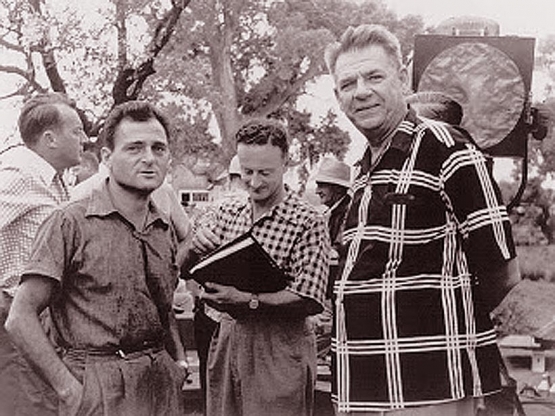
The attached three page article about John Wayne appeared at the very doorstep of the Fifties – the decade that was uniquely hisown. The uncredited Hollywood journalist who wrote this column was doing so in order to announce to the reading public that Wayne was coming remarkably close to being the top box office attraction:

Wayne reached this eminence by turning out film after film for 18 years. Working with a steady, un-nervous strength for four studios: Republic, RKO, Argosy and Warner Brothers. – he shifts back and forth between Westerns, sea-epics and war pictures. With each movie he makes (most of them re-hashes of of standard action-film plots, but a few of them film classics), his fans grow.

1939, Animation History, Film Daily Magazine

Paul Terry: The Other Animator
(Film Daily, 1939)

A short profile on Paul Terry, torn from the pages of a prominent Hollywood trade rag:

During Paul Terry’s notable career in the film industry, he has produced more than 1,000 pictures. In October of the current year he celebrates 25 years of continuous work in the cartoon field, which he helped to pioneer.

Today, the fountain of Terry-Toons is a thoroughly modern studio in New Rochelle, employing some 130 hands, all skilled in the imparting of life, voice and voice expression to the characters created on the drawing boards.

Advertisement

Use shortcode [oma_ad position="summary_top"] (or other position) in your theme or widgets to display OMA Promotions here.

Second Oscar for Tom and Jerry (The Lion's Roar, 1946)
1946, Animation History, Recent Articles, The Lion's Roar

Second Oscar for Tom and Jerry
(The Lion’s Roar, 1946)

All told, the animated cartoon series Tom and Jerry would be awarded seven (7) Academy Awards before Oscar’s attention turned elsewhere.


This 1946 article sings the praises of Fred Quimby (1886 – 1965), the animation producer who ran the shop at the Metro-Goldwyn-Mayer cartoon studio between the years 1937 and 1954:

Doff the cap to Metro-Goldwyn-Mayer’s Fred Quimby, producer of Tom and Jerry’, the only cartoon stars to have copped the coveted Oscar for two consecutive years. Even the distinguished Donald Duck has only been Oscarized once.

Tom and Jerry‘ reflect in broad comedy the faults and foibles of human beings, even as you and I. Here we have a thoroughly egotistical cat and a very shrewd mouse… a cartoon representation of the eternal conflict between HERO and VILLAIN. Toma always hopes to outwit Jerry who symbolizes the underdogs of the world.

This short notice appeared in The Lion’s Roar, which was the monthly publicity rag for M.G.M. Studio.

Eleanor Roosevelt on the Death of FDR (Yank Magazine, 1945)
1945, Eleanor Roosevelt, Yank Magazine

Eleanor Roosevelt on the Death of FDR
(Yank Magazine, 1945)

This column, by First Lady Eleanor Roosevelt, was an articulate effort at make some sense of her husband’s death, which took place during one of the most critical periods in world history:

Perhaps in His wisdom, the Almighty is trying to show us that a leader may chart a way, may point out the road to lasting peace, but that many leaders and many peoples must do the building. It cannot be the work of one man, nor can the responsibility be laid upon his shoulders, and so when the time comes for peoples to assume the burden more fully, he is given rest.

Advertisement

Use shortcode [oma_ad position="summary_top"] (or other position) in your theme or widgets to display OMA Promotions here.

Scroll to Top