Author name: editor

Remembering the Golden Age of the Dandy (Vanity Fair Magazine, 1920)
1920, Men's Fashion, Recent Articles, Vanity Fair Magazine

Remembering the Golden Age of the Dandy
(Vanity Fair Magazine, 1920)

This is a fun read covering the all too short reign of the dandystyle=border:none. It touches upon those who were the great practitioners of the art (Beau Brummell, Sir Phillip Dormer Chesterfield, Beau Nash, Sir Robert Fielding, Count Alfred d’Orsay) and those who came later, but deserving of honorable mention (King Alphonso XIII and Oscar Wilde), as well as the wannabe bucks who wished they were dandies but simply came away well-tailored (George IV and Edward VII).


An article about Beau Brummell can be read HERE

Advertisement

Use shortcode [oma_ad position="summary_top"] (or other position) in your theme or widgets to display OMA Promotions here.

1919, Almanach Hachette, Inventions and Weapons

German Gas Shells
(Almanach Hachette, 1919)

The attached is a black and white diagram depicting five different German gas artillery shells that were manufactured to be fired from a number of different guns of varying calibers.
In retaliation for a 1914 French tear-gas grenade attack at Neuve Chapelle, the German Army, on April 22, 1915, hurled 520 gas shells at British and Canadian units in Belgium, killing five thousand and incapacitating ten thousand more.

Clicke here to read more articles about W.W. I gas warfare.

The German Blockhouse (L'Illustration, 1917)
1917, Inventions and Weapons, L'Illustration Magazine

The German Blockhouse
(L’Illustration, 1917)

Here is an architectural plan and a photograph of a German blockhouse that was constructed in Flanders during 1917. The Historian John Laffin is very informative on this subject when he refers to it in his 1997 book, The Western Front Companion:style=border:none

Blockhouses generally measured 30 ft. along the front, with a width of 10 ft. They were sunk three feet into the ground and stood 7 feet above it. The front was up to 30 inches thick. Massively strong, a blockhouse was virtually impervious to shell-fire; even a heavy shell would merely knock a large chip off the edge.


This article appears on this site by way of a special agreement with L’Illustration.

Advertisement

Use shortcode [oma_ad position="summary_top"] (or other position) in your theme or widgets to display OMA Promotions here.

1918, Inventions and Weapons, J'ai Vu Magazine

Cockpit of the Giant Goltha Bomber
(j’ai vu Magazine, 1918)

In the spring of 1917, the German Air Corps developed a squadron of large aircraft capable of dropping 660-pound bombs on London -and drop them they did, killing as many as 788 human beings between May of 1917 and May of 1918. The Giant Goltha Bombers conducted these raids primarily at night and utterly terrified the East End of London. Eventually, German losses escalated and the London raids were canceled in favor of Paris and various other French targets. In 1917 this image of a Goltha cockpit appeared in the French press.

The Lewis Gun (The Great War Monthly, 1918)
1918, Inventions and Weapons, The Great War Monthly

The Lewis Gun
(The Great War Monthly, 1918)

The Lewis gun was, in the circumstances, a weapon of very considerable value. It helped the British infantry to hold back masses of the enemy in the opening phase of the war, and became one of the most important instruments of attack and defense during the long period of trench warfare.

The light Lewis gun became the favourite weapon of the British airman, against the Parabellum gun of German pilots and fighting observers.


Click here if you wish to read about the American inventor of the Lewis Gun.

Korean War Impact on the 1952 Election |
1952, Quick Magazine, Recent Articles, The Korean War

The 1952 Election and the War in Korea
(Quick Magazine, 1952)

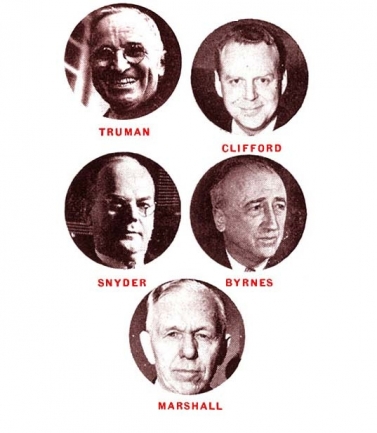
By the time November of 1952 rolled around the Korean War was in stalemate; this made the 1952 election one that was about progress as the American voters looked for a candidate who could make sound decisions and offer a leadership that would take the country (and the war) in a better direction. Neither candidate was looking for a victory in Korea, both campaigned on finding a peace. When President Truman taunted Eisenhower to come forward with any plan he had for peace in Korea it resulted in the retired general standing before the microphones and uttering pensively: I will go to Korea. The electorate was at once reminded as to how trusted he had been in the past and Eisenhower was elected, carrying 41 states and receiving nearly 58 percent of the popular vote.


More on the 1952 presidential election can be read here…

Advertisement

Use shortcode [oma_ad position="summary_top"] (or other position) in your theme or widgets to display OMA Promotions here.

Louis L'Amour on Post-War Paris (Rob Wagner's Script Magazine, 1946)
1946, France, Script Magazine

Louis L’Amour on Post-War Paris
(Rob Wagner’s Script Magazine, 1946)

During the course of the Second World War, Western fiction writer Louis L’Amour (1908 – 1988) served as a U.S. Army lieutenant in a transport unit. He penned this nifty article about 1946 Paris while waiting to return home:

It is cold in Paris now. There are chill winds blowing down those wide streets. The fuel shortage is serious, and will probably continue to be so as transportation is not yet what it should be.

Vivid with historical background, the city somehow remains modern. It has kept step with the world without losing its beauty or its patina…Easy enough when riding along the Rue St. Antoine to forget that where the jeeps and command cars roll now, there were once Roman chariots. No corner of Paris is without its memories.

Advertisement

Use shortcode [oma_ad position="summary_top"] (or other position) in your theme or widgets to display OMA Promotions here.

Dirigible Accident: ROMA (The Literary Digest, 1922)
1922, The Literary Digest, Zeppelins and Dirigibles

Dirigible Accident: ROMA
(The Literary Digest, 1922)

Two LITERARY DIGEST articles, printed seven days a part, addressing the topic of the destruction of the U.S. military’s semi-rigid airship, ROMA; much attention is paid as to where the blame for the disaster must be placed. The journalists concur that the U.S. Congress was answerable for the loss due to that body’s unwillingness to pay for the necessary helium, rather than the less expensive, and highly flamable, hydrogen gas. Thirty-four lives were lost.

ZMC-2: The First All Metal Airship (Literary Digest, 1929)
1929, The Literary Digest, Zeppelins and Dirigibles

ZMC-2: The First All Metal Airship
(Literary Digest, 1929)

1929 saw the creation of the U.S. Navy airship ZMC-2, the first metal dirigible (aluminum alloy) of its kind:

Heretofore, the trend in dirigible construction has been toward larger and longer ships; the egg-shaped ZMC-2 can withstand the buffeting of the winds much better than her larger and more unwieldy sister ships.

Built by the Aircraft Development Corporation (Detroit), ZMC-2 was in use by the U.S. Navy until her retirement, in 1941.

Advertisement

Use shortcode [oma_ad position="summary_top"] (or other position) in your theme or widgets to display OMA Promotions here.

Haus Hohenzollern 1912 | Dysfunctional Families in History
1912, Current Literature Magazine, European Royalty, Recent Articles

Father and Son Discord: Wilhelm II and the Crown Prince
(Current Literature, 1912)

Relations between Emperor William (Kaiser Wilhelm II, 1859-1941)and his son and heir, the German Crown Prince (Wilhelm III, 1882-1951), have now become so strained as to be a source of embarrassment to the whole court of Berlin. Vienna, a sort of clearing house for gossip of this sort, is filled with sensational stories…


Click here to read what the Kaiser thought of Adolf Hitler.

The Water-Colors of John Marin (VanityFair, 1922)
1922, Modern Art, Recent Articles, Vanity Fair Magazine

The Water-Colors of John Marin
(VanityFair, 1922)

When Fifth Avenue’s Montross Gallery launched an exhibit featuring over one hundred creations by the American painter John Marin (1870 – 1953) in the winter of 1922, art voyager and all-around well-respected critic Paul Rosenfeld (1890 – 1946) was present, and very shortly put pen to paper in order to heap many bon-mots upon the man and his work:

He applies his wash with the directness of impulse that is supposed to be discoverable only in the work of small children. One racks one’s brain for memory of a water-color painter who reveals in every stroke of his brush a more uninhibited urge outward.

Advertisement

Use shortcode [oma_ad position="summary_top"] (or other position) in your theme or widgets to display OMA Promotions here.

Scroll to Top