Author name: editor

Constantine Brancusi (Vanity Fair, 1916)
1916, Modern Art, Vanity Fair Hall of Fame

Constantine Brancusi
(Vanity Fair, 1916)

An appreciative five paragraph essay saluting the Modernist sculptor Constantine Brancusi (1876 – 1957), accompanied by one black and white image of the artist’s work, The Doves. Much of the review concerns the poor relationship Brancusi had with Auguste Rodin (1840 – 1917) who
had been his teacher in earlier days.

Advertisement

Use shortcode [oma_ad position="summary_top"] (or other position) in your theme or widgets to display OMA Promotions here.

Poiret Wraps and Coats (Vogue Magazine, 1919)
1919, Fashion, Vogue Magazine

Poiret Wraps and Coats
(Vogue Magazine, 1919)

By the time these images in American VOGUE hit the streets, the fashion house of Paul Poiret (1879 – 1944) was very much on the decline. Following the close of the First World War the designer was never able to regain his pre-1914 status. With the restlessness of the Twenties came the demand for a new mood in fashion and Coco Channel (1883 – 1971) became the new champion of Paris Fashion. Poiret closed his doors ten years after these photos were printed.


Read about the 1943 crochet revival

An Abbreviated War Record of the 92nd Division (The Stars and Stripes, 1919)
1919, African-Americans, The Stars and Stripes

An Abbreviated War Record of the 92nd Division
(The Stars and Stripes, 1919)

An illustration of the insignia patch and a brief account of the origins, deployments and war-time activities of the U.S. Army’s Ninety-Second Infantry Division during World War One. It is highly likely that the attached description of the 92nd’s service record had been rewritten to suit the personal taste’s of the paper’s Jim Crow editors. Sadly, there are other examples of such biased editing at THE STARS and STRIPES.

German Schools and the Teaching of the War (Literary Digest, 1922)
1922, Aftermath (WWI), The Literary Digest

German Schools and the Teaching of the War
(Literary Digest, 1922)

It was discovered in 1922 that when the German school system made mention of the recently ended war (if they addressed the topic at all), the subject was often white-washed or inaccurately characterized. When approached by a foreign reporter concerning the matter, teachers claimed that new books were too expensive and that the prevailing political forces could never agree on an accurate history of the war:

When do you think you will be able to begin studying the history of the war in your schools? I asked.

Not until this generation dies…

Advertisement

Use shortcode [oma_ad position="summary_top"] (or other position) in your theme or widgets to display OMA Promotions here.

Clemenceau (Literary Digest, 1922)
1922, Aftermath (WWI), The Literary Digest

Clemenceau
(Literary Digest, 1922)

Georges Clemenceau (1841 – 1929) served as one of France’s wartime Premieres (1917-1920). The following is an excerpt from his letter to the American people imploring them to share in his outrage concerning Germany’s open defiance to the Versailles Treaty. Clemenceau would die seven years later, fully convinced that another devastating war with Germany was just around the corner.

Click here to read more articles about the German violations of the Versailles Treaty.

'The Plainsman'' by Cecil B. DeMille (Stage Magazine, 1937)
1937, Hollywood History, Stage Magazine

‘The Plainsman” by Cecil B. DeMille
(Stage Magazine, 1937)

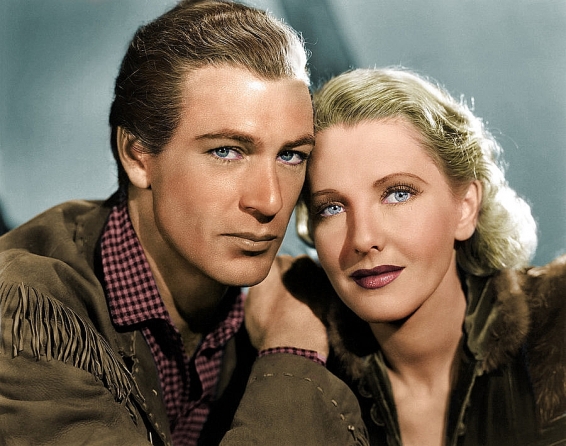
Why should a director risk it all with some anonymous film critic when a he is given the chance to review his own movie? With this thought in mind, Cecil B. DeMille (1883 – 1959) typed up his own thoughts concerning all his hard work on the 1937 film, The Plainsman, which starred Gary Cooper:

I think ‘The Plainsman’ differs from any Western we have ever seen for many reasons


– it is at this point in the article that DeMille rattles-off an extended laundry list
of reasons that illustrate the unique qualities of his Western. One of the unique aspects of the film mentioned only by publicists concerned the leading man Garry Cooper, who, being a skilled horseman from his Montana youth, chose to do most of his own riding stunts in the film, including the shot where he rode hanging between two horses.


Click here to read a 1927 review of Cecil B. De Mille’s silent film, King of Kings.

Advertisement

Use shortcode [oma_ad position="summary_top"] (or other position) in your theme or widgets to display OMA Promotions here.

'Tich'' of El Alamein (Coronet Magazine, 1960)
1960, Animals (WWII), Coronet Magazine

‘Tich” of El Alamein
(Coronet Magazine, 1960)

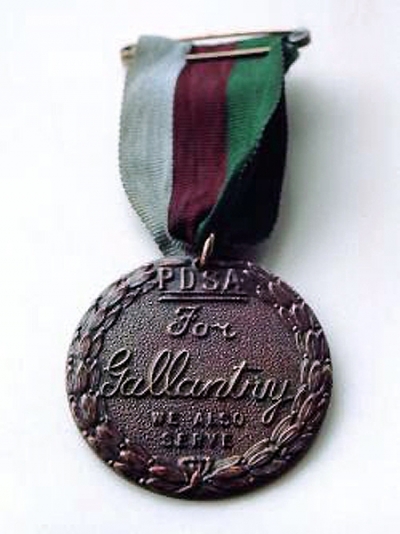
This is the story of Tich – the little black dog was the well-loved pet of the British Eighth Army. An admired veteran of three bitter World War II campaigns, she saw battle from North Africa to Sicily and on to Paris – thousands of Allied troops came to know her and like her. Due to her ability to predict in-coming artillery shells, many men owed their lives to her.


On July 1, 1949 Tich was awarded the Dickin Medal at Wembley Stadium, cheered by 10,000 onlookers. Ironically, having survived combat for nearly five straight years, Tich allowed malaria to get the better of her; she was buried at Ilford Animal Cemetery in her adopted home country.

The Western Front Elephant (Der Welt Spiegel, 1915)
1915, Animals (WWI), Der Welt Spiegel

The Western Front Elephant
(Der Welt Spiegel, 1915)

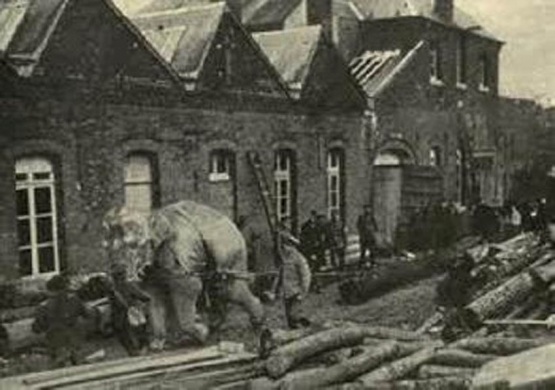
Animals have played important rolls in war from the beginning and World War One was no exception. Throughout the war the widespread use of dogs, horses mules and pigeons are all well documented and there have been some very interesting books written on the topic. Not so well documented is the presence of this one elephant who, being loyal to the Kaiser, is pictured in the attached photograph from 1915.


From Amazon: War Elephantsstyle=border:none

Advertisement

Use shortcode [oma_ad position="summary_top"] (or other position) in your theme or widgets to display OMA Promotions here.

Summer Fashions (Stage Magazine, 1934)
1930s Fashion, 1934, Stage Magazine

Summer Fashions
(Stage Magazine, 1934)

Illustrated with three nifty black and white fashion illustrations, this critic lays it all on the line as to what the most exciting part of ladies fashions will be for the summer of 1934 – there is much talk of the Paris offerings from Marcelle Dormoy, hats by Tappe and smocks by Muriel King. However, no other fashionable bauble attracts her attention more than the concept of the net dress:

The thing that everyone is going for now is net and, when you see that new net dresses, it is pretty hard to understand why this frivolous fabric was forgotten so long. It is being made into dresses and jacket dresses which are called cafe clothes; street-length skirts and crisp, starchy necklines and usually, short sleeves, each with its individual brand of ingenuity.

Click here to read an article about the nature of adultery.

Advertisement

Use shortcode [oma_ad position="summary_top"] (or other position) in your theme or widgets to display OMA Promotions here.

A Post-War Visit to Metz (Literary Digest, 1919)
1919, Letters, The Literary Digest

A Post-War Visit to Metz
(Literary Digest, 1919)

This is a letter from an American infantry Major, James E. White, who wrote home to explain that there was still much to do six days after the armistice.

The major’s letter relayed his experiences as being one of the first Allied officers to enter the formerly occupied city of Metz, in order to evacuate wounded American prisoners:

The following Tuesday the grand entry of the French troops took place, but no welcome was more spontaneous than than that given to the group of American officers who on that Sunday peacefully invaded the fortress of Metz.

On U.S. Imperialism (The Book League, 1930)
1930, Foreign Opinions About America, The Book League

On U.S. Imperialism
(The Book League, 1930)

Attached is a review of The Imperial Dollarstyle=border:none
by Hiram Motherwell.

Motherwell wrote the book in 1929 not simply to impress his peers but also to provide them with an outline that illustrated America’s progress in achieving world domination. The author examined subjects such as why America alone, of all the nations on earth, tended to believe itself to be a non-imperialistic one.

Elihu Root on Teddy Roosevelt (The North American Review, 1919)
1919, Interviews: 1912 - 1960, The North American Review

Elihu Root on Teddy Roosevelt
(The North American Review, 1919)

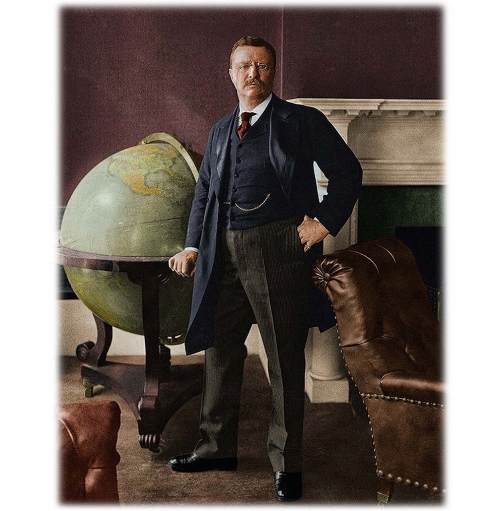
Eight months after the death of Theodore Roosevelt (1858 – 1919), the now defunct Rocky Mountain Club asked the former Secretary of State Elihu Root (1845 – 1937: Nobel Peace Prize 1912), to say a few words of remembrance regarding his old friend and colleague:

No one ever misunderstood what Theodore Roosevelt said. No one ever doubted what Theodore Roosevelt meant. No one ever doubted that what he said he believed, he intended and he would do. He was a man not of sentiment or expression but of feeling and of action. His proposals were always tied to action.


The historian Henry Steele Commager ranked Theodore Roosevelt at number 17 insofar as his impact on the American mind was concerned – click here to understand his reasoning…

Advertisement

Use shortcode [oma_ad position="summary_top"] (or other position) in your theme or widgets to display OMA Promotions here.

Scroll to Top