Author name: editor

1951 Hats | 1951 Fashion Hats
1950s Fashion, 1951, Collier's Magazine

The Milliner’s Collaboration
(Collier’s Magazine, 1951)

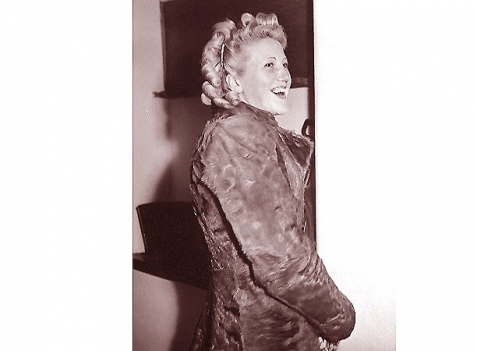
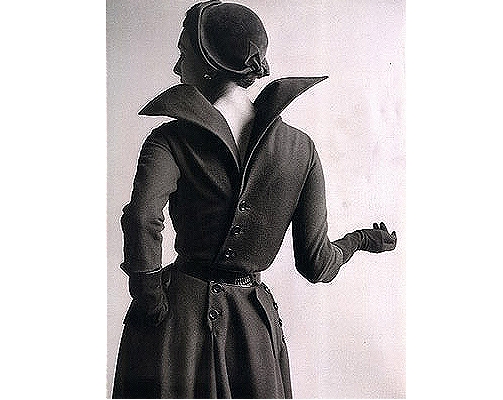
In 1951 the finest minds in American millinery were asked to put their collective craniums together and design some hats; each brought something unique to the table – the most humorous design element that appeared in each hat included a telephone!

Collaborators in the struggle to produce a taller plume, a more involved bird’s nest, are the hat designer’s – to whom carrots and cornstalks, bean bean pods and bumper-shoots are all perfectly acceptable decorations for the head.

The Long Haul (Quick Magazine, 1951)
1951, Quick Magazine, The Korean War

The Long Haul
(Quick Magazine, 1951)

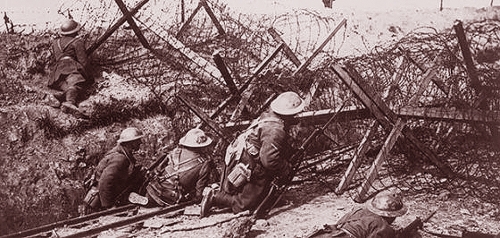
By the Winter of 1951 another round of cease-fire and truce agreements between UN and Communist field commanders had once again come to naught – and America’s second Thanksgiving in Korea soon gave way to America’s second Christmas in Korea. This brief column lays out what went wrong in the last negotiations and American Secretary of State Dean Acheson declared that the U.S. would remain in Korea even after a peace agreement has been signed.

Advertisement

Use shortcode [oma_ad position="summary_top"] (or other position) in your theme or widgets to display OMA Promotions here.

Inadequacies in Combat Training (Yank Magazine, 1945)
1945, Combat Training, Yank Magazine

Inadequacies in Combat Training
(Yank Magazine, 1945)

Training for combat, according to veterans in Italy, should be a hell of a lot more realistic and a hell of a lot more thorough.

‘They oughta learn them guys’ is that favorite beef you hear from combat veterans when they talk about replacements who have just joined their outfits…the average replacement doesn’t know enough about the weapons an infantryman uses. ‘He usually knows enough about one or two weapons…but he should know them all. He may know how to use and take care of the M1 or carbine, but if you need a BARman or machine-gunner quick, you’re up a creek.’


Statistical data concerning the U.S. Army casualties in June and July of 1944 can be read in this article.

Advertisement

Use shortcode [oma_ad position="summary_top"] (or other position) in your theme or widgets to display OMA Promotions here.

Tango Fashions (Vanity Fair Magazine, 1913)
1913, Fashion, Vanity Fair Magazine

Tango Fashions
(Vanity Fair Magazine, 1913)

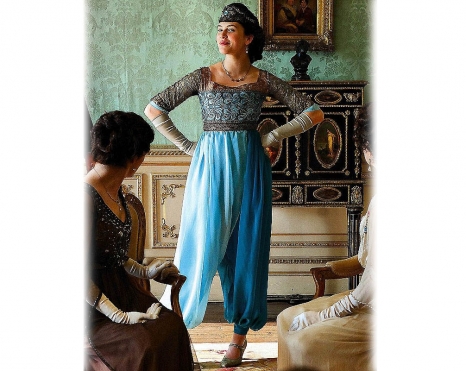
The urgent word from Belle Époque Paris on the matter of proper Tango gowns was published in this 1913 article and accompanied by seven illustrations.

What shall you wear to the Tango Teas? Let me whisper to you a secret, only to be revealed when it is found out, my dear, there is no Tango in America, or, at least in New York. But it is quite different in Paris and it is for Paris and the Tango that the French dance frocks are made.


Click here to read about feminine conversations overheard in the best New York nightclubs of 1937.

Reasons Truman Fired General MacArthur | President Harry Truman vs General MacArthur 1951 | General Douglas MacArthur Insubordination
1951, Pathfinder Magazine, The Korean War

Should Truman Have Fired MacArthur?
(Pathfinder Magazine, 1951)

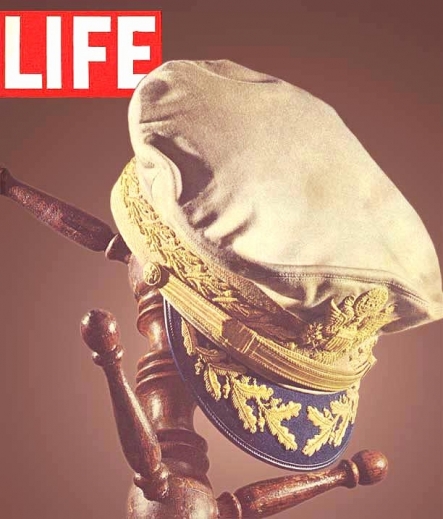
Had the five-star general, brilliant military servant of his country for 50 years, been a sincere, farsighted prophet advocating the only course which could halt Communist Imperialism and save the free world? Or had he been an egotistical, arbitrary, insubordinate soldier, deliberately undercutting his Commander-in-Chief in pursuit of a policy to which no United States or United Nations official would give endorsement?


The author lists numerous instances indicating that the General had been insubordinate.

Advertisement

Use shortcode [oma_ad position="summary_top"] (or other position) in your theme or widgets to display OMA Promotions here.

Stalin Dies and Power Changes Hands (Quick Magazine, 1953)
1953, Quick Magazine, The Cold War

Stalin Dies and Power Changes Hands
(Quick Magazine, 1953)

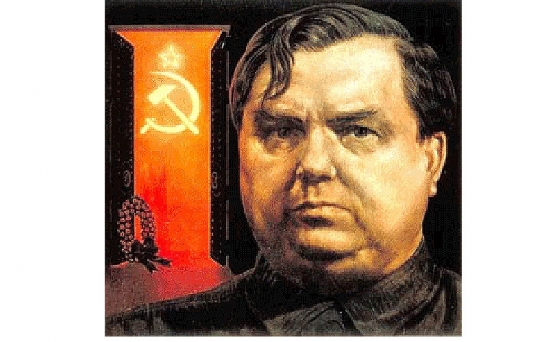
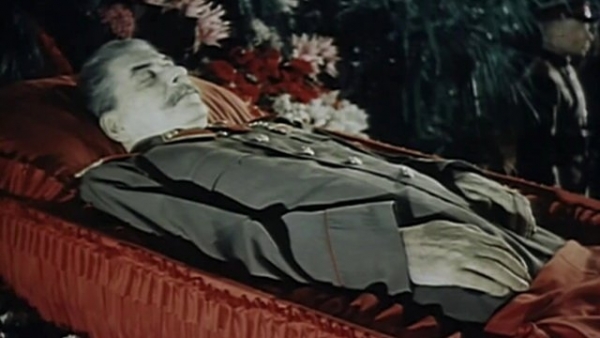
Stalin’s death on March 5, 1953 generated a tremendous amount of uncertainty in the West, and a good deal of it is reflected in the attached column. A list of possible successors was provided; two of the names played an immediate roll in the governance of the Soviet Union: Georgy Malenkov (1902 – 1988) – who ruled for three days, until he was replaced by Nikolai Bulganin (1895 – 1975). Bulganin ran the shop until he, too, was replaced by Stalin’s right-hand man: Nikita Khrushchev
(1894 – 1971) – who was known in some corners as the hangman of the Ukraine.


Read about the Soviet Congress

Last Days of Joseph Stalin | End of Stalin's Reign | Stalin's Neurotic Fears
1953, Joseph Stalin, Quick Magazine

Stalin’s Rule Summarized
(Quick Magazine, 1953)

Stalin’s final days, as recalled by his daughter, Svetlana Alliluyeva (1926 – 2011), were mired in paranoia; he had imprisoned his one physician (accusing him of being a British spy) and refused all medical attention – preferring to self-medicate with liberal doses of iodine. His hatred of the West had drastically intensified; he rambled on about the natural intelligence of peasants and was displeased that numerous members of his family wished to marry Jews.


(Click here to read another article about the 1953 death of Stalin.)


Read about the Soviet Congress

The Dwindling A.E.F. (American Legion Weekly, 1919)
1919, Aftermath (WWI), The American Legion Weekly

The Dwindling A.E.F.
(American Legion Weekly, 1919)

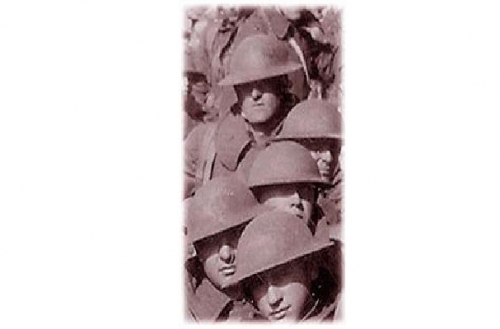
The intended readers for the attached article were the newly initiated members of the American Legion (ie. recently demobilized U.S. veterans), who might have had a tough time picturing a Paris that was largely free of swaggering, gum-chewing Doughboys gallivanting down those broad-belted boulevards, but that is what this journalist, Marquis James (1891 – 1955) intended. At the time of this printing, the A.E.F. (American Expeditionary Force) had been shaved down from 4,000,000 to half that number and re-christened the A.F.F. (American Forces in France) and the A.F.G. (American Forces in Germany). With a good bit of humor, the article concentrates on the antics of the American Third Army in Germany as they performed their Bolshevist busting duties in the Coblenz region.

Advertisement

Use shortcode [oma_ad position="summary_top"] (or other position) in your theme or widgets to display OMA Promotions here.

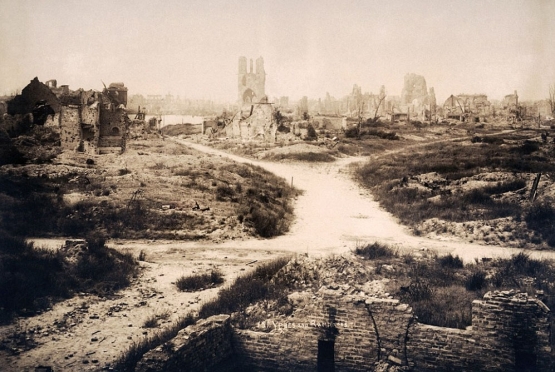
1914-1918 German-Occupied France
1920, Aftermath (WWI), The Smart Set

Odd Post-War Thinking from H.L. Mencken
(The Smart Set, 1920)

Perhaps in his haste to be the reliable cynic, H.L. Mencken (1880 – 1956) decided to ignore the haphazard nature of industrial warfare and indulged in some Darwinian thinking. There is no doubt that this column must have infuriated the Gold Star Mothers of W.W. I, who were still very much a presence at the time this opinion piece appeared, and it can also be assumed that the veterans of The American Legion were also shocked to read Mencken’s words declaring that:

The American Army came home substantially as it went abroad. Some of the weaklings were left behind, true enough, but surely not all of them. But the French and German Armies probably left them all behind. The Frenchman who got through those bitter four years was certainly a Frenchman far above the average in vigor and intelligence…

History of the Necktie in America 1865 - 1950 | Pre-Civil War Clothing in America | Necktie Facts
1950, Men's Fashion, Men's Wear Magazine

History of the Necktie in America
(Men’s Wear, 1950)

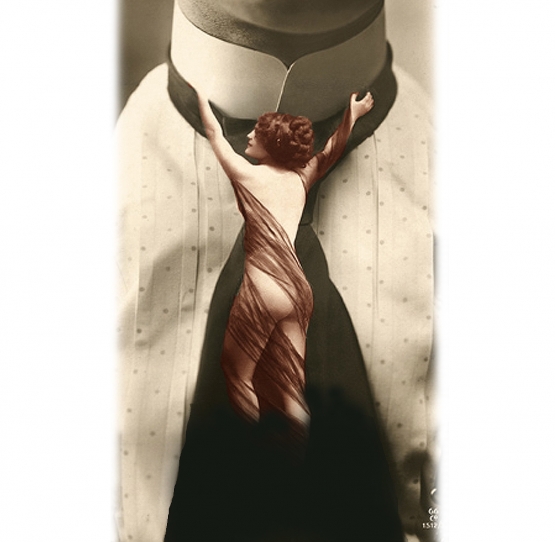
This illustrated column points out a number of interesting historic facts about ties in America; most notably that up until 1865 the preferred form of neck wear in the U.S. was a pre-tied bow that fastened in the back. In the 1920s the United States became the premiere manufacturer of men’s neckties – a record that was comfortably held for some time afterword.

Click here to read about the fabric restrictions imposed on
the American fashion world during the Second World war.

Earliest Television Stars | Comedian Milton Berle Television Star | Comedian Milton Berle Biography
1951, Coronet Magazine, Early Television

Milton Berle
(Coronet Magazine, 1951)

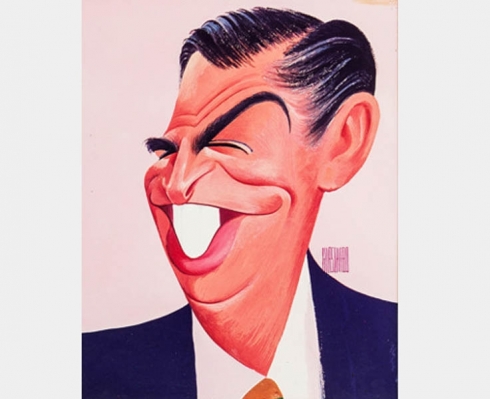
He was the biggest television star of the 1950s – Milton Berle (1908 – 2002):

An incurable extrovert of 43, Uncle Miltie is already a 36-year show business veteran and will probably go on forever. At the very least, his new 30-year contract with NBC will keep him in front of of the TV cameras until he is 72…

Advertisement

Use shortcode [oma_ad position="summary_top"] (or other position) in your theme or widgets to display OMA Promotions here.

Are the Indians of Jewish Origin? (The Literary Digest, 1912)
1912, First Nations, The Literary Digest

Are the Indians of Jewish Origin?
(The Literary Digest, 1912)

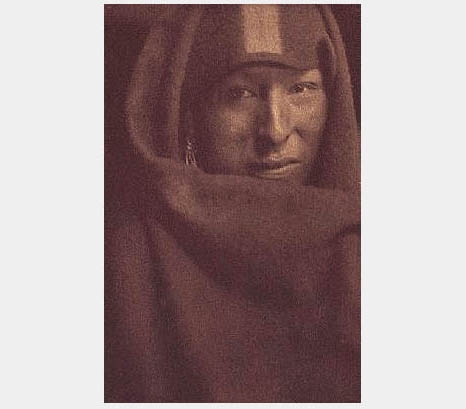
The earliest encounters with the Native American had left the brain trust of Europe entirely baffled. The persistent matter as to who these people were remained an unanswered question well into the Nineteenth Century, for in order to qualify as a member of enlightened classes, a fellow had to show some sufficiency in at least two fields: classical literature and the Bible. Therefore, it stood to their reasoning that the inhabitants of the Americas had their story told in one of those two fields of study. Some of Europe’s elite were convinced that these people were descendants of the survivors of Troy, who, fearing the Greeks, caught a strong wind which allowed them to sail both the Mediterranean as well as the Atlantic and arrive on that far distant shore. Others tended to believe that the Native American could only have descended from the lost tribes of Israel, which is the topic of this one page article.

Germany's Dictated Peace Terms for the World (Omnibooks Digest, 1942)
1942, World War Two

Germany’s Dictated Peace Terms for the World
(Omnibooks Digest, 1942)

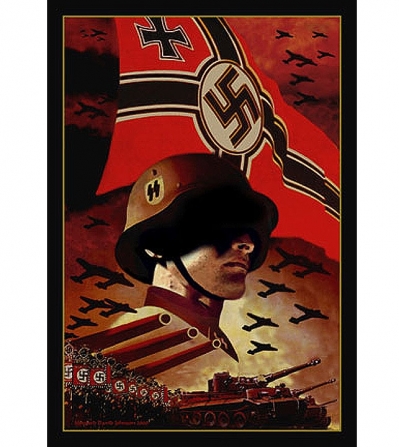
During the opening months of 1941 Nazi Germany was positively drunk with power; their army seemed able to march wherever it chose and all of Europe was trembling. Foreign correspondent for the Hearst papers, H.R. Knickerbocker (1898 – 1949), pointed out that on April 29, 1941 the Axis forces had printed, what he termed, a trial balloon on the pages of The Japan Times Advertiser that clearly indicated the peace terms that were acceptable to them.

The Rise of Islamic Outrage (Current Opinion, 1922)
1922, Aftermath (WWI), Current Opinion Magazine

The Rise of Islamic Outrage
(Current Opinion, 1922)

I predict increasing ferment and unrest throughout all Islam; a continued awakening to self-consciousness; an increasing dislike for Western domination.


So wrote Lothrop Stoddard (1883 – 1950), an author who was very much a man of his time and tended to gaze outside the borders of Western Civilization with much the same vision as his contemporary Rudyard Kipling, seeing the majority of the world’s inhabitants as the white man’s burden. Yet, for all his concern on the matter of Anglo-Saxon hegemony, he seemed to recognize the growing discontent in Islam, even if he was some sixty years early.

Advertisement

Use shortcode [oma_ad position="summary_top"] (or other position) in your theme or widgets to display OMA Promotions here.

Scroll to Top