






































47 Magazine Articles
Click Magazine Articles
Collier's Magazine Articles
Confederate Veteran Magazine Articles
Confidential Magazine Articles
Creative Art Magazine Articles
Current Literature Magazine Articles
Direction Magazine Articles
Film Daily Magazine Articles
Freedom's Triumph Articles
G.I. Joe Magazine Articles
Harper's Bazaar Magazine Articles
Harper's Weekly Articles
Hearst's Sunday American Articles
Ken Magazine Articles
La Baionnette Articles
Leslie's Magazine Articles
Liberty Magazine Articles
Life Magazine Articles
Men's Wear Magazine Articles
Newsweek Articles
Outing Magazine Articles
Outlook Magazine Articles
People Today Magazine Articles
Photoplay Magazine Articles
Pic Magazine Articles
PM Tabloid Articles
Punch Magazine Articles
Rob Wagner's Script Magazine Articles
Scribner's Magazine Articles
Sea Power Magazine Articles
Stage Magazine Articles
The American Legion Monthly Articles
The American Legion Weekly Articles
The Atlantic Monthly Articles
The Dial Magazine Articles
The Film Spectator Magazine Articles
The Flapper Magazine Articles
The National Park Service Articles
The New Republic Articles
The New York Times Articles
The North American Review Articles
The Saturday Evening Post Articles
The Saturday Review Articles
The Smart Set Articles
Theatre Arts Magazine Articles
Touchstone Magazine Articles
Trench Warfare Articles
Vanity Fair Magazine Articles
Vogue Magazine Articles

The Cold War

Enter the
Hydrogen-Bomb

• Pathfinder Magazine, 1950 •


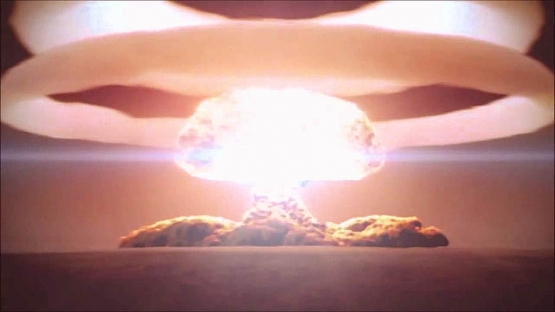
Within a nine-month period beginning on September 23, 1949, the Cold War began to get really hot, really fast, which made many people around the world increasingly nervous. First came the successful Soviet acquisition of an Atomic-bomb, which compelled the Truman’s Brain-Trust in Washington to announce five months later that they were commencing work on even bigger bombs; four months later, Stalin decides that he will not be out done – and orders the North Korean Army to attack across the 38th parallel – and the shooting began. This article is about the second step in this process: the United States development of the Hydrogen bomb.

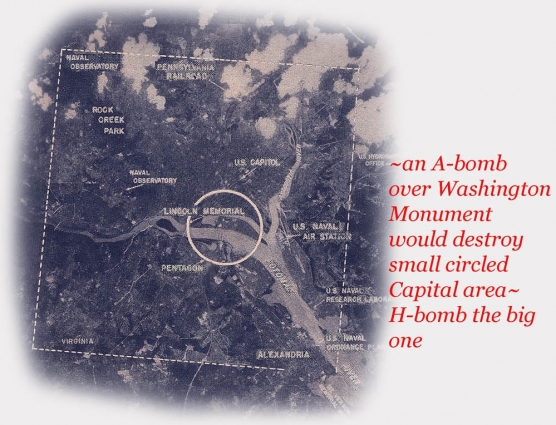
“A hydrogen bomb could cause damage almost without limit. The Nagasaki plutonium bomb affected an area of 10 square miles. The new weapon could destroy an area of 100, or 1,000 square miles. Loss of life can be figured on the same sliding scale. At Hiroshima, more than 78,000 persons were killed. Death from an H-bomb would multiply that by ten or, more horribly, 100. There is no known technical reason why such a bomb could not, fairly easily, destroy all of New York City. The bigger a hydrogen bomb is, the more efficiently it explodes”.
Read ‘The Hell Bomb” <br>(Pathfinder Magazine, 1950) for Free
Hydrogen Bomb Article1950 Hydrogen BombHydrogen Bomb Factoidsdestructive capabilities of a Hydrogen Bomb1950s Hydrogen Bomb news

Enter the [br]Hydrogen-Bomb

Enter the [br]Hydrogen-Bomb

Enter the [br]Hydrogen-Bomb

Hydrogen Bomb Article1950 Hydrogen BombHydrogen Bomb Factoidsdestructive capabilities of a Hydrogen Bomb1950s Hydrogen Bomb news
Scroll to Top