Author name: editor

Problems in British Palestine... (Current Opinion Magazine, 1921)
1921, Current Opinion Magazine, Jews in the 20th Century

Problems in British Palestine…
(Current Opinion Magazine, 1921)

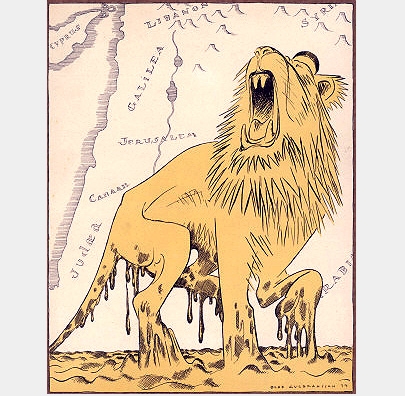
This is a news article that first appeared in 1921 concerning the continuing clash of civilizations in British Palestine:

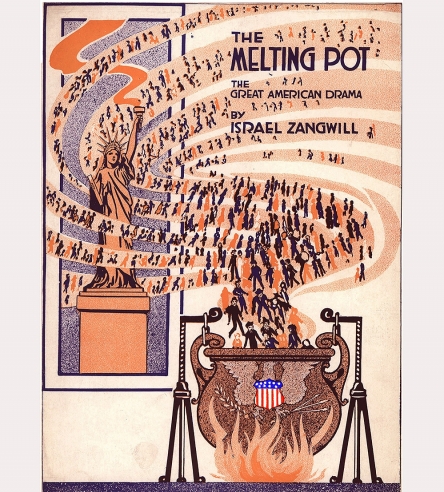
There are in Palestine about half a million Muslems, about 62,500 Christians and 65,300 Jews. The aspiration for a Jewish State encounters the opposition not only of all Moslems and Christians but of many Orthodox Jews residing in Palestine. …The Zionist leaders, erroneously classifying the present inhabitants as Arabs, expect them to silently steal away, as Zangwill puts it, and leave the Jews free to rule.
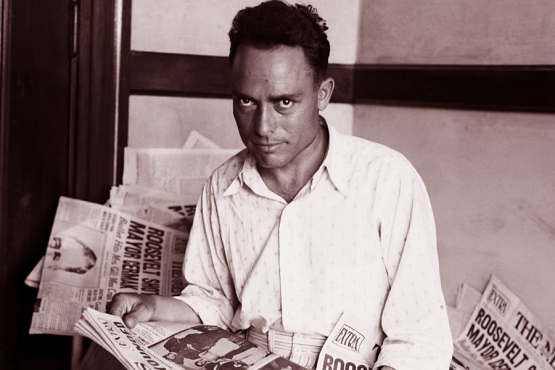
When New York City Mourned F.D.R. (Yank Magazine, 1945)
1945, F.D.R., Yank Magazine

When New York City Mourned F.D.R.
(Yank Magazine, 1945)

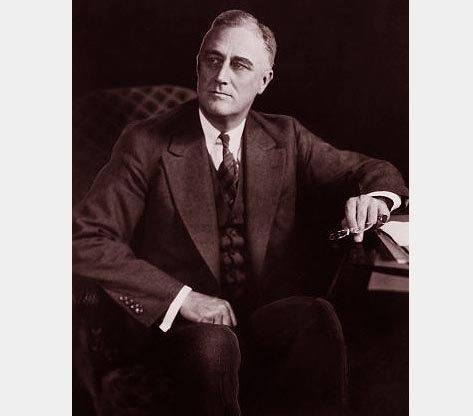
With the exception of the attached piece, there is no magazine article in existence that illustrated so clearly the soul-piercing pain that descended upon the city of New York when the word got around that President Franklin Delano Roosevelt had died. YANK correspondent Bill Davidson walked from one neighborhood to the next recording much of what he saw:

Nowhere was grief so open as in the poorest districts of the city. In Old St. Patrick’s in the heart of the Italian district on the lower East Side, bowed, shabby figures came and went, and by the day after the President died hundreds of candles burned in front of the altar. ‘Never’ a priest said ‘have so many candles burned in this church’.
A woman clasped her 8-year-old son and said, ‘Not in my lifetime or in yours will we again see such a man.’

Advertisement

Use shortcode [oma_ad position="summary_top"] (or other position) in your theme or widgets to display OMA Promotions here.

Lew Ayres at Twenty (Photoplay Magazine, 1930)
1930, Hollywood History, Photoplay Magazine

Lew Ayres at Twenty
(Photoplay Magazine, 1930)

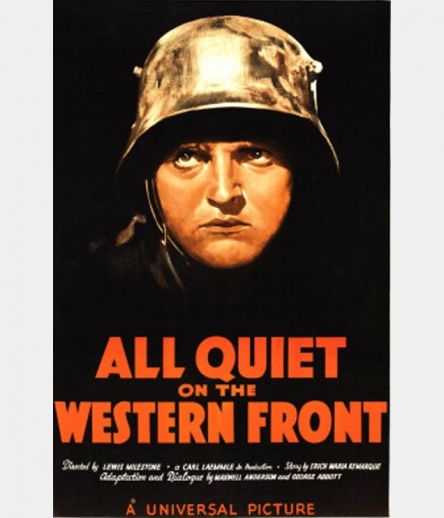
Here is a profile of the actor Lew Ayres (1908 – 1996) that was published, quite coincidentally, shortly before the release of ALL QUIET ON THE WESTERN FRONT (Universal):

Naturally a great deal depends on the outcome of this picture. Lew is not the type that will go on for years as a moderate success. He will either be a tremendous hit or or a failure.


Click here to read about Lew Ayres and his status as a conscientious objector during the second World War.

Advertisement

Use shortcode [oma_ad position="summary_top"] (or other position) in your theme or widgets to display OMA Promotions here.

Communist Racketeers in 1930s Hollywood
1940, Blacklisting, Photoplay Magazine

Red Tactics in Hollywood
(Photoplay Magazine, 1940)

American political parties have not been the only folks to visit Beverly Hills – hat-in-hand; Soviet-backed Reds have done it, too. This 1940 article goes into some detail explaining all the various false fronts that American Communists would erect in order to attract Hollywood’s empathetic pretty boys – a tribe that is so easily separated from their wealth. Once an actor was hooked, they were steadily relied upon by the Reds to cough-up the do-re-mi without question; if they didn’t – they got the works.

Walter Winchell has already passed on to Washington documentary evidence proving that thousands of dollars contributed by Hollywood to innocent-sounding organizations eventually wound up in the hands of Communist leaders. Police and other investigatory groups have gone about accumulating evidence of the conspiracy.


One of the many Communist-front advocacy groups that milked Hollywood of much of its wealth was called theIndependent Citizen’s Committee of the Arts, Sciences and Professions; actress Olivia de Havilland was one of their willing dupes until she worked with the FBI and helped to bring them down.

What Was the Phony War |1940 French Maginot Line Article
1940, Click Magazine, World War Two

German Choices In 1940
(Click Magazine, 1940)

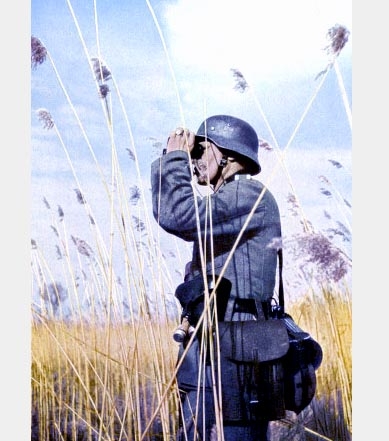
Attached is a Phoney War magazine article by Major General George Ared White (1880 – 1941) in which he mused wistfully (as Oregon men are wont to do) as to all the various horrible choices that were spread before Herr Hitler in the early months of 1940. The General believed that France’s Maginot Line was impregnable and he did not think that Hitler would commit to such an undertaking.

Richest Counties During the Great Depression | Richest Counties During the 1930s
1937, Pathfinder Magazine, The Great Depression

The Five Wealthiest Counties
(Pathfinder Magazine, 1937)

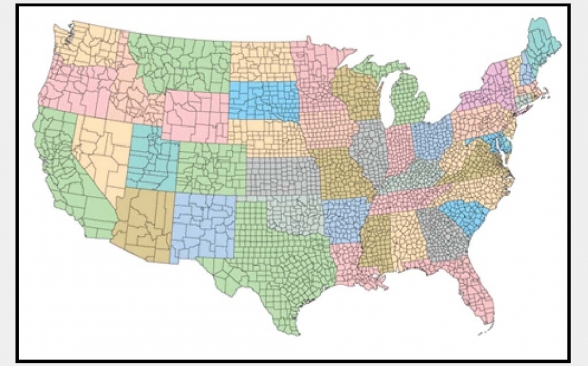
During the summer of 1937 the U.S. Census Bureau released the data that was compiled by it’s business department concerning the payrolls dolled out by the nation’s wealthiest industries in 1935. The information gleaned from these payrolls indicated which were the five richest counties in the country based on personal income. These small municipalities could be found in two Eastern states, two Mid-Western states and one Western state.


Jump ahead to our own time and you’ll learn how much the game has changed: today the top five wealthiest counties in the United States are all located in the Maryland and Virginia Suburbs that lie just outside the District of Columbia!

Advertisement

Use shortcode [oma_ad position="summary_top"] (or other position) in your theme or widgets to display OMA Promotions here.

The Early CIA (Coronet Magazine, 1951)
1951, Coronet Magazine, Spies

The Early CIA
(Coronet Magazine, 1951)

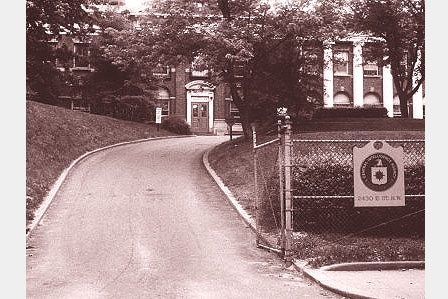
The CIA is a young and relatively untested child in the strange world of intelligence. The enemy dourly accuses it of ‘Black Warfare.’ But there is definite proof of its success. Radio Moscow never misses a chance to scream shrilly of ‘the extended spy network of the Wall Street mercenaries.’

The CIA formula avoids the fog of rumor that fills any world capital, and goes straight to the hard facts of the enemy’s economy, production, transportation, raw materials and manpower. A modern war must be organized, much of it in the open, long in advance. Guns must be manufactured; munitions, food, and raw materials stockpiled; railways and roads expanded and soldiers trained. The allocation of scarce Soviet-controlled steel is far more important than the minutes of the Politburo.


In 1958, Fidel Castro wrote an article for an American magazine in which he thoroughly lied about his intentions; click here to read it.

European Hunger 1946 | Post-WW2 Life | European Suffering 1946
1946, Aftermath (WWII), Collier's Magazine

One Year After the War
(Collier’s Magazine, 1946)

An anonymous opinion piece that was published in the August 24, 1946 issue of COLLIER’S MAGAZINE in which the writer expressed his astonishment in finding that peacetime, after such a hard-fought victory, should seem so anti-climactic:

Consumers goods are so scarce everywhere that all major countries are suffering more or less inflation. A wave of big strikes in this country earlier this year slowed production badly, so that it seems impossible for us to freeze our own relatively mild inflation at its present point.

'Where Moscow Is Teaching China to see Red'' (Literary Digest, 1927)
1927, China - Twentieth Century, The Literary Digest

‘Where Moscow Is Teaching China to see Red”
(Literary Digest, 1927)

Attached is a 1927 American magazine article that reported on the Soviet influence taking place in China. Attention is paid to the activities of a young Soviet named Karl Berngardovich Radek (born Karol Sobelsohn: 1885 – 1939):

Russia has been the only country to assist the Nationalist China movement to which they all hope to devote their lives. Men who believe in the ‘dictatorship of the proletariat’ have furnished much of the brain-power that has organized, directed and articulated the Chinese popular uprising in it’s successful Northern drive…As far as foreign culture is concerned, China is still much more deeply steeped in American and British idealism than in those of modern Russia

Advertisement

Use shortcode [oma_ad position="summary_top"] (or other position) in your theme or widgets to display OMA Promotions here.

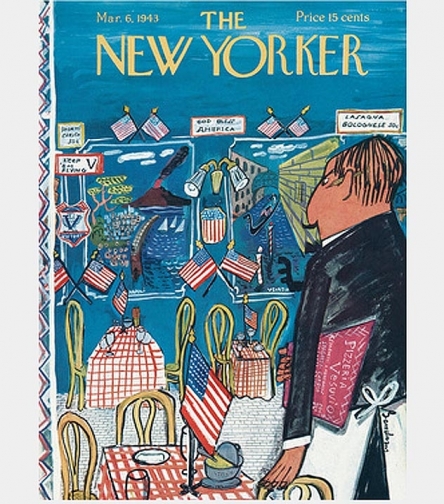
A Word on New York Waiters (Stage Magazine, 1939)
1939, Old New York History, Stage Magazine

A Word on New York Waiters
(Stage Magazine, 1939)

Waiters are to New York City what lobbyists are to Washington and celebrated illustrator, author and all-around foodie Ludwig Bemelmans (1898 – 1962) had some thoughts on this very diverse group:

New York is full of waiters, Chinese, American, Congo, French, Italian and German waiters, Jewish and Christian waiters, Vegetarian and Greek waiters, many good waiters, many bad waiters.

Click here to read an article by Benny Goodman concerning the arrival of Swing on Park Ave.

Women Migrants 1921 | European Women Search for American Husbands 1921
1921, Immigration History, The Literary Digest

1921 Saw Many Single European Women Moving to the U.S.
(Literary Digest, 1921)

The death and disfigurement of over four million young men during the course of the First World War (1914 – 1918) created an enormous problem for the women of Europe:

A French statesman recently estimated that in his country there are now 1,000,000 women for whom there are no mates, while similar conditions exist also in England, Italy, Germany and Austria.

This article makes clear that in a quest for husbands, half a million women had arrived in the U.S. following the end of hostilities and it was further believed that by the close of 1921 another half million will have landed.

New York State Suffrage Amendment 1917 | Melting Pot Americanization 1917
1917, Immigration History, Vogue Magazine

Getting the Immigrant Vote
(Vogue Magazine, 1917)

Upon learning that the Woman Suffrage Amendment passed the New York legislature quite handily, the Suffrage Party lost no time in solidifying their base and quickly set to work locating additional voters for future state elections. They discovered that there were five hundred thousand new voters in New York City alone; two hundred thousand of them were foreign-born women.

This VOGUE article is a fun read for a number of reasons, the first one being that it seems that nothing ever really changes in America and the second reason is because this article was written by a pampered patrician of the first order and when you read between the lines you get the sense that she would rather not breathe the same air as Italian and Jewish Immigrants:

As well-born American women, we can never out-vote the immigrant; we must make her an all-American citizen and voter.

Advertisement

Use shortcode [oma_ad position="summary_top"] (or other position) in your theme or widgets to display OMA Promotions here.

The Problem with Chain Stores 1933 | Chain Stores in the 1930s
1933, New Outlook Magazine, The Great Depression

The Chain Store Problem
(New Outlook Magazine, 1933)

The total amount of retail trade in 1929 was approximately $50,033,850,792 in net sales, but the ten percent of chain stores did $10,771,934,034 of this trade – or twenty-one and a half percent of the total! In the miniature department store field, selling articles for nickles, dime, quarters and dollars, earning charts show an average return on capital invested in 1920 of nearly fourteen percent. In 1925, this percentage rose to twenty-five. In 1930, after trade had begun to suffer, earnings still were in excess of of thirteen percent.

Illiterate Immigrant Soldiers (Current Opinion, 1920)
1920, Current Opinion Magazine, Immigration History

Illiterate Immigrant Soldiers
(Current Opinion, 1920)

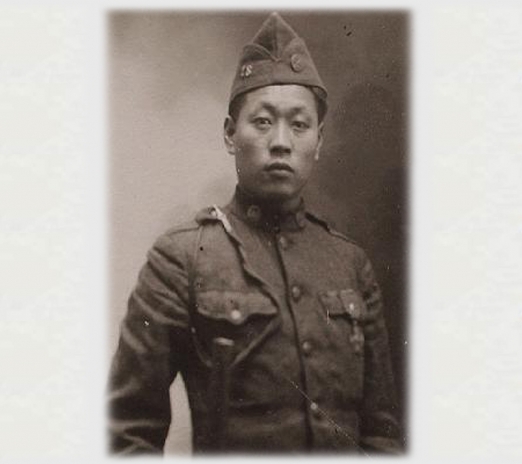
So deep were the ranks of khaki-clad immigrants who filled the U.S. military’s regiments and divisions throughout the course the First World War that our British allies would often refer to the U.S. Army as the American Foreign Legion; yet as grateful as the services were to have so many additional strong arms to deploy during a time of national emergency, it was not without a cost.

This article is all about how the army addressed the issue regarding the high number of illiterate immigrants who broadened their phalanx spanning the years 1917 through 1920.

Junk Science and Immigration Policy (Literary Digest, 1917)
1917, Immigration History, The Literary Digest

Junk Science and Immigration Policy
(Literary Digest, 1917)

The melting pot in this sense is applied to the race-conscious study of forensic anthropology. This article concerns the work of Dr. Ales Hrdlika (1869-1943) of the National Museum of Washington, and the records that he maintained regarding the physical features of the earliest European settlers compared to the Americans of the early Twentieth Century (read: Jews and Italians), following so many generations of immigration and intermarriage.


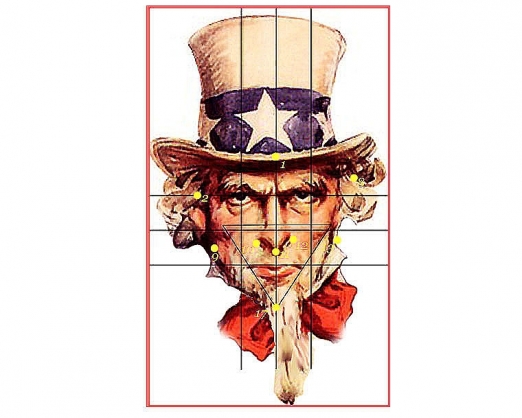
What is amusing is the illustration of The American Facestyle=border:none:

…the diagram drawn to scale from Dr. Hrdlicka’s data… shows the mean man of the old American stock. It is pointed out that the most conspicuous peculiarities of the type are the oblong outline of the face and the well-developed forehead.

Advertisement

Use shortcode [oma_ad position="summary_top"] (or other position) in your theme or widgets to display OMA Promotions here.

Scroll to Top