Author name: editor

Chosin Reservoir Marines | Chosin Reservoir USMC | Chosin Reservoir Article 1950
1950, Pathfinder Magazine, The Korean War

The March from Chosin to the Sea
(Pathfinder Magazine, 1950)

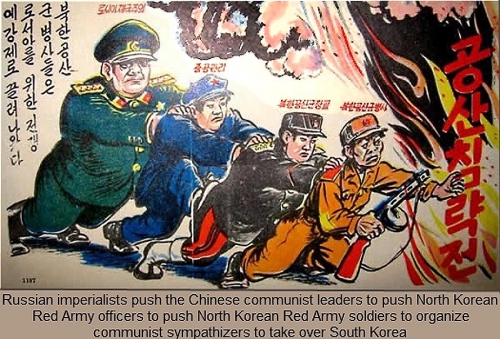
This is an eyewitness account of the fortitude and endurance exhibited by the freezing members of the 1st Marine Division as they executed their highly disciplined 100 mile march from the Chosin Reservoir to the Korean coastline – inflicting (and taking) casualties all the while. The account is simply composed of a series of diary entries – seldom more than eight sentences in length recalling that famous fighting retreat in the frozen Hell that was Korea. The journalist’s last entry points out that the number of Marine dead was so high, we need never think of the Battle of Tarawa as the bloodiest engagement in Marine history.

New York City: 1917 (Vanity Fair, 1917)
1917, Old New York History, Vanity Fair Hall of Fame

New York City: 1917
(Vanity Fair, 1917)

A VANITY FAIR article covering the social and patriotic transformation of New York City just eight months after The U.S. entered the First World War:

Already the greatest manufacturing center in the world, our coming into the War made New York the money center, the distributing center, the very hub of the universe as far as resources were concerned. London and Paris sank to the level of mere distributing points….


An additional event took place in 1917: Congress granted full U.S. citizenship rights to the citizens of Puerto Rico – but they didn’t move to New York until the Fifties. Click here to read about their integration.

Advertisement

Use shortcode [oma_ad position="summary_top"] (or other position) in your theme or widgets to display OMA Promotions here.

Immigration and Labor (The Nation, 1917)
1917, Immigration History, Pamphlet Produced by the National Park Service

Immigration and Labor
(The Nation, 1917)

Literacy tests were used to exclude immigrants even during the uncertain period of war with Germany and Austria. Rather than rely on immigrant labor from Italy or Mexico, steps were taken to reduce the number of available foreign workers. So great was the need for labor in agriculture and industry that the daily wage rose quickly in the month following Wilson’s call to arms.

addresses of old NYC bars in 1930s | 1930s Bars
1937, Old New York History, Stage Magazine

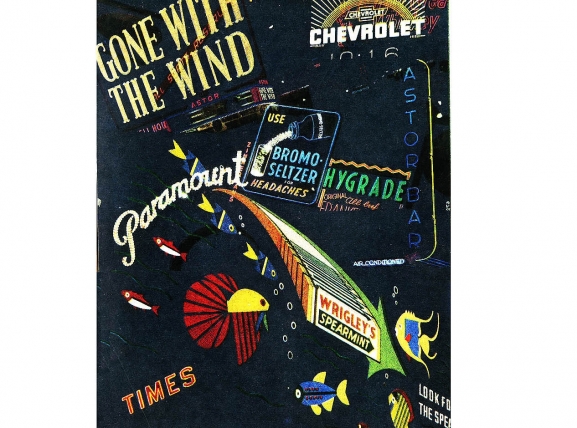
New York City Bars at Four in the Morning…
(Stage Magazine, 1937)

Tickled by the New York laws that prohibited bars from serving spirits between the hours of 4:00 to 8:00 a.m., this correspondent for Stage Magazine, Stanley Walker, sallied forth into the pre-dawn darkness of a 1937 Manhattan wondering what kind of gin mills violate such dictates. He described well what those hours mean for most of humanity and then begins his catalog of establishments, both high and low, that cater to night crawlers.

For something a shade rougher, more informal, smokier: Nick’s Tavern, at 140 Seventh Avenue South [the building went the way of Penn Station long ago], dark and smoky, with good food and carrying on in the artistic traditions of the old speakeasies.


Click here to read about the arrest and conviction of New York’s high society bootleggers.
American Dating Culture | Dating in America vs Europe | Dr Paul Popenoe Sociology
1955, Americana, People Today Magazine

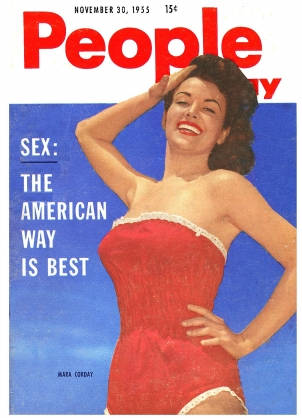
American Love is Better
(People Today Magazine, 1955)

This article is based on the research of Paul Popenoe (1888 – 1979), and the American Sociological Society that pointed out the high STD rate in Europe at the time indicated that the first sexual experiences among the males of that continent were with prostitutes. Two additional factors in the author’s argument highlighted the alarmingly high suicide rate among young European women coupled with the fact that the illegitimate birthrate far outpaced that of the United States at that time. Illustrated with four images that depict how depraved European dating in the Fifties was and how darn wholesome American teenage dating used to be by comparison, this article presents some sociological data supporting the conclusion that American love is better than European love because the American approach to the topic was simply easier and Europeans are just a bunch of pervs.

Advertisement

Use shortcode [oma_ad position="summary_top"] (or other position) in your theme or widgets to display OMA Promotions here.

1916 Robert Benchley Vanity Fair Article
1916, Old New York History, Vanity Fair Hall of Fame

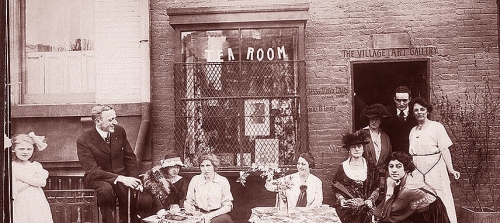
Greenwich Village Bohemians
(Vanity Fair, 1916)

Robert Benchleystyle=border:none (1889 – 1945) drama critic, humorist and actor. Upon graduating from from college (1912) he began his career writing for a number of New Yorkstyle=border:none papers. At the time this witty anthropological study of Greenwich Village wildlife was printed, Benchley was serving as a contributing editor for Conde Nast’s ‘Vanity Fair’.
Click here if you would like to read a 1934 profile of Robert Benchley.

USS Oklahoma Constructed 1912 | USS Nevada Constructed 1912
1912, Current Literature Magazine, Prelude

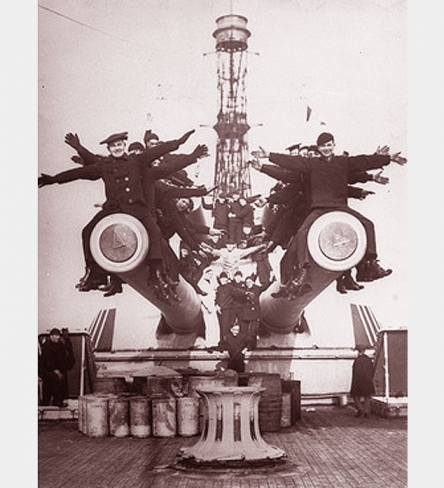
When the U.S. Navy Got A Little Larger…
(Current Literature, 1912)

This article heralds the construction of two American battleships that would later become famous for the rolls they played during the Second World War. Both ships, U.S.S. Oklahoma and U.S.S. Nevada, would be commissioned in 1916 and assigned to the Atlantic Fleet during the Great War; Oklahoma protected convoys and later, in 1919, escorted President Wilson to France to the Versailles Treaty.

Advertisement

Use shortcode [oma_ad position="summary_top"] (or other position) in your theme or widgets to display OMA Promotions here.

Lincoln's Address at Cooper Union (The National Park Service, 1956)
1956, Abraham Lincoln, The National Park Service

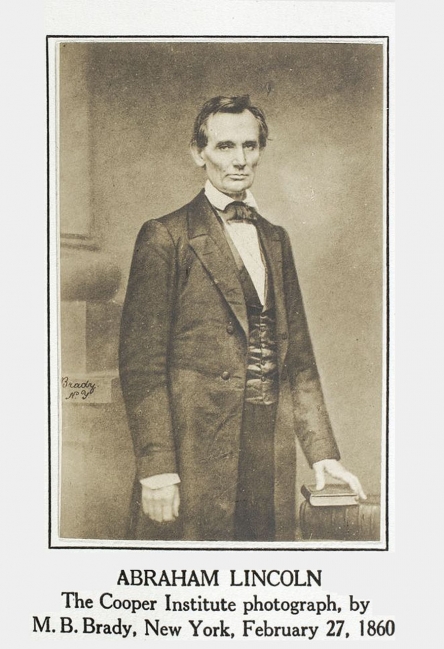
Lincoln’s Address at Cooper Union
(The National Park Service, 1956)

Before his 1860 address at the Cooper Institute (presently known as Cooper Union) Abraham Lincoln was known in the East chiefly as a rather obscure western lawyer who had gained some prestige a little over a year earlier in the debates with Douglas during the Illinois senatorial contest. The day after the address Horace Greeley’s NEW YORK TRIBUNE remarked:

No man ever before made such an impression on his first appeal to a New York audience.

This speech put within Lincoln’s grasp a chance for the Presidency.


Attached, you will find his very powerful conclusion to the address.


Click here to read about the Confederate conscription laws.

H.L. Mencken: Not Impressed with Lincoln (The Smart Set, 1920)
1920, Abraham Lincoln, The Smart Set

H.L. Mencken: Not Impressed with Lincoln
(The Smart Set, 1920)

As far as culture critic and all-around nay-sayer H.L. Mencken was concerned, Abraham Lincoln was simply another opportunist who fed at the federal trough and he found himself at a loss when it came to understanding the American deification of the man. It seemed that even Jefferson Davis might have had an easier time uttering a few sweet words to describe Lincoln then did the Bard of Baltimore. Yet, there was one contribution Lincoln made that Mencken applauded, the Gettysburg Address:

It is eloquence brought to a pellucid and almost gem-like perfection –the highest emotion reduced to a few poetical phrases. Nothing else precisely like it is to be found in the whole range of oratory. Lincoln himself never even remotely approached it [in other speeches]. It is genuinely stupendous.

(Although, like any unreconstructed Confederates, he thought the argument was all a bunch of rot.)

Advertisement

Use shortcode [oma_ad position="summary_top"] (or other position) in your theme or widgets to display OMA Promotions here.

African-Americans, FDR, and the 1944 Election (Yank Magazine, 1944)
1944, F.D.R., Yank Magazine

African-Americans, FDR, and the 1944 Election
(Yank Magazine, 1944)

A segment from a longer article regarding the 1944 presidential election and the widespread disillusionment held by many Black voters regarding the failings of FDR and his administration:

…the Negro vote, about two million strong, is shifting back into the Republican column.

The report is largely based upon the observations of one HARPER’S MAGAZINE correspondent named Earl Brown.


The group that advised FDR on all matters involving the African-American community was popularly known as the Black Brain Trust…

Advertisement

Use shortcode [oma_ad position="summary_top"] (or other position) in your theme or widgets to display OMA Promotions here.

American English and American Identity (American Legion Weekly, 1920)
1920, American English, The American Legion Weekly

American English and American Identity
(American Legion Weekly, 1920)

When it came to the issue of assimilating immigrants on American shores and deporting Alien Slackers, few groups yelled louder than the editors at The American Legion Weekly. In this anonymous editorial the author gently advocates for the recognition of American English in all schools with heavy immigrant numbers.

Why not inform these aliens they are about to be taught the American language… [and] announce to the world that there is a new language? Why, even in Mexico they do not stand for calling their language the Spanish language. They insist it is the Mexican language… why not quit press-agenting John Bull and have our own language – the American language.


– from Amazon: A Decade-by-Decade Guide to the Vanishing Vocabulary of the Twentieth Centurystyle=border:none

Who Are the Italian Fascists? (The Literary Digest, 1921)
1921, Benito Mussolini, The Literary Digest

Who Are the Italian Fascists?
(The Literary Digest, 1921)

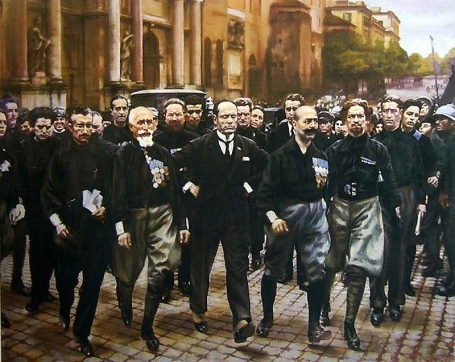
There have been other ‘Fasci’ before the present, for the word, derived from Latin ‘fascia’ (a bandage), means any league or association. Thus, the association of laborers and sulfur-workers, that caused the agrarian agitation in Sicily in 1892, were called Fasci… the essence of the word being the close union of different elements in a common cause that binds them all together. Each ‘Fascio’ possesses so-called ‘squadre de azione’ (squadrons of action), composed of young men who have mostly served in the war. Each of these ‘squadrons’ has a commandant, named by the directing council of the particular Fascio.


In Milan there existed a general committee that supervised all these yahoos, but by enlarge, each local Fascio was free to do as they saw fit within their own domains. The earliest ‘Fasci di Combattimento’ were created in 1919 by Mussolini, who at the time enjoyed some popularity as the editor of the Il Popolo d’Italiastyle=border:none. The Fascists saw the destruction of Italian socialism as their primary job.
Advertisement

Use shortcode [oma_ad position="summary_top"] (or other position) in your theme or widgets to display OMA Promotions here.

Scroll to Top