Author name: editor

Leon Trotsky Speaks About FDR and the Great Depression (Rob Wagner's Script Magazine, 1938)
1938, F.D.R., Rob Wagner's Script Magazine

Leon Trotsky Speaks About FDR and the Great Depression
(Rob Wagner’s Script Magazine, 1938)

Two and a half years were left on the clock for the exiled Leon Trotsky (né Lev Davidovich Bronstein: 1879 – 1940) until he would have to keep his rendezvous with an icepick in Mexico – and while living it up on this borrowed time he granted an interview to this one correspondent from a Beverly Hills literary magazine in which he ranted on in that highly-dated and terribly awkward Bolsheviki language about President Franklin Delano Roosevelt and his social programs.


Click here to read an article about the NKVD agent who murdered Trotsky.

The American Springfield '03 Rifle (U.S. Infantry Drill Manual, 1911)
1911, The U.S. Infantry Drill Manual, World War One

The American Springfield ’03 Rifle
(U.S. Infantry Drill Manual, 1911)

A black and white diagram depicting the breach of the 1903 Springfield riflestyle=border:none, with all parts named. This rifle was the primary weapon for American troops during World War One and was in use by that army up until 1936. At the time of America’s entry into the W.W. I, in April of 1917, there were roughly 843,239 Springfield ’03 rifles issued; seeing that this was not nearly enough for such an adventure, the Springfield Armory manufactured 265,620 additional rifles. In some photographs from the war, American soldiers and Marines are pictured shouldering the British Enfield rifle, which had been modified to fit the ammunition of the Springfield ’03. Subsequent modifications produced the Springfield 1903A3 and A4 which were issued to American snipers up until the earlier years of the Vietnam War.

Throughout the course of the war the U.S. Army was paying $19.50 for each rifle.

Advertisement

Use shortcode [oma_ad position="summary_top"] (or other position) in your theme or widgets to display OMA Promotions here.

A Post-War Study of British Conscientious Objectors (The Spectator, 1922)
1922, Draft Dodgers, The Spectator Magazine

A Post-War Study of British Conscientious Objectors
(The Spectator, 1922)

Conscription and Consciencestyle=border:none by John W. Graham is very briefly reviewed here; the summation provides some fast facts on the history of British conscientious objectors during World War One, yet tactfully fails to mention that during the course of the war, the British Army ordered 306 conscientious objectors be shot at dawn. In 2006 the British government pardoned them; just in time.

The New York Suffrage Amendment Advances the Ball (Vogue Magazine, 1917)
1917, Vogue Magazine, Women's Suffrage

The New York Suffrage Amendment Advances the Ball
(Vogue Magazine, 1917)

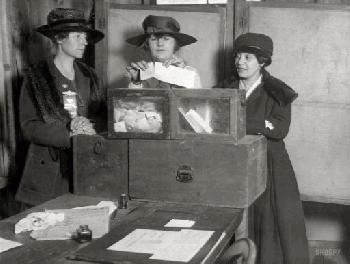
Last year New York State carried its Woman Suffrage Amendment by a majority of one hundred thousand. The Suffrage Party, instead of turning its headquarters to a tea room or a new Tammany Hall, decided to remain in existence, for educational purposes only, until it was assured that each new voter knew who she was, and what she was going to do about it.

The problem of educating the feminine voter has as little to do with the telephone directory as it has with the Social Register. For the average addition to the voter’s lists, strange as it may seem, is quite below the financial level recognized by the switchboard operator…


Click here to read articles about the American women of W.W. II.
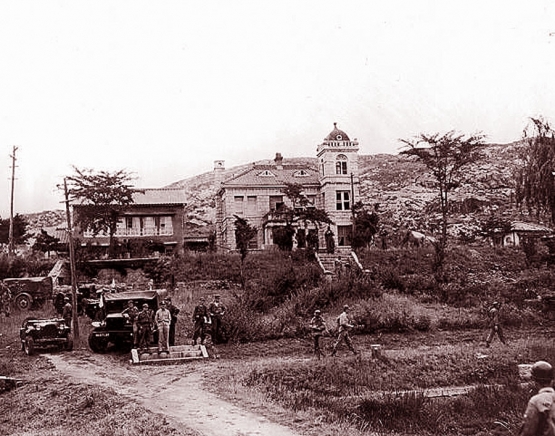
Vice Admiral Joy USN at Kaesong Negotiations | Kaesong Cease-Fire Talks August 1951
1951, The Korean War, Time Magazine

The Kaesong Cease-Fire
(Time Magazine, 1951)

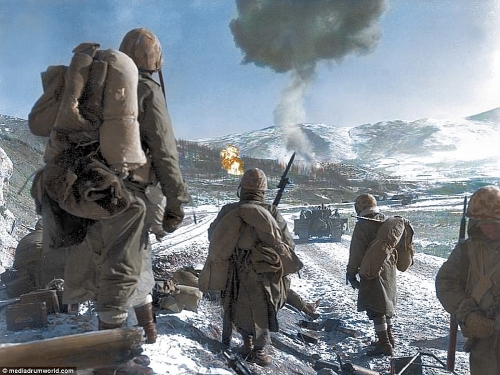
The Korean War peace negotiations that took place at Kaesong during August of 1951 are remembered as one of the many failed peace conferences to be convened during the course of that war. The talks were broken off early as a result of a series of U.N. raids that were launched in two different enemy held positions – in addition to an nighttime airstrike that almost decimated the grounds where the talks were being held. The U.N. negotiators were especially frustrated with the fact that the Communists wished that both armies adhere to the 38th Parallel as the post-war border; exactly where the war began.

Advertisement

Use shortcode [oma_ad position="summary_top"] (or other position) in your theme or widgets to display OMA Promotions here.

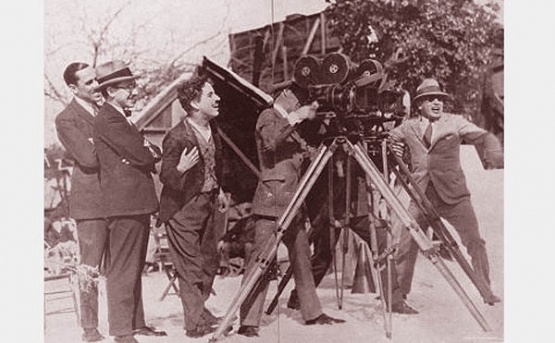
Charlie Chaplin: the Man (Photoplay Magazine, 1930)
1930, Charlie Chaplin Articles, Photoplay Magazine

Charlie Chaplin: the Man
(Photoplay Magazine, 1930)

Attached is a three page article about Charlie Chaplin that first appeared in 1930 and contains far more information about the man than you might possibly care to know:

He is a splendid boxer and a keen boxing fan…He plays bridge well…He loves traveling and dislikes flying…He likes to be alone…He likes to talk…He swears now and then…He did not go to school…

Henri Landru, Monsieur Verdux and Charlie Chaplin (Rob Wagner's Script, 1947)
1947, Charlie Chaplin Articles, Rob Wagner's Script Magazine

Henri Landru, Monsieur Verdux and Charlie Chaplin
(Rob Wagner’s Script, 1947)

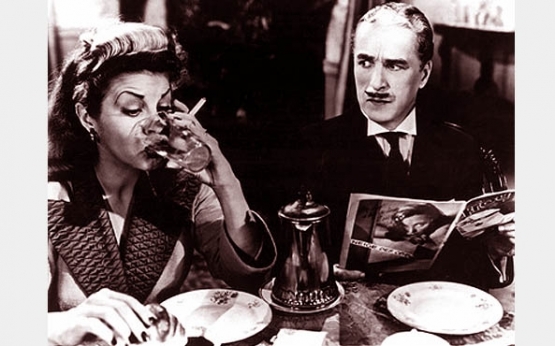
Attached is an article about the Charlie Chaplin film, Monsieur Verdux (1947) and the monstrous beast Henri Landru -the French murderer on whom the story is loosely based. This article was written by Gordon Kahn, remembered chiefly in our own time as one of the blacklisted Hollywood screenwriters of the post-World War II period. Not too long after this article was written he went into self-exile in Mexico.

Your Television Shopper 1950s TV Shopping Program | Dumont TV Network Program | WABD NY TV Station
1951, Early Television, Pathfinder Magazine

Shopping from Television
(Pathfinder Magazine, 1951)

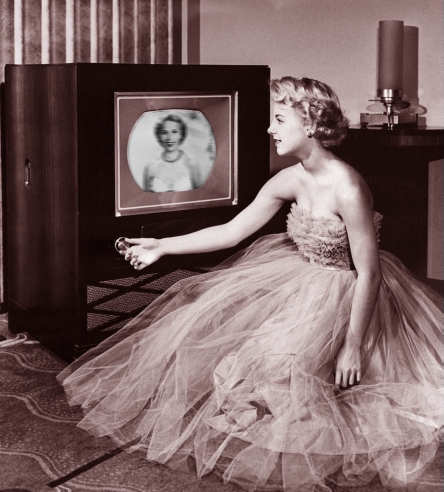
Before there was an HSN or a QVC – before there was an Adam Freeman or a Mary Beth Roe, there was Your Television Shopper and Leave It To The Girls starring Maggie Johnson and Faye Emerson, respectively. The programs were two of several such shows that aired during the prepubescent days of television broadcasting – and like the shopping shows that came along fifty years later, they, too, moved products off the shelves at a surprising pace.


Click here to read how Hollywood costume designer affected popular fashion…

Advertisement

Use shortcode [oma_ad position="summary_top"] (or other position) in your theme or widgets to display OMA Promotions here.

Franco-American Relations After W.W. I (Literary Digest, 1927)
1927, Aftermath (WWI), The Literary Digest

Franco-American Relations After W.W. I
(Literary Digest, 1927)

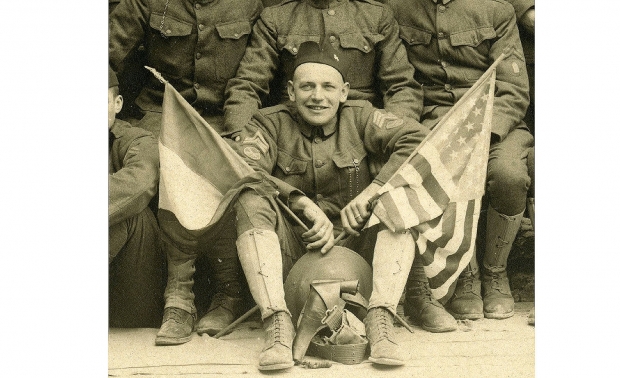
Ten years after America entered the First World War, thrice elected French Prime-Minister André Tardieu (1876 – 1945) put pen to paper and came up with a book about the complicated relations between France and the United States Devant l’Obstacle (1927):

They go on repeating the words ‘American friendship’ without realizing that America as a nation does not want friendships, and separates herself from her political associates the moment she can do so, as unceremoniously as she did in 1919, when she signed a separate peace with Germany. Few French students know or remember that less than twenty years after Lafayette left the American shores, America was at war with the country to which she virtually owed her freedom…


Click here to read another article in which André Tardieu slanders the Americans.
Click here should you wish to read good thoughts by a Frenchman concerning America’s entry into W.W. I.

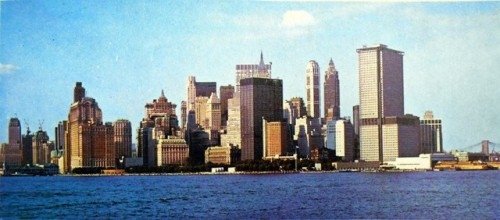
Puerto Ricans Move to New York City | New York City Planning Department and Puerto Ricans
1955, Old New York History, Pic Magazine

Puerto Ricans Arrive
(Pic Magazine, 1955)

In the early Fifties many of the people from the U.S. territory of Puerto Rico decided to pack their bags and move to New York City. Overnight, it seemed, a portion of Harlem came to be known as Spanish Harlem – where hastily assembled mambo dance halls could be found among restaurants serving the exotic cuisine of the Caribbean. There were also complications that emerged with the new comers that are addressed in this 1955 article:

Today, however, there is a forceful change taking place, an influence so great that New York City officials have forecast a startling racial shift within a few years and are already making plans for meeting this switch…

Advertisement

Use shortcode [oma_ad position="summary_top"] (or other position) in your theme or widgets to display OMA Promotions here.

Interviews: 1912 - 1960

An Interview with Erich von Stroheim
(Photoplay Magazine, 1919)

Legendary silent film player Erich von Stroheim (1885 – 1957) gave an account of his life and career in this 1920 interview printed in Motion Picture Magazine. The article touches upon von Stroheim’s roll as producer for the movie Blind Husbands (1919), but primarily concentrates on his pre-Hollywood life and his disappointment with the provincial nature of American films:

Motion picture audiences have been educated down to to accept drivel until they have lost all perspective. It will take time to again build up a sane balance and an artistic judgment.

As Europe Sees Us (The Smart Set, 1921)
1921, Foreign Opinions About America, The Smart Set

As Europe Sees Us
(The Smart Set, 1921)

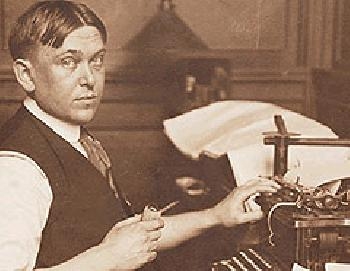
George Jean Nathan (1882 – 1958) and H.L. Mencken style=border:none (1880 – 1956) surmised that as the Europeans bury their many dead among the damp, depressing ruins of World War One, America is neither admired or liked very much: the English owe us money, the Germans smart under their defeat, the French lament that they are no longer able to rob and debauch our infantry.

-Read an Article About the First World War and the Gratitude of France-

Bertrand Russell on American Idealism (The Literary Digest, 1922)
1922, Foreign Opinions About America, The Literary Digest

Bertrand Russell on American Idealism
(The Literary Digest, 1922)

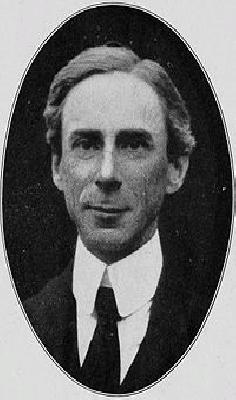
British thinker Bertrand Russell (1872-1970; Nobel Prize for Literature, 1950) used to get mighty hot under the collar when the topic of 1922 American society came up and this report is just one example. On a speaking tour in the United States, the Cambridge Professor opined that

love of truth [is] obscured in America by commercialism of which pragmatism is the philosophical expression; and love of our neighbor kept in fetters by Puritan morality.

He would have none of the thinking that America’s main concern for jumping into the meat grinder of 1914-1918 was entirely inspired by wounded France and poor little Belgium but was rather an exercise in American self-interest.

Advertisement

Use shortcode [oma_ad position="summary_top"] (or other position) in your theme or widgets to display OMA Promotions here.

Mine-Detecting Dogs (Yank Magazine, 1944)
1944, Animals (WWII), Yank Magazine

Mine-Detecting Dogs
(Yank Magazine, 1944)

A short paragraph about the M-Dogs of the American Army during the Second World War and how they were trained to locate both plastic and metallic mines during the course of the war.

An additional paragraph can be read about the Hollywood starlet who volunteered her dog for military service, only to be informed that the pooch had given the last full measure on behalf of democracy and a grateful nation.

Click here to read an article about re-educating the captured German boys of the war.

The Battle for Aachen (Yank Magazine, 1944)
1944, World War Two, Yank Magazine

The Battle for Aachen
(Yank Magazine, 1944)

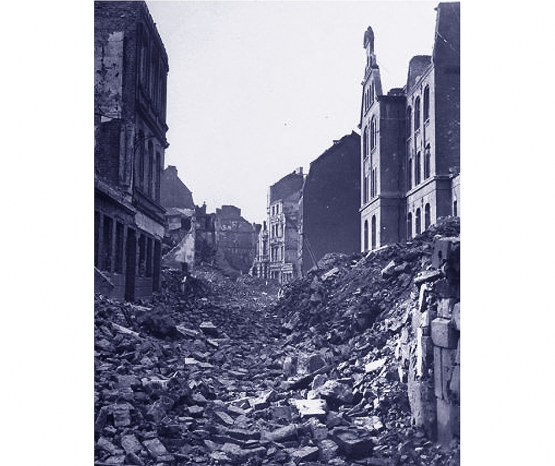
An eye-witness account of the first major American battle to be fought on German ground during World War II. Aachen, the Westernmost city in Germany was defended by some 44,000 men of the Wehrmacht as well as assorted elements of the First SS Leibstandarte Adolf Hitler Division which combined to offer a stubborn defense that lasted nineteen days. This article, written by Bill Davidson, who witnessed the most vicious kind of street combat, believed that the battle for Aachen was simply a re-staging of the battle of Stalingrad and he supports this point throughout the article:

Godfrey Blunden,the Australian war correspondent, was here in Aachen…he was immediately struck by the similarity between the two battles. ‘There is is the same house-to-house and room-to-room fighting, the same combat techniques, the same type of German defense.’


Years later, historian Stephen Ambrose remarked that the Battle of Aachen was unnecessary.

Advertisement

Use shortcode [oma_ad position="summary_top"] (or other position) in your theme or widgets to display OMA Promotions here.

Scroll to Top