Author name: editor

The Case for Cavalry (Vanity Fair Magazine, 1919)
1919, Vanity Fair Magazine, World War One

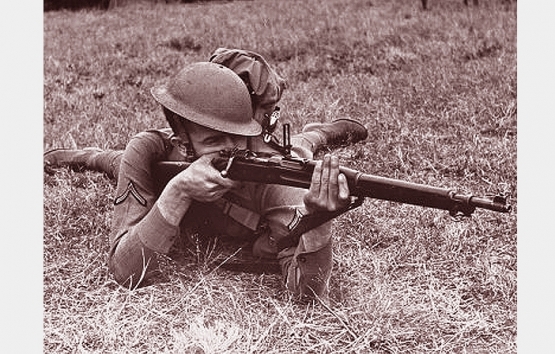
The Case for Cavalry
(Vanity Fair Magazine, 1919)

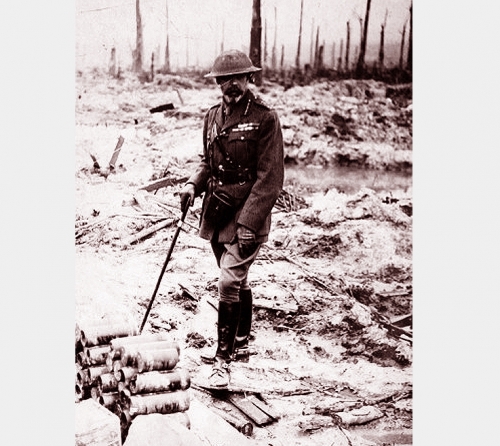
Numbered among the many Monday-morning-quarterbacks who appeared in print throughout much of the Twenties and Thirties were the old horse soldiers of yore, bemoaning the fact that industrial warfare had deprived their kind of the glory that was their birthright. This was not the case on the Eastern Front, where Imperial Russian generals had seen fit to launch as many as 400 cavalry charges – while American troopers were ordered to dismount (along with most other cavalry units in the West) and suffer postings with the Service of Supply, among other assorted indignities.

More Letters From Vietnam (Coronet Magazine, 1970)
1970, Coronet Magazine, The Vietnam War

More Letters From Vietnam
(Coronet Magazine, 1970)

“Dear Ma and Dad:

“I hope you don’t take this too hard… I got wounded in both of my legs and they had to be amputated. I don’t remember exactly how it happened – I only remember the explosion and the hospital at Inchon… I’m relieved to get away from it all, Mom and Dad, and there will be something to look forward to when I see you people again. The only thing I am l worried about are you folks. I don’t want you to be worrying and going around with tears in your eyes. The best years of my life are ahead of me. For your information they amputated from my knees down….

Advertisement

Use shortcode [oma_ad position="summary_top"] (or other position) in your theme or widgets to display OMA Promotions here.

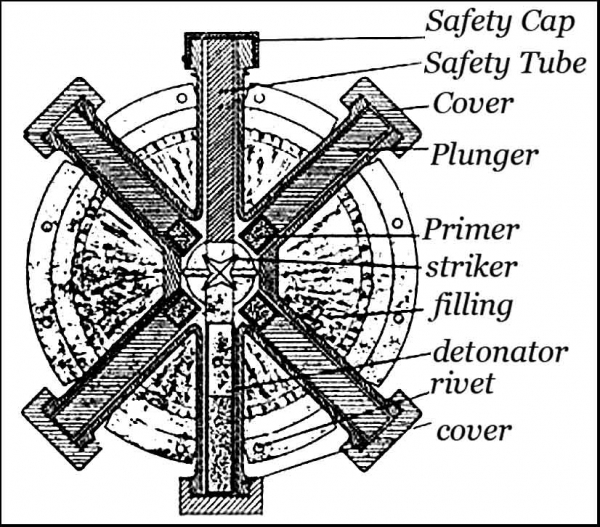
A Diagram of the French Renault Tank (Freedom's Triumph, 1919)
1919, Freedom's Triumph, Inventions and Weapons

A Diagram of the French Renault Tank
(Freedom’s Triumph, 1919)

The French made light Renault tank was first seen on the Western Front in 1918, it had a crew of two, measured 13 feet (4 meters) in length and weighed 6.5 tons. The tank’s 35 hp. engine moved it along at a top speed of 6 mph. The factory options were few: one turret was fashioned to accommodate a 37mm gun while the other was made for a machine gun. The American Army placed 227 of these tanks in the field; these Renaults were distinctly different from those commanded by their French allies: the American version sported an octagonal turret (the French used a circular one) and steel wheels (the French Army preferred wood).


If you wish to read about the only German tank of World War I, click here.


Read about the Patton tank in Korea…

The German View of the Next War (Literary Digest, 1912)
1912, Prelude, The Literary Digest

The German View of the Next War
(Literary Digest, 1912)

Attached is a short review of a book that turned many heads in the diplomatic circles of Europe in 1911: Germany And The Next War, written by Germany’s General von Bernhardi (1849 – 1930):

A very influential military writer in Germany declares that Germany must win her place as a world power through warfare.

The book sales in Germany were quite meager up until the first shot was fired in August of 1914, when they picked up considerably.

Germany Defends It's Military Build Up (Literary Digest, 1913)
1913, Prelude, The Literary Digest

Germany Defends It’s Military Build Up
(Literary Digest, 1913)

A defense was offered for the growth of German military expenditures based on the spread of Slavik pride and the rise of a great Pan-Slavonic movement due to victory of their kinsmen in the Balkans. German leaders, furthermore, felt a deep uneasiness about the fact that about one-third of the population of the Hapsburg Monarchy consisted of Slavs and therefore felt that military aid from the Austro-Hungarian Empire was not guaranteed in the event of a war with Russia and France.

Advertisement

Use shortcode [oma_ad position="summary_top"] (or other position) in your theme or widgets to display OMA Promotions here.

One German's Opinion (The Nation, 1922)
1922, Pamphlet Produced by the National Park Service, Versailles Treaty

One German’s Opinion
(The Nation, 1922)

A few choice words concerning the Treaty of Versailles by the German anti-socialist author S. Miles Bouton (born 1876):

Such a treaty could not bring real peace to the world even if the conditions were less critical and complex. As they are, it will hasten and aggravate what the world will soon discover to be the most serious, vital, and revolutionary consequences of the war.


The quote above is an excerpt from THE NATION’s review of Bouton’s 1922 book, And The Kaiser Abdicates: The German Revolution, November, 1918.

German Post-War Opinion
1922, Aftermath (WWI), The American Legion Weekly

German Post-War Thinking
(American Legion Weekly, 1922)

Thus any traveler in Germany feels that the future grows darker and darker for both Germany and Europe. There is no doubt that the German people have learned little from their war experiences and that it would require only a spark to set them off in another wild rush down through Europe behind Russian guns. It is a dismal prospect, and it is a terrible one, for it would mean, in the final analysis, the utter destruction of European civilization.

Cold War Cambridge 4 Spies Article | Cold War Spy Guy Burgess
1951, Quick Magazine, Spies

British Moles Defect
(Quick Magazine, 1951)

On May 19, 1951 two officials of the British Foreign Office were reported as missing; their disappearance raised many eyebrows within the intelligence community.
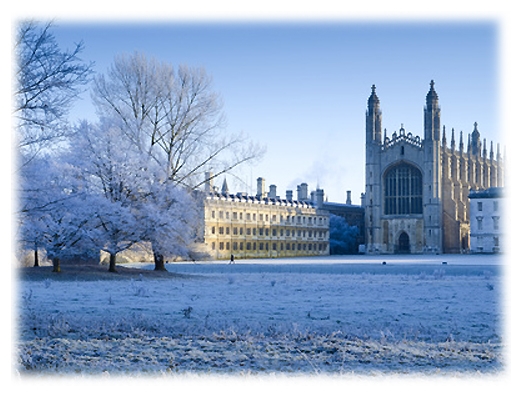
One of the men, Donald MacLean (1913 – 1983) had been working in various trusted positions within the British diplomatic corps since 1934, but his handlers in Moscow called him Homer. The other Englishman, Guy Burgess (1911 – 1963) began working for the Foreign Office in 1944; the KGB called him Hicks. The two men were members of a spy ring that would soon be known as the Cambridge Four (the other two being Kim Philby and Anthony Blunt. In later years a fifth spy would surface: Roland Perry. All of them were recruited by the Soviets while attending Cambridge University in the 1930s).


The information that was fed to the journalist who wrote the attached article was clearly meant to disguise the fact that all the Western intelligence agencies were totally freaking out.

Advertisement

Use shortcode [oma_ad position="summary_top"] (or other position) in your theme or widgets to display OMA Promotions here.

Hair Fashions of the Early 1950s (People Today, 1952)
1950s Fashion, 1952, People Today Magazine

Hair Fashions of the Early 1950s
(People Today, 1952)

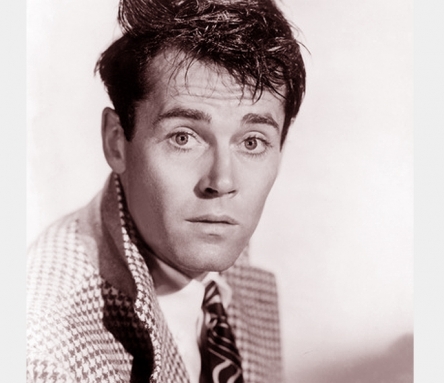
Keep it short: that was the M.O. of the hairdressers of the Fifties (as you, no doubt, gathered from this 1949 article) – and this column, accompanied by eight photos, serves as proof. Much of this column pertains to the men who were active in 1952 hair dressing, and their deep thoughts pertaining to pny tails, perms and poodle-cuts.

Click here to read about the short hair craze of the late Forties.

1950 Vietnam War | French Foreign Legion in Vietnam | French Combat in Vietnam
1950, Pathfinder Magazine, The Vietnam War

‘Uncle Ho Strikes Back”
(Pathfinder Magazine, 1950)

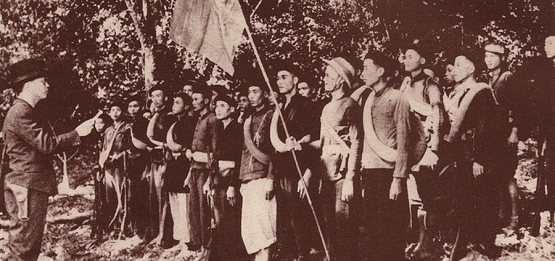
Three years before the total French withdrawal from Vietnam, this one Frenchman summed up his comrade’s frustrations concerning their battles against the Viet Minh:

We can’t win a guerrilla war unless we have the support of the people. Frankly, we have not got it. Hitler or the Russians could conquer this country in two months with mass executions, wholesale reprisals and concentration camps. To fight this war and remain humanitarian is difficult.

Advertisement

Use shortcode [oma_ad position="summary_top"] (or other position) in your theme or widgets to display OMA Promotions here.

Fascist Dictators Called for Higher Birthrate
1937, Pathfinder Magazine

More Babies, Please
(Pathfinder Magazine, 1937)

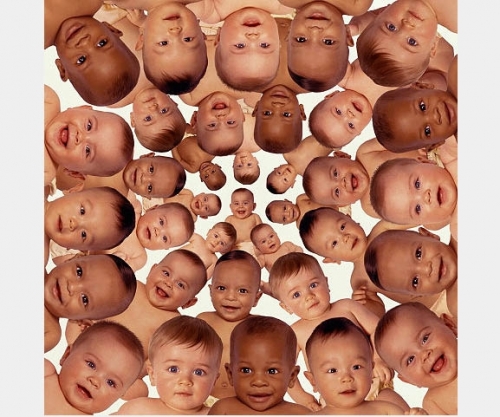
Italy, Germany and Russia, leading exponents of Europe’s Fascist and Communist camps, have each asked for more prolific mothers and decreed measures designed to fetch in the bambini, kinder and kodomos. Their dictator’s desires for more babies and still more babies have developed into a population race.


Click here to read about the Nazi struggle to increase their birthrate…

Above Verdun (Cambridge Magazine, 1916)
1916, Letters, The Cambridge Magazine

Above Verdun
(Cambridge Magazine, 1916)

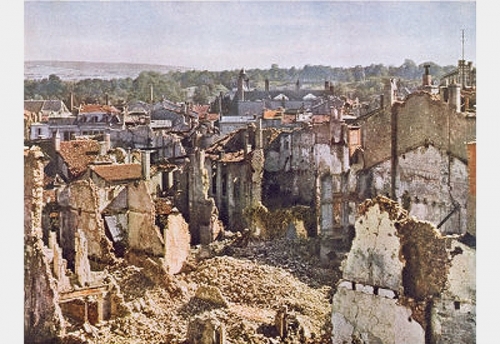
ARBEITER ZEITUNG, a Viennese newspaper, quoted the following swelled with hubris recalling his flight over crushed French Village in the Verdun sector:

I felt like a king, loaded with my bombs… I flew over Saint Privat quite low, so that I could see all the houses, and if I dropped my bombs there, I should have been able to to destroy half the village…

Advertisement

Use shortcode [oma_ad position="summary_top"] (or other position) in your theme or widgets to display OMA Promotions here.

Jacqueline Kennedy Private Life
1970, Jackie, Pageant Magazine

The Unknown Jackie Kennedy
(Pageant Magazine, 1970)

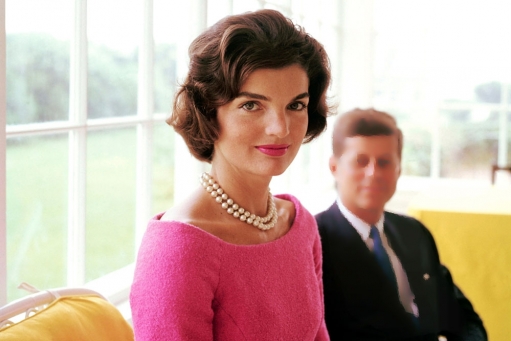
Seven years must have seemed an appropriate amount of time to withhold information concerning the generally unpleasant character traits that were apparent in First Lady Jackie Kennedy – and so in 1970 Washington writers Lucianne Goldberg and Fred Sparks put pen to paper and recalled all the minutiae they could piece together regarding her Elegance.

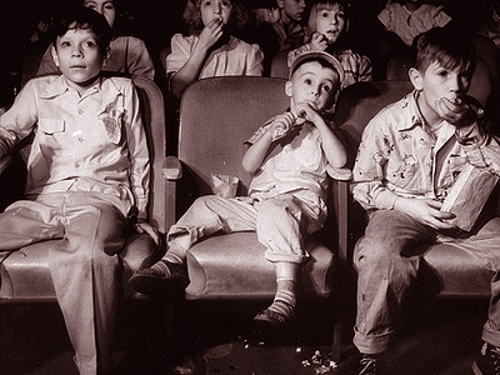
Popcorn Finds a Home at the Movies (Quick Magazine, 1952)
1952, Americana, Quick Magazine

Popcorn Finds a Home at the Movies
(Quick Magazine, 1952)

Popcorn was introduced as a snack food to American movie-goers as a result of the candy shortages during the earliest years of the Second World War.


Attached is a petite notice documenting the fact that the substitute was a wise one:

By 1952, movie houses accounted for about one-third of the nation’s annual $350 million retail popcorn sales.


Reference is also made to the efforts that were made to secure noiseless popcorn bags.


If popcorn replaced sweets on the home front, what replaced steak?

Advertisement

Use shortcode [oma_ad position="summary_top"] (or other position) in your theme or widgets to display OMA Promotions here.

Scroll to Top