Author name: editor

Sportscaster (Quick Magazine, 1949)
1949, Early Television, Quick Magazine

Sportscaster
(Quick Magazine, 1949)

It isn’t a sports show; it’s entertainment for the same kind of people who listen to Jack Benny


– thus said the sportscaster Bill Stern (1907 – 1971) – who is remembered in our age as the announcer to broadcast the nation’s first remote sports broadcast and the first telecast of a baseball game.

Charlie Chaplin Joins With Pickford, Fairbanks and Griffith to Form United Artists (Film Daily, 1939)
1939, Charlie Chaplin Articles, Film Daily Magazine

Charlie Chaplin Joins With Pickford, Fairbanks and Griffith to Form United Artists
(Film Daily, 1939)

Restless with the manner in which the film colony operated, Chaplin joined forces with three other leading Hollywood celebrities to create United Artists; a distribution company formed to release their own films. Attached is a printable history of United Artists spanning the years 1919 through 1939 which also outlines why the organization was so original:

[United Artists] introduced a new method into the industry. Heretofore producers and distributors had been the employers, paying salaries and sometimes a share of the profits to the stars. Under the United Artists system, the stars became their own employers. They had to do their own financing, but they received the producer profits that had formerly gone to their employers and each received his share of the profits of the distributing organization.

Advertisement

Use shortcode [oma_ad position="summary_top"] (or other position) in your theme or widgets to display OMA Promotions here.

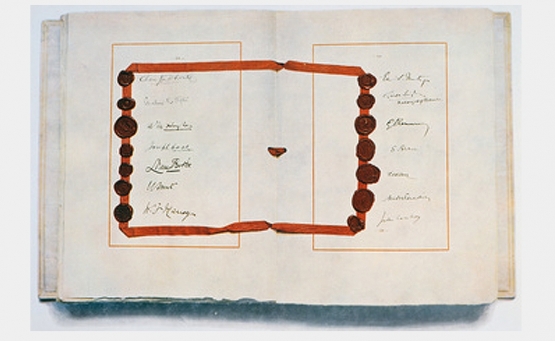
The Demands of the 1918 Armistice (The Stars and Stripes, 1918)
1918, Armistice, The Stars and Stripes

The Demands of the 1918 Armistice
(The Stars and Stripes, 1918)

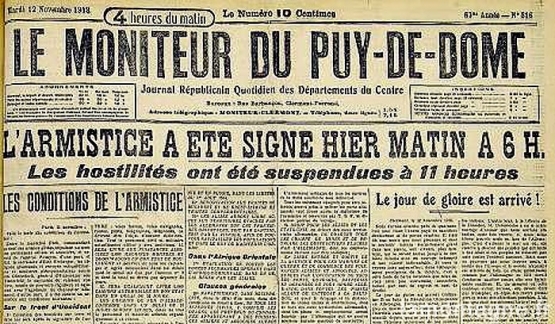
Attached herein are the terms of the 1918 Armistice as they appeared in the official newspaper of the American Expeditionary Forces:

The complete official translated text of the Armistice conditions to which the German plenipotentiaries set their signature is herewith reproduced:

1.) Cessations of operations by land and in air six hours after the signature of armistice.


II.)Immediate evacuation of the invaded countries…

etc, etc, etc…


There Are Additional Magazine
Articles About W.W. I

1918: An Armistice Remembrance (American Legion Monthly, 1936)
1936, Armistice, The American Legion Monthly

1918: An Armistice Remembrance
(American Legion Monthly, 1936)

St. NAZAIRE, 1918. It was eleven in the morning when we first heard the news. A piercing whistle from one of the steamers in the harbor, a sudden blast so loud and so startling that even the nurses in their rest camp in La Baule fifteen kilometers away could hear it…L’ARMISTICE EST SIGNÉ…by noon the entire town was outdoors; a truck load of German prisoners rolled past, apparently quite as happy as the rest of us.

Advertisement

Use shortcode [oma_ad position="summary_top"] (or other position) in your theme or widgets to display OMA Promotions here.

German Dugouts (L'Illustration, 1915)
1915, L'Illustration Magazine, World War One

German Dugouts
(L’Illustration, 1915)

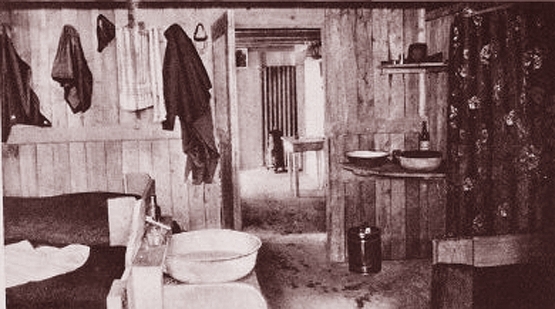
A 1915 diagram from a French news magazine depicting the depth of a German front-line dugout. John Laffin makes it quite clear in his World War One book, The Western Front Companion:<img src=http://www.assoc-amazon.com/e/ir?t=oldmagazinear-20&l=as2&o=1&a=075091520X width=1 height=1 border=0 alt= style=border:none !important; margin:0px !important;:, that the term dugout seems misleading when applied to the Germans:

From 1915, the remarkably well developed German positions, notably on the Somme front, reflected their strategic advantage. They were on enemy soil, the Germans held the initiative and they could afford to settle down in their dugouts. Hence, most had electricity, drainage, sewage system, piped water, a telephone system and many were heated. The soldiers could lie down on mattresses resting on beds made of stacking stretched over wooden frames, and -and because of deep overhead cover – 30 to 40 feet of it, they were safe even during heavy shell fire.


This article appears on this site by way of a special agreement with L’Illustration.

Click here to see a 1915 ad for British Army military camp furniture.


Click here to read an article about life in a W.W. I German listening post…

The Cockpit of the Giant Goltha Bomber (j'ai vu..., 1918)
1918, Inventions and Weapons

The Cockpit of the Giant Goltha Bomber
(j’ai vu…, 1918)

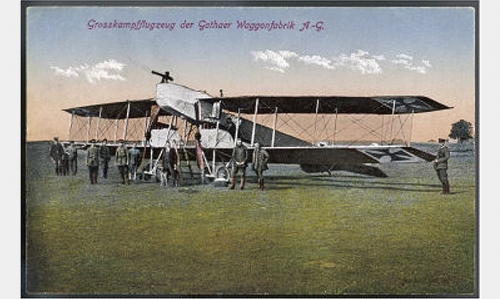
During the spring of 1917 the Germans developed a squadron of large aircraft capable of dropping 660-pound bombs on London -and drop them they did, killing as many as 788 human beings between May of 1917 and May of 1918. The Giant Goltha Bombers conducted these raids primarily at night and utterly terrified the East End of London. Eventually, German losses escalated and the London raids were canceled in favor of Paris and various other French targets. In 1917 this image of a Goltha cockpit appeared in the French press.

Click here to read an article about the development of aerial reconnaissance during W.W. I.

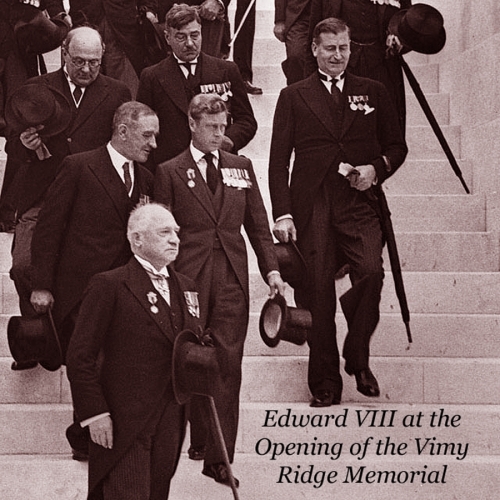
The Monument at Vimy Ridge (The Literary Digest, 1936)
1936, Aftermath (WWI), The Literary Digest

The Monument at Vimy Ridge
(The Literary Digest, 1936)

The attached article was written nineteen years after the smoke cleared over Vimy Ridge and succinctly tells the story of that battle in order that we can better understand why thousands of Canadian World War One veterans crossed the ocean a second time in order to witness the unveiling of the memorial dedicated to those Canadians who died there:

Walter S. Allward (1876 – 1955), Canadian sculptor, worked fourteen years on the completion of the monument, which cost $1,500,000.

The article also touches upon some of the weird events that have taken place at Vimy Ridge since the war ended…


Click here to read an article about the German veterans of W.W. I.

Advertisement

Use shortcode [oma_ad position="summary_top"] (or other position) in your theme or widgets to display OMA Promotions here.

Arranged Marriages to Seal the Peace in the Balkans (Dress and Vanity Fair Magazine, 1913)
1913, Prelude, Vanity Fair Magazine

Arranged Marriages to Seal the Peace in the Balkans
(Dress and Vanity Fair Magazine, 1913)

When the attached article first appeared in print the Balkan War (1912 – 1913) was over, however some of the swells of Europe put their crowned heads together and collectively came up with the best Medieval plan they could think of in order to insure the promise of peace in the region.


It was agreed that the Czar’s daughter, Grand Duchess Olga (1895 – 1918), would wed Serbia’s Crown Prince Alexander (1888 – 1934); while the Czar’s second daughter, Grand Duchess Tatiana (1897 – 1918) was promised to Romania’s Crown Prince Charles (1893 – 1959). All concerned felt that Romania’s Princess Elizabeth (1894-1956) and Crown Prince George of Greece (1890 – 1947) would make a simply splendid couple (they divorced in 1935).

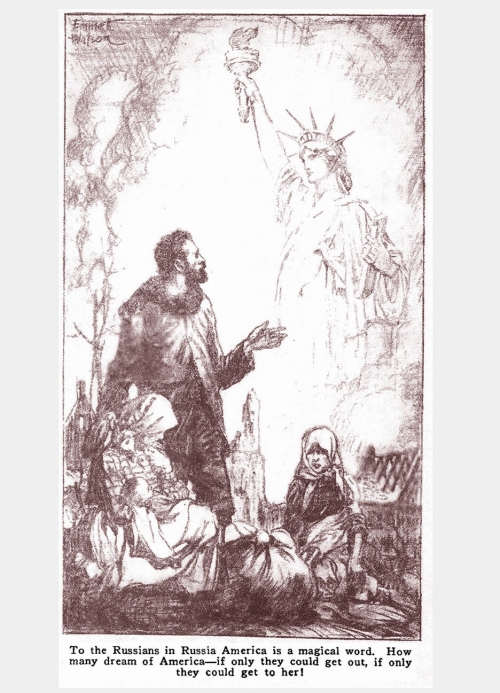
America Hates Poor Immigrants |
1922, Immigration History, The American Legion Weekly

Closing The Golden Door
(American Legion Weekly, 1922)

If you’ve been in search of an historical article that clearly indicated that Americans were irked by white immigrants just as much as they’ve been bugged by non-white immigrants – then search no more. The journalist who penned this 1922 column chides the U.S. Government, and the people who granted them authority, for the difficulties that were placed in the path of all the various poor European migrants yearning to breathe free:

Whilst it does seem most expedient to curtail immigration, it ought to be done in a way which would impose least hardship on those who after all have had a supreme belief in America. One of America’s weaknesses lies in red tape, did it need to be said; another lies in a sort of contempt for the poor whites of Europe – the ‘Wops’ and the ‘K*k*s’ and the ‘Dagoes’ and ‘Hunkies’ and the rest. They are unfortunate – after all, that is the chief thing against them.

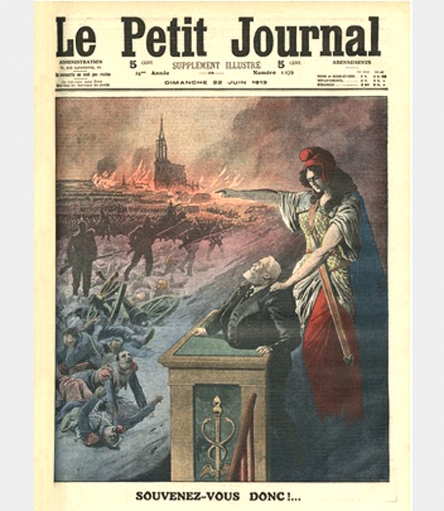
France, Germany & Alsace-Lorraine (Literary Digest, 1900)
1900, Prelude, The Literary Digest

France, Germany & Alsace-Lorraine
(Literary Digest, 1900)

A printable article that illustrated the sensitive diplomatic status existing between France, Britain and Germany in 1900 when France was still smarting from their humiliating defeat in the Franco-Prussian War; recently allying themselves with Imperial Russia, Germany felt extremely ill at ease. The kaiser’s diplomats remarked openly that Britain, as the abusive tormentors of the Boer farmers in South Africa, were not likely to be on friendly terms with Germany any time soon.

Advertisement

Use shortcode [oma_ad position="summary_top"] (or other position) in your theme or widgets to display OMA Promotions here.

The Feminist Rebellion of the Twenties (The Dilineator, 1921)
1921, Aftermath (WWI), The Dilineator

The Feminist Rebellion of the Twenties
(The Dilineator, 1921)

It was estimated that there were as many as two million empty seats around the collective family dinner tables in Post World War One Britain. Such an absence of young men could not help but lead to a new social arrangement:

England is the great human laboratory of our generation – England with her surplus of two million women, her restless, well-equipped, unsatisfied women.


Too many European women were unable to find husbands and moved to America.

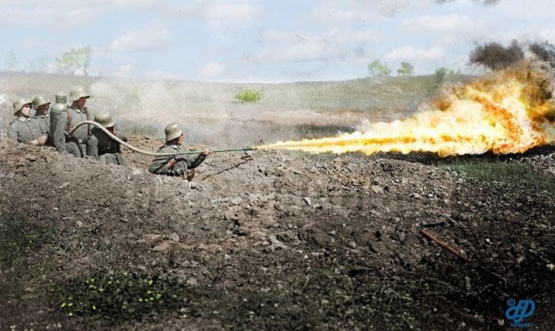
WW1 German Flame-Thrower Article | 1916 Flammenwerfer | Flame-Thrower History
1916, Inventions and Weapons, The Literary Digest

Liquid Fire
(Literary Digest, 1916)

– A well-illustrated article which sought to explain to American readers the workings of one of the most heinous inventions of the First World War:

This idea of projecting upon the adverse trenches and their occupants a rain of liquid fire was no sudden afterthought of the German mind. It was conceived, studied, and perfected for several years before the war, and its history may be traced in the German patent office.

Women's Overseas Corps of WW1 | US Labor Bureau SERVICE of SUPPLY World War One 1918 | WW1 Women Volunteers
1918, The Stars and Stripes, Women (WWI)

The Women’s Overseas Corps
(The Stars and Stripes, 1918)

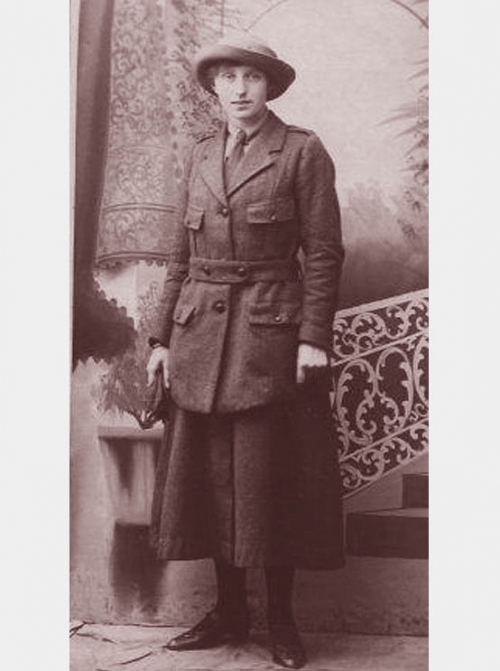
Five thousand women are to be brought from the United States to be a part of the American Expeditionary Forces…The Women’s Overseas Corps (WOCS) will consist of companies of 50 women each. The members of the WOC will be under soldierly discipline and wear uniforms…It is not expected that they will march in formation or observe the formalities of the salute.

These women were recruited by Miss Elsie Gunther of the Labor Bureau in order to relieve the men posted to the Service of Supply of their clerical duties for service at the front; in light of the fact that the war ended six weeks later it is unlikely that the these women ever arrived.

Advertisement

Use shortcode [oma_ad position="summary_top"] (or other position) in your theme or widgets to display OMA Promotions here.

American losses in World War I American WW I Deaths from Disease I How Many Americans Were Killed in WW I
1922, The American Legion Weekly, World War One

The American Death Record
(American Legion Weekly, 1922)

Statistics of the World War prove, however, that war was, from the standpoint of mortality, not vastly different from other wars. In spite of the improvements in methods of killing by machinery,Nature managed to runup a higher score than the enemy’s bullets and shells. The Surgeon General of the Army, at the request of The American Legion Weekly, has prepared the following figures for the period of the war, from April 1, 1917 to December 31, 1919.

College Essentials (Quick Magazine, 1952)
1950s Fashion, 1952, Quick Magazine

College Essentials
(Quick Magazine, 1952)

Here are a few short paragraphs accompanied by nine images concerning what the college girls of the early Fifties were wearing:

A girl can still get into college with a sweater and skirt, but for full credit she needs quantities of gadgets. For campus, girls stick to classic Brooks Brothers sweaters, pleated skirts, blue jeans – but go wild on accessories and underwear novelties…


The journalist then went to some effort listing many of the fashionable essentials: stamp bracelets, rhinestone handcuff bracelets, silk pleated turtleneck sweaters and harness-neck bib fronts – all to die for.

1918, Stars and Stripes Archive, The Stars and Stripes

The American Army Occupies Coblenz, Germany
(The Stars and Stripes, 1918)

On the afternoon of December 8, 1918, the troops of the Third American Army entered Koblenz. This was the goal of the occupation. The Yankees had reached the Rhine.

Probably never in all its stressful history did enemy troops enter it so in quite the matter-of-fact manner which marked the American entry last Sunday. There was no band. There were no colors. ‘We’re just going in sort of casual like,’ one of our generals had said the day before, and he was right.

Advertisement

Use shortcode [oma_ad position="summary_top"] (or other position) in your theme or widgets to display OMA Promotions here.

Scroll to Top