Author name: editor

Bush Family Dynasty | Bush Family Weddings
1921, Manners and Society, Vogue Magazine

The Bush Wedding, Kennebunkport
(Vogue Magazine, 1921)

These days the Bush family is not much in vogue, but that was not always the case.


Attached is a small notice from a 1921 issue of VOGUE MAGAZINE announcing the marriage of George Herbert Walker’s daughter, Dorthy, to a Mr. Prescott Sheldon Bush in Kennebunkport, Maine. From this union would spring two U.S. Presidents, one Florida governor, and one Chief Executive of the Municipal Opera Association.

'The Nisei Problem'' (Yank Magazine, 1945)
1945, Japanese-American Internment, Yank Magazine

‘The Nisei Problem”
(Yank Magazine, 1945)

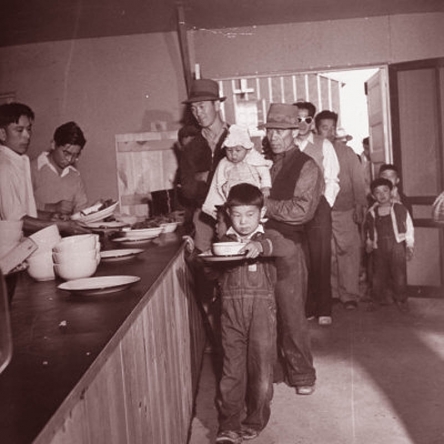
An interesting article, written with a sense of embarrassment regarding the injustice done to the Japanese-Americans, and published a few weeks shy of VJ-Day. The article reports on how the former internment camp families were faring after they were released from their incarceration. 55,000 Japanese-Americans chose to remain in the camps rather than walk freely among their old neighbors; one man, Takeyoshi Arikawa, a former produce dealer, remarked:

I would like to take my people back home, but there are too many people in Los Angeles who would resent our return. These are troubled times for America. Why should I cause the country any more trouble?


Important references are made concerning those families who had lost their young men serving in the famed 442 Regimental Combat Team: a U.S. Army unit composed entirely of Nisei that was awarded a Presidential Unit Citation for it’s fortitude displayed in Italy, France and Germany.

Advertisement

Use shortcode [oma_ad position="summary_top"] (or other position) in your theme or widgets to display OMA Promotions here.

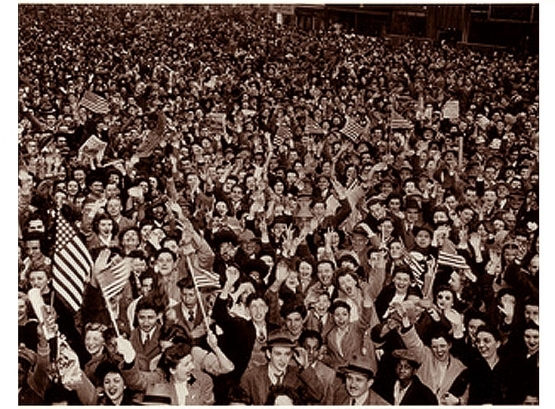
VJ Day in New York City (Yank Magazine, 1945)
1945, VJ Day, Yank Magazine

VJ Day in New York City
(Yank Magazine, 1945)

…On, on, on it went into the night and the next night as the biggest city in the world went its way toward picking up the biggest hangover in its history. It was a hangover few would ever regret.


Click here if you would like to read an article about the VE Day celebrations in Europe.


Click here if you would like to read about the VE Day celebrations in the United States.

Advertisement

Use shortcode [oma_ad position="summary_top"] (or other position) in your theme or widgets to display OMA Promotions here.

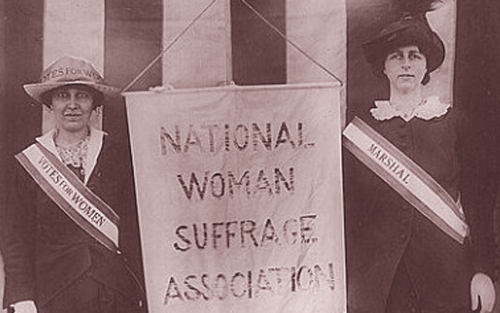
1894 Suffrage Politics | National Woman-Suffrage Association and Local Politics 1894
1894, The Literary Digest, Women's Suffrage

The Suffragettes Appeal To The States
(Literary Digest, 1894)

This article tells the story of Susan B. Anthony, Dr. Anna Howard Shaw and the gang as they worked the state conventions in a effort to gain the right to vote. In states with large Republican majorities, they swore to vote vote Republican, in states with large Democratic majorities they promised to support that party:

The State Woman-Suffrage Association should remain non-partisan and each individual woman should feel free to ally herself with whatever party she approves.

Explaining Abstract Art (Pageant Magazine, 1950)
1950, Modern Art, Pageant Magazine

Explaining Abstract Art
(Pageant Magazine, 1950)

WHY DO THEY DISTORT THINGS? CAN’T THEY DRAW? WHY DO THEY
PAINT SQUARES AND CUBES?


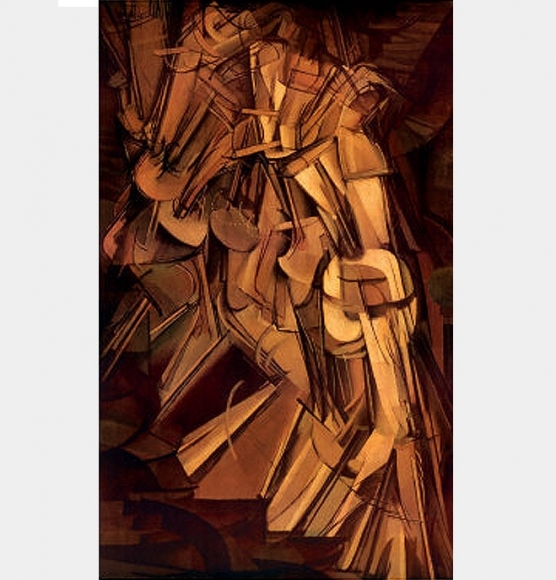
In an effort to help answer these and many other similar questions that are overheard in the modern art museums around the world, authors Mary Rathbun and Bartlett Hayes put their noodles together and dreamed up the book (that is available at Amazon) Layman’s Guide to Modern Artstyle=border:none, and we have posted some of the more helpful portions here, as well as 17 assorted illustrations to help illustrate their explanations.


The authors point out that abstract images are not simply confined to museums and galleries but surround us every day and we willingly recognize their meanings without hesitation:

Lines picturing the force and direction of motion are a familiar device in cartoons… The cartoonist frequently draws a head in several positions to represent motion. Everybody understands it. The painter multiplies the features in the same way… Everybody abstracts. The snapshot you take with your [camera] is an abstraction – it leaves out color, depth, motion and presents only black-and-white shapes. Yet its simple enough to recognize this arrangement of shapes as your baby or your mother-in-law or whatever…

Artist Paul Cadmus (Art Digest, 1937)
1937, Modern Art, The Art Digest

Artist Paul Cadmus
(Art Digest, 1937)

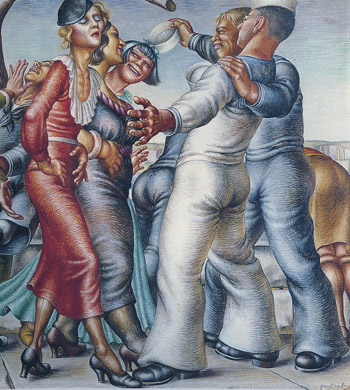
A late Thirties art review of Paul Cadmus (1906 – 1999), one of the finest and most scandalous artists of the W.P.A.:

Paul Cadmus was thrust into national prominence at the age of 26 when his canvas, ‘The Fleets In’, painted for PWAP in 1933, stirred up a storm of protest. Since then controversies have dogged his art but with them has come recognition…Like the contemporary writers Thomas Wolfe and Aldous Huxley the reaction of Cadmus against present day ‘civilization’ is one of repulsion tinged with hatred. This note of protest seems to be the battle cry of the younger generation of artists and writers. Mrs Overdressed Middle class to be viewed by the public…

Advertisement

Use shortcode [oma_ad position="summary_top"] (or other position) in your theme or widgets to display OMA Promotions here.

A Letter from a Bombardier in the French Air Corps (Vanity Fair, 1916)
1916, Letters, Vanity Fair Hall of Fame

A Letter from a Bombardier in the French Air Corps
(Vanity Fair, 1916)

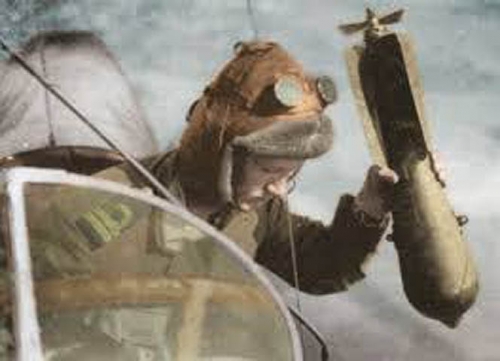
In the attached letter from the artist Bernard Boutet de Monvel (1884 – 1949), the artist explains thoroughly his thoughts and adventures as an bombardier in a Vosin biplane; experiences which contrast greatly with his days in the trenches and he writes well on the feelings of lonliness that an aviator can experience at 2000 feet.

For those who are interested in learning about the living conditions and daily life of World War One pilot officers this article can only help you. Click here

Picasso Painted Me ('48 Magazine, 1948)
1948, 48 Magazine, Modern Art

Picasso Painted Me
(’48 Magazine, 1948)

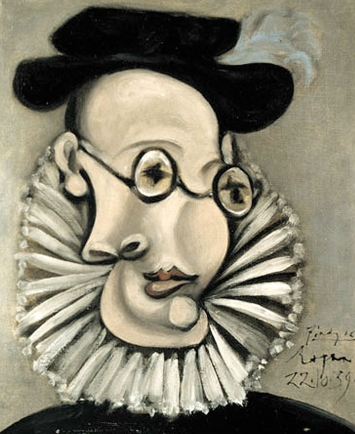
Artist and poet Jaime Sabartés (1881 – 1968) had been among the oldest and closest friends of Pablo Picasso since the two of them were 19-year-old artists in Barcelona. Throughout the course of their 40-year friendship Picasso had painted and drawn his pal on numerous occasions – Sabartés’ comments about those six portraits and his memories of those isolated moments appear on the attached pages. He recalled a day when Picasso energetically encouraged him to write down his thoughts, which in time lead to this article, that appeared in his 1948 book, PICASSO: an Intimate Portraitstyle=border:none:

I decided, therefore, to take these portraits as texts, to try to imbue with warmth Picasso’s pictures of me, to make them live anew, to enrich them with fragments from the life of their creator and shreds of my own.


A Picasso poem is included among the reminiscence (translator unknown).


A forgotten article from 1913 that degraded Picasso and other assorted Modernists can be read here.

Women s Uniforms WW I | WW1 American Uniforms for Women Volunteers
1918, Touchstone Magazine, Women (WWI)

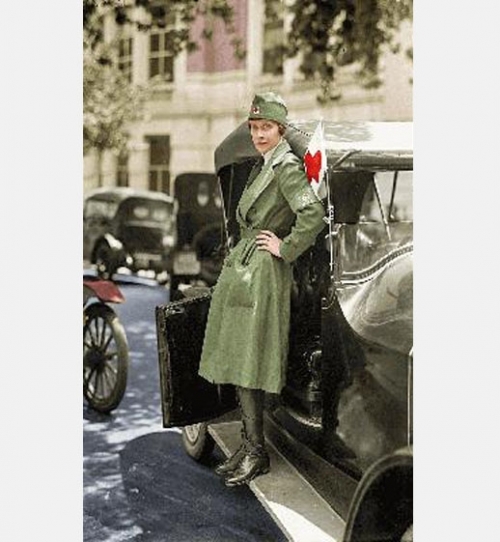
The Uniforms of Women War Workers
(Touchstone Magazine, 1918)

Well-over 30,000 women participated in the United States war effort during World War One. The majority served as nurses, but there were also impressive numbers who volunteered to do their bit as drivers and telephone operators. Many chose to serve in the religious organizations, such as the Y.M.C.A., the Knights of Columbus or the Jewish Welfare Board. They all needed uniforms and that is what this well-illustrated article addresses. Never before had there been such a conflict requiring uniforms be cut in women’s sizes, and this matter was not simply new to American women, it was a new day in human history as well.

The background of women’s service uniforms is war, war of the most terrible kind.


How unseemly any attempt to make the costume pleasing to the eye.

Click here to visit an interesting site dealing with the history of American servicewomen.


If you would like to read about the U.S. Army uniforms for women during W.W. II, click here…


Dressed for Duty: America’s Women in Uniform, 1898-1973style=border:none

Advertisement

Use shortcode [oma_ad position="summary_top"] (or other position) in your theme or widgets to display OMA Promotions here.

The Future of War and Chemical Weapons (Current Opinion, 1921)
1922, Poison Gas, The American Legion Weekly

Gassing The Germans
(American Legion Weekly, 1922)

This is the story of the First Gas Regiment. It was organized at American University (Washington, D.C.) in August of 1917 and arrived in France in time to disperse noxious gas all over the Germans as they launched their March offensive in 1918:

Company B of the First Battalion was the outfit that participated in the first show. The attack was launched on a two-mile front extending from Lens to Hill 70 near Loos, and held by the Canadians… It was a tough job. The nature of the work was graphically described by a Yankee buck, who said in a moment of disgust: ‘This is a job for grave diggers, hod carriers and piano movers, instead of chemists, pipe fitters and mechanics.

1940, Collier's Magazine, Hollywood History

Mickey Rooney, RIP
(Collier’s Magazine, 1940)

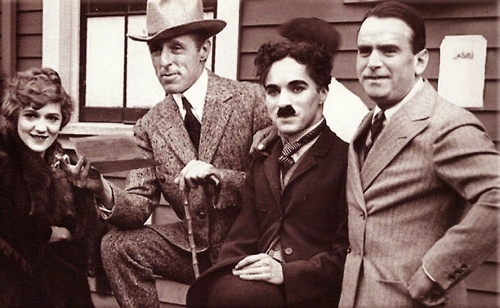
In 1940 Mickey Rooney (né Joe Yule, Jr.; b. 1920 – 2014) had replaced Shirley Temple as the number one box-office draw, after having steadily performed before the cameras from the age of six onward. Rooney had been jockeying for first place since he began playing the title roll in the Andy Hardy films just two and a half years earlier.


With the onslaught of the Second World War the sands of Hollywood shifted beneath his feet, creating a plethora of new stars and the need for different sorts of films – from that point on he only appeared in supporting rolls. In 1982 Rooney remarked:

When I was 19 years old, I was the number one star of the world for two years. When I was 40, nobody wanted me. I couldn’t get a job.

Advertisement

Use shortcode [oma_ad position="summary_top"] (or other position) in your theme or widgets to display OMA Promotions here.

Excursions Into Hunland (Vanity Fair, 1918)
1918, Aviation History, Vanity Fair Hall of Fame

Excursions Into Hunland
(Vanity Fair, 1918)

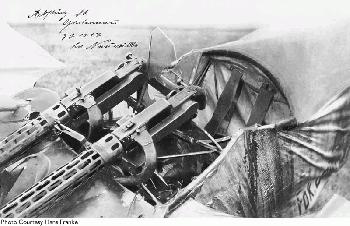
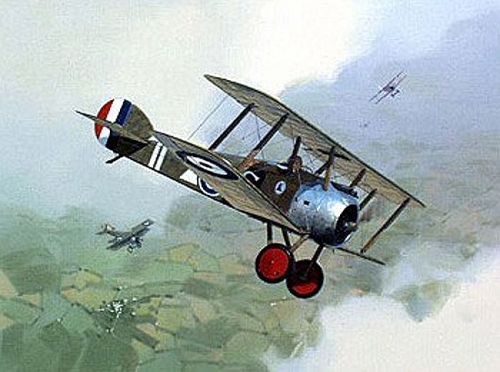
An American fighter pilot of the R.F.C., Lieutenant E.M. Roberts, gave this account of the deadly game of Boche-hunting above the clouds:

I noticed he was going down a little, evidently for the purpose of shooting me from underneath. I was not quite sure as yet that such was really his intention; but the man was quick…he put five shots into my machine. But all of them missed me.

I maneuvered into an offensive position as Quickly as I could, and I had my machine gun pelting him…The Hun began to spin earthward.

Southern States During the Great Depression | 1930s Hard Times in the Southern States
1938, Pathfinder Magazine, The Great Depression

The Great Depression in the South
(Pathfinder Magazine, 1938)

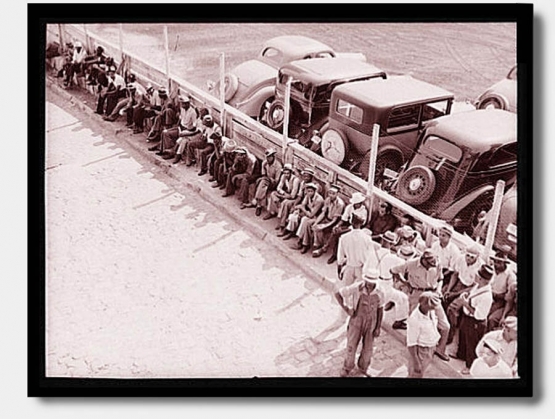
In the Summer of 1938 the New Deal administration turned its attention to the Southern States in an effort to solve the poverty that had long afflicted the region and was especially keen during the Great Depression:

The War Between the States freed the slaves, but it did not free the South. Old plantations were broken up. Pressed to meet mortgages, farmers leased part of their farms to tenants. Cheap [African-American] labor remained and children were pressed into service on the Southern fields. Cotton and low labor costs stayed in the South.


Read about FDR’s African-American advisers here…

Advertisement

Use shortcode [oma_ad position="summary_top"] (or other position) in your theme or widgets to display OMA Promotions here.

Scroll to Top