Author name: editor

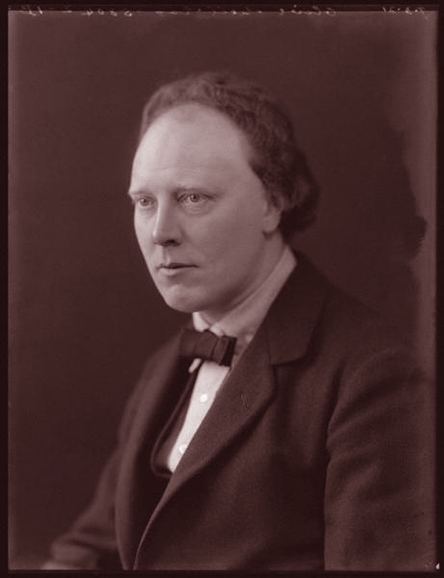
Rudyard Kipling Literary Contributions Assessed | Philip Guedallia Vanity Fair Magazine 1923
1923, Twentieth Century Writers, Vanity Fair Magazine

Rudyard Kipling
(Vanity Fair Magazine, 1923)

Literary critic Philip Guedallia (1889 – 1944) reluctantly concluded that the contributions of Rudyard Kipling (1865 – 1936) to the world of letters were genuine – and, no matter what you think of him, his writing will be around for a good while.


“He sharpened the English language to a knife-edge, and with it he has cut brilliant patterns on the surface of our prose literature.”

Advertisement

Use shortcode [oma_ad position="summary_top"] (or other position) in your theme or widgets to display OMA Promotions here.

NY Times Review of Cubist Art 1913 | Julian Street 1913 Art Review
1913, Cubism, NY Times

Academy of Misapplied Art Assailed Cubism
(NY Times, 1913)

Once upon a time there was a short-lived organization in New York City created to lampoon works of art hailed by the critics as worthy creations. They called themselves The Academy of Misapplied Art and they held their exhibits in the lobby of the Light House for the Blind. Attached herein is the N.Y. Times review of their 1913 exhibit intended to make light of the European Cubists.

NULL
1941, Collier's Magazine, World War Two

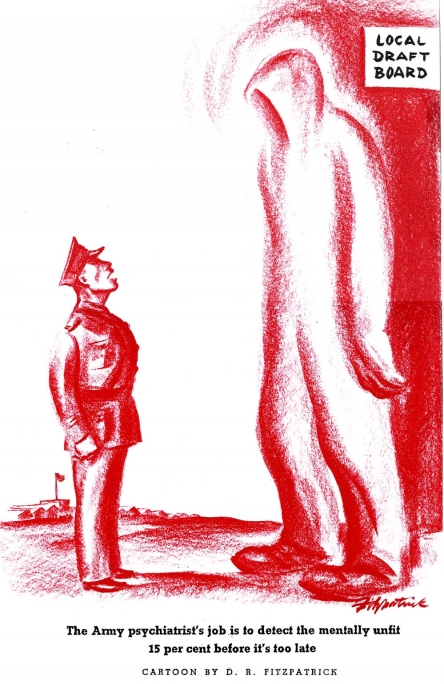
Weeding-Out the Nuts from the Draft Pool
(Collier’s Magazine, 1941)

As America was gearing up to fight another world war, the brass caps were reminded how incapable they were at identifying and isolating the mental incompetents during the last war, and they swore this war would be different. Numerous military and civilian psychiatrists were convened, and it was concluded that of the millions of men called, at least 15 percent would likely be off-their-rockers.
Advertisement

Use shortcode [oma_ad position="summary_top"] (or other position) in your theme or widgets to display OMA Promotions here.

Clive Bell Art Review on the Cubists | Cubism Reviewed by Clive Bell 1923
1923, Cubism, Vanity fair

The Rise and Fall of Cubism
(Vanity fair, 1923)

Numerous deep thoughts on the subject of Cubism by a prominent art critic of the time, Clive Bell (1881 – 1964):


“But, though in two or three years’ time Cubism may have disappeared, its influence should endure for a generation at least. The service it has rendered art is inestimable. Without it the liberating impulse given by Cezanne had been incomplete. Cezanne freed artistic sensibility from a hampering and outworn convention; Cubism imposed on it an intelligent and reasonable discipline. If a generation of free artists is now turning spontaneously towards the great tradition, it was through Cubism that it came at Ingres and Poussin.”

Advertisement

Use shortcode [oma_ad position="summary_top"] (or other position) in your theme or widgets to display OMA Promotions here.

First German POW Taken in 1941 | September 1940 USCG Fought in North Atlantic | USCG Cutter NORTHLAND Captures BUSCO 1941
1945, Philadelphia Record, World War Two

The Coast Guard Fired the First Shot
(Philadelphia Record, 1945)

“Philadelphia Coast Guardsmen yesterday observed the surrender of Germany by recalling that their branch of service fired the first American shot in the war against Germany, capturing the first enemy ship and taking the first Nazi prisoner… It was in September, 1941, that the Coast Guard cutter Northland captured the Norwegian freighter Busko, loaded with equipment for a German weather station to be established in Greenland.”

US Government Health Insurance Debate 1945 |
1945, Collier's Magazine, The Nanny State

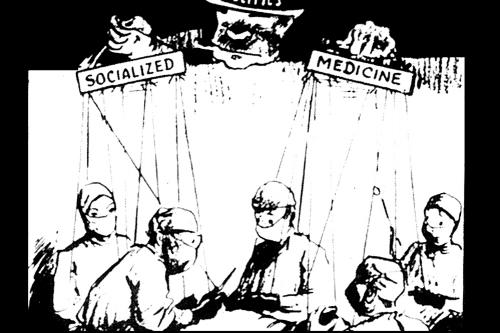
Weighing the Pros and Cons of Socialized Medicine
(Collier’s Magazine, 1945)

Here is an in-depth examination as to whether or not government-sponsored healthcare was suitable for post-war America. Written by a journalist who was decidedly for the proposal, you will not be surprised to read the same exact arguments were presented on both sides as they were during the Obama years.


“The bill’s friends argue that tax-supported medicine is no more un-American than tax-supported education.”

Advertisement

Use shortcode [oma_ad position="summary_top"] (or other position) in your theme or widgets to display OMA Promotions here.

Free College Education Considered Under Harry Truman
1948, Pathfinder Magazine, President Truman

Free College?
(Pathfinder Magazine, 1948)

The concept of a free college education paid for by the Federal Government was not the brain child of the Vermont Marxist Bernie Sanders, but an idea that was briefly pursued by the education advisers of U.S. President Harry S Truman:


“Today the average American of 20 – 24 years of age has completed 12.1 years of schooling, an all-time high…Last week the President’s Commission on Higher Education issued a report aimed at pushing the average still higher. It urged that free public education be extended through the first two years of college.”


Even as early as 1894 socialism was recognized as wishful thinking.

Advertisement

Use shortcode [oma_ad position="summary_top"] (or other position) in your theme or widgets to display OMA Promotions here.

First Election Planned for Post-Fascist Japan | Japanese Women Get the Vote 1945
1945, Philadelphia Record, Post-War Japan

First Election Planned for Post-Fascist Japan
(Philadelphia Record, 1945)

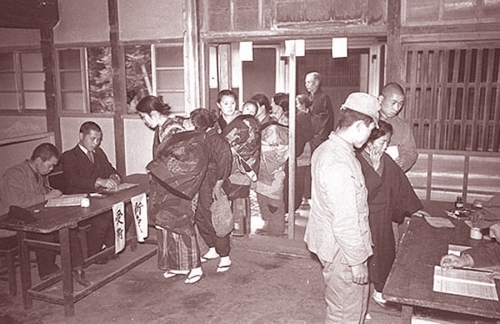
“The Japanese Cabinet decided yesterday a general election will be held January 20 to 31 [1946], and the Tokyo newspaper Yomuri Hochi urged ‘spontaneous and vigorous action’ toward forming a democratic government.”

Wanting the Japanese Cabinet to know who was in charge, General MacArthur moved the date up to December seventeenth [1945]. It was the first time Japanese women had ever voted.

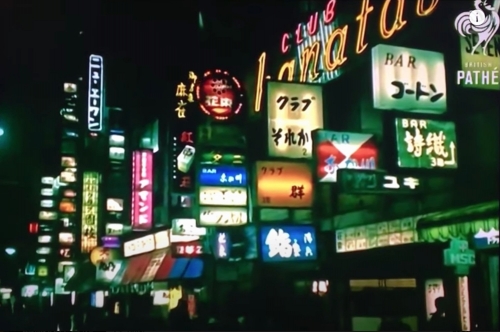
Re-Armed Japan 1956 | 1956 Japanese Politics
1956, Collier's Magazine, Post-War Japan

VJ-Day + 11 Years
(Collier’s Magazine, 1956)

“The new Japan is fermenting a mash of new ideas and old customs. It is mixing political democracy with feudal loyalties, free enterprise with giant monopolies, and several shades of Marxism with a hankering for the good old days. The nation that once meekly did what a handful of leaders told it to do is now outspokenly divided on every major issue… For seven Occupation years the Japanese had no choice of sides. We ran the country and fed them slabs of democracy sandwiched between $2,500,000,000 worth of relief and rehabilitation. Japan enjoyed our help and even digested a good deal of the democracy. But when the Occupation lid came off in 1952 it revealed a country weary of being told what to do, curious to taste the forbidden fruit behind the bamboo curtain and relishing its authority over the foreigners who had been giving it orders for so long.”

Advertisement

Use shortcode [oma_ad position="summary_top"] (or other position) in your theme or widgets to display OMA Promotions here.

Scroll to Top