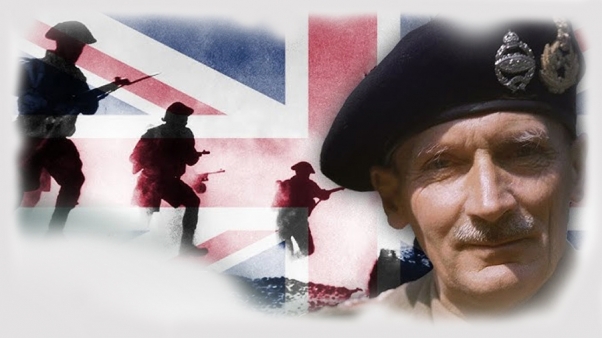
Cocky Monty
(Collier’s Magazine, 1943)
NULLRead more …

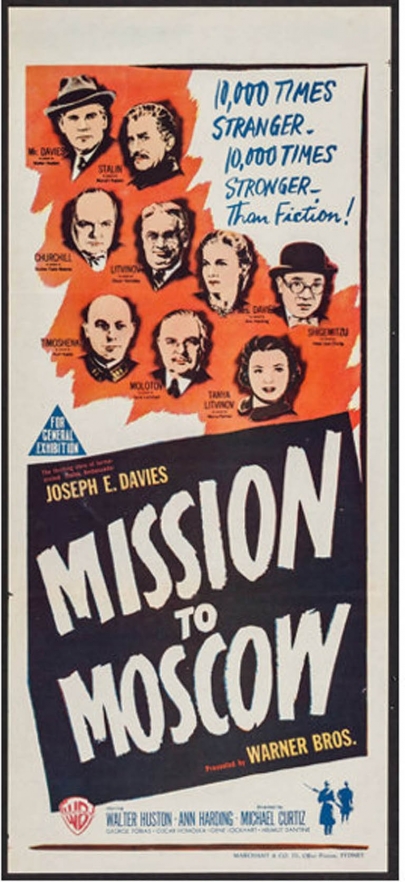
A few months after PM Daily was established, the editor announced that he had gone to great lengths to purge their ranks of Communists. However, as the attached movie review makes clear, they missed one. While the rest of the country was absolutely scandalized by the pro-Soviet Warner Brothers production, Mission to Moscow (1943), Peter Furst, the reviewer in question was absolutely delighted:
“The film reflects the undisguised admiration of [U.S. Ambassador Joseph E. Davies (1876 – 1958)] for Joseph Stalin and his government, as well as the Ambassador’s conviction that the famous Soviet ‘purge’ trials of 1936 – 38 were based on proof ‘beyond a reasonable doubt’ that the former leaders punished were guilty of plotting with Germany and Japan for the overthrow of the Stalin regime.”
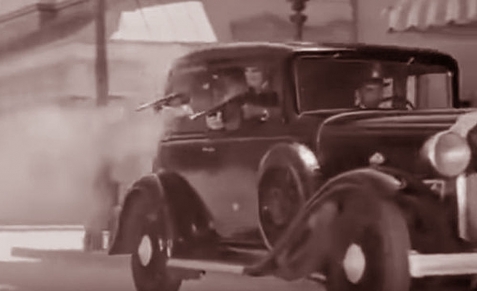
“It is reported by WRA (War Relocation Authority) that between January 2 and April 22, there have been 16 shooting incidents in California. Nobody was hit. It is clearly terroristic activity aimed at frightening Nisei who have the temerity to come home and try to earn a living from their farms again”.
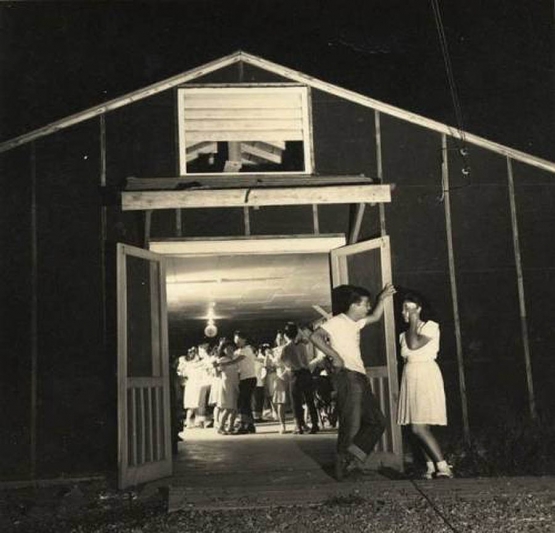
Dance at Tule Lake.
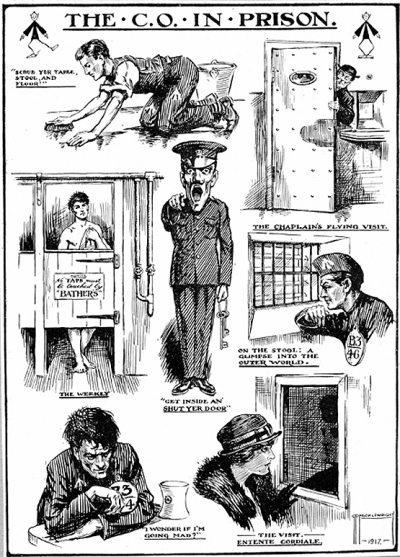
An interesting article by photojournalist James Hare (1856 – 1946) who told us his impressions as to how patriots and recruiting officers prowl about Hampstead Heath in search of volunteers. He was dumbstruck by the high number of men who simply shrugged when reminded of the national emergency.
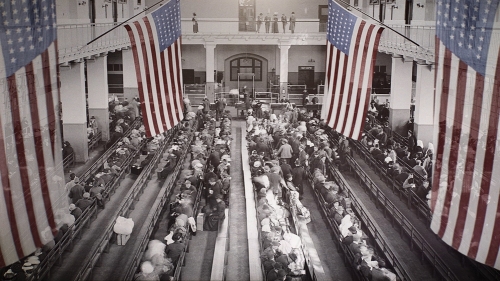
William B. Wilson (1862 – 1834) was the first to be appointed Secretary of Labor, and in this article he weighs the needs of Europe for fighting men and the needs of the United States for laborers. It is a very dry article and difficult to get through, but, happily, the most interesting factoids can be found in the opening paragraphs when he explains how many new immigrants chose to leave the United States in order to fight for their old countries in Europe.
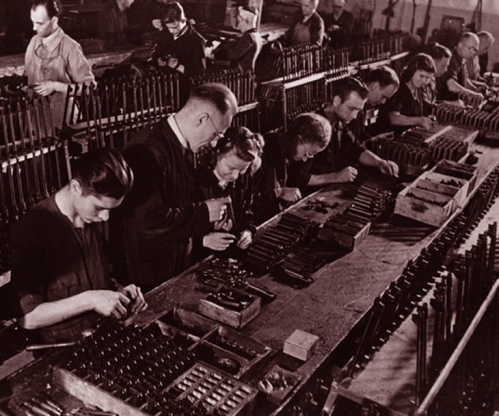
After Hitler drafted everyone who could possibly be drafted, he found that he now had a labor shortage. He reached out to his fellow Fascist, Mussolini, asking for additional workers – Italy complied and numerous volunteers went forth. These Italians returned two years later and told how they were consistently abused:
“They were treated by the master race like the millions of Russian, Polish, French, Yugoslav war prisoners who are forced to produce for the Nazi war machine. Far from home, cut off from their families, the Italian workers suffered hardships often as great as the workers from Nazi-occupied countries.”

This interview with Barbara Stanwick (b. Ruby Catherine Stevens 1907 – 1990) will give you a genuine insight to her character, its a wonderful read.

This is an article about the unintended consequences that ensue when the morality police ban books that, in their eye, will corrupt our youth and degrade society’s splendid ethical code. Time and again these books become bestsellers:
“In our own day, standards have changed so rapidly that books banned and burned only decades ago are now acceptable reading matter in our schools…[banned authors] are so respected that most college students are puzzled to learn of the trouble that greeted these books when originally published.”

“Business is just as important to this nation as food and drink is to the human body. And every effort that retards it in any way affects the entire nation… It was [the New Deal’s] attack on business that destroyed the confidence of businessmen generally.”

As editor-in-chief of Liberty Magazine, Bernarr Macfadden (1868 – 1955) asked an important question:
“What is the matter with this country? Why is it we are credited with being the last to recover from the world-wide Depression? As the wealthiest nation in the world we should have been the first?”
“The Brain Trust’s very lack of practical experience was its chief asset. Unhampered by tradition and fairly drunk with the opportunity of translating college dreams into realities, they leapt to the battle, careless of obstacles and without fear of frustration.”
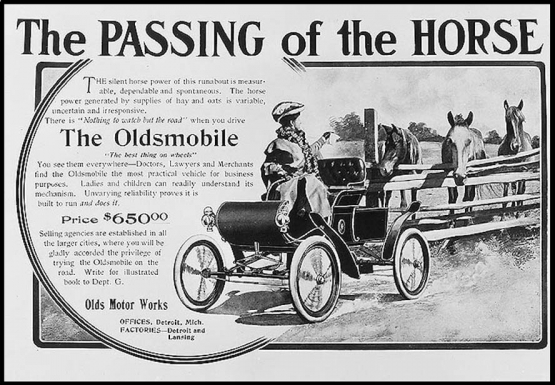
This article explains those heady days spanning the years 1900 through 1910 when the apostles of the automobile were given the task of telling anyone who would listen that the days of the horse were over:
“In the old days the salesmen had his problems. It took more than reason to get a sensible man in one of those contraptions with the motor under the seat and a water tank hanging from the rear. The salesman had to be a promoter, a mechanic, a ballyhoo artist, a stunt performer and a magician.”
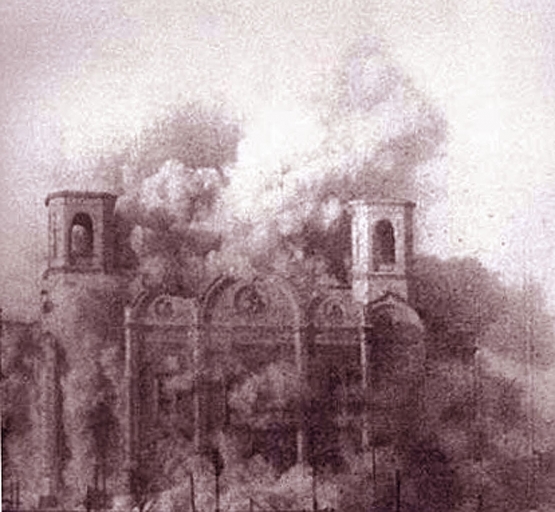
J. Edgar Hoover was a pro when it came to calling out communism – and he does it again in the article posted herein:
“Nikita Khrushchev told the 22nd Congress of the Soviet Communist Party:”
”We need a well-considered and orderly system of scientific-atheist education that will embrace all strata and groups of the population and will prevent the dissemination of religious concepts, especially among children and adolescents.”
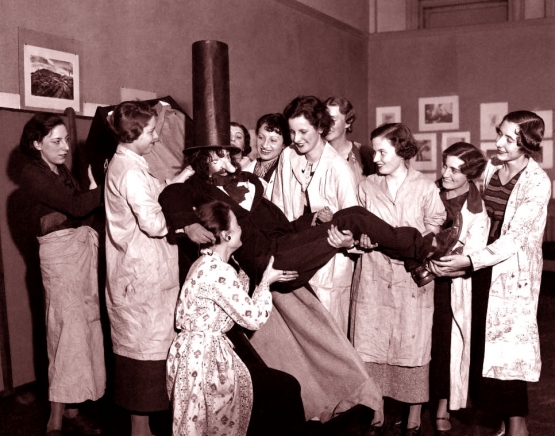
What was to be done with all the racketeers who dominated the Twenties once Prohibition was prohibited? Organizing the collective labor of truck drivers seemed to have been the most obvious project for the kingpins, but what of the average foot soldier?
“Even the rank and file have not been driven to the breadline. Current quotations for gunmen have fallen from $300 a week to as low as $100. Plain sluggers command even scantier wages. A fancy pineapple job once cost $250; by 1933 you could get a good workman for $50.”
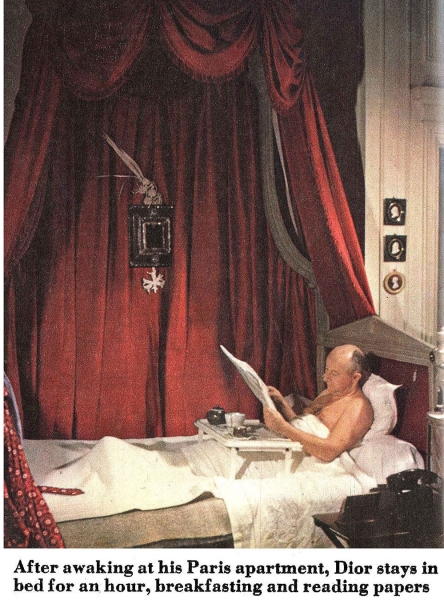
Christian Dior (1905 – 1957) first cast his enormous shadow across the whole of the fashion world in 1947. Collier’s Magazine, always quick to seek out a relevant new story and run with it before anyone else, ran this timely profile of the fashion designer in 1955:
“The greatest of all M. Dior’s virtues, of course, is his burning desire to make all women look beautiful. ‘My dream is to save them from nature.'”
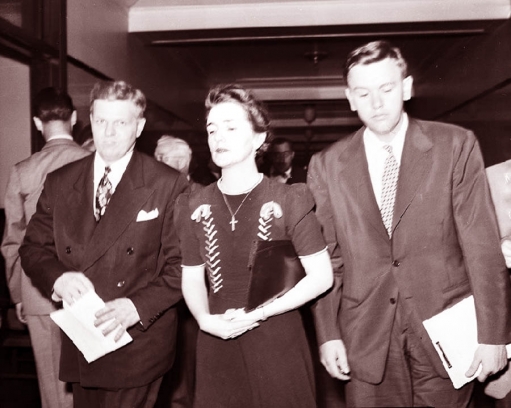
Here is told the tale of Countess Grace Buchanan-Dineen, a Detroit hostess and amateur Nazi spy. She was posted to Motor City in order to report on all the goings-on there to her pals in Berlin. The FBI turned her shortly after her her arrest and she began spying for them.
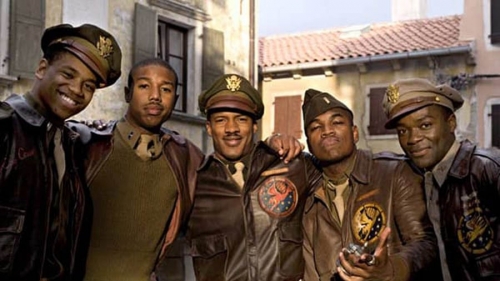
The brainiac who wrote the Jim Crow rules for the U.S. Army officer corps forgot to segregate the officer’s clubs.
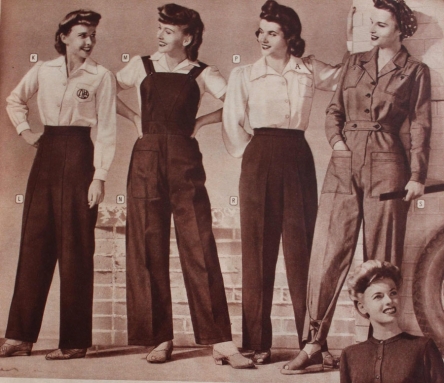
Two Weeks after the Pearl Harbor attack, the New York fashion industry hastily manufactured profiles that were both feminine and practical for the new lives American women were about to have thrust upon them. Overnight, durable and launderable fabrics became uppermost in the thinking of the new war workers and culottes gained greater importance as the need for bicycles became a viable mode of transport for getting to the defense plants.