Jim Crow Officer Corps
(PM Tabloid, 1945)
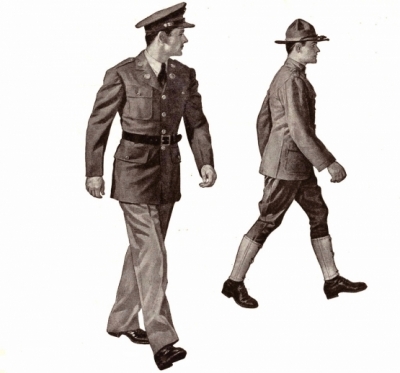
The brainiac who wrote the Jim Crow rules for the U.S. Army officer corps forgot to segregate the officer’s clubs.
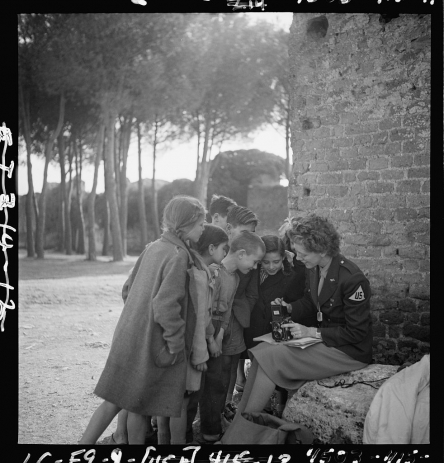
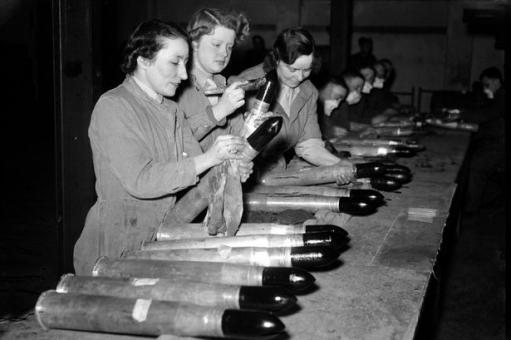
Two Weeks after the Pearl Harbor attack, the New York fashion industry hastily manufactured profiles that were both feminine and practical for the new lives American women were about to have thrust upon them. Overnight, durable and launderable fabrics became uppermost in the thinking of the new war workers and culottes gained greater importance as the need for bicycles became a viable mode of transport for getting to the defense plants.
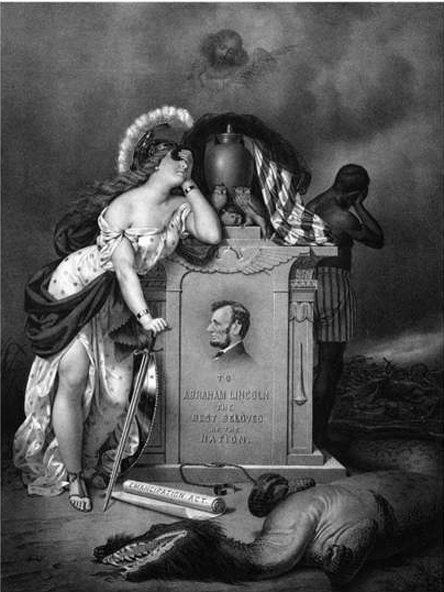
“[To the liberated slaves] the name Abraham Lincoln meant freedom, justice, home, family, happiness. In his life they knew that they lived. In his perfect benignity and just purpose, inflexible as the laws of seed-time and harvest, they trusted with all their souls, whoever doubted. Their deliverer, their emancipator, their friend, their father, he was known to them as the impersonation of that liberty for which they had wept and watched, hoping against hope, praying in the very extremity of despair and waiting with patience so sublime that fat prosperity beguiled us into the meaness of saying that their long endurance of oppression proved that God had created them to be oppressed.”
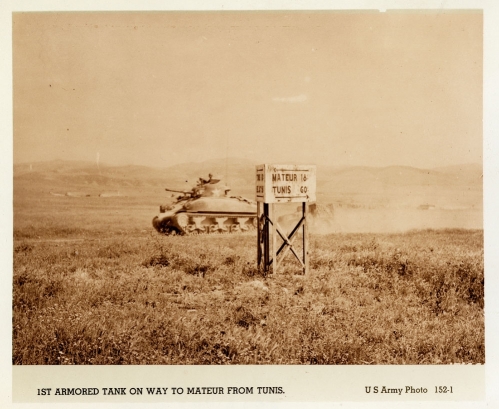
“The Axis forces in Tunisia, fighting desperately from their mountain fortifications, have stalled for a little longer the day of their defeat…”
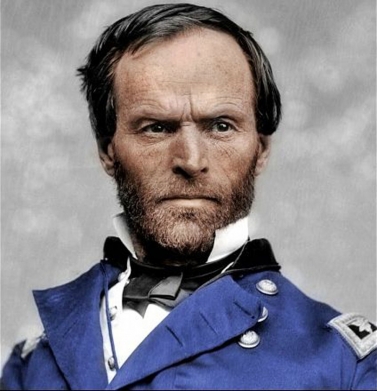
General William Tecumseh Sherman (1820 – 1891), U.S. Army, found himself in hot water at war’s end when he accepted the surrender of Confederate General Joseph Johnston (1807 – 1891) after having provided far more lenient terms than President Lincoln preferred.
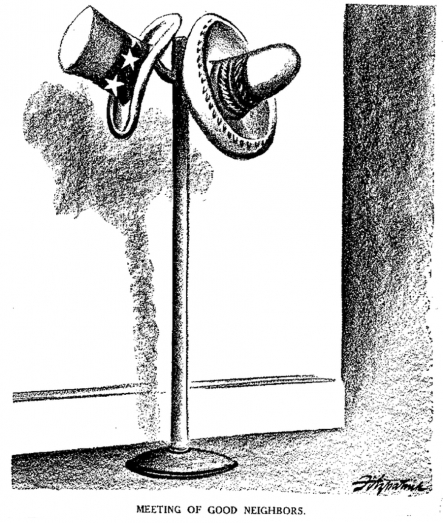
Within hours of the Pearl Harbor attack, the nations of Costa Rica, Nicaragua and the Dominion of Canada all declared war upon Imperial Japan. The United States wouldn’t do so until the next morning.
Although there were a number of Latin American countries that declared war on the Axis, only two, Brazil and Mexico, put men in the field (Mexican nationals served in the U.S. military)- click here to read about the Brazilians.
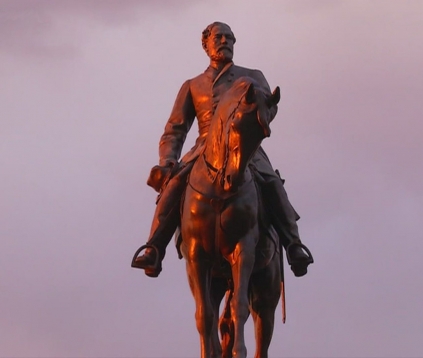
Here is a tongue-and-cheek piece of creative writing in which a New York-based scribe writes as if he is reporting on the Southern press and the joyous glee that was widely generated as a result of General Lee and his magnificent victory at Gettysburg…
Reviewed anonymously in the attached column are two books, I Was a Nazi Flyer, the diary of Gottfried Leske, and The Airmen Speak, which is a compilation of war stories told by assorted RAF pilots.
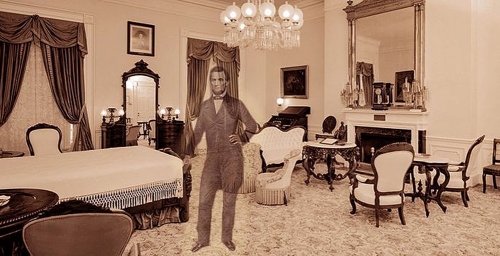
In the 218-year history of the White House, only ten people have died within its walls – yet everyone who has ever perceived the presence of a ghost insists that the spirit was that of Abraham Lincoln (who died a few blocks to the east). President Eisenhower was no exception.
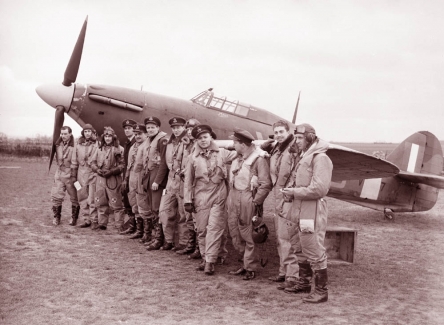
“Many Americans are serving both with the British and Canadian Air Forces, but the RAF’s Eagle Squadron is the only unit that is all-American save for the British squadron leader who succeeded William Erwin Gibson Taylor (1905 – 1991), a New Yorker, released to rejoin United States naval aviation.”
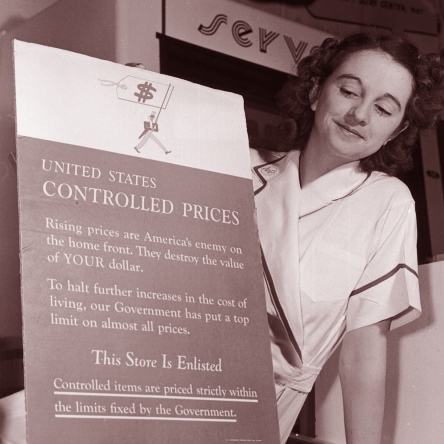
This article appeared six months before the 77th Congress passed a price control law as a wartime measure in an attempt to stave off inflation. The column pertains to the early planning of a wartime economy as the nation prepared to devote itself to total war. You’ll remember that the Supreme Court found FDR’s price control schemes (the NRA) to be unconstitutional during the Thirties. Regardless of their efforts, inflation still kicked-in after the war, up until the Republican Congress cut taxes.
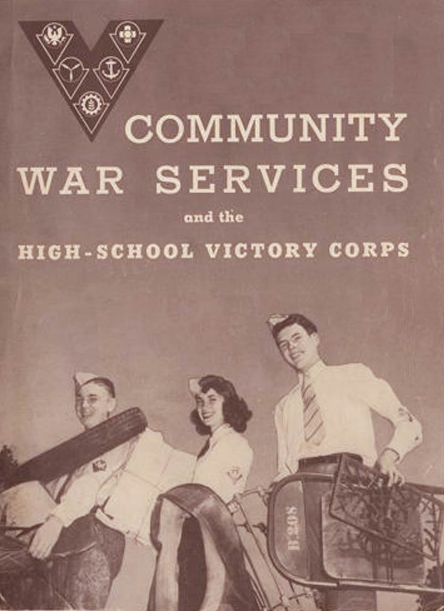
The Victory Corps was a voluntary program open to American high school
and college students during the Second World War. It was established in September of 1942 with an eye toward preparing teenagers for military service. Although its primary concern involved weapons training, physical fitness and mathematics, it also had a “farm volunteer” arm, as this article about one branch of the Sacramento Victory Corps makes clear.
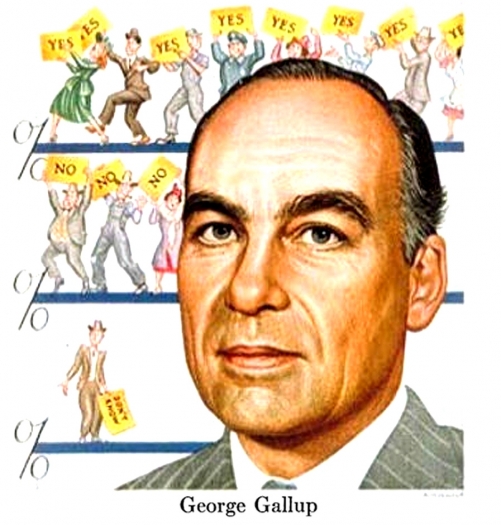
Five months before America entered the war, pollsters sallied forth onto the streets with numerous queries:
“On the question, ‘Shall the United States enter the war to help Britain defeat Hitler?’ The New York Daily News and the Chicago Tribune found war sentiment ranging from 3 out of 10 voters in New York State to 2 out of 11 in Illinois.”
Using the most accurate figures available to them at the time, the editors at PM Daily News compared and contrasted the two world wars for their readers in their VJ-Day issue.
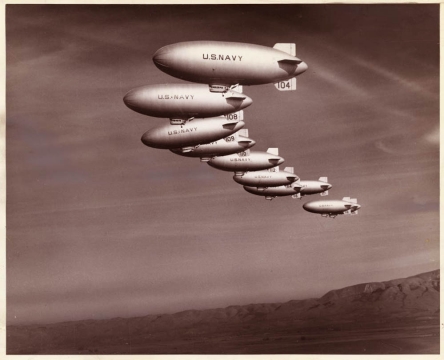
America’s foremost authority on lighter-than-air craft, Rear Admiral Charles Rosendahl (1892 – 1977), tells you why this country should build and operated dirigibles if we are to maintain our rightful place in the field of post-war air transportation (they decided to build jets instead).
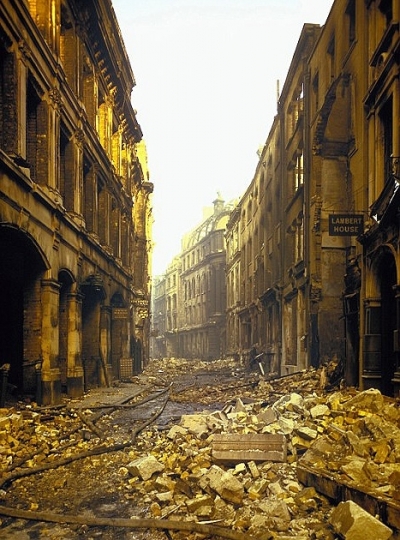
Here is an account of life during the Blitz, as written by sculptor Clare Sheridan (née Frewen; 1885 – 1970):
“I have from the very beginning put [poison] gas out of my thoughts and refused to carry a gas mask. But in a mad world growing madder daily who knows what the madmen may not resort to!… According to the gas booklet, the stuff will come through the window clacks, under the door and down the chimney.”