Author name: editor

Detroit Race Riot 1943 Newsweek Magazine | Multiple Race Riots in 1943 USA
1943, African-American Service, Newsweek Magazine

Race Riots
(Newsweek Magazine, 1943)

“It is a singular fact that [the] supposedly civilized Americans in these times deny the Negroes the opportunity to engage in respectable jobs, the right of access to the restaurants, theaters, or the same train accommodations as themselves and periodically will run amuck to lynch Negroes individually or to slaughter them wholesale – old men, women, and children alike in race wars like the present one.”


What Radio Tokyo was referring to were the multiple race riots that broke out in Detroit and seven other municipalities during the Summer of 1943.

Advertisement

Use shortcode [oma_ad position="summary_top"] (or other position) in your theme or widgets to display OMA Promotions here.

Dependability of the Ford Model T | Ford Model T Still Going at 250,000 Miles
1941, Cars, Spot Magazine

Mr. Nystrom’s Car Won’t Quit
(Spot Magazine, 1941)

Mr. John Nystrom of New York City drove a 32 year-old Model T Ford. Judging by the writer’s tone, we can guess that not many cars from 1909 were around to see Roosevelt’s third term. The Flivver (as she was nicknamed) had 250,000 miles on her (no mention as to how that was known) and still got 20 miles per/gallon, with a top speed of 48 miles per/hour. We can assume that Mr. Nystrom went to his rewards some time ago, but his car is probably still out there being written about.

Letters to FDR from the Public 1941 | Letters to the White House 1941
1941, F.D.R., Spot Magazine

His Mail
(Spot Magazine, 1941)

Unlike his many predecessors, FDR used to encourage the American people to write him with their thoughts. At times, the President used to boast to Congress concerning the volume of his mail in favor of his programs, but the mails did not simply deliver stamped envelopes:


“Almost anything you can think of has arrived as a gift at some time or another – dogs, sheep, eagles, baby chicks, toads, alligators. Mr. Roosevelt has never received any lions, but Calvin Coolidge got two, from Johannesburg…”
Advertisement

Use shortcode [oma_ad position="summary_top"] (or other position) in your theme or widgets to display OMA Promotions here.

NULL
1941, African-American Service, Collier's Magazine

An Anti-Discrimination Law on the Home Front
(Collier’s Magazine, 1941)

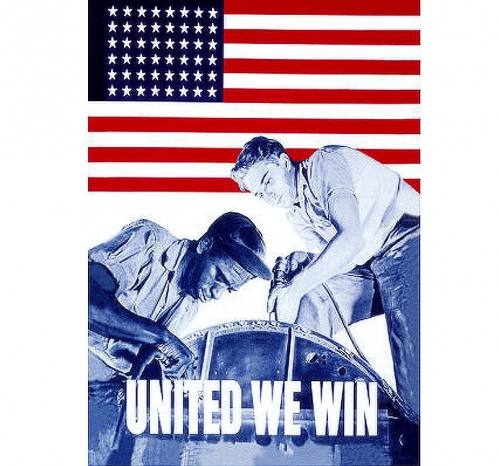
Inasmuch as the Roosevelt administration believed that the integration the armed forces was far too risky a proposition during wartime, it did take steps to insure that fair hiring practices were observed by all industries that held defense contracts with the Federal government; during the summer of 1941 a law was passed making such discrimination a crime.


The attached editorial from Collier’s Magazine applauded the President for doing the right thing.

Willys Jeep
1945, Coronet & Yank Magazines, Weapons and Inventions

The Jeep
(Coronet & Yank Magazines, 1945)

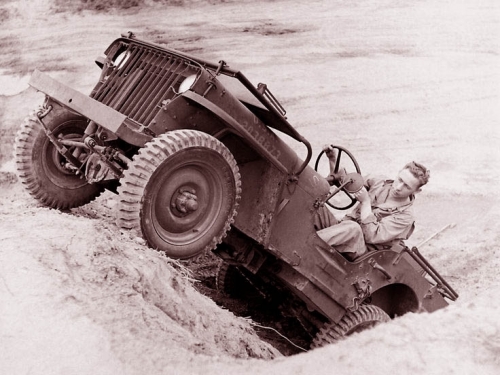
When General Marshall listed the numerous advantages that the U.S. Army enjoyed during the war (you can read it here), he included on his list the Willys Jeep. The Jeep and the Two and Half-Ton truck, he believed, contributed mightily to the mobility of American Forces in most theaters. The two articles attached herein go into some detail about the strengths of the Jeep, but concentrated primarily on the improvements made in the vehicle as Jeep prepared for its launch in the civilian market place.

Advertisement

Use shortcode [oma_ad position="summary_top"] (or other position) in your theme or widgets to display OMA Promotions here.

Thompson Submachine Gun Magazine Article 1945 | History of the Tommy Gun 1945
1945, Coronet Magazine, Weapons and Inventions

Tommy Gun
(Coronet Magazine, 1945)

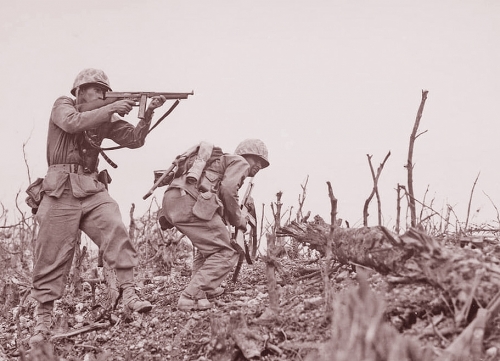
“Soldiers respect for this weapon traces to two things. It fires .45 caliber slugs as a cyclical rate of 600 to 700 per minute. An enemy struck by a carbine or riffle bullet can keep coming – as Japs have shown. A man struck by a Tommy Gun slug is stopped dead in his tracks. A burst of fire can cut a man in two.”

Thompson Submachine Gun Magazine Article 1945 | History of the Tommy Gun 1945
1945, Coronet Magazine, Weapons and Inventions

Tommy Gun
(Coronet Magazine, 1945)

“Soldiers respect for this weapon traces to two things. It fires .45 caliber slugs as a cyclical rate of 600 to 700 per minute. An enemy struck by a carbine or riffle bullet can keep coming – as Japs have shown. A man struck by a Tommy Gun slug is stopped dead in his tracks. A burst of fire can cut a man in two.”

Advertisement

Use shortcode [oma_ad position="summary_top"] (or other position) in your theme or widgets to display OMA Promotions here.

Reporter Becam a WAC and Told All 1943 | Newsweek Magazine Report on the WAC Life 1943
1943, Newsweek Magazine, WACs

The Reporter was a WAAC
(Newsweek Magazine, 1943)

Newsweek reporter Vera Clay was not slow in accepting the U.S. Army’s invitation to don the khaki uniform and learn what goes into the training of a WAAC. In the company of fourteen other women reporters, she took the train to Fort Oglethorpe, Georgia, and for the next six days, the group began to learn about all things WAAC.

Katherine Dunham Tropical Revue Review 1945 | Katherine Dunham Magazine Article 1945
1945, Dance Magazine Articles, See Magazine

Katherine Dunham
(See Magazine, 1945)

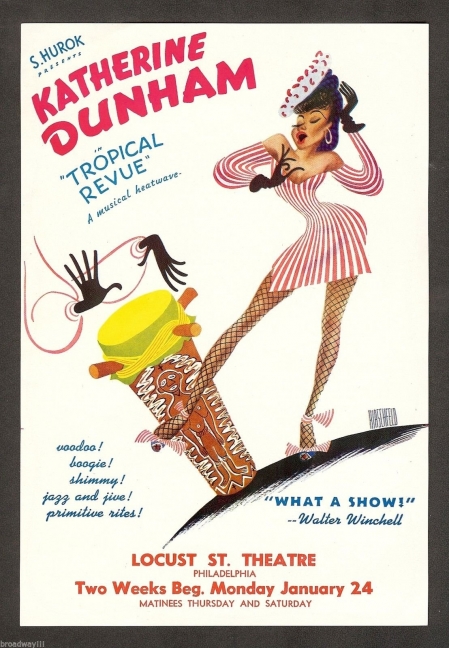
Katherine Dunham (1909 – 2006) was an African-American dancer and choreographer, producer, anthropologist, author and Civil Rights activist – enjoying throughout the decades one of the most successful dance careers a dancer could ever hope for. Attached is a profusely illustrated review of her 1945 production, Tropical Revue. It implies that much of the audience came away recognizing her originality and genius – while others simply thought she was a burlesque artist.

Advertisement

Use shortcode [oma_ad position="summary_top"] (or other position) in your theme or widgets to display OMA Promotions here.

Critic Ernest Boyd on Hermann Bahr 1923 | Hermann Bahr and German Expressionism 1923
1923, Modern Art, Vanity Fair Magazine

Expressionism as Theory
(Vanity Fair Magazine, 1923)

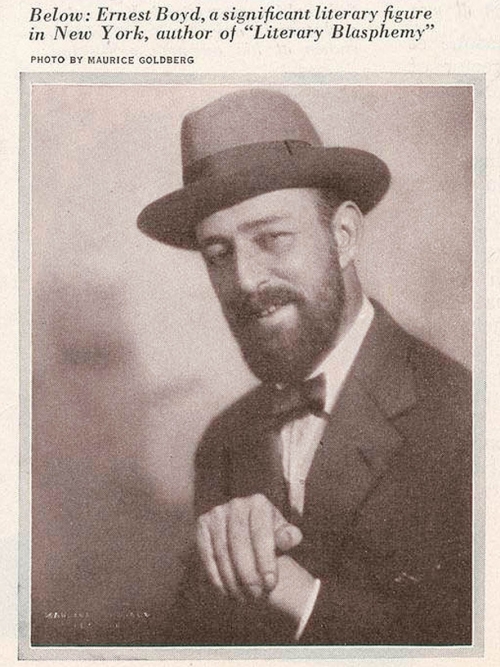
Ernest Boyd (1887 – 1946), all-around swell guy and significant literary figure in 1920s New York, took a hard look at German Expressionism and its wide influence on other Teutonic arts in the early Twenties. He paid particular attention to the German critic Hermann Bahr (1863 – 1934), who coined the term, Expressionism, and had much to say about the movement.

Advertisement

Use shortcode [oma_ad position="summary_top"] (or other position) in your theme or widgets to display OMA Promotions here.

Scroll to Top