Author name: editor

1943, Collier's Magazine, World War Two

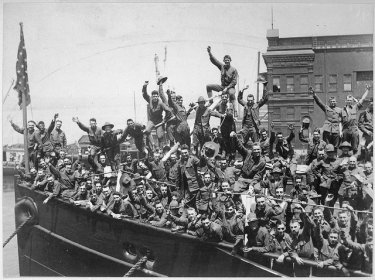
Amphibian Engineers
(Collier’s Magazine, 1943)

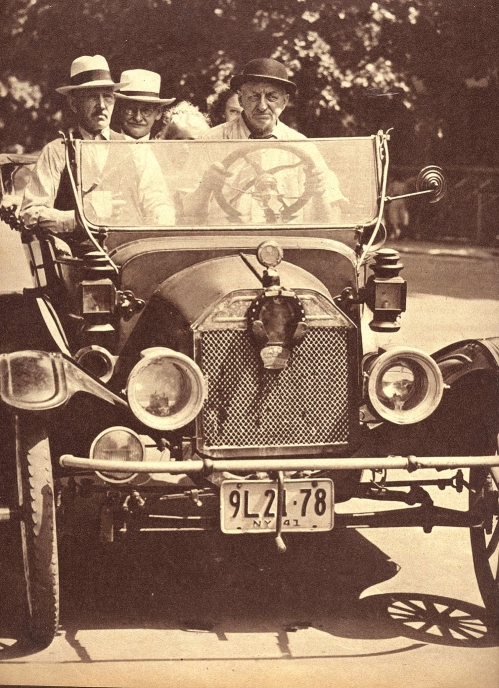
“The motto of the Engineer Amphibian Command is “Put’em Across”, and its principle is aptly put by Brigadier General Daniel Noce (1894−1976) , chief of the U.S. Army’s amphibious operations in the European theater, who built this force from scratch. ‘Water between us and the enemy is an avenue, not an obstacle’ he says.”

Japanese Soldiers Killing Themselves 1943 | Why
1943, Collier's Magazine, POWs

Fair Treatment
(Collier’s Magazine, 1943)

To us, the most interesting part of this 1943 editorial is in the opening sentence, where an accounting is given as to the number of prisoners acquired after a full year and a half of war. The U.S. military had amassed 22,000 Germans, 14,000 Italians – yet only 62 (sixty-two) Japanese prisoners of war! This is famously due to the instructions given to the Emperor’s combatants to not be taken prisoner – but we certainly expected there to be more than that. The writer goes on speaking in favor of just treatment for Axis prisoners – but please don’t pamper our Nisei in Arizona.

Aviator Frank Coffyn Memoir 1932 | Frank Coffyn Early Aviator Article
1934, Aviation History, Collier's Magazine

Frank Coffyn
(Collier’s Magazine, 1934)

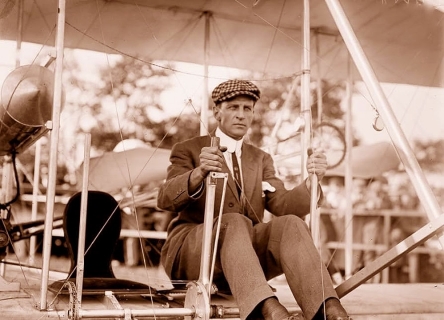
Frank Coffyn (1878 – 1960) was one of the earliest pioneer aviators in the United States. In this article he recalls those heady days when he regularly broke bread and talked shop with the likes of Orville Wright and other assorted fathers of aviation. Coffyn has long been remembered for being the first pilot to fly his camera-mounted Wright Flyer over Manhattan and under both Brooklyn and Williamsburg Bridges in 1912 – which he recalls herein.
Advertisement

Use shortcode [oma_ad position="summary_top"] (or other position) in your theme or widgets to display OMA Promotions here.

Allied Air Power vs General Rommel in North Africa | Allied Air Superiority in WW2 North Africa
1942, Collier's Magazine, North Africa

Allied Air Power Succeeded
(Collier’s Magazine, 1942)

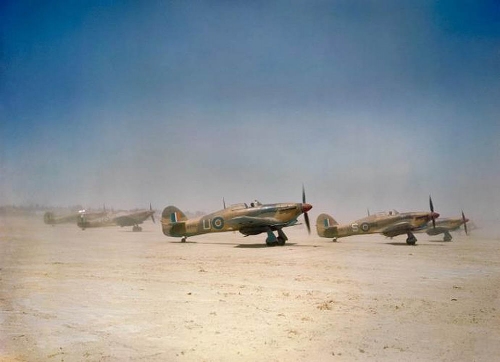
“[If not for the Allied air forces] Rommel might have reached his objectives – Alexandria, Cairo and Suez – had he not been able to plow through to the Nile Delta where he could resume his favorite kind of military football. He might have reached the flat, broad, green cool plains of the Delta had he been able to bring up water, food, fuel and reinforcements in men and weapons. It was precisely that which air power prevented…”

Advertisement

Use shortcode [oma_ad position="summary_top"] (or other position) in your theme or widgets to display OMA Promotions here.

1923 Immigration Policy Debate | National Immigration Conference 1923
1923, Immigration History, Time Magazine

Debating Immigration
(Time Magazine, 1923)

An occasion was provided to debate the pros and cons of American immigration policy at the National Immigration Conference that convened in New York City during December of 1923:

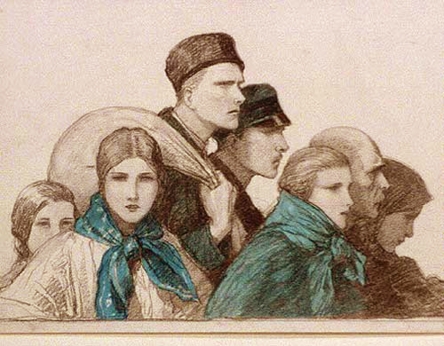
“Most of the speakers advocated restriction and selection, but as to the degree and variety of each there was no consensus of opinion. Especially, there were two different methods of attacking the problem – from the industrial standpoint, and from the standpoint of the welfare of the race and of citizenship.”

Advertisement

Use shortcode [oma_ad position="summary_top"] (or other position) in your theme or widgets to display OMA Promotions here.

US Admiral Raymond A Spruance Magazine Article 1944
1944, Collier's Magazine, War at Sea

The Strategist
(Collier’s Magazine, 1944)

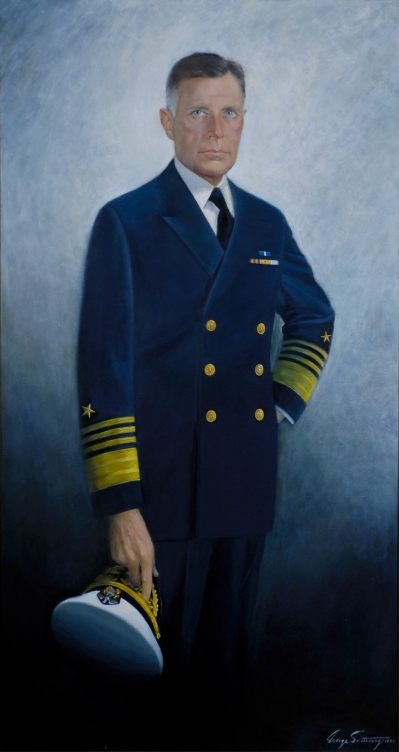
Here is a Collier’s profile of U.S. Admiral Raymond Spruance (1886 – 1969):


“Outside Navy circles, very few know much about the man who bosses our task forces in the Pacific and has never lost an engagement. But Admiral Nagano knows of Spruance; so does Tojo – because, if it weren’t for Spruance at Midway, Japanese carriers might now be based at Pearl Harbor.”

Advertisement

Use shortcode [oma_ad position="summary_top"] (or other position) in your theme or widgets to display OMA Promotions here.

Maximilian Harden Editorial on 1923 Germany | Maximilian Harden Editorial on the German Conscience 1923
1923, Aftermath (WWI), Vanity Fair Magazine

1923 Germany
(Vanity Fair Magazine, 1923)

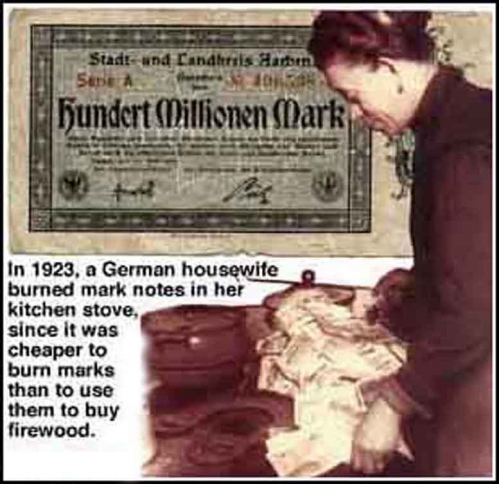
Maximilian Harden (1861 – 1927) was a major-league journalist and editor in Germany at the time of the First World War. Between 1914-18 he was all-in for a German victory. After the defeat he believed in the democracy that came with the Weimar Republic – but he hated the economic state that his country was forced to endure – and that is what he addresses in this column.


“An old married couple, or a widow, who in 1914 were assured of an untroubled existence on an income 6,000 marks a year, cannot buy with that amount today a pair of shoes, or any new sheets, and can get nine or ten pounds of butter at the most…If anyone has looked upon all this destitution, which is borne by many in silence and true dignity, if anyone has seen this decay of a whole nation, which is like the crumbling of some venerable cathedral, and if in spite of this he puts it all down as camouflage, then that person has a heart of stone in his breast.”

Advertisement

Use shortcode [oma_ad position="summary_top"] (or other position) in your theme or widgets to display OMA Promotions here.

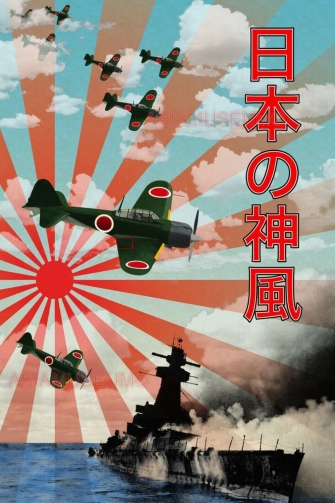
Kamikaze Pilots Were Not Supposed to Commit Suicide
1946, All Hands Magazine, Kamikaze Attacks

Kamikazes: The Naked Truth
(All Hands Magazine, 1946)

This unnamed journalist wished to discern fact from fiction as to what was expected from Kamikaze pilots. After spending almost an entire year in Occupied Tokyo, he read numerous reports on the topic, both military and civil. The PR blather fed to the Japanese public did state that a willing death was expected of them, but was surprised to find that many (not all) of the pilots were given parachutes (rarely used). His research revealed that the Kamikaze corps was hastily assembled and was composed of the lousiest pilots they could find.

Detroit Race Riot 1943 Newsweek Magazine | Multiple Race Riots in 1943 USA
1943, African-American Service, Newsweek, Newsweek Magazine

Race Riots
(Newsweek Magazine, 1943)

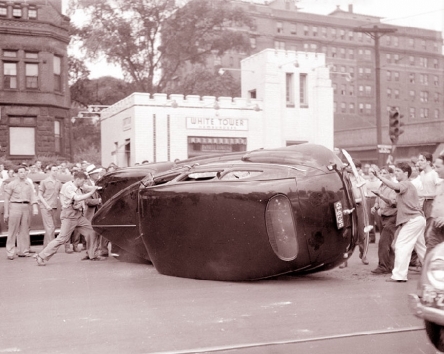
“It is a singular fact that [the] supposedly civilized Americans in these times deny the Negroes the opportunity to engage in respectable jobs, the right of access to the restaurants, theaters, or the same train accommodations as themselves and periodically will run amuck to lynch Negroes individually or to slaughter them wholesale – old men, women, and children alike in race wars like the present one.”


What Radio Tokyo was referring to were the multiple race riots that broke out in Detroit and seven other municipalities during the Summer of 1943.

Advertisement

Use shortcode [oma_ad position="summary_top"] (or other position) in your theme or widgets to display OMA Promotions here.

Scroll to Top