Author name: editor

1951 Korean War Expansion | Korean War Mobilization | Cold War Civil Defense Measures
1951, Pathfinder Magazine, The Korean War

Mobilization
(Pathfinder Magazine, 1951)

Attached is a report on President Truman’s efforts to intensify America’s wartime posture. When this article was first read the Korean War had been raging for seven months – with the fifth month bringing the promise of an expanded and very bloody war as a result of Chinese intervention. Compiled in these columns is a list explaining how the Truman administration, the Pentagon and the officials on the American home front had met the Korean challenge thus far.

Segregated Infantry Divisions in France (The Independent, 1919)
1919, African-Americans, The Independent

Segregated Infantry Divisions in France
(The Independent, 1919)

A spirited commentary concerning how the African-American Doughboys came to see France, rather than their own homeland, as the land of equality and liberty. It was written by Oscelo E. McKaine, who was serving as a second lieutenant in the all-black 92nd Division. In later life he would play an important roll in the South Carolina civil rights movement.


Read an article about racial integration in the U.S. military.

Advertisement

Use shortcode [oma_ad position="summary_top"] (or other position) in your theme or widgets to display OMA Promotions here.

THE BETTER 'OLE On The London Stage (Touchstone Magazine, 1918)
1918, Entertainment, Touchstone Magazine

THE BETTER ‘OLE On The London Stage
(Touchstone Magazine, 1918)

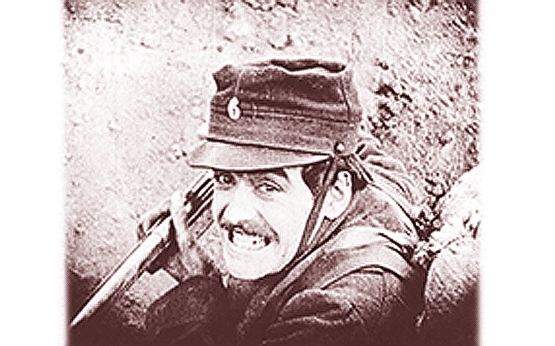
Before there was Sad Sack, there was Old Billstyle=border:none, Bert and Alf -the later three being the creation of World War One British cartoonist Bruce Bairnsfather (1888-1959; and the former was the brainchild of World War Two Army Sergeant George Baker, 1915 – 1975). Bairnsfather was the creator of a popular cartoon called Old Bill which was widely believed by the Tommies to accurately depict the hardships on the Western Front.
This illustrated article is a theater review of The Better ‘Ole; a funny, well received play written by the cartoonist and staged in London during the closing weeks of the war.

ON TO BERLIN Film Review 1918 | WW 1 Propaganda Movie Reviewed
1918, Entertainment, The Stars and Stripes

The First of Many Inaccurate War Movies Reviewed
(The Stars and Stripes, 1918)

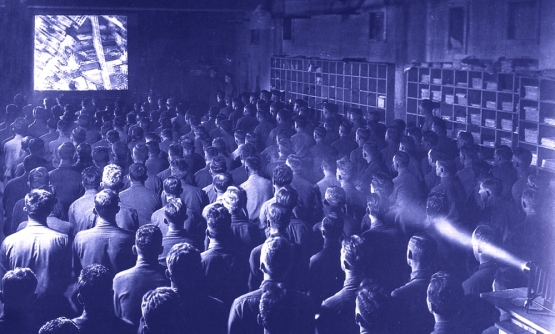
The production of inaccurate war flicks with unlikely plots is a proud tradition that is alive and well in every film capitol around the globe and not likely to vanish any time soon. Today’s film critics seem to have a good deal more patience when reviewing the genre -as compared to the jaded, old ink-slinger who was charged with the task of summing up this silent film from 1918: On to Berlin.


The American-made war dramas must be giving the folks back home a swell idea of what The War isn’t like…William Fox is accused of producing On to Berlin

Advertisement

Use shortcode [oma_ad position="summary_top"] (or other position) in your theme or widgets to display OMA Promotions here.

Elsie Janis WW I Entertainer | Elsie Janis Sweetheart of the A.E.F |
1936, Entertainment, The American Legion Monthly

Elsie Janis Entertained the Doughboys
(American Legion Monthly, 1936)

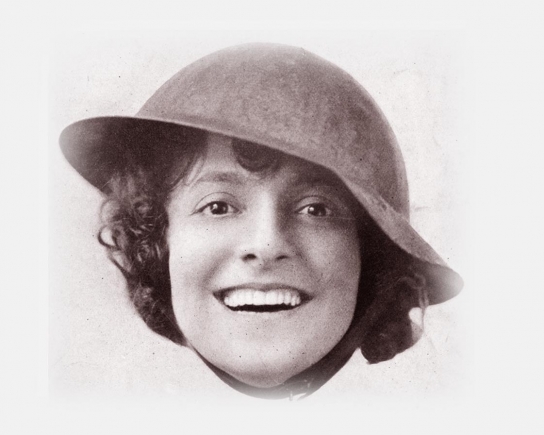
The Americans who fought in the Second World War had Bob Hope to entertain them, and their fathers who fought in the First had Elsie Janis (1889 – 1956). Like Hope, Janis traveled close to the front lines and told the troops jokes, and sang them songs – making it clear all the while that her sympathies and affections for the Doughboys were strong – and they, in turn, loved her right back. In the attached 1936 reminiscence Janis recalls some of her experiences from the six months in which she entertained the American Army in France; she also speaks of her roll entertaining the volunteer American Army of the 1930s, as well.


Click here to read about the U.S.O. entertainers…

John Sloan Ridiculed Cubism (The Masses, 1913)
1913, Cubism

John Sloan Ridiculed Cubism
(The Masses, 1913)

Although realist painter John Sloan (1871 – 1951) was one of the fortunate American painters to also be included in the 1913 Armory Show (he was also on the organizing committee), it did not mean that he was above ridiculing the European modernists who were enjoying the same prestige that he was.


To read an anti-Picasso review from that same period, click here.

Advertisement

Use shortcode [oma_ad position="summary_top"] (or other position) in your theme or widgets to display OMA Promotions here.

Her Next Task (Life Magazine, 1919)
1919, Life Magazine, Women's Suffrage

Her Next Task
(Life Magazine, 1919)

An excellent cartoon that serves to illustrate the difficulty that the American suffragettes had to overcome in post World War I America. Following the demobilization of so many women who played vital roles during the course of the war, the next task at hand was to see to it that her fathers, brothers and uncles understood that these veterans of the war expected greater opportunity and would not reside gladly in the same world of low-expectations that saw them off at the docks in 1917

Recognizing the Potential of Wind Power (Current Opinion, 1925)
1925, Current Opinion Magazine, Renewable Energy

Recognizing the Potential of Wind Power
(Current Opinion, 1925)

Eighty-three years ago, aircraft pilot Major Kurt Bilau (formerly of the Imperial German Air Corps) was intrigued by the abilities a properly designed propeller; he applied his curiosity to the design of a windmill in order to experiment with the possibility harnessing the power of the wind as a source of energy.
This magazine article briefly explains what a success that experiment was. Bilau’s aerodynamo was able to convert a sixteen-mile per/hour wind into an amount of energy that was measured at sixty horse power.

These days, the good works of Kurt Bilau are very actively being improved upon and his same theory is being adapted to harness the power of underwater sea currents.


Click here to read a 1947 article about the battle against air pollution.


Click here to read a 1951 article about America’s polluted rivers.


Artist Jacob Epstein Drafted... (Vanity Fair Magazine, 1918)
1918, Artists, Vanity Fair Magazine

Artist Jacob Epstein Drafted…
(Vanity Fair Magazine, 1918)

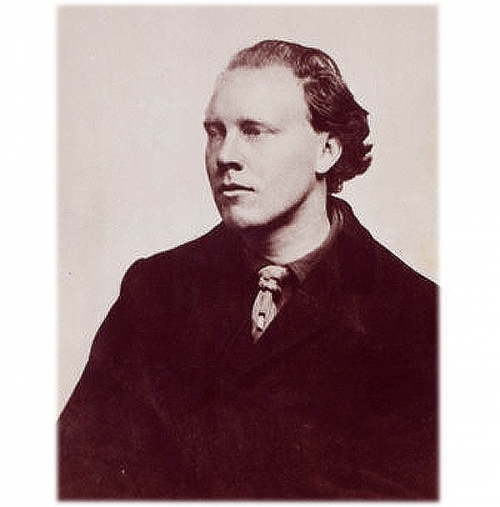
In 1918, the London-based American expatriot sculptor Jacob Epstein was living life to the fullest and enjoying all the benefits his talents had provided him. He had no intention of joining the army of his adopted country and had successfully avoided the draft since the outbreak of the war. However in 1918, conscription caught up with him. Epstein hated the idea of joining the colors, believing that the military would kill his creative soul, but this article puts a nice spin on all that.

Advertisement

Use shortcode [oma_ad position="summary_top"] (or other position) in your theme or widgets to display OMA Promotions here.

Advertisement

Use shortcode [oma_ad position="summary_top"] (or other position) in your theme or widgets to display OMA Promotions here.

John Singer Sargent in 1914 (Vanity Fair, 1914)
1914, Modern Art, Vanity Fair Hall of Fame

John Singer Sargent in 1914
(Vanity Fair, 1914)

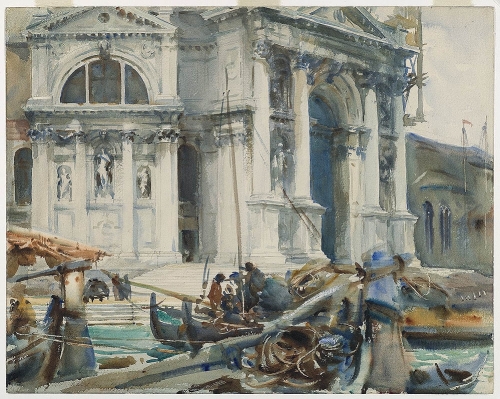
The attached VANITY FAIR article announced that the numero uno society portrait painter of the Gilded Age, John Singer Sargent (1856 – 1925) was swearing-off portrait commissions in order to concentrate on water color. Little did he know that he would be back at it in a few years painting whole boat-loads of general officer portraits when he was named as one of the Official British War Artists.

Leftist Cartoonist Art Young (Direction Magazine, 1938)
1938, Direction Magazine, Interviews: 1912 - 1960

Leftist Cartoonist Art Young
(Direction Magazine, 1938)

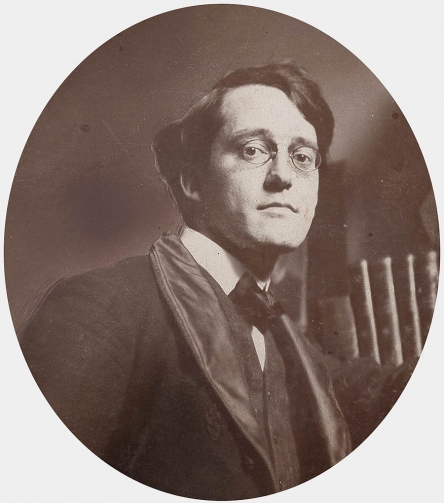
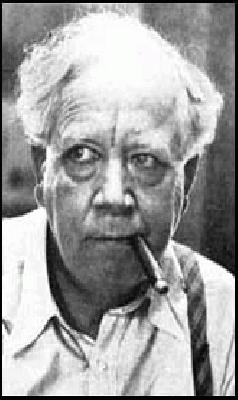
Artist Gilbert Wilson conducted this interview with American socialist cartoonist Art Young (1866 – 1943) which appeared in DIRECTION MAGAZINE during the summer of 1938. In the fullness of time, Art Young has come to be recognized as something of a demi-god in the American poison pen pantheon of graphic satirists and no study of Twentieth Century political cartoons is complete without him:

Art Young has never adopted the policy of tearing into his foe (which is capitalism) with tooth and claw. It simply isn’t his way. He just isn’t capable of hating anyone or anything badly enough to get that angry.

Isn’t it rather the duty of a good radical, as Lenin said, ‘patiently to explain’?


In 1887 the NEW YORK TIMES reviewed the first english edition of Das Kapital by Karl Marx, click here to read it…

1911 Paris Fall Salon Art Review | Salon d'Automne 1911 | Cubist Exhibition at the 1911 Fall Salon Paris
1911, Cubism

Salon d’Automne, Paris
(NY Times, 1911)

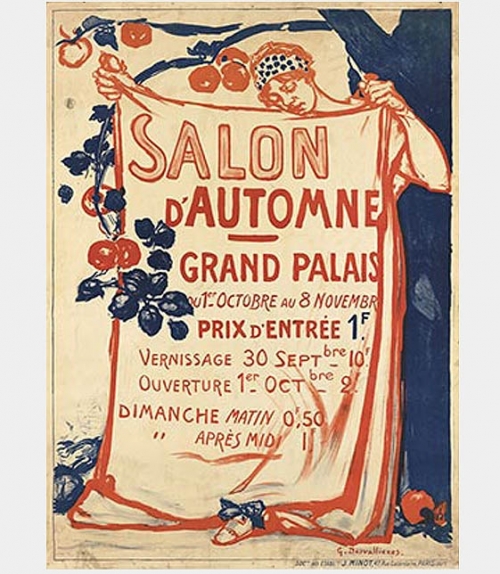
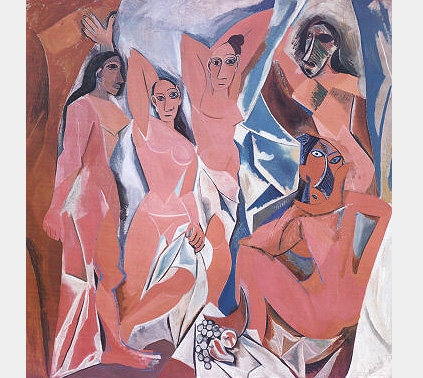
Among all the paintings on exhibition at the Paris Fall Salon, none is attracting so much attention as the extraordinary productions of the so-called ‘Cubist’ school. In fact, dispatches from Paris suggest that these works are easily the main feature of the exhibition.

Advertisement

Use shortcode [oma_ad position="summary_top"] (or other position) in your theme or widgets to display OMA Promotions here.

Scroll to Top