Author name: editor

ANDRE DERAIN Magazine Article 1921 | NEW REPUBLIC Art Review by CLIVE BELL 1921
1921, Modern Art, The New Republic

Andre Derain
(The New Republic, 1921)

Clive Bell (1869 – 1964) was an art critic who is remembered in our day as one of the most devoted champions of modern abstract art. In this 1921 review for THE NEW REPUBLIC, Bell explained why he held that the paintings of the André Derain (1880-1954) were so significant – writing that the Frenchman was best painter in all of France (reserving for Picasso the roll of the most influential painter in all of Europe).

Why Dada? (The Century Magazine, 1922)
1922, Dada History, The Century Magazine

Why Dada?
(The Century Magazine, 1922)

Why Dada? is a thoughtful essay by Sheldon Cheney (1886 – 1980), a Dada enthusiast and founder of the American monthly THEATRE ARTS MAGAZINE. This is a fine article which attempted to explain Dada to the American public and identified several American artists who subscribed to Dada principles.

…at last years exhibitions the Futurists and Cubists joined the academicians in denouncing the Dadaists as fakers, charlatans, and ignoramuses who know nothing of the laws of art and only wish to shock the public into considering them a sensation! And the Dadaists get unlimited joy out of the situation, but hold to the center of the stage…

Advertisement

Use shortcode [oma_ad position="summary_top"] (or other position) in your theme or widgets to display OMA Promotions here.

A New Word for the Dictionary (NY Times, 1914)
1914, Silent Movie History

A New Word for the Dictionary
(NY Times, 1914)

In our era it doesn’t seem terribly odd that a fresh, exciting and highly popular industry would begin generating new words to fill our dictionaries, and 1914 was no different. The attached article introduced the readers of THE NEW YORK TIMES to a new verb contributed by the early film industry:

The verb ‘to film’ having gained currency, it must be graciously admitted to the language. It will soon be in the ‘advanced’ dictionaries and it must be recognized. The old idea of protecting the English language from invasion is extinct. To ‘film’ means to make a picture for a ‘movie’ show’.


During the past twenty years, Hollywood provided us with a whole slew of terms, such as dramedy (a combination between a comedy and a drama) and “romcom” (romantic comedy), sitcom (situation comedy) to name only a few.


Click here to read another article about the impact of film on the English language.

Popular from the Start (NY Times, 1917)
1917, Trench Coats

Popular from the Start
(NY Times, 1917)

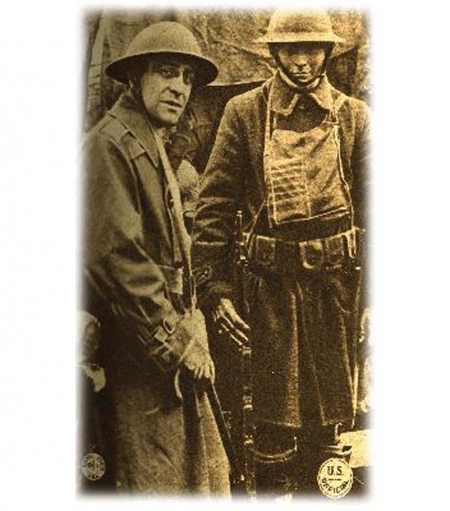
This small notice is interesting for what it doesn’t say: of all the uniform foppery and up-town military accessories that were made available for American officers of World War I, there was no run on serge, whipcord or fine Melton wools; pigskin was plentiful for custom boots and no one seemed fearful that pewter flasks were scarce. What was in short supply were trench coats. The officer candidates from Plattsburg (N.Y.) were making their desires known: they did not care to risk life and limb only to wear a mackinaw. These men wanted trench coats and the New York Times found that newsworthy (It is interesting to note that the reporting journalist had never actually seen one, or else he might not have said that it extended to the ankle).

Advertisement

Use shortcode [oma_ad position="summary_top"] (or other position) in your theme or widgets to display OMA Promotions here.

Anti-Lynching Law Debated in Congress (Congressional Digest, 1922)
1921, Lynchings

American Lynchings on French Soil
(NY Times, 1921)

(The article can be read here)


This article from 1921 reported on a disturbing series of lynchings that took place between the years 1917 through 1919 by U.S. Army personnel serving in France during the First World War. The journalist quotes witness after witness who appeared before a Senate Committee regarding the lynchings they had seen:

Altogether…I saw ten Negroes and two white men hanged at Is-Sur-Tille. Twenty-eight other members of my command also witnessed these hangings and if necessary, I can produce them.

It was alleged that the murders were committed under the authority of American officers who willingly acted outside the law.

If you would like to read more about African-American service during W.W. I you may click here.

French Army Grenade 1918 diagram
1918, Inventions and Weapons

A Diagram of a French WW I Grenade
(NY Times, 1918)

A black and white mechanical drawing of a World War One French grenade with all parts labeled. In 1918, the New York Times wrote:

The pine-apple grenade, or as the French are wont to call it, the citron grenade (lemon) is charged with a powerful explosion called shedite, which when exploded on open ground is said to cause injuries at 250 yards. Primed with a sensitive detonator, the grenade is caused to explode when it strikes the ground. Very often the grenade is not thrown far enough, so the that the explosion is likely to cause casualties among one’s own troops. Apart from these disadvantages, the grenade is an excellent weapon for hand to hand fighting.

The Collapse of the European Aristocracy (NY Times, 1919)
1919, Aftermath (WWI)

The Collapse of the European Aristocracy
(NY Times, 1919)

The three great military monarchies which have lately fallen to pieces – Russian, Austro-Hungarian and German – were all based upon an aristocracy of large landed properties, whereas the other European countries had become parliamentary and democratic states. Europe was thus divided between two political orders, founded on two social orders, in fact, into two different worlds between which the river Elbe was approximately the boundary…

The war proved a decisive test of the stability of the two social orders; the democratic states went through it without flinching, the monarchies which had which had engendered the war in the hope of strengthening their position have gone under; from their defeat has sprung the revolution, which is overthrowing all aristocracies.

Click here to read a 1916 VANITY FAIR article about how the war had affected the British upper class.

Advertisement

Use shortcode [oma_ad position="summary_top"] (or other position) in your theme or widgets to display OMA Promotions here.

The Effects of War on Character (NY Times, 1915)
1915, Letters

The Effects of War on Character
(NY Times, 1915)

The attached W.W. I letter is a reflection on the effects of war upon character written by a British officer on the western front to his wife.

You need not fear for a ‘disgraceful peace’ coming from fatigue on the part of the fighting men. It is the resolution of the talking men you will need to look to.


No truer words…

American Blacks Under French Command (NY Times, 1919)
1919, African-Americans

American Blacks Under French Command
(NY Times, 1919)

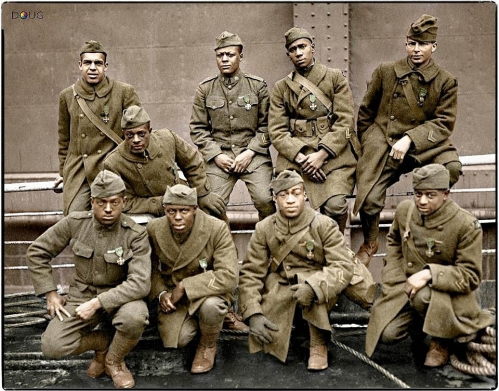
This article in a 1919 issue of THE NEW YORK TIMES that told the history of Negro infantry units during the First World War. It concerns the combat record of the American 92nd and 93rd Divisions – units that were dubbed ‘Schwartz Teufel’ (black devils) by the luckless Germans who stood in the opposite trenches.

The negro soldiers of the United States arrived late on the field of battle, but in more than sufficient time to make Germany feel the strength of their arm. In all 83,000 Negroes were drafted for service in the National Army sent overseas. More than 626 of the 1,250 colored men who completed their course of training were commissioned as officers in the United States Army; nearly 100 negro physicians and surgeons received commissions as officers in the Medical Reserve Corps and a full 30,000 men constituted the 92nd Division detailed for duty in France under General Pershing. The total number of Negro combat troops was 42,000.


Click here to read an article about the African soldiers of the French Colonial Army.

Letter from a Veteran (NY Times, 1916)
1916, Letters

Letter from a Veteran
(NY Times, 1916)

An experienced Canadian trench fighter gives some tips to an American Guardsman.

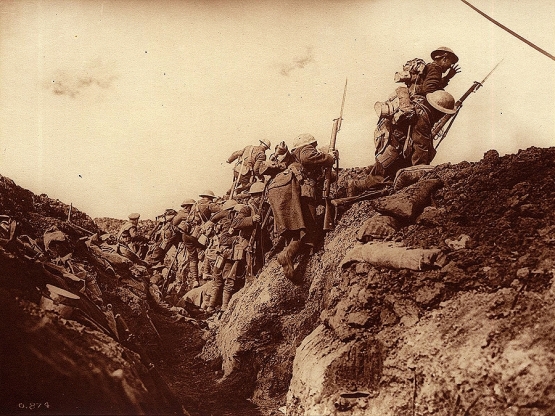
Men enthuse over descriptions of bayonet charges. They are no idle pastimes, so it behooves all soldiers not only to become absolutely perfect in bayonet exercises, but to practice getting under way, keeping abreast with your mates and having a firm hold on your rifle. The soldier may say, ‘Oh, that bayonet exercise isn’t practical in a charge. No? Very well, that may appear right to some, but I should advise every one knowing every parry, thrust and counter so thoroughly that after they become second nature you can then do whatever your intuition at the moment directs.

Advertisement

Use shortcode [oma_ad position="summary_top"] (or other position) in your theme or widgets to display OMA Promotions here.

Living the Trench War (NY Times, 1915)
1915

Living the Trench War
(NY Times, 1915)

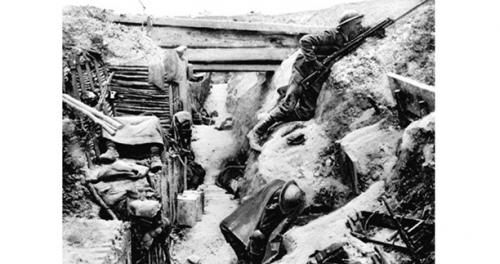
This World War One correspondence makes for a wonderful read and it gives a very lucid picture of what the war must have been like once both sides had resigned themselves to trench warfare. The letter was dated October 8, 1914 and the British officer who composed it makes clear his sense that no modern war had ever been fought in this queer manner before.

Trench Warfare Tips from a Veteran (NY Times, 1916)
1916

Trench Warfare Tips from a Veteran
(NY Times, 1916)

An experienced Canadian trench fighter wrote the attached columns offering sound advice to the American National Guardsmen he knew were bound to enter the war at some point.

Men enthuse over descriptions of bayonet charges. They are no idle pastimes, so it behooves all soldiers not only to become absolutely perfect in bayonet exercises, but to practice getting under way, keeping abreast with your mates and having a firm hold on your rifle. The soldier may say, ‘Oh, that bayonet exercise isn’t practical in a charge. No? Very well, that may appear right to some, but I should advise every one knowing every parry, thrust and counter so thoroughly that after they become second nature you can then do whatever your intuition at the moment directs.

WW I German Trench System | German Concrete Trenches in WW1 France
1915

‘The German Concrete Trenches”
(NY Times, 1915)

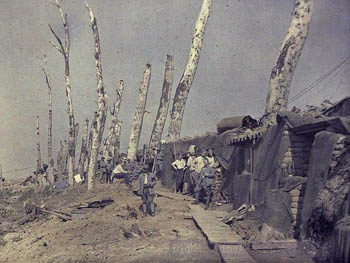
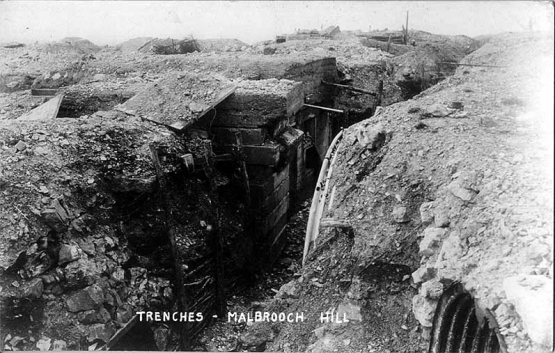
Some of the trenches have two stories, and at the back of many of them are subterranean rest houses built of concrete and connected with the trenches by passages. The rooms are about seven feet high and ten feet square, and above the ground all evidence of the work is concealed by green boughs and shrubbery.

Advertisement

Use shortcode [oma_ad position="summary_top"] (or other position) in your theme or widgets to display OMA Promotions here.

The Battle of the Cooties (NY Times, 1918)
1918

The Battle of the Cooties
(NY Times, 1918)

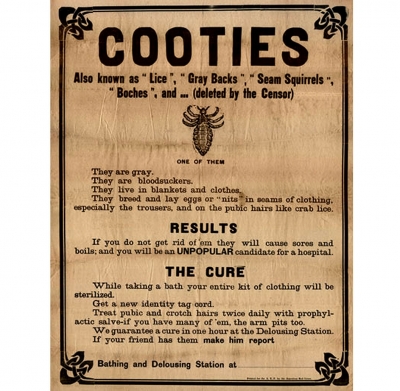
Cooties, in the World War One sense of the word, were tiny little bugs that lived in the seams of uniforms for that unlucky multitude who lived in the trenches. Being an equal-opportunity sort of parasite, they plagued all combatants alike, regardless of one’s opinions concerning Belgian neutrality, and were cause for much complaining, scratching, discomfort and the creation of way too much juvenile verse.

The attached article from 1917 tells the tale of some fortunate Doughboys and their encounter with a U.S. Army Cootie Graveyard (read: delousing station):

They entered a bedraggled, dirty, grouchy lot of sorry-looking Doughboys. They came out with faces shinning and spirits new. They knew they had before them the first good night’s rest in some time and sans scratching.

As far as cooties were concerned, the American infantrymen of the Great War had it far easier than his European comrades and counter-parts, for he only had to contend with them for the mere six month time that he lived in the trenches, rather than the full four years.

Mustard Gas Warfare (NY Times, 1918)
1918, Poison Gas

Mustard Gas Warfare
(NY Times, 1918)

A 1918 New York Times article that reported on the expectations among the French and British for the United States to both use and manufacture mustard gas now that they have joined the war against Imperial Germany. The reporter went to some length elucidating as to the nasty, obscene and vile nature of mustard gas:

Several months ago when I was making an experiment, some mustard gas got between two of my fingers. It was so little that it escaped notice. It was not until 9 o’clock that night that my hand began to look puffy. The next morning it was badly blistered.

A Letter from One Who Saw the First German Prisoners (NY Times, 1915)
1915, Prisoners of War

A Letter from One Who Saw the First German Prisoners
(NY Times, 1915)

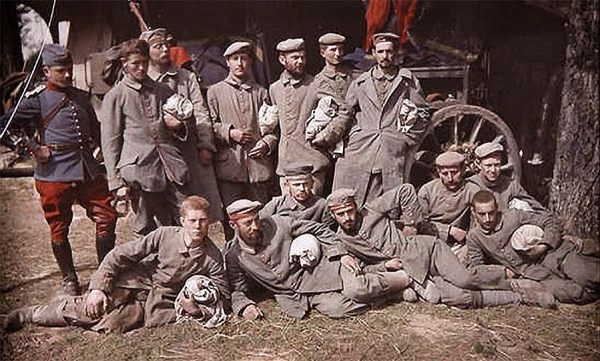
This W.W. I letter was written by a French infantryman who had participated in one the earliest battles of 1914. In this letter, that managed to make it into the French, British and American papers, the Frenchman took a good deal of time to describe his impressions of the first German prisoners to be taken in the war:

Their appetite is so great that, though in [the] presence of a French officer they will click their heels together properly, they never cease at the same time to munch noisily and to fill out their hollow cheeks.

Advertisement

Use shortcode [oma_ad position="summary_top"] (or other position) in your theme or widgets to display OMA Promotions here.

Scroll to Top