Author name: editor

The Titanic Crew: Under-Drilled and Mediocre (The Nation, 1912)
1912, Pamphlet Produced by the National Park Service, Titanic History

The Titanic Crew: Under-Drilled and Mediocre
(The Nation, 1912)

The following is a very short opinion piece that more than likely served as an accurate reflection the of the opinions held by the Titanic‘s mourning loved ones. In their grief and incomprehension, some of the surviving family members of Titanic‘s victims, no doubt, did lay much of the blame on those who ply their trade at sea:

The Titanic‘s loss has made it clear that things are not going well among seamen. Despite the calmness of many of the crew, some of the facts that are coming out do not redound to the credit of the men of the sea. Like the captains of those near-by steamers that could have saved all but refused, they have made us all ask weather the old ideal of the sailor as a man brave to rashness, ready at any time to risk his life for others, and characterized by many other noble attributes of character, has faded from the sea…

A Greek Tragedy at Sea (Century Magazine, 1912)
1912, Century Magazine, Titanic History

A Greek Tragedy at Sea
(Century Magazine, 1912)

In an effort to add some element of nobility to that horrid April night when Titanic slipped under the surface of the sea, an anonymous opinion writer wrote this short editorial six weeks later:

The terrible event reads like an epic of night, or like a Greek tragedy on a colossal scale; more, it is a revelation of the power of God in man.

Advertisement

Use shortcode [oma_ad position="summary_top"] (or other position) in your theme or widgets to display OMA Promotions here.

1943, Click Magazine, World War Two

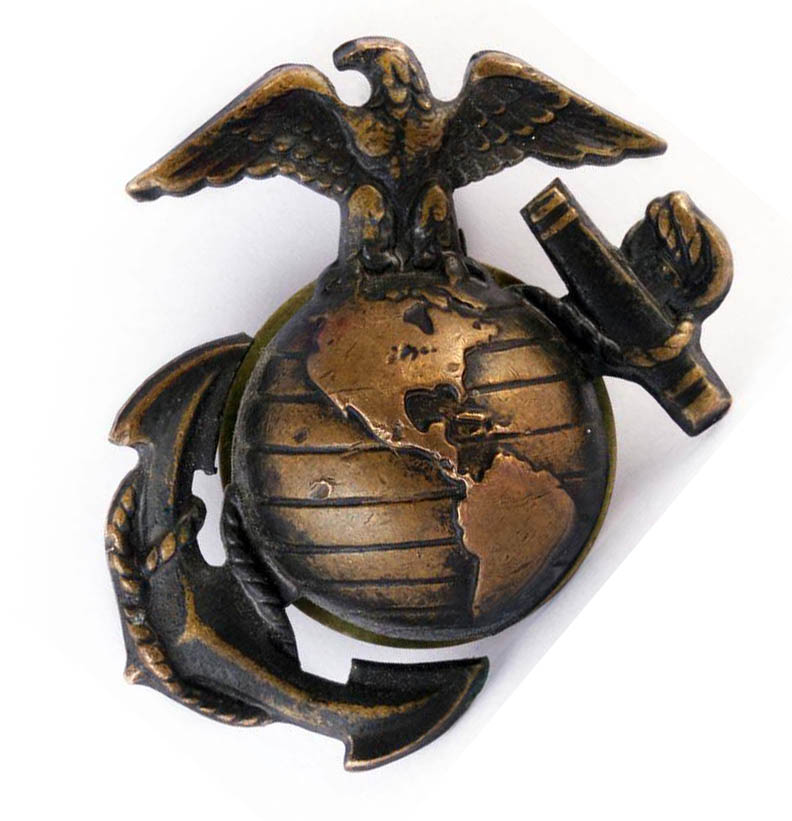
Who are the U.S.Marines?
(Click Magazine, 1943)

A nice piece of P.R. for the W.W. II Gyrenes:

Since the policy limits Marine Corps personel to 20 percent of the navy, no Marine can specialize as do other service men. He must be a crack rifle and pistol shot, a saboteur, a scout familiar with jungle and city alike. He must run, walk, swim, sail, shoot, and maim better than the men he’s fighting… He glories in this responsibility, as in his corp’s 167-year-old reputation as nonpareil shock troops. He’s never yeilded either that responsibility or reputation to his jealous friends in rough-and-ready Army and Navy units. They resent the Marine. He knows it and doesn’t give a damn, cocky in the knowledge that he’s relied on to pave the way for the Army’s operations and to finish up the Navy’s.


This is a six page photo-essay that is comprised of seventeen images (two in color) of the San Diego Marines, who are identified as the dirtiest and cockiest fighters in the nation’s arsenal.


Click here to read another article about the Marines.
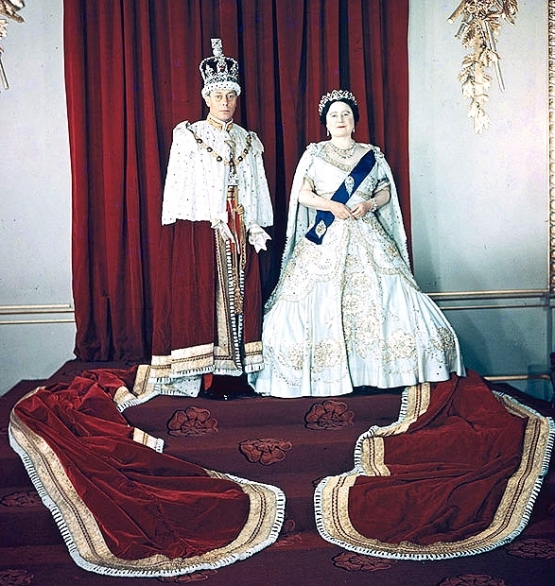
The Coronation of George VI (Stage Magazine, 1937)
1937, European Royalty, Stage Magazine

The Coronation of George VI
(Stage Magazine, 1937)

An article by Rebecca West (1892 – 1983) in which she listed an enormous number of reasons as to why May 12, 1937 (the coronation date for George VI) will not be a good day to be in London. From time to time throughout the article she throws-in some bon mots:

This is a crucifixion as well as a coronation. The best kings we have ever had have been Queens, and every year Kingship becomes less and less suitable for a man. A constitutional monarch has constantly to behave as if he were a mindless puppet in circumstances which would prove fatal to everybody, including himself, if he really were a mindless puppet.

The King’s Speechstyle=border:none

Advertisement

Use shortcode [oma_ad position="summary_top"] (or other position) in your theme or widgets to display OMA Promotions here.

Congress Examines the Morals Portryed on T.V. (Quick Magazine, 1952)
1952, Early Television, Quick Magazine

Congress Examines the Morals Portryed on T.V.
(Quick Magazine, 1952)

This article is illustrated with a single television image of the Hollywood actress Ilona Massey exposing her highly charming decolletage for all the world to see. The image alone can be credited for having launched a dozen Congressional hearings concerning the matter as to what is a television programmers singular understanding of public decency? Yet this short column only discusses one hearing, the one that took place in the Summer of 1952 in which Elizabeth Smart of the Women’s Christian Temperance Union spoke frankly about the alleged amusement that the networks were providing. Another temperance group in attendance complained that the actors on beer commercials should not appear as if they were enjoying themselves…

Summary and Analysis of THE WASTE LAND by TS Eliot | THE WASTE LAND Critical Review 1922
1922, Pamphlet Produced by the National Park Service, Twentieth Century Writers

Reviewed: The Waste Land
(The Nation, 1922)

Attached is one of the first American reviews of T.S. Eliot’s poem The Waste Land, it was penned by literary critic Gilbert Seldes (1893 – 1970):

In essence The Waste Land says something which is not new: that life has become barren and sterile, that man is withering, impotent, and without assurance that the waters which made the land fruitful will ever rise again.

Advertisement

Use shortcode [oma_ad position="summary_top"] (or other position) in your theme or widgets to display OMA Promotions here.

Had Germany Really Deployed Women Soldiers? (The Stars and Stripes, 1919)
1919, The Stars and Stripes, Women (WWI)

Had Germany Really Deployed Women Soldiers?
(The Stars and Stripes, 1919)

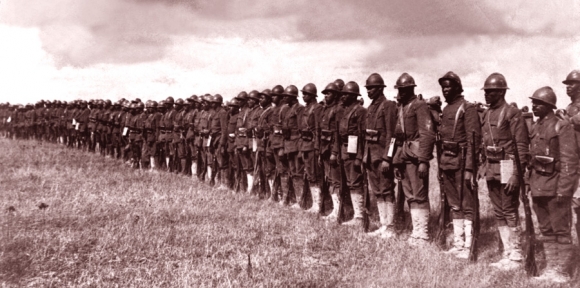
This paragraph was lifted from a longer article regarding the battle-savvy Native Americans of World War One and it supports the claims made in 1918 by a number of anonymous allied POW’s who reported seeing female soldiers in German machine gun crews toward the close of the war. The article appeared after the Armistice and this was a time when The Stars and Stripes editors were most likely to abstain from printing patriotic hooey.


If you would like to read another article about women combatants in W.W. II, click here.

Remembering the American Dead (The Atlantic Monthly, 1923)
1923, The Atlantic Monthly, Women (WWI)

Remembering the American Dead
(The Atlantic Monthly, 1923)

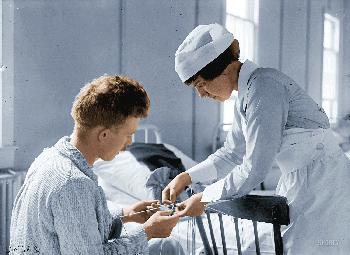
Always stationed to the most forward field hospitals during America’s five major campaigns, a former W.W. I nurse penned this moving reminiscence that recalled her experiences tending to the soldiers who slowly died in the army hospitals. Haunted by the memories of these dying boys, she asked her readers as to whether they feel the world has kept the promises made to those who sacrificed so much: is the France they died to protect a better place? is the country that demanded they fight a better place?


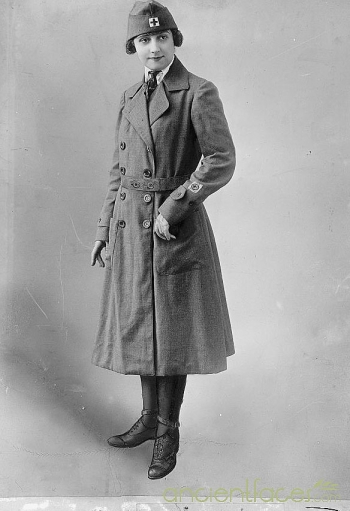
Click here for clip art depicting the nurses of World War One.

Advertisement

Use shortcode [oma_ad position="summary_top"] (or other position) in your theme or widgets to display OMA Promotions here.

Dogs for Defense (American Magazine, 1943)
1943, Animals (WWII), The American Magazine

Dogs for Defense
(American Magazine, 1943)

Dogs for Defense was a World War II organization founded by three patriotic dog enthusiasts who established the group in order to procure patriotic canines (meeting certain height and weight standards) for the U.S. Army Quartermaster Corps, that branch of the services charged with the task of training the animals. Dogs for Defense was able to provide as many as four hundred dogs a week for the U.S. Army throughout both W.W. II as well as the Korean War.

The attached article can be printed.

Realistic Training for ALL QUIET ON THE WESTERN FRONT (Photoplay Magazine, 1931)
1931, Hollywood History, Photoplay Magazine

Realistic Training for ALL QUIET ON THE WESTERN FRONT
(Photoplay Magazine, 1931)

Prior to reading this PHOTOPLAY article we were convinced that Oliver Stone’s Vietnam war film, PLATOON (1986) was the first production of it’s kind to actually take the effort to school all cast and extras as to the horrors of war; however it seems that this unique distinction goes to All Quiet on the Western Front.


In this interview the seven leading cast members discuss how the making of that movie disturbed each of them in profound ways:

We went into that picture a group of average wise-cracking fellows. We didn’t come out that way…


A small notice has been added that announced that the movie had been banned in Austria.

A 1929 review of the book can be read here

Advertisement

Use shortcode [oma_ad position="summary_top"] (or other position) in your theme or widgets to display OMA Promotions here.

ww2 German Airborne Infantry | german airborne operations in ww2
1945, Compiled by the U.S. Dept. of War, German Army Studies

German Paratroops
(U.S. Dept. of War, 1945)

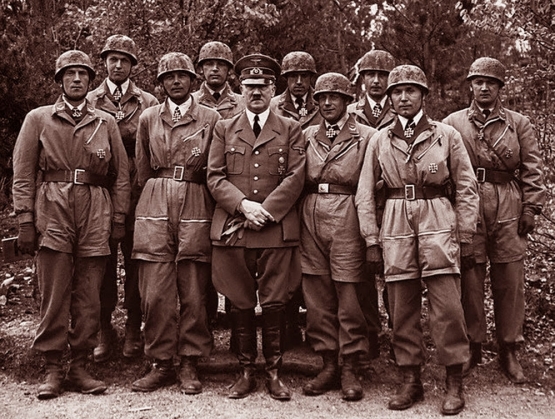
Attached is the U.S. War Department study regarding the tactical uses of German airborne forces throughout the course of the Second World War; from the Battle of Crete to the Battle of the Bulge:

In Russia, the Balkans, and the December 1944 counteroffensive in the Ardennes, units varying in strength from a platoon to a battalion have been landed behind enemy lines to disrupt communications, to seize such key points as railroads, roadheads, bridges and power stations.

Founders of Hollywood Silent Film | Early Hollywood Producers and Directors
1939, Film Daily Magazine, Silent Movie History

The Founders of the Hollywood Film Colony Gather Together(Film Daily, 1939)

A notice from the pages of a 1939 Hollywood trade publication announced an organization for the silver-haired alumni of Hollywood’s silent film business:

Early this summer there came into existence a new organization known as Picture Pioneers, consisting of veterans who have been in the industry 25 years.


Click here to read about the movie moguls of 1919.

Advertisement

Use shortcode [oma_ad position="summary_top"] (or other position) in your theme or widgets to display OMA Promotions here.

Scroll to Top