The British Government’s Conclusion
(The Annual Register, 1913)
Here is a digest of the conclusion reached by the British government’s Special Commission on the Loss of the Titanic.

Here is a digest of the conclusion reached by the British government’s Special Commission on the Loss of the Titanic.
The White Star Company is properly condemned for the fact that there was no suitable provision for saving life, no drill of the sailors, and further, that the bulkheads separating the watertight compartments did not close properly.
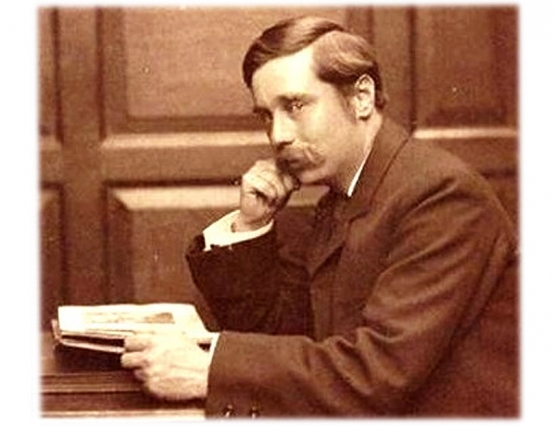
Writing as a devoted socialist, H.G. Wells (1866 – 1946) saw the Titanic disaster through the lenses of one who has come to only expect the worst from the British class structure:
It typifies perfectly to his mind the muddle of the present social situation and illustrates the incompetence of the upper class in modern society.
It was the penetrating comment of chance upon our entire social system. Beneath a surface of magnificent efficiency was -slapdash. The ship was not even equipped to to save its third-class passengers; they placed themselves on board with an infinite confidence in the care that was to be taken of them, and most of their women and children went down with the cry of those who find themselves cheated out of life.
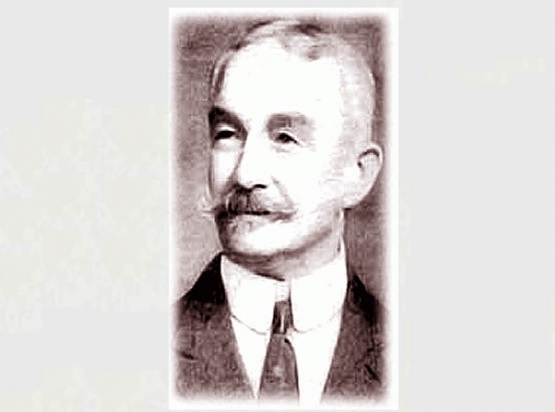
Journalist, artist and American Civil War veteran Francis D. Millet, (1846 – 1912) was also one of the doomed passengers on board Titanic. Prior to the sinking, Millet had enjoyed some success as a muralist.
Among the institutions possessing canvases by Millet are the Metropolitan Museum of Art, the Detroit Museum, the Union League Club, the Duquesne Club of Pittsburg, and the National Gallery of New Zealand.
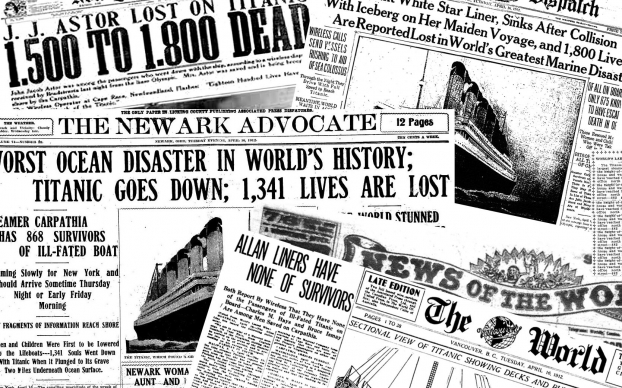
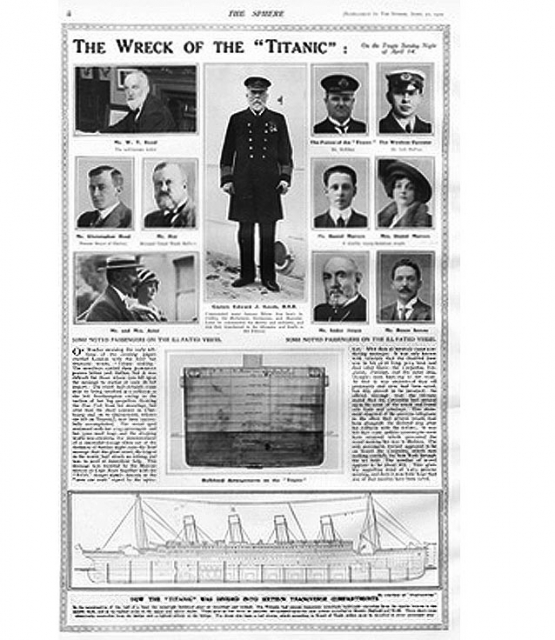
The attached three news reports were among some of the very first British magazine notices on the Titanic disaster to be printed. The Spectator editors rejected, even as a possibility, the fact that the great ship had broken in half; they also rejected a number of other observations made by the surviving eyewitnesses.
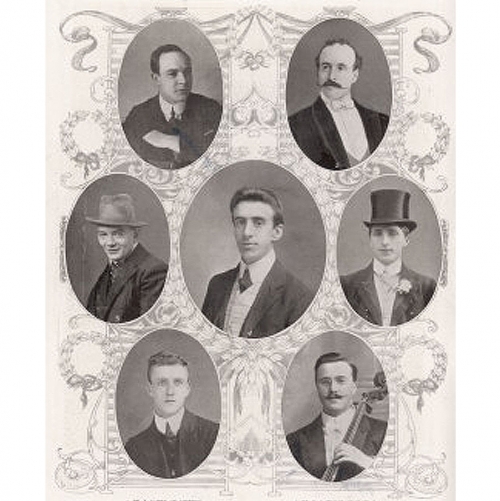
A short excerpt from the London Standard concerning the fortitude of the Titanic musicians:
We are usually a undemonstrative people, but the incident of the string band of the Titanic, it’s members gathered together to play the hymn Nearer My God to Thee, as the great ship settled for her last plunge, left men speechless with pity. It is a great incident of history, worthy to rank with the last parade on Birkenhead
Attached you will also find the musical score and lyrics of Nearer My God to Thee.

In the attached news report from The Literary Digest you will read an article that is composed of portions from various Christian sermons that were delivered throughout the United States on the Sunday following the Titanic sinking:
…The disease that is gnawing into our civilization are love of money and passion for luxury. Those two combined to sink the Titanic.
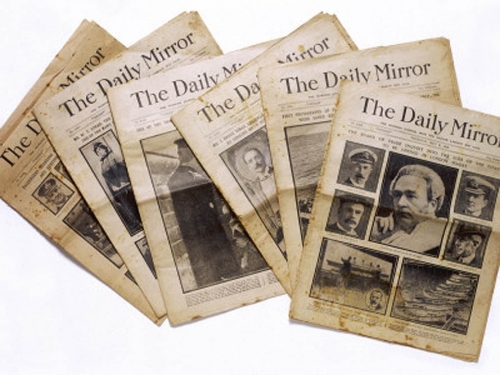
This article presents a broad survey of 1912 opinions concerning the Titanic sinking from a number of different sources. You’ll read the defensive statements of Joseph Bruce Ismay, the critical remarks made by Carpathia Captain Rostrom, the varying assignments of blame made by newspapers and assorted government swells as well as the broad understanding that wireless communication must become a standard piece of equipment for all ships. Also reported is the news of a mutiny on board the Titanic‘s sister ship, Olympic, which was also furnished with the suspect collapsible lifeboats.
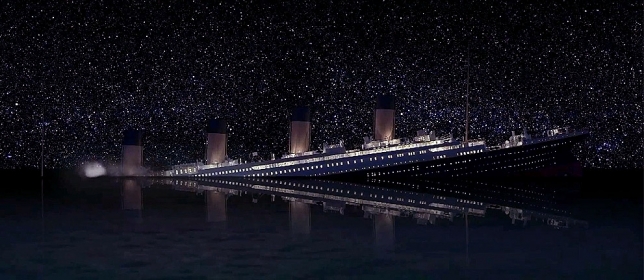
In the final hours of the Titanic‘s life there were examples of heroic self-sacrifice; there were also examples of selfishness and cowardice.
Women and men, stokers and millionaires, crew and passengers, faced the grim enemy with unshaken fortitude and self-control. There were exceptions of course. In a company of 2,300 men and women of all sorts there must be some who show the yellow streak at such a time.
Of the 1,400 passengers, 495 were saved, of whom 202 were first cabin, 115 second cabin and 178 steerage passengers. That is, 35 percent of the passengers and 22 percent of the crew survived.
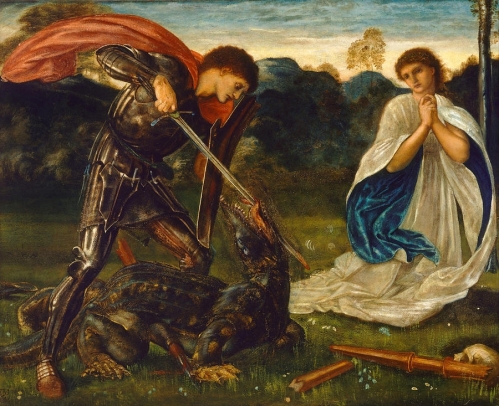
The Titanic disaster was a sad affair on a number of levels; however April 15, 1912 was a great night for the Anglo-Saxon hegemony and the values they held dear. As this piece makes clear, chivalry and other examples of good form were all in place as the great ship went down. It was remembered with pride how even the most pampered of millionaire industrialists stepped aside so that others might have a place on the lifeboats (all except J. Bruce Ismay).

It was not simply the menfolk who maintained the stiff upper lip as Titanic began to take water; many of the women also believed it was there place to suffer in order that others may live.
Many other women had to be almost forced into the boats or wheeled into them.
A few lines devoted to those who distinguished themselves that sad evening on Titanic, as well as some thoughts concerning the tune, Autumn -which was performed during the closing moments of the tragedy. The article is accompanied by a photograph of U.S. Army Major Archie Butt (b. 1865), who was remembered for having kept the order during the evacuation.
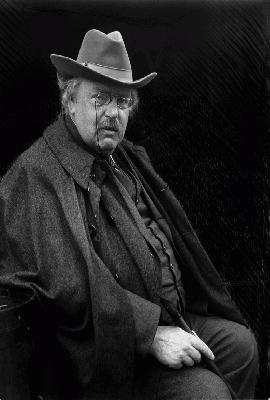
The British critic, novelist and poet G.K. Chesterton (1874 – 1936) was far more outraged by the American press coverage and the remarks made by the Yankee political classes than by any other aspect of the Titanic.
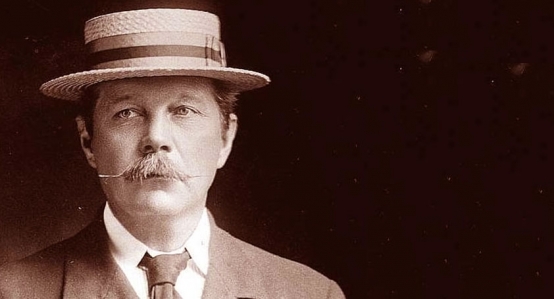
Sir Arthur Conan Doyle (1859 – 1930) was outraged by the dismissive, bitter comments made by the Irish playwright George Bernard Shaw (1856 – 1957) regarding the many acts of heroics that took place as the ship was sinking.
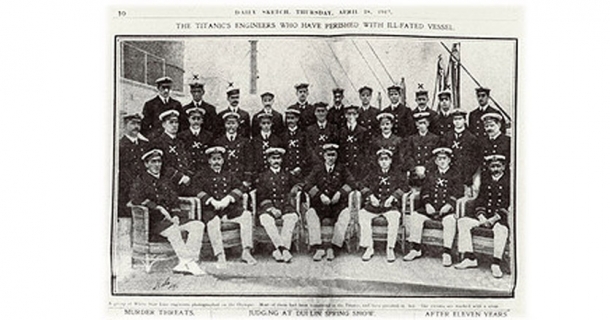
The following is a very short opinion piece that more than likely served as an accurate reflection the of the opinions held by the Titanic‘s mourning loved ones. In their grief and incomprehension, some of the surviving family members of Titanic‘s victims, no doubt, did lay much of the blame on those who ply their trade at sea:
The Titanic‘s loss has made it clear that things are not going well among seamen. Despite the calmness of many of the crew, some of the facts that are coming out do not redound to the credit of the men of the sea. Like the captains of those near-by steamers that could have saved all but refused, they have made us all ask weather the old ideal of the sailor as a man brave to rashness, ready at any time to risk his life for others, and characterized by many other noble attributes of character, has faded from the sea…
Four cartoons pertaining to the loss of Titanic; the drawings first appeared in four different newspapers from various parts of the the United States shortly after news of the disaster had spread.
In an effort to add some element of nobility to that horrid April night when Titanic slipped under the surface of the sea, an anonymous opinion writer wrote this short editorial six weeks later:
The terrible event reads like an epic of night, or like a Greek tragedy on a colossal scale; more, it is a revelation of the power of God in man.
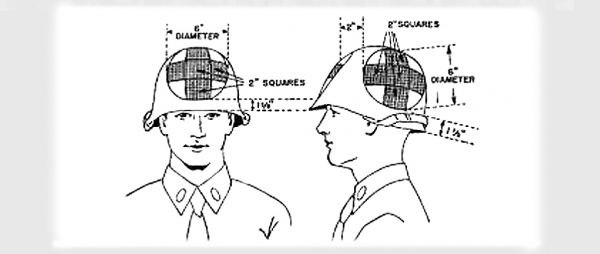
Moved by the devotion and fortitude of the U.S. Army combat medics serving in the New Guinea campaign, YANK correspondent Dave Richardson wrote this short article in praise of the selfless acts performed by four outstanding medics.
1943 was truly the year that proved to have been the turning point in the war, click here to read about it…