Author name: editor

Lena Horne (Collier's Magazine, 1943)
1943, Big Band 1930s-1940s, Collier's Magazine

Lena Horne
(Collier’s Magazine, 1943)

Widely seen mid-way through the year 1943 was this COLLIER’S MAGAZINE profile of singer Lena Horne (1917 – 2010) who impressed the the West-coast press corps in the same way she did the ink-stained wretches of the East:

When she was sixteen she was in the chorus at the Cotton Club in Harlem, getting that job through her mother who was then playing in-stock at the old Lafayette Theater on Lenox Avenue… Her name up to then was Helena Horne, but Barney [Josephson] ruthlessly dropped the added letters. He also taught her a great deal about using her personality in her songs.

Advertisement

Use shortcode [oma_ad position="summary_top"] (or other position) in your theme or widgets to display OMA Promotions here.

German Prisoners of WW I | Transporting WW1 German Prisoners
1921, Prisoners of War, The American Legion Weekly

A Clever Way to Escort Prisoners…
(American Legion Weekly, 1921)

This piece reminds me of what my son’s history teacher so wisely passed on to them one day in sixth grade: History can be found anywhere. How right she was, and in this case, a seldom remembered but perhaps widely practiced method of escorting German prisoners to the rear was rendered by a cartoonist in a 1921 magazine advertisement for a firm that manufactured men’s accessories [underwear]:

Remember that big attack? You couldn’t spare a whole squad to escort your prisoners back to the cages; you needed every man in front. You got around the difficulty by cutting off the Boches’ trousers. That made them helpless. They couldn’t run and they couldn’t fight. You parked the skipper’s dog robber on their flank with a warped rifle and ran’em back.


Click here to read an article about the American POW experience during the Korean War.

Inhumane Treatment of Allied Prisoners of War by the Japanese in WW II
1944, Newsweek, POWs

Inhumanity
(Newsweek Magazine, 1944)

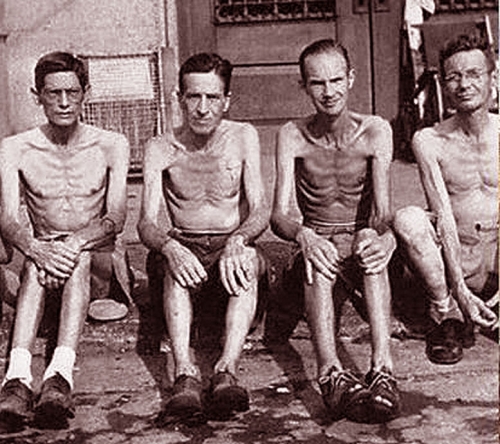
Here is a short column that recalls the bestial treatment that was meted out to the American and Filipino prisoners of war by their Japanese masters.

For example, in August of last year, some 300 Japs attacked an unarmed litter train on the Munda Trail. They hacked twenty of the wounded to death…

Hemingway's Death in the Afternoon (Saturday Review of Literature, 1932)
1932, The Saturday Review of Literature, Twentieth Century Writers

Hemingway’s Death in the Afternoon
(Saturday Review of Literature, 1932)

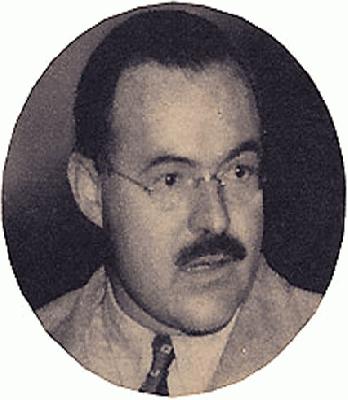
In 1932, one of the few English speaking fans of bull-fighting was given the task of reviewing Ernest Hemingway’s (1899 – 1961) Death in the Afternoonstyle=border:none, and came away thinking:

Ernest Hemingway, in the handling of words as an interpretation of life, is not a brilliant and ephemeral novillero, but a matador possessed of solid and even classic virtues.


Click here to read about Hemingway, the war correspondent.

Advertisement

Use shortcode [oma_ad position="summary_top"] (or other position) in your theme or widgets to display OMA Promotions here.

The Reds Take it on the Chin (Pathfinder Magazine, 1951)
1951, Pathfinder Magazine, The Korean War

The Reds Take it on the Chin
(Pathfinder Magazine, 1951)

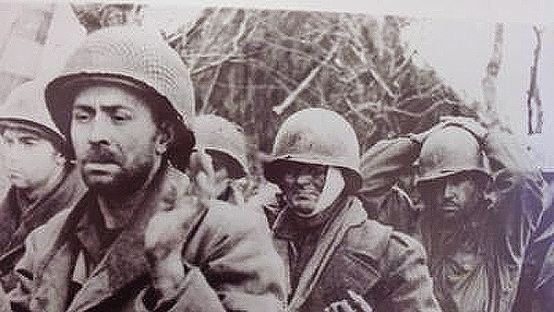
United Nations patrols in Korea probed north last week seeking out an enemy that wouldn’t stand and fight. But early this week, after U.N. advance units had pushed to within eight miles of Seoul, the Communists suddenly stopped playing hide and seek and began to offer stiffer resistance…. The Communist reluctance to fight last week caused much speculation at Eighth Army headquarters. Some officers thought the Reds were regrouping for a major push down the center. Others felt the Chinese had pulled back to give weight to the cease-fire negotiations at Lake Success. But they all agreed on one point: the Communists have paid an appalling price for their Korean adventure.


In hindsight we can say that the musings of the first officers were correct: the Communists were indeed rearming for a major offensive that would begin the following May.


Click here to read an article about the American POW experience during the Korean War.

The Stalin ''Peace Plan'' (Quick Magazine, 1950)
1950, Quick Magazine, The Korean War

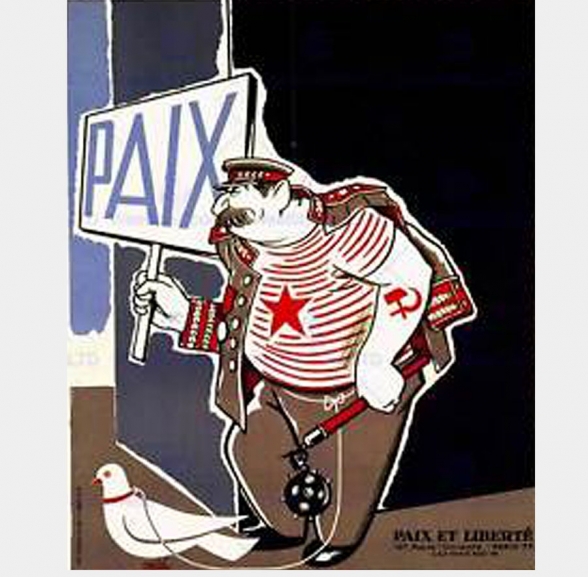
The Stalin ”Peace Plan”
(Quick Magazine, 1950)

This column will give you a quick understanding as to how 1950 ended:

Russian diplomats made valiant efforts. In Moscow, [Stalin’s adviser] Andrei Gromyko called Western envoys, urging Big Four talks to ‘unify’ Germany. In the U.N., Andrei Vishinsky protested Russia’s ‘devotion’ to peace and to the belief that capitalism and Communism could live in the same world… But while the Reds talked, Chinese Communists had swept into the Korea War. The Soviet military budget had soared . Russia’s submarine fleet had multiplied, it’s air force had expanded to 14,000 combat planes, its army was millions strong, and still growing.


Click here to read an article about the American POW experience during the Korean War.

Early Korean War News
1950, Quick Magazine, The Korean War

The Continuing Crisis
(Quick Magazine, 1950)

[In Washington] the U.S. defense effort snowballed. Looking beyond the Korea showdown, the U.S. had to plan against new Russian surprises… There would be no appeasement, even at the risk of W.W. III. U.S. intelligence indicated a ten year Russian military plan designed to bleed America white. The aim would be to keep the U.S. in a semi-mobilized state for years.


Click here to read an article about the American POW experience during the Korean War.

Advertisement

Use shortcode [oma_ad position="summary_top"] (or other position) in your theme or widgets to display OMA Promotions here.

US ARMY Interrogation Instruction During WW II | Captured WW II American Soldiers
1943, POWs, Yank Magazine

If You’re Captured…
(Yank Magazine, 1943)

This cautionary article seems like a collaboration between Emily Post, the Twentieth Century’s High-Priestess of manners, and Sigmund Freud. It concerns one-part social instruction and one-part psychology. It offers wise words to the Yank readers as how best to behave when being interrogated by Axis goons; American mothers would have been proud to know that their tax dollars were well-spent advising their progeny to keep in mind manners, manners, manners and always anticipate the direction of the conversation:

It’s best to call your enemy questioner Sir or his rank, if you can figure out what it is. Then when you answer I’m sorry, sir to his questions, there isn’t much he can do about it…


Click here to read an article about the American POW experience during the Korean War.
Holocaust Witness 1945 | William L Chenery Death Camp Article Collier's Magazine 1945 | Odilo Globocnik Article
1945, Collier's Magazine, Death Camps

Testimony
(Collier’s Magazine, 1945)

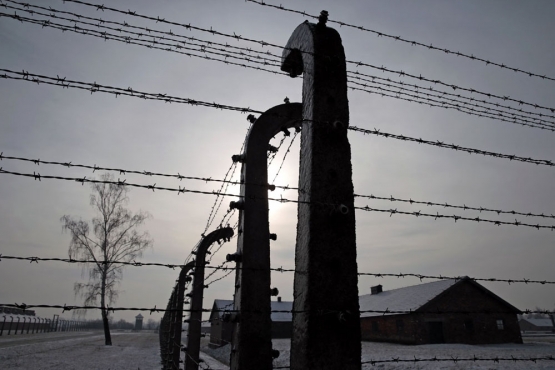
I have visited these [death] camps and I have seen the prisoners and the conditions under which they existed or died. It would be hard, with a mere camera, to overstate the essential horrors of these camps… It is not a pretty site to see – as I did… I fancy that no other generation was ever required to witness horror in this particular shape…

Advertisement

Use shortcode [oma_ad position="summary_top"] (or other position) in your theme or widgets to display OMA Promotions here.

Women's Labor Supply Services of the War Production Board | Thelma McKelvey Director of the Women's Labor Supply Services WPB
1942, The American Magazine, Women (WWII)

Distributing Women Throughout Industry
(The American Magazine, 1942)

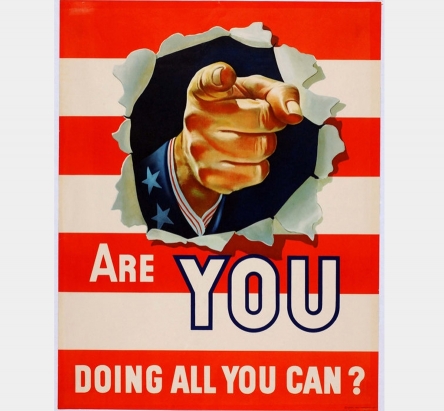
One of the seldom remembered branches of the War Production Board was the Women’s Labor Supply Services which served to eradicate the various draft deferments that were keeping too many men out of the military. Thelma McKelvey was the woman in charge of this body:

This captain of industry expects to see women workers in factories and farms increase from 700,000 today to 4,000,000 by mid-1943.

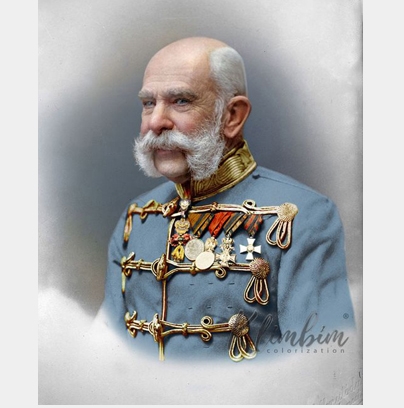
Franz Joseph: Geezer Emperor (La Baionnette, 1915)
1915, Cartoons, Cartoons (WWI), La Baionnette

Franz Joseph: Geezer Emperor
(La Baionnette, 1915)

There was once a time when magazine editors would not endeavor to encourage their cartoonists to pursue punchlines that were insensitive to the aged members of the world community, but that was a long time ago; in the attached WW I cartoon, a French satirical artist indulged his pettiness – daring the Politically Correct generations yet un-born to label him an ageist.

Advertisement

Use shortcode [oma_ad position="summary_top"] (or other position) in your theme or widgets to display OMA Promotions here.

1935 Tyrannical Legislation Introduced During the Great Depression | 1930s Anti-Free-Speech Legislation | 1935 Cedric Fowler Magazine Article
1935, New Outlook Magazine, The Great Depression

Tyranny At Home
(New Outlook Magazine, 1935)

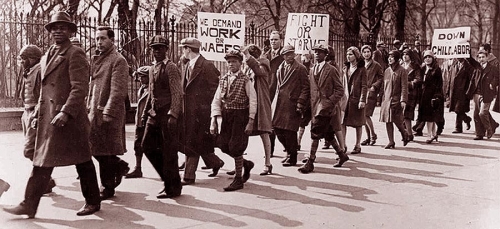
In the Spring of 1935, as the world slipped deeper and deeper into the muck of the Great Depression, journalist Cedric Fowler noticed that both governments state and Federal were introducing legislation that was designed to muzzle free-speech and make the deportation of foreign radicals far easier. At first he thought it was a result of the spread of Fascism across the globe – and it had finally reached our shores. He also considered the possibility that the elected classes, realizing that they were unable to reduce the destruction of the Depression, felt emasculated and invigorated by picking on the radical minority. Either way, he feared for the nations future.

C.R.W. Nevinson Rants About the American Art World (Literary Digest, 1922)
1922, Modern Art, The Literary Digest

C.R.W. Nevinson Rants About the American Art World
(Literary Digest, 1922)

Sounding a good deal like Simon Cowell (b. 1960), British painter C.R.W. Nevinson (1889 – 1946) had some nasty words for the American people and the art market they created.

Here emphatically they have lost their courage. They are afraid to buy what they like; they rely entirely on the auction-room value. To read the American art news is like reading our Financial Times. The American art critic has no use for a picture which does not tell a story…


Pegged as a Futurist, Nevinson is best remembered for his W.W. I paintings of the Western Front, which can be read about here.

Advertisement

Use shortcode [oma_ad position="summary_top"] (or other position) in your theme or widgets to display OMA Promotions here.

Scroll to Top