Author name: editor

A Hollywood Movie in Japan (Quick Magazine, 1952)
1952, Post-War Japan, Quick Magazine

A Hollywood Movie in Japan
(Quick Magazine, 1952)

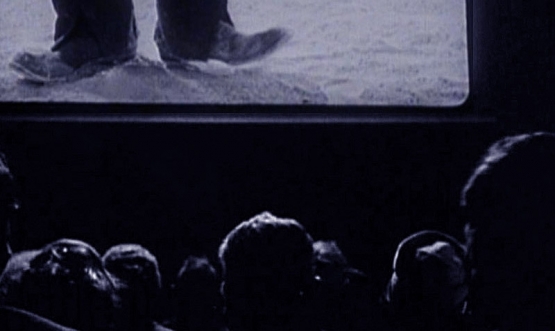
We were sympathetic when we learned that the Japanese did not much care for the movies Thirty Seconds Over Tokyo (1944), Back to Bataan (1945) or David Lean’s masterpiece Bridge on the River Kwai (1957) – but when we heard that they hated Sands of Iwo Jima (1952) – we finally realized that there are some people you simply cannot please. Apparently we weren’t the only ones who felt this way: the editors of QUICK MAGAZINE were so outraged on this matter they dispatched a reporter to document the venom that spewed-forth from those Japanese lips as they left the theater.

Reforms in Post-Fascist Japan (United States News, 1946)
1946, Post-War Japan, The United States News

Reforms in Post-Fascist Japan
(United States News, 1946)

Speaking of naive: when I was privileged to visit Japan in 2011 I actually believed that there would be a few native-born women who would recognize that I was an American and step forward to express some measure of gratitude for my country’s part in granting Japanese women the right to vote. I’m still waiting – however, it is important for all of us to remember that in the immediate aftermath of the war, our occupying forces introduced American values to the Japanese and they have thrived as a result:

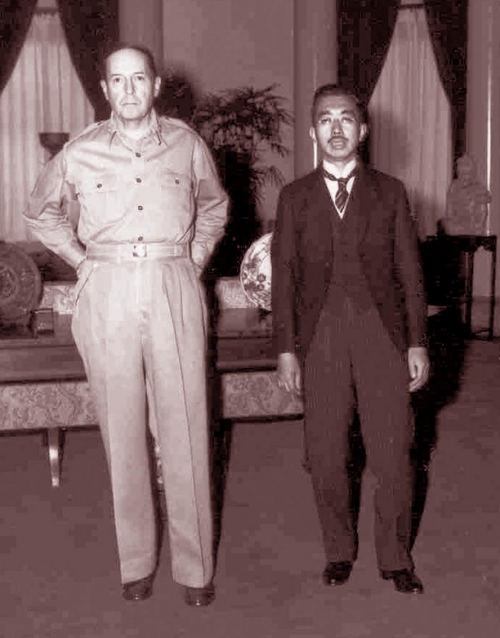
General MacArthur has ordered the Japanese Government to provide for freedom of speech, of press, of assembly, and of worship. ‘Thought control’ by the secret police is to be a thing of the past.

Advertisement

Use shortcode [oma_ad position="summary_top"] (or other position) in your theme or widgets to display OMA Promotions here.

To Live in Occupied Tokyo (Rob Wagner's Script Magazine, 1947)
1947, Post-War Japan, Rob Wagner's Script Magazine

To Live in Occupied Tokyo
(Rob Wagner’s Script Magazine, 1947)

A breezy account of American occupied Tokyo as reported by a literary magazine:

Regardless of the festivities, the War Crimes Trials proceed as usual and the accused sit with earphones listening intently as the defense presents the China Phase.
Japan seems to be striving toward Democracy, their interest in government affairs has broadened, and the voting in the national elections showed their arousal.

Should you like to read how the city of Kyoto fared during the Second World War, click here.

The Audience Laughed at the First Talkies (Film Spectator, 1930)
1930, Talkies 1930, The Film Spectator Magazine

The Audience Laughed at the First Talkies
(Film Spectator, 1930)

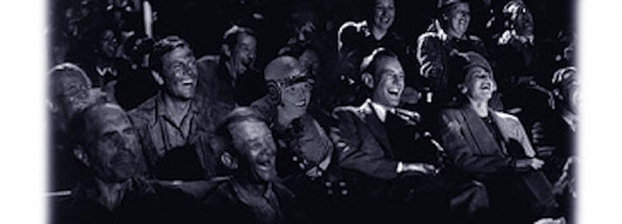
Upon viewing one of the earliest sound movies this film reviewer did not find it odd in the least as to why the audiences laughed uproariously while listening to perfectly ordinary dialog during the viewing of one of Hollywood’s newest offering War Nurse (directed by Edgar Selwyn):

It was not so much [that they chortled] at these isolated bits of dialogue that the audience laughed, as it was a resort to laughter caused by the absurdity ceaseless chatter that prevails throughout the entire production.


From Amazon: Shattered Silents: How the Talkies Came to Staystyle=border:none

Advertisement

Use shortcode [oma_ad position="summary_top"] (or other position) in your theme or widgets to display OMA Promotions here.

The Trial of Hideko Tojo (Pathfinder Magazine, 1945)
1945, Pathfinder Magazine, Post-War Japan

The Trial of Hideko Tojo
(Pathfinder Magazine, 1945)

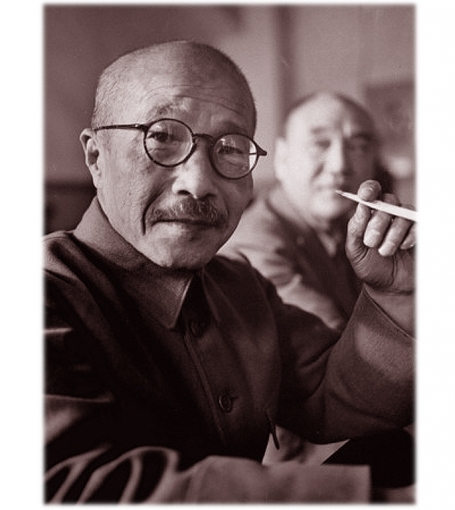
Standing before the judges who made up the 11-nation war crimes tribunal in occupied Tokyo, General Hideko Tojo, among 19 other Japanese wartime leaders, put on the show of his life:

Without hesitation, Tojo accepted full blame for plunging Japan into war. But it was, he insisted, a ‘defensive’ war, and ‘in no manner a violation of international law..’

The Steel Tree Stump, Part I (Popular Mechanics, 1917)
1917, Inventions and Weapons, Popular Mechanics Magazine

The Steel Tree Stump, Part I
(Popular Mechanics, 1917)

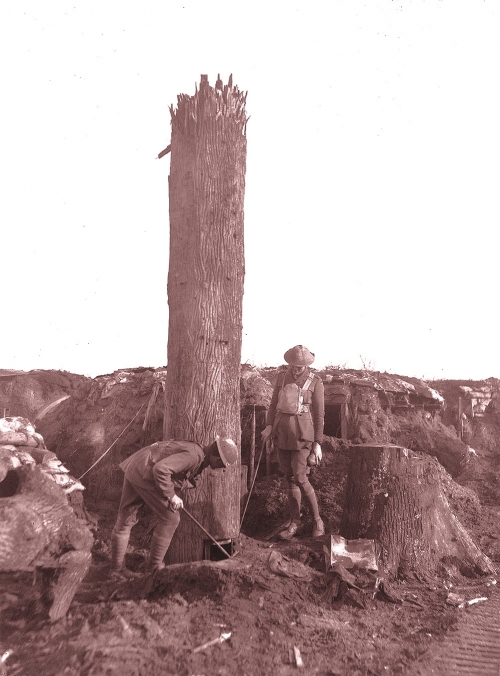
The American press seemed a bit late in writing about the wartime innovations when they printed this piece:

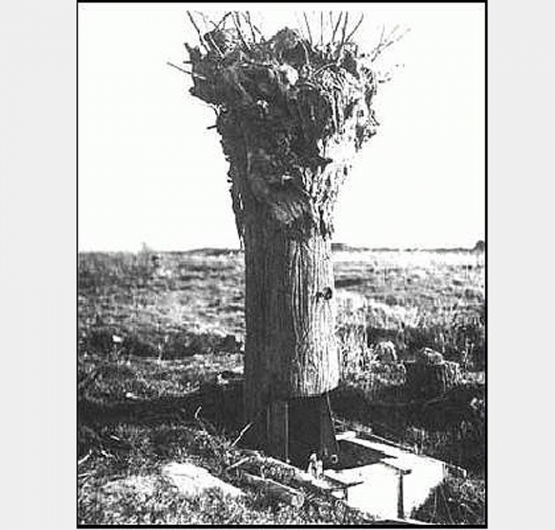
Observation posts made of lumber and sheet metal to look like tree trunks are among the latest disguises employed on the battle front to deceive the enemy and enable watchers to occupy positions of advantage.


The steel tree-stump gag had been in effect since 1915.

Advertisement

Use shortcode [oma_ad position="summary_top"] (or other position) in your theme or widgets to display OMA Promotions here.

An Artillery Observation Tower (L'Illustration, 1917)
1917, Inventions and Weapons, L'Illustration Magazine

An Artillery Observation Tower
(L’Illustration, 1917)

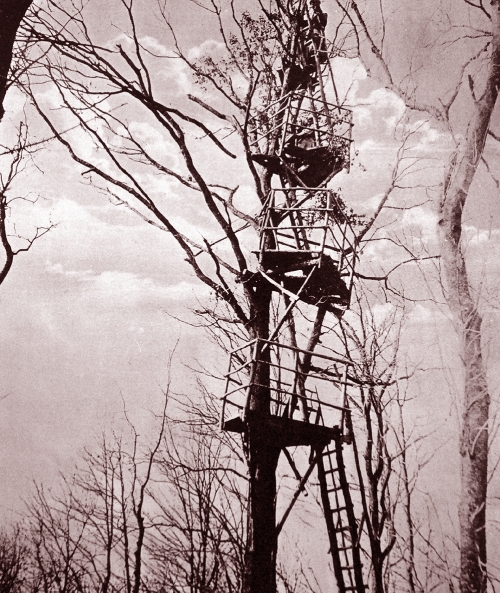
The need for elevated artillery observation platforms is as old as the science of artillery itself. As this black and white image makes clear, the ones built during the Great War had to meet different needs: in order to evade detection from the air (as well as enemy artillery spotters) the more successful ones were built among the taller trees and draped in camouflage.


This article appears on this site by way of a special agreement with L’Illustration.

German Howitzers (Popular Mechanics, 1914)
1914, Inventions and Weapons, Popular Mechanics Magazine

German Howitzers
(Popular Mechanics, 1914)

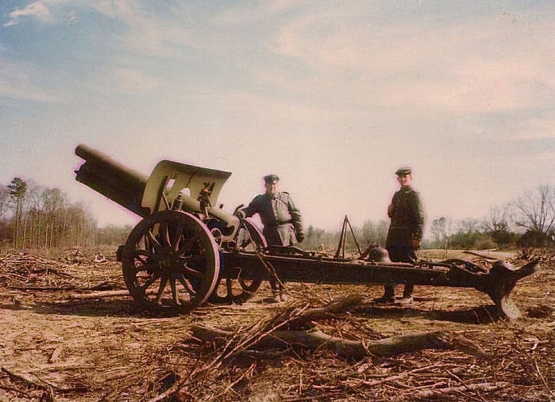
At the time, the war of 1914 – 1918 was unique in the sense that it was the first war in which more men were killed as a result of the projectiles rather than from disease; and it was artillery that did the lion’s share of the killing. This article appeared during the early months of the war when the world was shocked to learn of the astounding losses due to advancements in artillery. There is an illustration of an unidentified German howitzer (more than likely a 1911 model 210mm) and an account of the roll that German gunnery played during the siege of Liege and Fort Loncin in particular.

The one big surprise for the military experts thus far developed in the European war is the effectiveness of the heavy guns of the German field artillery. Never before have such terrible engines of annihilation been carried by an invading army as those used in the assault upon the forts at Liege.

Advertisement

Use shortcode [oma_ad position="summary_top"] (or other position) in your theme or widgets to display OMA Promotions here.

America's First Shot in WW1 1917 | American Ship USS MONGOLIA Sinks German U-Boat 1917
1917, The Literary Digest, World War One

U.S. Navy Fired America’s First Shot
(Literary Digest, 1917)

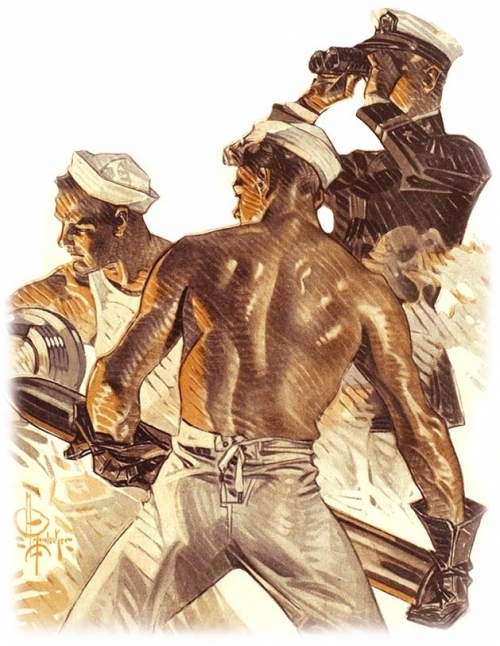
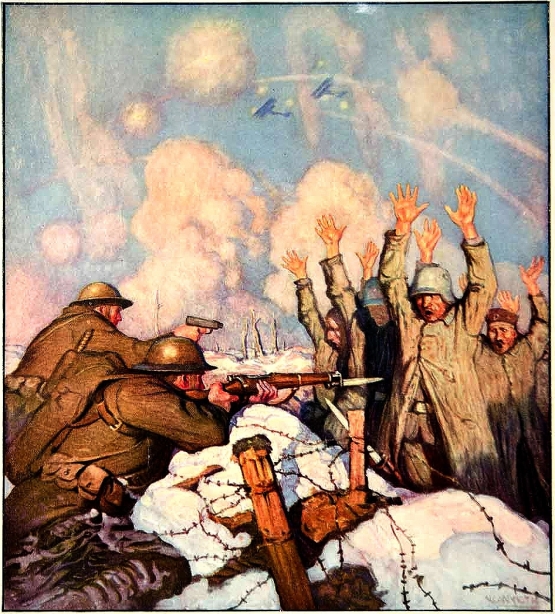
Printed five years apart were these two articles that we’ve attached herein collectively recalling three different events by three different services within the American military, each claiming to have fired the opening salvo that served notice to Kaiser Bill and the boys that the U.S. of A. was open for business:

•The first article recalls the U.S. Merchant Marine freighter MONGOLIA that sank a German U-Boat on April 19, 1917 while cruising off the coast of England.


•The second article chuckles at the Army for insisting that the First Division fired the premiere shot on October 23, 1917 in the Luneville sector of the French front;


•following up with the absolute earliest date of American aggression being April 6, 1917 – the same day that Congress declared war – when Marine Corporal Michael Chockie fired his 1903 Springfield across the bow of the German merchant raider S.M.S COMORAN on the island of Guam.
Advertisement

Use shortcode [oma_ad position="summary_top"] (or other position) in your theme or widgets to display OMA Promotions here.

Naval Camouflage of W.W. I (Sea Power Magazine, 1919)
1919, Inventions and Weapons, Sea Power Magazine

Naval Camouflage of W.W. I
(Sea Power Magazine, 1919)

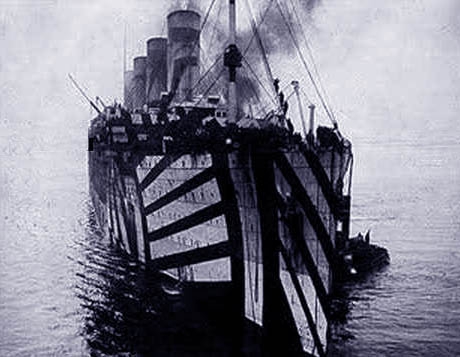
It was Lt. Commander Norman Wilkinson (1878 – 1971) of the Royal Navy who deduced that white (reflecting blue at night) was a suitable base color for naval camouflage. Wilkinson based his reasoning on the snow-capped iceberg that made such quick work of TITANIC, remembering all the while that seagulls are white, as are pelicans and the Antarctic Petrels. When the war broke out, his findings were presented to the Admiralty and it was concluded that elements of the North Atlantic fleet should be so painted. They added the black in order that the ships appear gray on the horizon.

A Profile of Shirley Temple (Film Daily, 1939)
1935, Hollywood History, Stage Magazine

Shirley Temple Sheds a Baby Tooth!
(Stage Magazine, 1935)

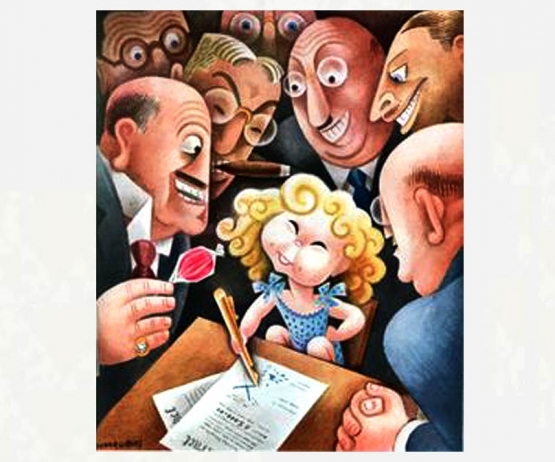
Child movie star Shirley Temple (1928 – 2014) was by no means at her box-office peak when this article was penned (her most popular period would span the years 1936 through 1938), but the institution that she had become by 1935 had already built many second homes and an assorted number of mansions for more than a few well-placed studio executives and mogul types. When the news hit the palmy, sun-soaked boulevards of Hollywood that she had lost her first baby tooth, there was panic!

That the end now shows unmistakable signs of beginning. That first baby tooth fell to the studio floor with a crash heard ’round the world….Yet, even as as the nabobs of Fox stood about applauding and cooing, the cold hand of fear must have gripped their kindly hearts.


Click here to read a 1939 profile of Shirley Temple.

Advertisement

Use shortcode [oma_ad position="summary_top"] (or other position) in your theme or widgets to display OMA Promotions here.

Scroll to Top