Author name: editor

Lt. Alexander Nininger Posthumous MoH Awarded 1942| 1st MoH Recipient of WW II | CMH Radio Program CBS
1945, Medal of Honor Recipients, Newsweek

Lt. Alexander Nininger, Jr.
(Newsweek Magazine, 1945)

Lt. Alexander Nininger, Jr. (1918 – 1942) was posthumously awarded the first Medal of Honor of the Second World War, but regardless of that fact he got the brush-off in this column which was primarily written in order to inform the public of a new CBS radio program. The radio show was titled CMH and was intended to tell the individual stories of each and every MoH recipient of W.W. II.

General Omar Bradley Newspaper Article | General Omar Bradley U.S. 2nd Corps in Tunisia
1944, Reader's Digest, World War Two

‘Doughboy’s General”
(Reader’s Digest, 1944)

This column summarizes General Bradley’s early life and career with a good deal of space devoted to his leadership during the North African Campaign:

Chosen over dozens his senior in service, he was sent to North Africa in February 1943 as deputy to General Patton. In May he succeeded Patton. On several critical occasions his tactical skill and remarkable sense of timing surprised the Germans and soundly defeated them. One of his favorite maxims: ‘Hit the enemy twice: first to find out what he’s got; then, to take it away from him.’

Training the Doughboy (U.S. Gov. 1931)
1931, Doughboys, The U.S. Government Records

Training the Doughboy
(U.S. Gov. 1931)

Two remarkably brief paragraphs concerning the required military training of the average American Doughboy throughout the course of America’s blessedly short participation in the First World War:

The average American soldier who went to France received six months of training in this country before he sailed. After he landed overseas he had two months of training before entering the battle line. The part of the battle line that he entered was in a quiet sector and here he remained one month before going into an active sector and taking part in hard fighting.

Click here to read a 1918 magazine article about the Doughboy training camps.

Advertisement

Use shortcode [oma_ad position="summary_top"] (or other position) in your theme or widgets to display OMA Promotions here.

Starvation in the Worker's Paradise (Current Opinion, 1921)
1921, Current Opinion Magazine, Soviet History

Starvation in the Worker’s Paradise
(Current Opinion, 1921)

The first Soviet famine lasted from 1919 through 1923; some historians have placed the death toll as high as five million:

[Lenin] is held responsible for the policy which has brought about a consumption of so great a proportion of the seed wheat that the fields cannot be sown. For the first time since Bolsheviki gained power, says the Berlin Lokalanzeiger, Lenin is a cipher.


Click here to read about the blackmail and extortion tactics that American Communists used in Hollywood during the Great Depression…

A Look Back at the Berlin Air-Lift (Pathfinder Magazine, 1949)
1949, Berlin Blockade, Pathfinder Magazine

A Look Back at the Berlin Air-Lift
(Pathfinder Magazine, 1949)

Last week, after the Russians announced they would lift the blockade on May 12 [1949], the airlift took a bow and added a modest nod at the 324-day record:


• 189,247 flights;

• 1,528,250 tons delivered;

• best day’s work: April 16 with 12,947 tons hauled in 1,393 flights.


– [and if the West had not chosen to answer the Soviet challenge in Berlin] there might never have been an Atlantic Pact or a Western German state. The Communists might have gone amok in France and Italy. Russia might have won the Cold War in the first heat.
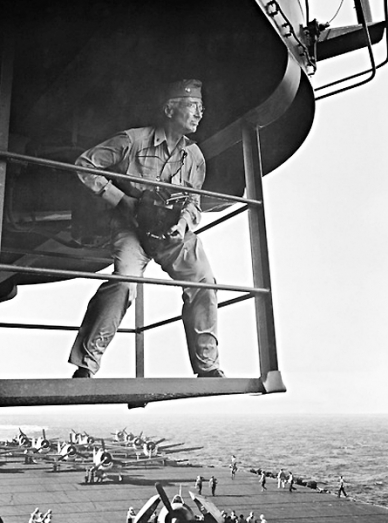
Captain Edward Steichen of the U.S. Navy (Collier's Magazine, 1945)
1945, Collier's Magazine, Photographers

Captain Edward Steichen of the U.S. Navy
(Collier’s Magazine, 1945)

As informative as this World War Two article about photographer Edward Steichen (1879 – 1973) is, it fails to convey to the reader what an interesting soul he must have been. Steichen was a respected photographer in modernist circles prior to volunteering for service in the First World War, and by the time he joined the U.S. Navy for the second go-round, his stock was even higher.

Advertisement

Use shortcode [oma_ad position="summary_top"] (or other position) in your theme or widgets to display OMA Promotions here.

American POWs Korean War 1953 | American POWs Interviewed 1953 | POW Abuse in North Korea Prison Camp
1953, The Korean War, The United States News

American POWs in North Korea
(United States News, 1953)

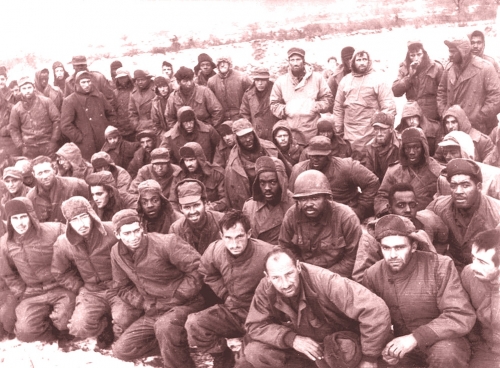
Here is a collection of interviews with the men who, just a week earlier, had all been POWs in North Korea. Each of them recall their own unique account as to how they had been captured, their forced march to the camp, the poor medical care, sanitation and the high death toll from exposure to the cold. The intense practice of Communist brainwashing is described in detail.

Capture of Heinrich Himmler | SS Commander Heinrich Himmler Captured 1945
1945, POWs, Yank Magazine

The Capture of Heinrich Himmler
(Yank Magazine, 1945)

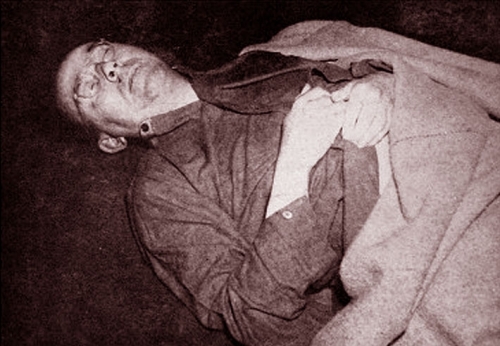
A quick read, which begins with the story of how the British Army of occupation in Germany managed to detain and identify Reichsführer-SS Heinrich Himmler (1900 – 1945) when he was disguised in the Wehrmacht uniform of a sergeant. The remaining paragraphs are devoted to instructing the reader as to how similar ploys could be managed to identify other German war crimes suspects when they are in captivity.

Advertisement

Use shortcode [oma_ad position="summary_top"] (or other position) in your theme or widgets to display OMA Promotions here.

Advertisement

Use shortcode [oma_ad position="summary_top"] (or other position) in your theme or widgets to display OMA Promotions here.

Italian Partisans 1945 | Corpo di Volontari Della Liberta 1945 | Comitato di Liberazione Nazionale Alta Italia 1945
1945, Benito Mussolini, Collier's Magazine

‘Fascist Finale”
(Collier’s Magazine, 1945)

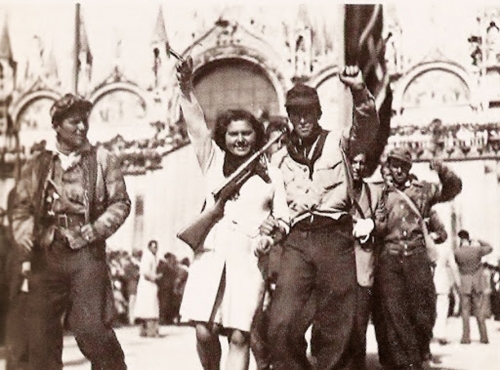
They killed Mussolini and his henchmen. They killed 1,000 persons in five days in and around Milan. Some Partisans thought the city was still not cleaned of Fascists when the American Army finally entered on Sunday afternoon April 29 and by their presence ended the assassinations.The fighting was about over; the even more difficult struggle was for stability was already beginning but with less excitement.

1945 Fire Bombing of Japan | 1945 Destruction of Japan
1945, Collier's Magazine, World War Two

‘Terror in Japan” Collier’s Magazine, 1945)

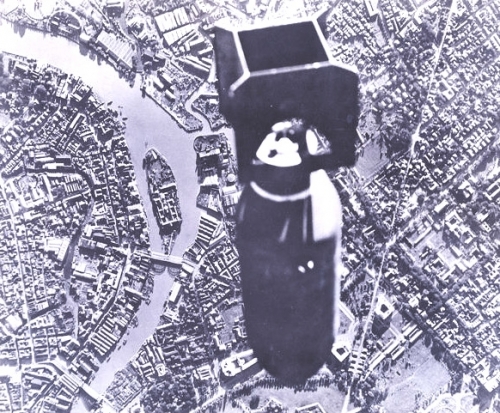
On March 10, 1945, a group of Superforts crossed Japan’s coast line. Behind them came another group, and another in a line stretching far back toward Saipan. In a long, thin file they roared over Tokyo. They flew low and out of their open bellies spilled bombs of jellied gasoline. When they hit, they burst, spewing out billowing, all-consuming fire. The flames leaped across fire lanes, swallowed factories, destroyed skyscrapers.


Click here to read about August 28, 1945 – the day the American occupation began.

Advertisement

Use shortcode [oma_ad position="summary_top"] (or other position) in your theme or widgets to display OMA Promotions here.

Reforms in Post-Fascist Japan (United States News, 1946)
1948, 48 Magazine, World War Two

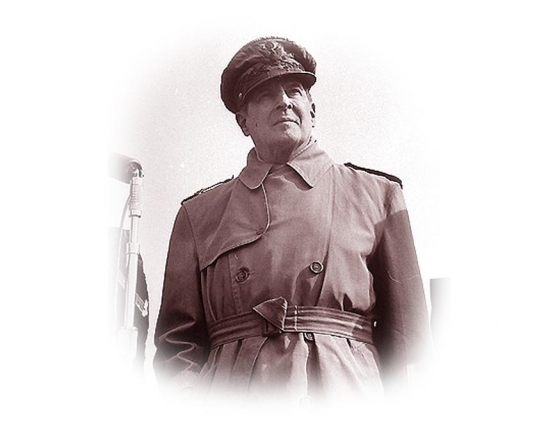
General Douglas MacArthur
(’48 Magazine)

If you’ve been looking for an editorial that was intended to take General MacArthur down a peg or two, you’ve found it. It was penned by Shelley Mydans (1915 – 2002), a journalist who was primarily known at the time for her LIFE MAGAZINE news dispatches; she found the General to be both admirable and repulsive at the same time and was thoroughly baffled as to why he was so loved on so many different continents.


Written two years before General MacArthur’s stunning 1950 victory in the Korean War (the Battle of Inchon), this article makes apparent a deep-seated fear held within the senior leadership of the Democratic party that MacArthur was planning to challenge Truman in the 1948 presidential election.


Another article on General MacArthur can be read here…

Max Hill Associated Press Japan
1943, Click Magazine, World War Two

When Japan Went on the Defensive
(Click Magazine, 1943)

Japan’s one purpose now is to fight back and stall for more time – not to attack. That period in her war is over, and she came out on top…All signs now point to a growing major Allied offensive, and for the first time the enemy will be faced with the problem of holding territory which he can’t afford to lose.


1943 was truly the year that proved to have been the turning point in the war, click here to read about it…

Advertisement

Use shortcode [oma_ad position="summary_top"] (or other position) in your theme or widgets to display OMA Promotions here.

Scroll to Top