Author name: editor

Atomic Bomb Explanation | Dr Philip Morrison Explains the Atomic Bomb | What Was the Atomic Bomb Explosion Like
1945, Atomic Bombs, Newsweek

Black Lessons of the Bomb
(Newsweek Magazine, 1945)

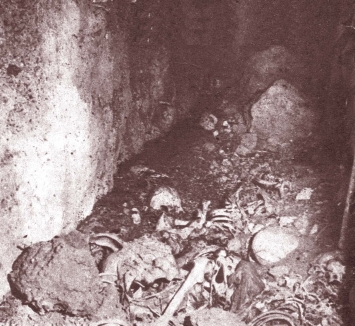
The Senate special committee on atomic energy had heard both pros and cons on atomic energy control. Last week it heard another kind of testimony – a terrifying eyewitness account by Dr. Philip Morrison, nuclear physicist of the Los Alamos atomic bomb laboratory, [who] spoke of the effects on Hiroshima.

Advertisement

Use shortcode [oma_ad position="summary_top"] (or other position) in your theme or widgets to display OMA Promotions here.

A Profile of Cartoonist Rube Goldberg, Cartoonist and Quack-Inventor (Vanity Fair, 1914)
1914, Interviews: 1912 - 1960, Vanity Fair Hall of Fame

A Profile of Cartoonist Rube Goldberg, Cartoonist and Quack-Inventor
(Vanity Fair, 1914)

In the attached 1914 magazine profile, Joseph Edgar Chamberlin (1851 – 1935) asked, Who is Goldberg? and then jumped right in and proceeded to answer that question. However, the reader should understand that in 1914 it simply did not take very long to give the answer. With so much good work yet to come, this article outlined the cartoonist’s earliest employment record while making clear that he was already well known for his invention gags, which had already appeared in many papers across the United States.


If you would like to read a 1930 article written by Rube Goldberg click here.

Click here to see an anti-New Deal cartoon that Goldberg drew in 1939.

Humor in Uniform (Yank Magazine, 1943)
1943, World War Two, Yank Magazine

Humor in Uniform
(Yank Magazine, 1943)

In the years to come, he would be known as the Oscar Award winning screenwriter for A Place in the Sunstyle=border:none, SANDS OF IWO JIMA and OCEAN’S ELEVEN – but in 1943 Harry Brownstyle=border:none
(1917 – 1986) was writing tongue and cheek essays like this one on the history of warfare under the nome de guerre Artie Greengroin:

War is a very popular pass-time of humane beings. It is fought by men, on sides, with the popular intentions of killing people of the other side. The more people get killed the more you win. That is war. Historically, war has been fought for a long time and several people have won them. Some people have been Alexander, Julius Caesar and some other people…


1943 was truly the year that proved to have been the turning point in the war, click here to read about it…
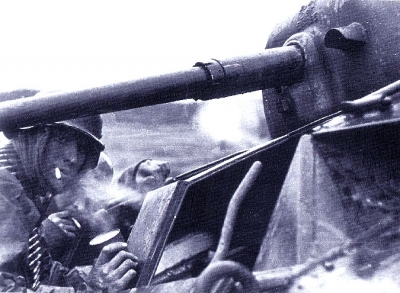
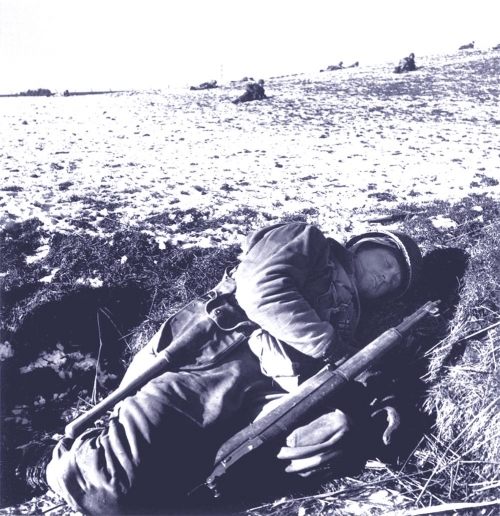
The First Two Weeks of the Battle of the Bulge (United States News, 1944)
1944, Battle of the Bulge, The United States News

The First Two Weeks of the Battle of the Bulge
(United States News, 1944)

The American magazines that appeared on newsstands during late November and early December of 1944 are often found to have articles anticipating life in the post-war world or tips on how to welcome your returning husband home from the battle fronts. This line of thinking was put on hold in late December when the Germans launched their brutal counter offensive through the Ardennes Forrest in what has been nicknamed the Battle of the Bulge.

Advertisement

Use shortcode [oma_ad position="summary_top"] (or other position) in your theme or widgets to display OMA Promotions here.

1949, Pathfinder Magazine, The Cold War

The Soviets Get the Bomb
(Pathfinder Magazine, 1949)

A news column that is appropriately drenched in the gravitas of the day because it announced that the short-lived age of atomic security that brought W.W. II to a close had come to an end. A new epoch had arrived at 11:00 a.m., September 23, 1949, when President Harry Truman announced


We have evidence that within recent weeks an atomic explosion occurred in the USSR.


With nuclear bombs must come a nuclear strategy:
click here to read about that

Advertisement

Use shortcode [oma_ad position="summary_top"] (or other position) in your theme or widgets to display OMA Promotions here.

General Alexander Barmine 1944
1944, Reader's Digest, Spies

Warnings From A Soviet Defector
(Reader’s Digest, 1944)

A fascinating article written by a man who just seven years earlier had been a senior officer in Stalin’s army. In order to escape the dictator’s purges, General Alexander Barmine (1899 – 1987) defected to the West in 1937 and made his way to the U.S. where he began writing numerous articles about the NKVD operations in North America. This article concerns the Soviet infiltration of labor unions, the Democratic Party and the U.S. Government.

American P.O.W.s Massacred (Yank Magazine, 1945)
1945, POWs, Yank Magazine

American P.O.W.s Massacred
(Yank Magazine, 1945)

Nine Americans recalled witnessing the deliberate torture and killing of American prisoners of war by their Japanese captors on the Pacific island of Palawan.

The American began begging to be shot and not burned. He screamed in such a high voice I could hear him. Then I could see the Jap pour gasoline on one of his feet and burn it, and then the other. He collapsed…

Port of Embarcation (Yank Magazine, 1944)
1944, D-Day, Yank Magazine

Port of Embarcation
(Yank Magazine, 1944)

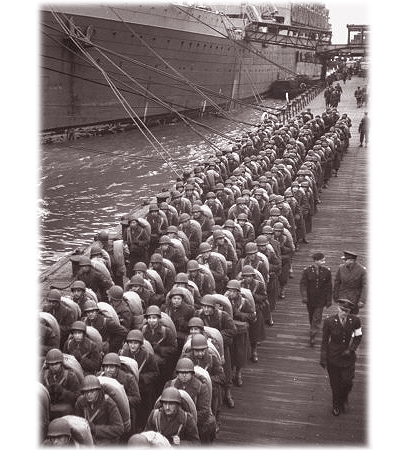
This one page article from YANK MAGAZINE by Irwin Swerdlow will give you a sense of the Herculean task that was involved in the transporting of so many men and supplies across the English Channel to breach Rommel’s Atlantic Wall:

The biggest job of coordination that the world has ever known was under way. Thousands of things had to happen at a certain time, things which, if they did not happen, would delay the entire movement.


Click here to read about unloading supplies on Iwo Jima.

Advertisement

Use shortcode [oma_ad position="summary_top"] (or other position) in your theme or widgets to display OMA Promotions here.

3rd Marine Division on Iwo Gima |
1945, Iwo Jima, Newsweek

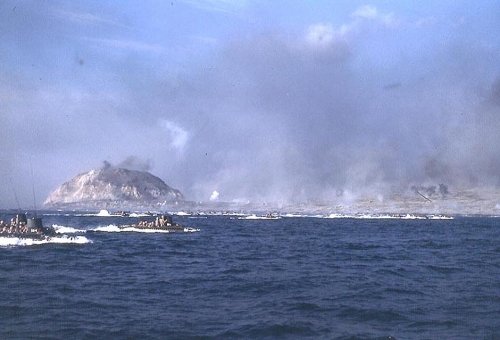
Bloody Iwo
(Newsweek Magazine, 1945)

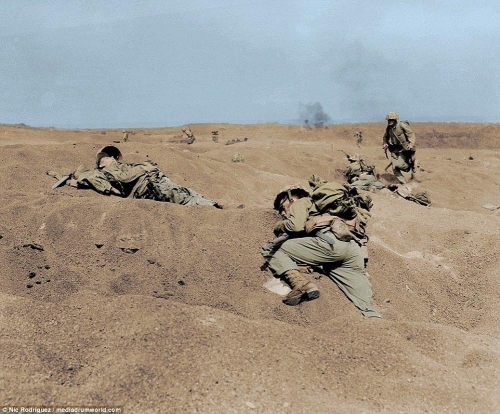
Some Jap officers, unable to face the prospect of defeat, dressed in their best uniforms, laid their samurai swords by their sides and then shot themselves in the head. Tokyo broadcast a plaintive admission from the Jap commander on Iwo Jima, General Tadamichi Kuribayashi:


‘This island is the front line that defends our mainland and I am going to die here.’

He was right on both counts.

The Invasion of Japan and the Importance of Iwo Jima (Yank Magazine, 1945)
1945, Iwo Jima, Yank Magazine

The Invasion of Japan and the Importance of Iwo Jima
(Yank Magazine, 1945)

In our day, the significance of the 1945 Battle of Iwo Jima is often dismissed as a campaign that should never have been waged; be that as it may, the following attachment is the U.S. Government explanation as to why the invasion of Iwo Jima was an essential part of the American strategy to invade Japan. Although you won’t find the information in this particular YANK article, the Marine and Army units that were to play leading rolls in the Japanese invasion were already selected and were at this point in training for the grim task before them (had it not been for the deployment of the Atomic Bombs, which hastened an end to the hostilities and saved hundreds of thousands of lives on both sides).

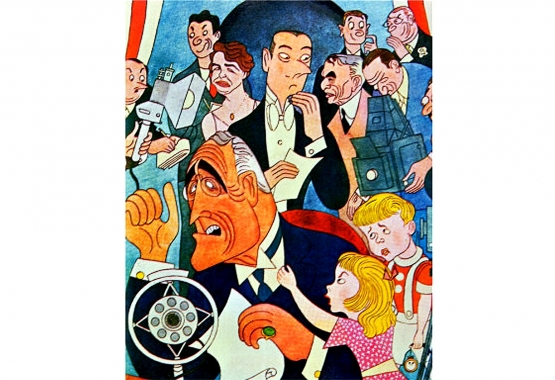
A Day in the Life of F.D.R. (Literary Digest, 1937)
1937, F.D.R., The Literary Digest

A Day in the Life of F.D.R.
(Literary Digest, 1937)

The attached article presented a dusk till dawn account of one day in the life of President Franklin Delano Roosevelt (1882 – 1945).
Written during his first term (prior to the war), the journalist recounted who the reoccurring players in his life were, the time of his rising, the preferred meals, the length of the meetings, distractions, recreations and other assorted minutia -but you’ll not read the word wheelchair once. This is a fine example of the press black-out that was in place in order to prevent the public any knowledge whatever of Roosevelt’s paralytic illness, which rendered him paralyzed from the waist down (he suffered from Guillain-Barré syndrome which he contracted in 1921).

Read a 1945 interview with FDR’s economic adviser, Bernard Baruch; click here.
Click here to read about the four inaugurations of FDR.

Advertisement

Use shortcode [oma_ad position="summary_top"] (or other position) in your theme or widgets to display OMA Promotions here.

VE Day

The Nazi Surrender Proceedings

An eye-witness account of the 1945 German Army surrender proceedings in Reims, France in the early days of May, 1945.

Penned in that unique english of the 1940s American soldier (which sounded a good deal like the movies of the time), this article describes the goings-on that day by members of the U.S. Army’s 201st Military Police Company, who were not impressed in the least by the likes of German General Gustav Jodl or his naval counterpart, Admiral Hans von Friedeburg:

Sgt. Henry Wheeler of Youngstown, N.Y., said, ‘The wind-up was pretty much what we expected. ‘Ike’ didn’t have anything to do with those phonies until they were ready to quit. Then he went in and told them to sign up. And what does he do as he comes out of the meeting? He shakes hands with the first GI he comes to.

VE Day

The Nazi Surrender Proceedings

An eye-witness account of the 1945 German Army surrender proceedings in Reims, France in the early days of May, 1945.

Penned in that unique english of the 1940s American soldier (which sounded a good deal like the movies of the time), this article describes the goings-on that day by members of the U.S. Army’s 201st Military Police Company, who were not impressed in the least by the likes of German General Gustav Jodl or his naval counterpart, Admiral Hans von Friedeburg:

Sgt. Henry Wheeler of Youngstown, N.Y., said, ‘The wind-up was pretty much what we expected. ‘Ike’ didn’t have anything to do with those phonies until they were ready to quit. Then he went in and told them to sign up. And what does he do as he comes out of the meeting? He shakes hands with the first GI he comes to.

Advertisement

Use shortcode [oma_ad position="summary_top"] (or other position) in your theme or widgets to display OMA Promotions here.

Scroll to Top