Author name: editor

Citizenship Denied (Literary Digest, 1922)
1922, Immigration History, The Literary Digest

Citizenship Denied
(Literary Digest, 1922)

This article reported that as of 1922, the United States Government saw fit to deny 19,000 immigrants U.S. citizenship. This number, when added to the other repatriated applicants of the previous ten years, totals up to 760,000 people; which was, at that time, more than the entire population of North Dakota. The Ellis Island based naturalization service classified all rejected immigrants in fifteen different categories, this reporter preferred to name just two: Ignorance and Immoral Character. Immoral Character speaks for itself. And Ignorance covers those who didn’t appear to know enough to exercise the rights of citizenship intelligently. Oddly, there seemed to have been no talk of amnesty.

The Fear of the 'Nipponification' (The Independent, 1920)
1920, Immigration History, The Independent

The Fear of the ‘Nipponification’
(The Independent, 1920)

Interesting figures revealed by the U.S. Census Bureau in 1920 served to relieve much of the race-conscious anxiety among some of the members of the Anglo-Saxon majority:

The report of the Census Bureau on the number of Japanese residents in the United States shows that the number has been much exaggerated by those panic-stricken persons who affect to dread the rise of a new Japan in America…the Japanese population of the three states on the Pacific coast increased more slowly from 1910 to 1920than it did in the previous decade. There are 70,196 Japanese in California, which has a total population of 3,426,861; in other words about one Californian in every fifty is a Japanese.

The U.S. Census figures for 2011 indicated that the Asian-American population numbered over 17 million, with the lion’s share still residing in the West and the vast majority having arrived after 1965.

Advertisement

Use shortcode [oma_ad position="summary_top"] (or other position) in your theme or widgets to display OMA Promotions here.

Commercial Profits Generated Within the Camps (U.S. Government, 1944)
1944, Japanese-American Internment, The U.S. Government

Commercial Profits Generated Within the Camps
(U.S. Government, 1944)

Even under the gloomy conditions of the camps the wheels of commerce continued to turn ~and they turned out an impressive $3,526,851.77! As can clearly be seen in the plans of the camps that are offered on this site, the camps all had commercial districts where the interned families could purchase needed goods and services; the ten Japanese-American internment camps had 160 businesses operating within their gates that managed to employ 1,853 souls. The attached chart from the 1944 records of the War Relocation Authority serves to illustrate the productivity of all these assorted commercial operations that had once thrived in the camps.

1930s Migration | Illegal Canadian/Mexican Migrants Working in 1920s USA | Hoover Administration and Migrant Labor
1931, Immigration History, Pathfinder Magazine

In The Country Illegally
(Pathfinder Magazine, 1931)

[President Hoover’s Secretary of Labor, William N. Doak] placed the number of aliens now illegally residing in the United States at 400,000. Of this number he thought 100,000 were subject to deportation… The illegal entries were made, he said, under the quota laws of 1921 and 1924, the larger part coming through Mexico and Canada, while ship’s deserters amounted to about 11,000>

Advertisement

Use shortcode [oma_ad position="summary_top"] (or other position) in your theme or widgets to display OMA Promotions here.

Advertisement

Use shortcode [oma_ad position="summary_top"] (or other position) in your theme or widgets to display OMA Promotions here.

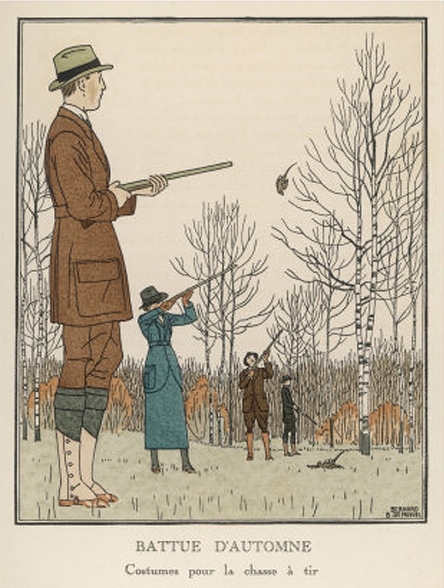
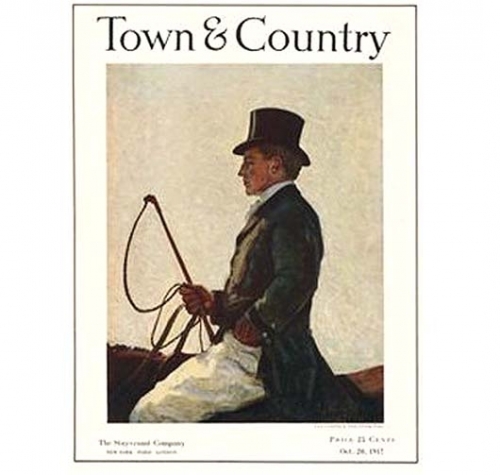
Equestrian Attire (Vanity Fair Magazine 1916)
1916, Men's Fashion, Vanity Fair Magazine

Equestrian Attire
(Vanity Fair Magazine 1916)

1916 was a poor year if you happened to be a German sailor off the coast of Denmark; it was a terrible year if you were in the infantry on the Somme or near Verdun but if you were an American man fond of horseback riding and you happened to have been shopping for the perfect riding suit on Madison Avenue, then OldMagazineArticles.com is quite certain that 1916 was a great year for you!

If you would like to read another article about men’s equestrian attire, please click here.

1919, Magazine Ad, Men's Fashion

Knickers Make Their Appearance In Town
(Magazine Ad, 1919)

In our era, we don’t think it terribly odd to see someone in an art museum dressed as though they were going to go poll-vaulting standing next to someone else who is clothed as if they were intending to rope a steer. This sort of untraditional-tradition began in the twenties. The attached link will show you a magazine advertisement for men’s knickers which appeared at a time when this sort of thinking began to evolve and knickerbockers began a new life as an in-town and on-campus fashion choice. Previously, knickers were worn by young boys or strictly for men who enjoyed country sports; other examples of similar active-ware abuse in the Twenties involved the clothing of yachtsmen, hunters and tennis players. This era saw the rise of the sportswear industry.

Advertisement

Use shortcode [oma_ad position="summary_top"] (or other position) in your theme or widgets to display OMA Promotions here.

1921, Magazine Advertisement, Men's Fashion

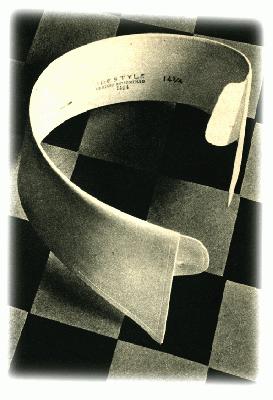
The Shirt Tuck
(Magazine Advertisement, 1921)

There is no doubt about the fact that in the 1920s, there lived a great number of men who left the world a far richer place for their having walked the earth when they did; fellows like Pablo Picasso and Bertrand Russel, to name only two. The shallow editors at OldMagazineArticles.com think that is all just ducky, but what we really want to know is how did these men keep their shirts tucked in? How could such fellows as these look so presentable when so many men before them have failed?

We did some digging around and this is what we discovered…

Incendiary Bombs Over Germany 1942 | Challenges to the German Military in 1942
1942, Newsweek, World War Two

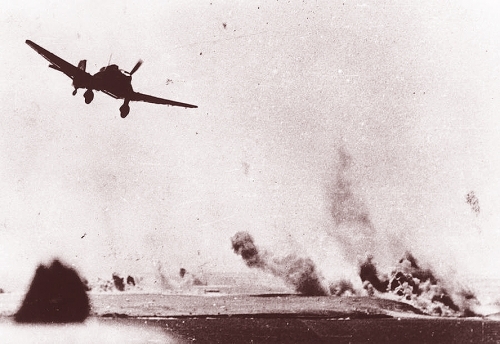
Hitler’s 1942 Challenges
(Newsweek Magazine, 1942)

The dilemma before Hitler is that he must marshall all his air strength to crush Russia. He cannot do so without weakening his air units in France or the Mediterranean. Such a move would threaten him either with an Allied invasion of the Continent or the disruption of the Axis supply lines to Africa… The Luftwaffe had lost 15,000 planes in Russia – and with them the hope of regaining air superiority in Russian skies.

Advertisement

Use shortcode [oma_ad position="summary_top"] (or other position) in your theme or widgets to display OMA Promotions here.

1919: Franco-American Relationship Begin to Cool (The North American Review, 1919)
1919, Aftermath (WWI), The North American Review

1919: Franco-American Relationship Begin to Cool
(The North American Review, 1919)

During the closing months of the American presence in France, one element can be found in the majority of the letters written to loved ones at home:

The French aren’t treating us as nice.

In the war’s aftermath, writer Alexander Woollcott (1887 – 1943) attempted to explain the situation to his readers; what follows were his observations.

Igor Stravinsky and the Player Piano (The Independent, 1925)
1925, Music History, The Independent

Igor Stravinsky and the Player Piano
(The Independent, 1925)

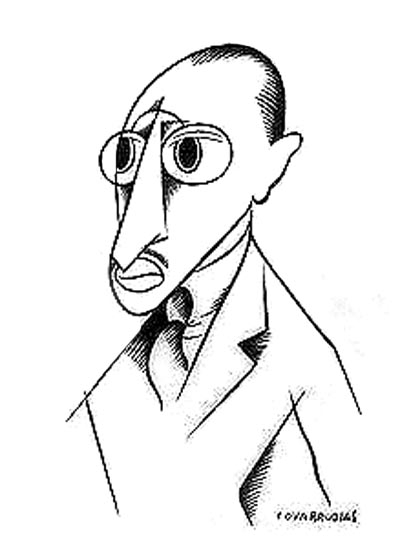
Igor Stravinsky (1882 – 1971), acclaimed as the most distinguished, if not the greatest, of living composers, now sojourning in America after an absence of ten years, ardently advocates and practices the composition of mechanical music – of not merely piano music, that is, which can be played on an automatic instrument, but music composed without purpose of performance by hand, designed for the player-piano solely, and intended to take advantage of characteristics and limitations inherent in an instrument operated by a perforated roll of paper.

There is anew polyphonic truth in the player-piano. There are new possibilities. It is something more. It is not the same thing as a piano…

Advertisement

Use shortcode [oma_ad position="summary_top"] (or other position) in your theme or widgets to display OMA Promotions here.

Scroll to Top