Author name: editor

NRA Ends 1937
1937, National Recovery Administration, Pathfinder Magazine

The End of the NRA
(Pathfinder Magazine, 1937)

During the Spring of 1935 the U.S. Supreme Court unanimously proclaimed FDR’s National Recovery Administration and void – and the names of some 5,300 of its Washington, D.C. functionaries were immediately entered onto the unemployment list. All except one: Diana Rogovin; she was the sole survivor of the bureaucracy. To her fell the task of dotting the i’s and crossing the t’s as the great ship went down. She completed her last duty in February of 1937.

The NRA Shows Its Teeth (Pathfinder Magazine, 1933)
1933, National Recovery Administration, Pathfinder Magazine

The NRA Shows Its Teeth
(Pathfinder Magazine, 1933)

The National Recovery Administration (1933 – 1935) was just one of the many alphabet agencies that the FDR administration created; his critics at the time, like the historians today, all believed that it was one of the well-meaning Federal efforts that simply prolonged the the Great Depression.


This is 1933 editorial addressed the various violation codes (there were 500 of them) and punishments that the Federal Government was prepared to dish out to all businesses wishing to defy any of the assorted labor laws and price-fixing measures that the NRA was designed to enforce.

From Amazon: Nine Honest Menstyle=border:none

Advertisement

Use shortcode [oma_ad position="summary_top"] (or other position) in your theme or widgets to display OMA Promotions here.

Kemal Ataturk 1937 Interview | Kemal Ataturk in 1937 | Reforms of Kemal Ataturk
1937, Interviews: 1912 - 1960, Pathfinder Magazine

Mustafa Kemal Atatürk
(Pathfinder Magazine, 1937)

Here is a very thorough profile of Mustafa Kamel Atatürk (1881 – 1938), the first president of the Republic of Turkey (1923 – 1938). The article goes into some detail concerning his humble beginnings, his vices and his secret writings for the revolutionary Vatan ve Hürriyet (Motherland and Liberty) underground movement. His rise to power came with his assorted military triumphs in the Italo-Turkish War, the Balkan War, the First World War and most notably, the Greko-Turkish War. He came to power in 1922 and began reforming Turkish society in ways that rocked the nation to its very corps.


Click here to read a 1922 article about the Turkish slaughter of Christians.

Chateau-Thierry: Setting the Record Straight (The Literary Digest, 1919)
1919, Chateau Thierry, The Literary Digest

Chateau-Thierry: Setting the Record Straight
(The Literary Digest, 1919)

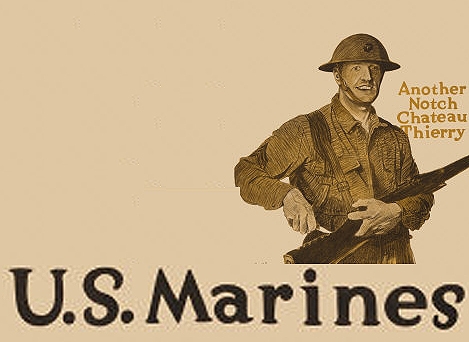
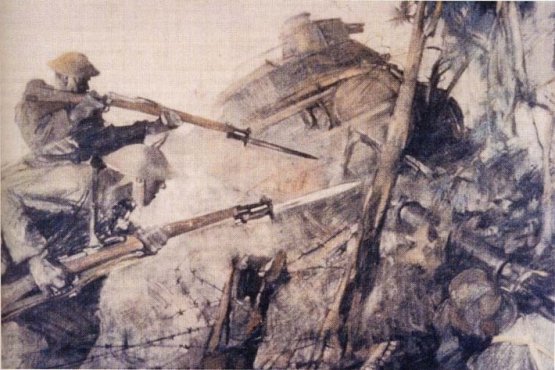
Rumor has it that when the U.S. Army’s senior staff officers had learned of the victory that the U.S. Marines had achieved at the Bois de Belleau in the summer of 1918, one of them had remarked, Those head-line hunting bastards! When reading this next piece you will immediately get a sense that the army was fed-up with the folks at home believing that the same Marines were responsible for the Army’s success at Chateau-Thierry. The war was already over by the time this piece appeared, making it clear to all that Chateau-Thierry was a feather in the cap for the Army, and no one else.

Advertisement

Use shortcode [oma_ad position="summary_top"] (or other position) in your theme or widgets to display OMA Promotions here.

'The Truth About Chateau-Thiery'' (Home Sector, 1919)
1919, Chateau Thierry, The Home Sector

‘The Truth About Chateau-Thiery”
(Home Sector, 1919)

The veterans magazine that published the attached column, THE HOME SECTOR, was edited by Harold Ross, who, just a few months earlier, had held that same post at THE STARS and STRIPES; the article was written by Alexander Woollcott – previously a journalist with that same paper. I’m sure that this was quite common in 1919, but it would seem that these two men wanted to be forthright with their readers and set straight an issue that they wrote about when they were in the employment of Uncle Sam: the Doughboys who were victorious at Chateau-Thiery and Belleau Wood did not save Paris. Just as German historians have insisted for many years, those German divisions were simply not headed for Paris.

Who Was Wilde's Dorian Gray? (Vanity Fair Magazine, 1919)
1919, Miscellaneous, Vanity Fair Magazine

Who Was Wilde’s Dorian Gray?
(Vanity Fair Magazine, 1919)

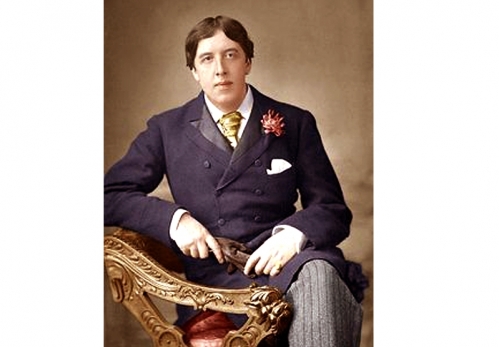
One writer’s reminiscence of attending a London party and being introduced to Oscar Wilde (1854 – 1900) and the object of his affection, John Gray. The author insists, as has been documented in other places, that Gray was the model for Wilde’s character Dorian Gray:

Once at a Private View in the New Gallery, as I came downstairs, I came on Wilde, in the midst of his admirers, showing more than ever his gift of versatility. Seeing me he made a gesture, and as I went up he introduced me to John Gray, then in what is called ‘the zenith’ of his youth. The adventure was certainly amusing…


An additional article about Wilde can be seen here.


Click here to read a 1940s article about American sodomy legislation.

Advertisement

Use shortcode [oma_ad position="summary_top"] (or other position) in your theme or widgets to display OMA Promotions here.

1908, Prelude, The Literary Digest

Who Were the Young Turks?
(Literary Digest, 1908)

This 1908 magazine article serves to define the Young Turk movement and present a brief history of those reformers who sought to modernize the government of Turkey and introduce a constitutional form of government that would benefit not only the Turks but also the people who reside within the dominions of the Ottoman Empire:

The program of the Young Turks includes individual liberty to all Ottomans; this liberty is to be inviolable excepting by process of law; the press is to be free, Ottomans may form commercial, industrial, or agricultural associations, so long as no law is infringed. All are to be equal before the law.

1943, Combat Training, The Leatherneck Magazine

Training Marines in San Diego
(Leatherneck Magazine, 1943)

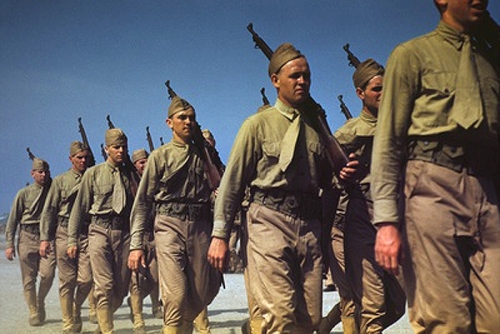
Originally published in the Stars & Stripes of the U.S. Marine Corps, The Leatherneck, this is an interesting eight page article illustrated with fifteen photographs regarding the dramatic growth in that institution that took place in the immediate aftermath of the Pearl Harbor attack.


Click here to read a CLICK MAGAZINE article about the Marines of W.W. II.


Articles about the W.W. I Marines can be read HERE…


Read what the U.S. Army psychologists had to say about courage in war.
Read what the editors of YANK MAGAZINE thought about the Marine Corps Magazine, LEATHERNECK…


Read about the Women Marines of W.W. II HERE.

Advertisement

Use shortcode [oma_ad position="summary_top"] (or other position) in your theme or widgets to display OMA Promotions here.

Aerial Gunnery School (Click Magazine, 1943)
1943, Click Magazine, Combat Training

Aerial Gunnery School
(Click Magazine, 1943)

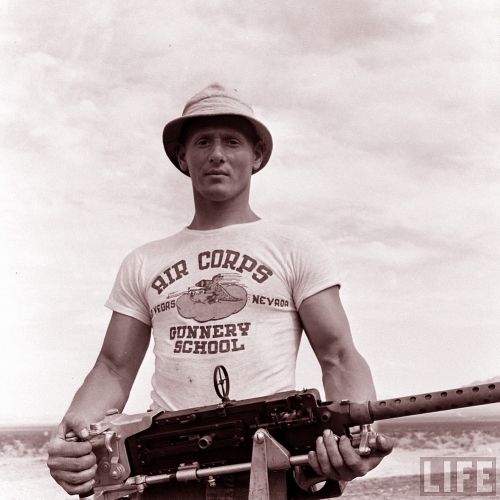
World War II terms such as tail gunner, waist gunner and belly gunner are no longer a part of our vocabulary; they are uttered, if at all, about as often as the word blacksmith. However, since you found this website, there is a good chance that you use these terms more often than most – which means you’ll appreciate the attached color photo-essay from 1943 illustrating how vital W.W. II Allied aerial gunners were in winning the air war over Germany and Japan.

The California Alien Land Bill of 1921 | Earl S Parker Secretary of the American League of Justice of California
1921, Immigration History, The Independent

‘The Real Yellow Peril”
(The Independent, 1921)

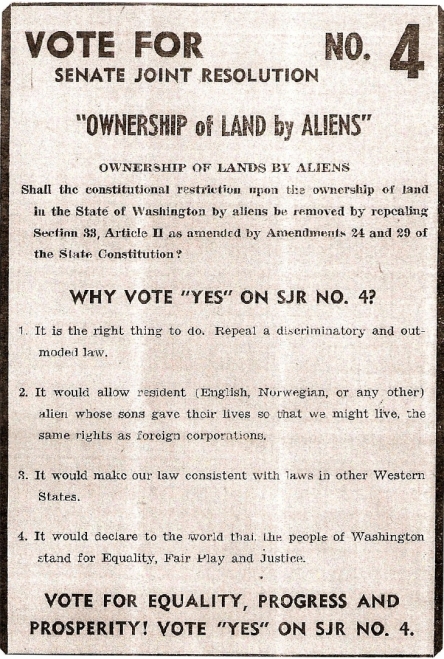
Three cheers for the late Earl S. Parker, long-suffering secretary of the now-defunct American League of Justice (California) who recognized the tyranny inherit in the California Alien Land Bill of 1921! Seeing that the Japanese immigrants had been dealt enough cruelty by being denied citizenship, he was quick to point out that it was wrong to deny them real estate as well.


Click here to read about the Yellow Peril in Canada.

Ida Tarbell journalist WW1 article | WWI Portrait Soldiers Doughboy
1919, Doughboys, The New Red Cross Magazine

‘The Doughboys”
(The New Red Cross Magazine, 1919)

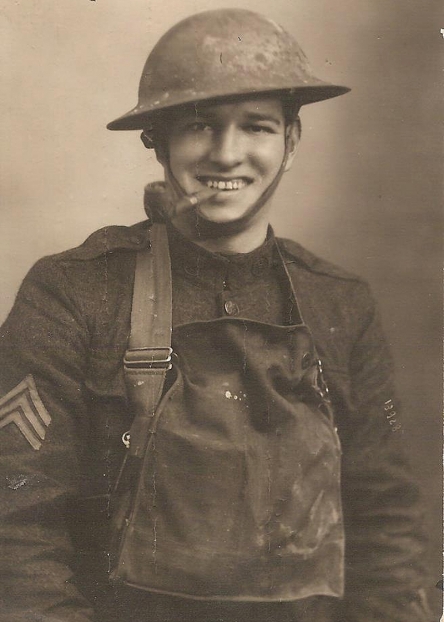
What we enjoyed about this piece by the Muckraking Ida Tarbell (1857 – 1944) was that it was written some six months after the heavy handed George Creel had ceased influencing Yankee magazine editors into printing pro-American blather, and so we tend to feel that her praise of the American Doughboys was quite sincere – and praise she does! Up hill and down dale, the Doughboys can do no wrong in her eyes.
This essay appeared in print around the same time the French had decided that all the Doughboys were just a bunch of racist hurrah-boys and were becoming increasingly sick of them. The Yanks might have squared their debt with the Marquis de Lafayette, but the recently returned Poilus were not above taking an occasional swipe at Ida Tarbell’s Doughboys…

Click here to read some statistical data about the American Doughboys of the First World War.

Advertisement

Use shortcode [oma_ad position="summary_top"] (or other position) in your theme or widgets to display OMA Promotions here.

A Call to Repeal the Japanese Exclusion Act (Literary Digest, 1935)
1935, Immigration History, The Literary Digest

A Call to Repeal the Japanese Exclusion Act
(Literary Digest, 1935)

The anonymous journalist opened this 1935 magazine article explaining how the Indian caste system took root and reasoned as to why he believed such a system was an inevitability in the United States as well.

With the California Council on Oriental Relations waging an eloquent campaign for repeal of the Japanese Exclusion Act, a quota-basis solution is suggested.


Read another article about Asian immigration to California


Click here to read about the 1921 [anti-]Alien Land Bill in California.


You might also be interested in reading about the Yellow Peril in Canada.

Immigrant Literacy Tests Passed (NY Times, 1915)
1915, Immigration History

Immigrant Literacy Tests Passed
(NY Times, 1915)

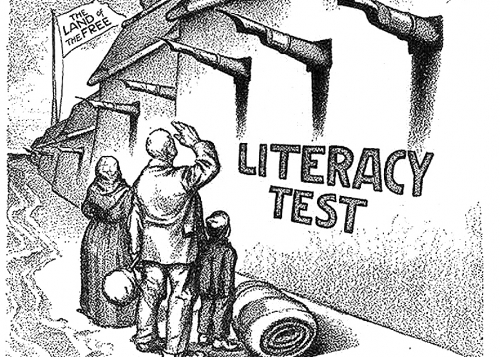
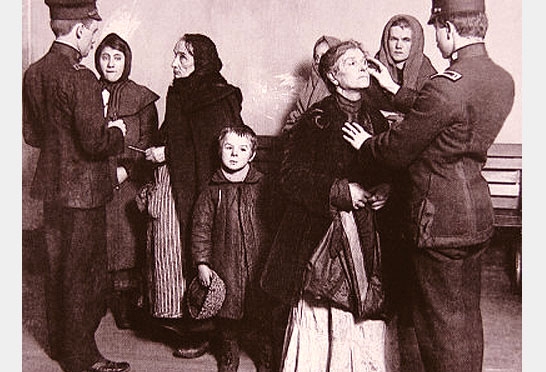
In 1915, some newspaper readers might have preferred to interpret the passage of the Smith-Burnett Immigration bill as a legal measure that would insure a higher standard for immigrants to meet in order to guarantee citizenship; while others tended to interpret the legislation as a restrictive law that was intended only to exclude from citizenship Italians and Eastern-European Jews. This article reported on a massive New York protest decrying the Smith-Burnett bill that was attended by Louis D. Brandeis (1856 – 1941; appointed to the Supreme Court a year later), Episcopal Bishop David Hummel Greer (1844 – 1919) and former president of Columbia University Seth Low (1850 – 1916).


Green Card holders are to this day still required to show fluency in the English language, although the swearing-in ceremony and their voting ballots are often in their native language. Go figure.


In this article Vladimir Lenin speaks of his fondness for The New York Times.

No Citizenship for Japanese Immigrants (Literary Digest, 1922)
1922, Immigration History, The Literary Digest

No Citizenship for Japanese Immigrants
(Literary Digest, 1922)

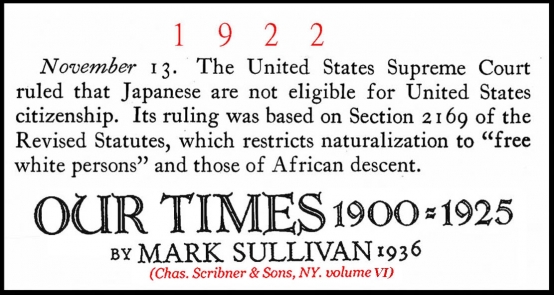
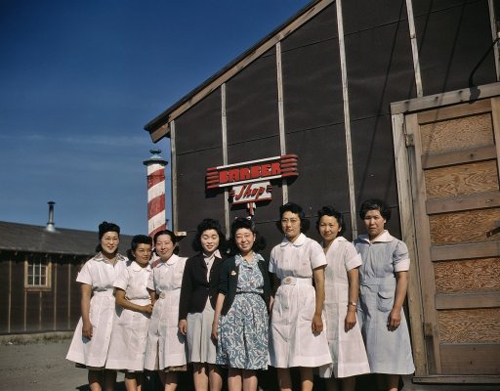
An article that marks the date of November 13, 1922 as a poor one for the assembled masses who happened to have been of Japanese ancestry in the United States. On that date Justice George Sutherland (1862-1942), of the United States Supreme Court, handed down the ruling that the Japanese can not be citizens of this country. The opinions of many American Newspapers are presented herein, among them an excerpt from the St. Louis Star which summed up the opinion just so:

The law which prevents the naturalization of Japanese is plainly intended to exclude the Japanese because they are racially unassimlable and their presence creates economic difficulties.


You can read more about Justice Sutherland HERE…

Advertisement

Use shortcode [oma_ad position="summary_top"] (or other position) in your theme or widgets to display OMA Promotions here.

Scroll to Top