











47 Magazine Articles
Click Magazine Articles
Collier's Magazine Articles
Confederate Veteran Magazine Articles
Confidential Magazine Articles
Creative Art Magazine Articles
Current Literature Magazine Articles
Direction Magazine Articles
Film Daily Magazine Articles
Freedom's Triumph Articles
G.I. Joe Magazine Articles
Harper's Bazaar Magazine Articles
Harper's Weekly Articles
Hearst's Sunday American Articles
Ken Magazine Articles
La Baionnette Articles
Leslie's Magazine Articles
Liberty Magazine Articles
Life Magazine Articles
Men's Wear Magazine Articles
Newsweek Articles
Outing Magazine Articles
Outlook Magazine Articles
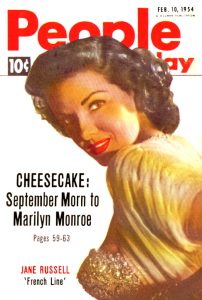
People Today Magazine Articles
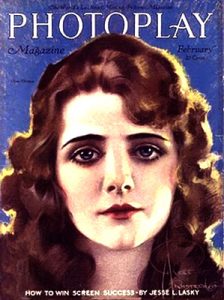
Photoplay Magazine Articles
Pic Magazine Articles
PM Tabloid Articles
Punch Magazine Articles
Rob Wagner's Script Magazine Articles
Scribner's Magazine Articles
Sea Power Magazine Articles
Stage Magazine Articles
The American Legion Monthly Articles
The American Legion Weekly Articles
The Atlantic Monthly Articles
The Dial Magazine Articles
The Film Spectator Magazine Articles
The Flapper Magazine Articles
The National Park Service Articles
The New Republic Articles
The New York Times Articles
The North American Review Articles
The Saturday Evening Post Articles
The Saturday Review Articles
The Smart Set Articles
Theatre Arts Magazine Articles
Touchstone Magazine Articles
Trench Warfare Articles
Vanity Fair Magazine Articles
Vogue Magazine Articles

Inventions and Weapons

The Dazzled Ships
of the First World War

• Sea Power Magazine, 1919 •


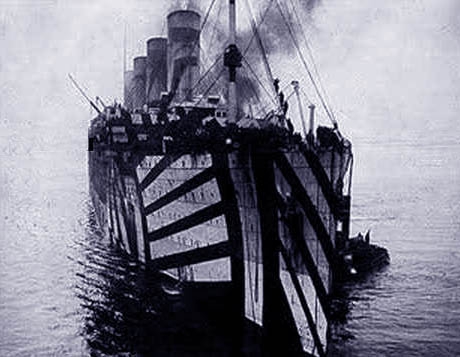
Prior to the outbreak of the war in August of 1914, British naval engineers had made serious efforts to reduce smoke belching and shorten funnels all in the name of camouflage – which shortly lead to their study of nature’s camouflage. Seeing that the snow-capped iceberg that made such quick work of TITANIC was white (reflecting blue at night), and that seagulls and pelicans are (largely) white, it was concluded by the brain trust of the Admiralty that this was suitable naval camouflage for their North Atlantic fleet. They added the black in order that the ships appear gray on the horizon. As for the designs:

“The so-called ‘dazzle’ system of camouflage – the piebald effect – makes a vessel ‘unhittable’ rather than invisible. The early British ‘dazzle’ scheme was based frankly upon the assumption that ‘invisibility at sea being unattainable, some protection may be offered by painting the ships in such a way as to confuse the enemy by causing some doubt as to course, speed and distance, thus delaying the discharge of the torpedo.'”


There was only one surviving log entry in which a U-boat captain confessed to being confused by the dazzle camouflage. However, by September of 1918 a committee of inquiry convened by the Admiralty had concluded that the camouflage made no difference, although it did succeed in lifting the morale of both officers and men on board these ships. It is Lt. Commander Norman Wilkinson (1878 – 1971) who is largely credited as the father of Dazzle.


– from Amazon:


Read Naval Camouflage of W.W. I<br>(Sea Power Magazine, 1919) for Free
Dazzle Naval Camouflage of WW1Lt. Commander Norman Wilkinson inventor of Dazzle Camouflagemaritime camouflage of WW1Naval Camouflage of the First World WarMarine Camouflage by Robert Cushman Murphy Sea Power Magazine January 1919Dazzle Naval Camouflage of WW1

The Dazzled Ships of the First World War

The Dazzled Ships of the First World War

The Dazzled Ships of the First World War

The Dazzled Ships of the First World War

The Dazzled Ships of the First World War

The Dazzled Ships of the First World War

The Dazzled Ships of the First World War

The Dazzled Ships of the First World War

The Dazzled Ships of the First World War

The Dazzled Ships of the First World War

Dazzle Naval Camouflage of WW1Lt. Commander Norman Wilkinson inventor of Dazzle Camouflagemaritime camouflage of WW1Naval Camouflage of the First World WarMarine Camouflage by Robert Cushman Murphy Sea Power Magazine January 1919Dazzle Naval Camouflage of WW1
Scroll to Top