









47 Magazine Articles
Click Magazine Articles
Collier's Magazine Articles
Confederate Veteran Magazine Articles
Confidential Magazine Articles
Creative Art Magazine Articles
Current Literature Magazine Articles
Direction Magazine Articles
Film Daily Magazine Articles
Freedom's Triumph Articles
Harper's Bazaar Magazine Articles
Harper's Weekly Articles
Hearst's Sunday American Articles
Ken Magazine Articles
La Baionnette Articles
Leslie's Magazine Articles
Liberty Magazine Articles
Life Magazine Articles
Men's Wear Magazine Articles
Newsweek Articles
Outing Magazine Articles
Outlook Magazine Articles
People Today Magazine Articles
Photoplay Magazine Articles
Pic Magazine Articles
PM Tabloid Articles
Punch Magazine Articles
Rob Wagner's Script Magazine Articles
Scribner's Magazine Articles
Sea Power Magazine Articles
Stage Magazine Articles
The American Legion Monthly Articles
The American Legion Weekly Articles
The Atlantic Monthly Articles
The Dial Magazine Articles
The Film Spectator Magazine Articles
The Flapper Magazine Articles
The National Park Service Articles
The New Republic Articles
The New York Times Articles
The North American Review Articles
The Saturday Evening Post Articles
The Saturday Review Articles
The Smart Set Articles
Theatre Arts Magazine Articles
Touchstone Magazine Articles
Trench Warfare Articles
Vanity Fair Magazine Articles
Vogue Magazine Articles

Hollywood

''Here Is Your War''
Made Into A Film

• Pic Magazine, 1945 •


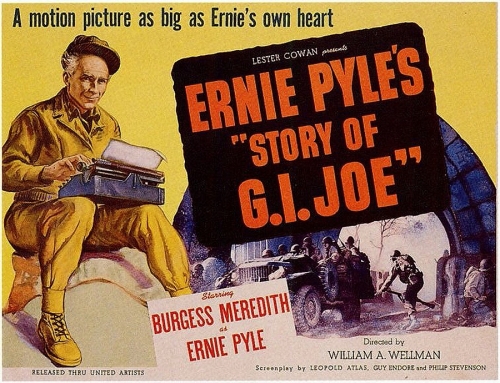
When Americans on the home front wanted to know what sort of life their sons, brothers, husbands, uncles or fathers were experiencing on the European battle fronts during W.W. II they would read the columns of Ernie Pyle (1900 – 1945). He was the most loved of all the war correspondents at the time because his sympathies for the exhausted soldiers were so evident. This brief notice on the right reviews the movie that appeared at the end of the war concerning his experiences in Tunisia and Italy: The Story of G.I. Joe. It is a film known to have brought veterans to tears and it was much admired by General Eisenhower, their supreme commander. In the movie, soldiers are depicted as hungry and tired and wishing they could be elsewhere, but knowing they had a job to do; this was a very different sort of war film for that time.

One of Pyle’s most memorable lines read:

“And for those beneath the wooden crosses there is nothing we can do except perhaps to pause and murmur, thanks pal, thanks.”

More on Ernie Pyle can be read here…

More about W.W. II Hollywood can be read here.


Read ‘The Story of GI Joe”<br>(Pic Magazine, 1945) for Free

''Here Is Your War''[BR] Made Into A Film

Scroll to Top