






47 Magazine Articles
Click Magazine Articles
Collier's Magazine Articles
Confederate Veteran Magazine Articles
Confidential Magazine Articles
Creative Art Magazine Articles
Current Literature Magazine Articles
Direction Magazine Articles
Film Daily Magazine Articles
Freedom's Triumph Articles
G.I. Joe Magazine Articles
Harper's Bazaar Magazine Articles
Harper's Weekly Articles
Hearst's Sunday American Articles
Ken Magazine Articles
La Baionnette Articles
Leslie's Magazine Articles
Liberty Magazine Articles
Life Magazine Articles
Men's Wear Magazine Articles
Newsweek Articles
Outing Magazine Articles
Outlook Magazine Articles
People Today Magazine Articles
Photoplay Magazine Articles
Pic Magazine Articles
PM Tabloid Articles
Punch Magazine Articles
Rob Wagner's Script Magazine Articles
Scribner's Magazine Articles
Sea Power Magazine Articles
Stage Magazine Articles
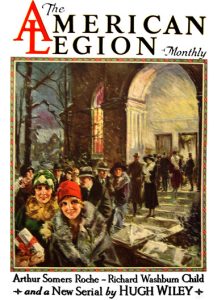
The American Legion Monthly Articles
The American Legion Weekly Articles
The Atlantic Monthly Articles
The Dial Magazine Articles
The Film Spectator Magazine Articles
The Flapper Magazine Articles
The National Park Service Articles
The New Republic Articles
The New York Times Articles
The North American Review Articles
The Saturday Evening Post Articles
The Saturday Review Articles
The Smart Set Articles
Theatre Arts Magazine Articles
Touchstone Magazine Articles
Trench Warfare Articles
Vanity Fair Magazine Articles
Vogue Magazine Articles

Food and Wine * World War Two

How the GIs Ate

• American Legion Magazine, 1942 •


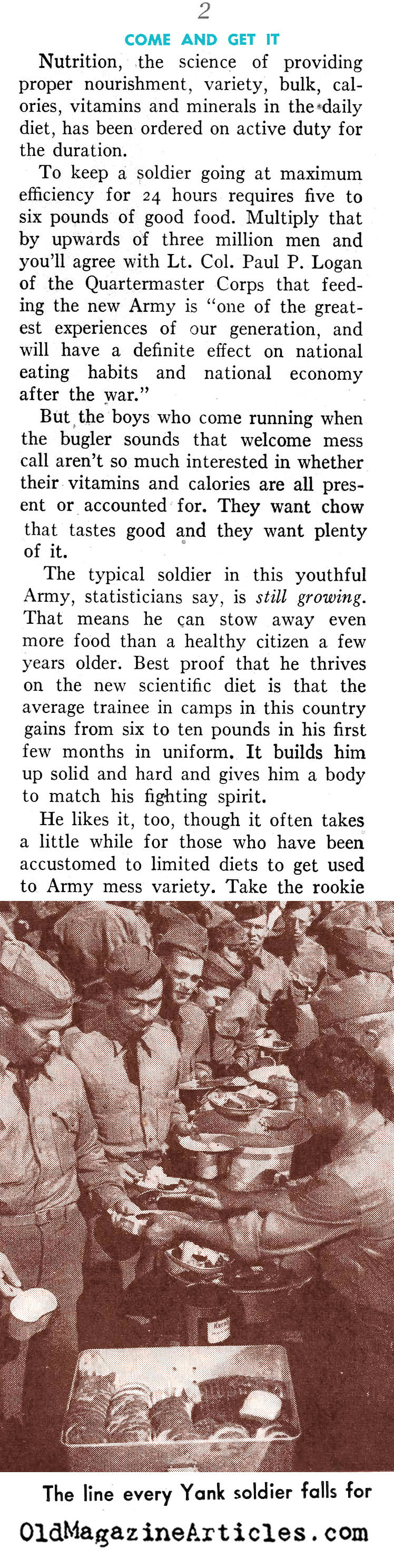
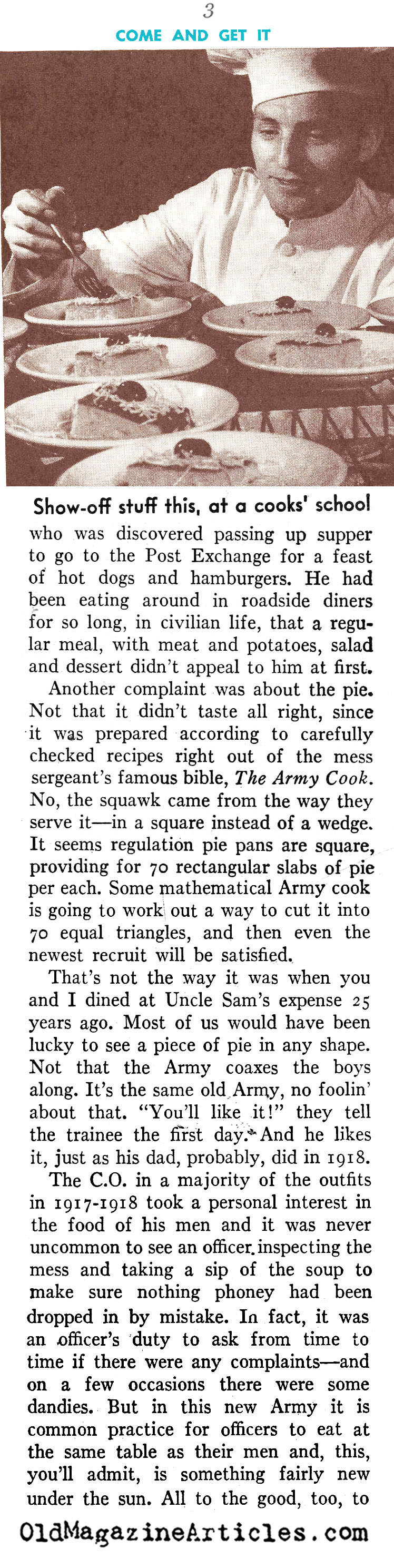
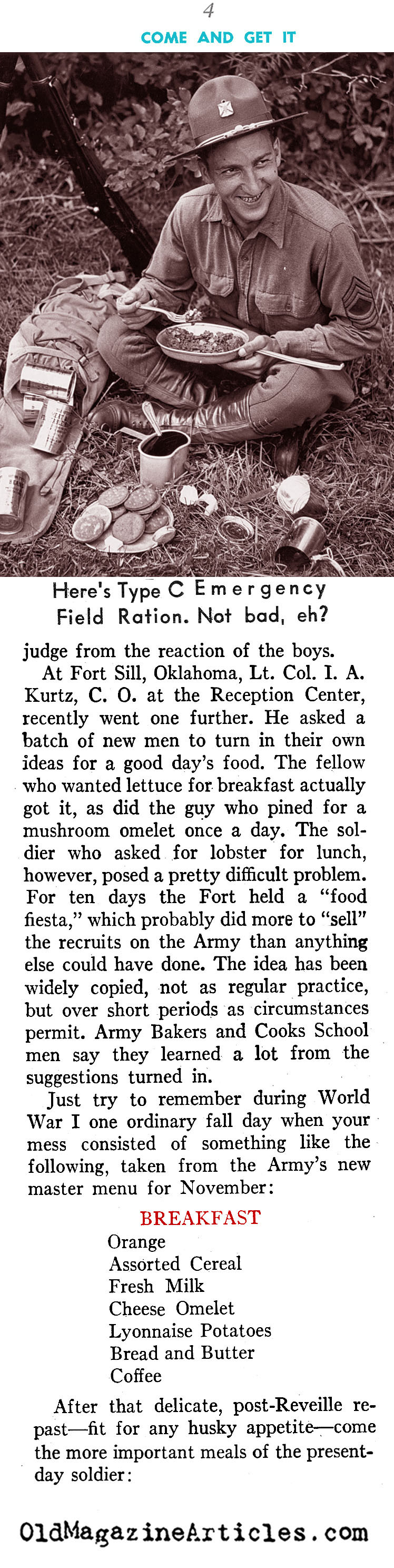
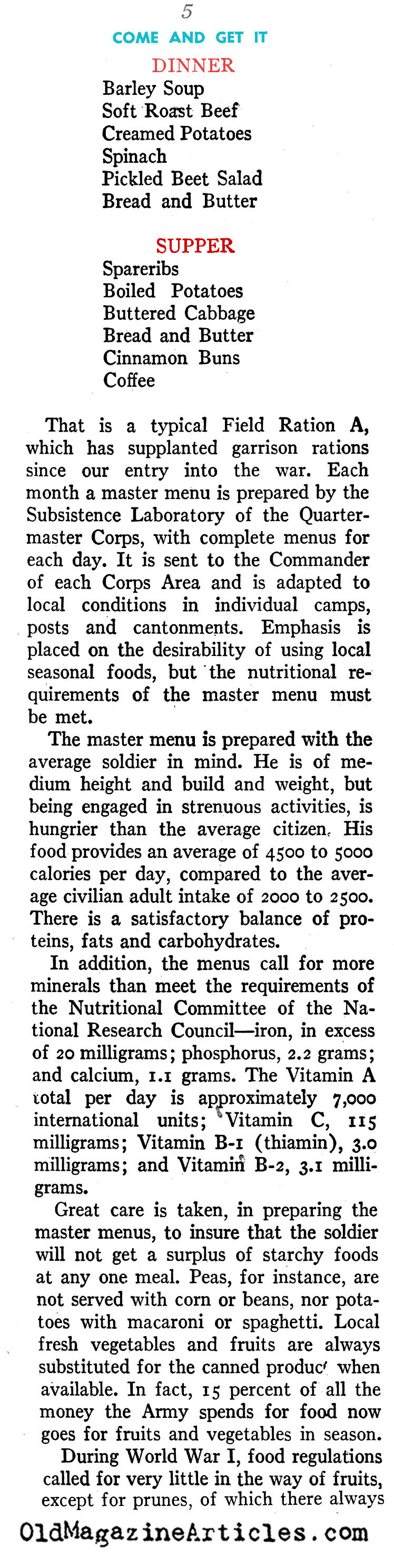
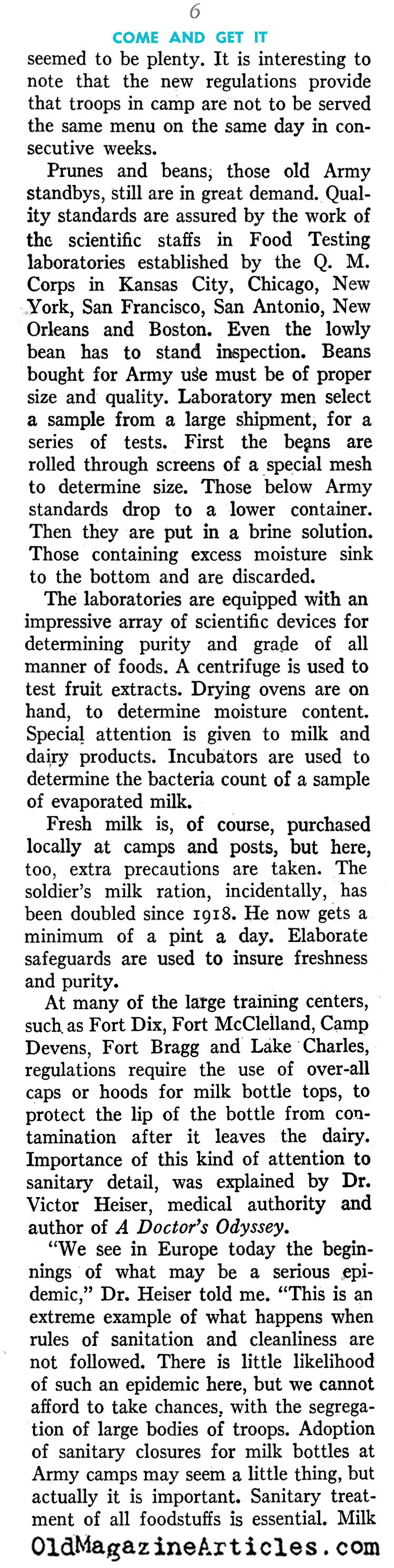
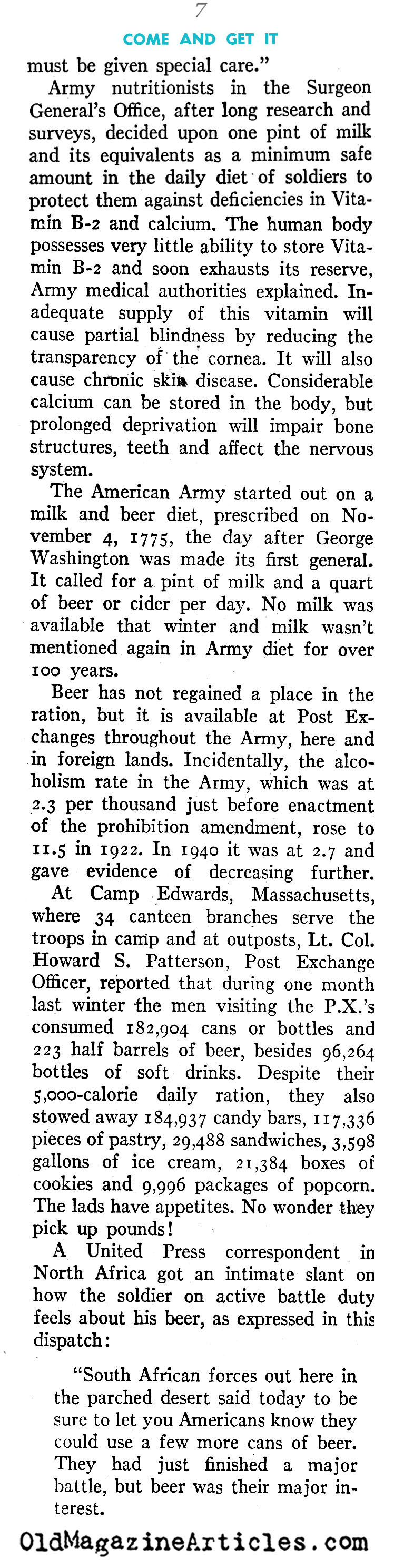
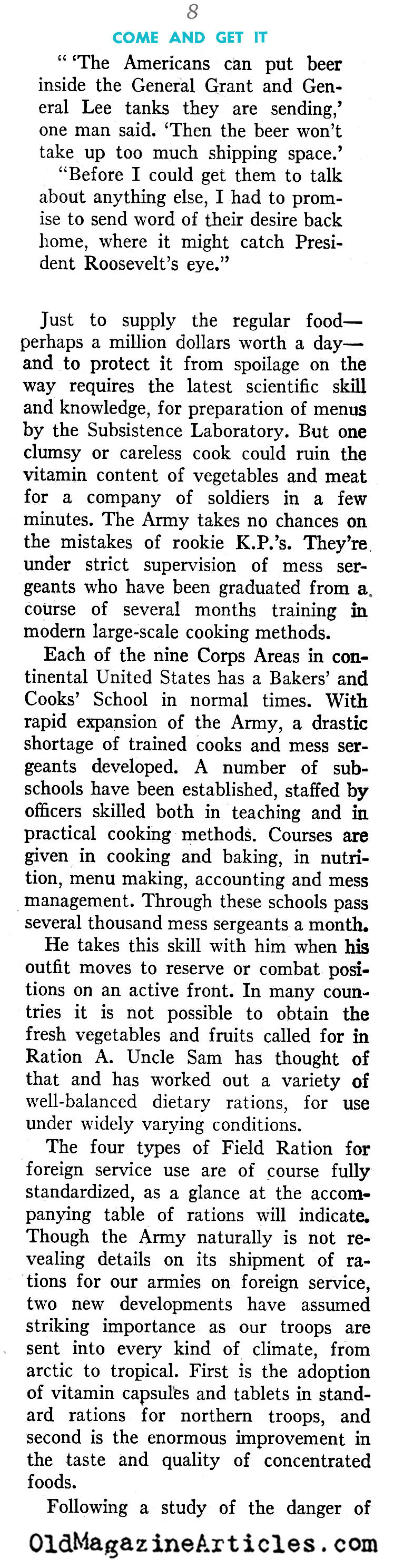
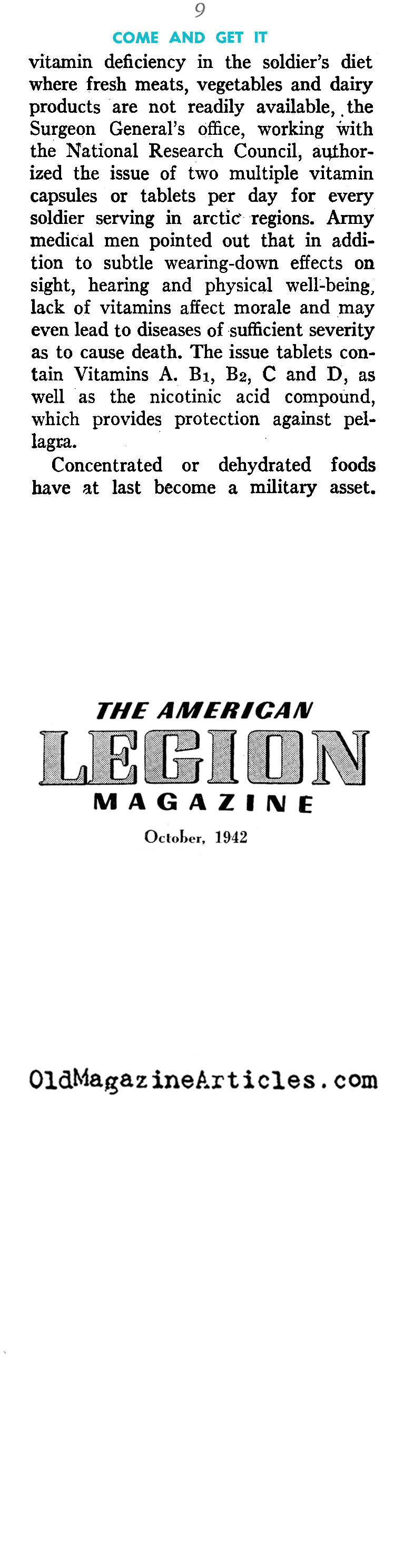
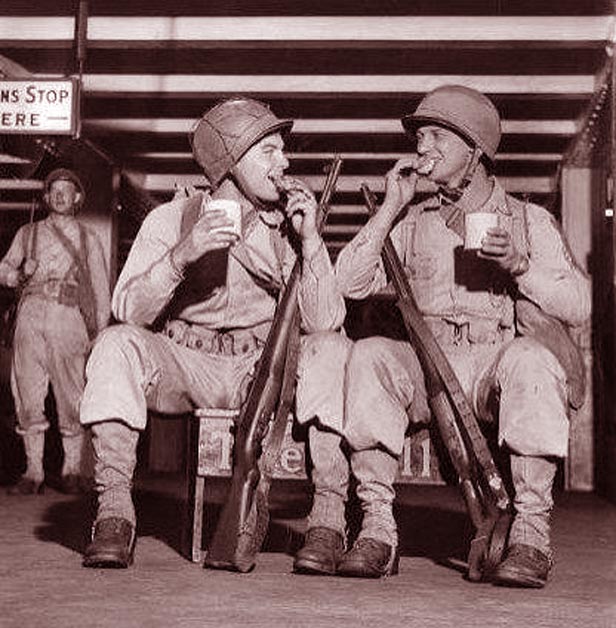
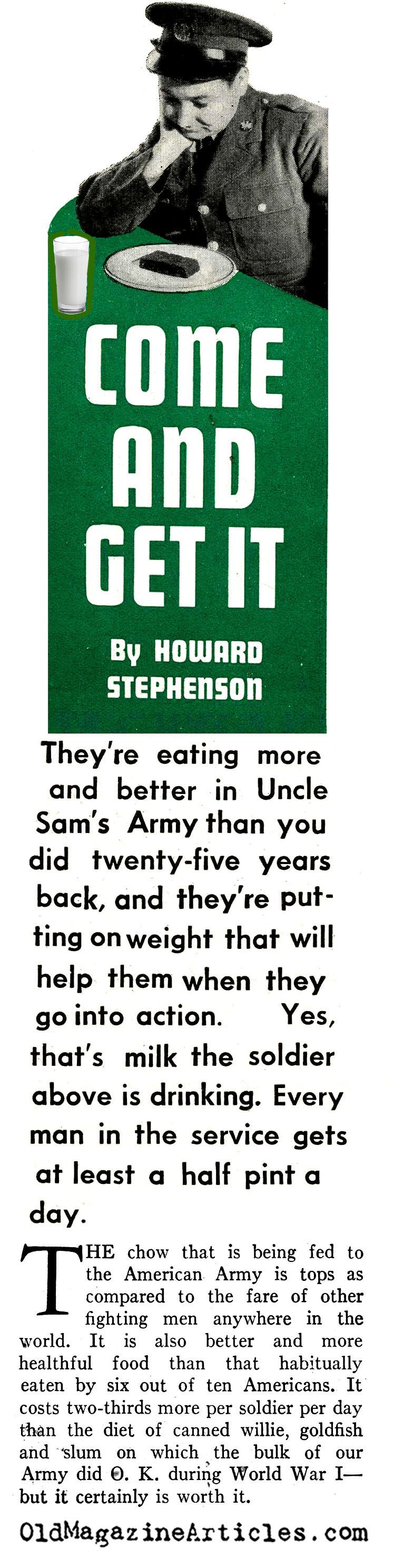
This article explains how World War II Army food became a scientifically planned system that improved soldiers’ health, performance, and eating habits. The Army treated food as a vital part of military readiness: nutritious, safe, appealing meals helped build stronger soldiers and sustain morale.

“The master menu is prepared with the average soldier in mind. He is of medium height and build and weight, but being engaged in strenuous activities, is hungrier than the average citizen. His food provides an average of 4500 to 50000 calories per/day, compared to the average citizen adult intake of 2000 to 2500. There is a satisfactory balance of proteins, fats, and carbohydrates.”

Read GI Food<br>(American Legion Magazine, 1942) for Free
Food for the WW2 GIs

How the GIs Ate

How the GIs Ate

How the GIs Ate

How the GIs Ate

How the GIs Ate

How the GIs Ate

How the GIs Ate

How the GIs Ate

How the GIs Ate

Food for the WW2 GIs
Scroll to Top