















47 Magazine Articles
Click Magazine Articles
Collier's Magazine Articles
Confederate Veteran Magazine Articles
Confidential Magazine Articles
Creative Art Magazine Articles
Current Literature Magazine Articles
Direction Magazine Articles
Film Daily Magazine Articles
Freedom's Triumph Articles
G.I. Joe Magazine Articles
Harper's Bazaar Magazine Articles
Harper's Weekly Articles
Hearst's Sunday American Articles
Ken Magazine Articles
La Baionnette Articles
Leslie's Magazine Articles
Liberty Magazine Articles
Life Magazine Articles
Men's Wear Magazine Articles
Newsweek Articles
Outing Magazine Articles
Outlook Magazine Articles
People Today Magazine Articles
Photoplay Magazine Articles
Pic Magazine Articles
PM Tabloid Articles
Punch Magazine Articles
Rob Wagner's Script Magazine Articles
Scribner's Magazine Articles
Sea Power Magazine Articles
Stage Magazine Articles
The American Legion Monthly Articles
The American Legion Weekly Articles
The Atlantic Monthly Articles
The Dial Magazine Articles
The Film Spectator Magazine Articles
The Flapper Magazine Articles
The National Park Service Articles
The New Republic Articles
The New York Times Articles
The North American Review Articles
The Saturday Evening Post Articles
The Saturday Review Articles
The Smart Set Articles
Theatre Arts Magazine Articles
Touchstone Magazine Articles
Trench Warfare Articles
Vanity Fair Magazine Articles
Vogue Magazine Articles

France

I M P R E G N A B L E

• Literary Digest, 1938 •


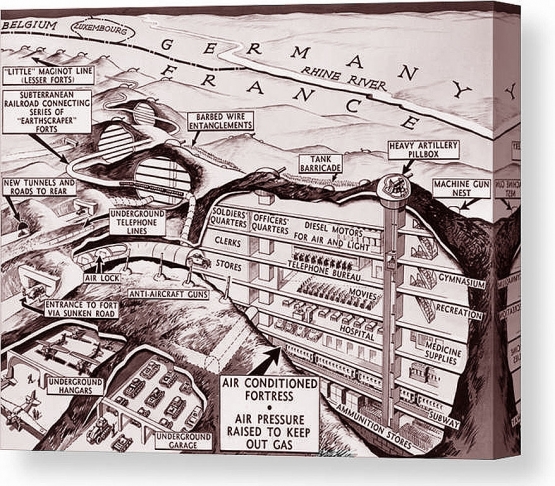
“The Maginot Line will permit calm French mobilization, experts say, in the event of a crisis. It may be noted, from a study of these forts on a map, that the chief point of concentration is approximately opposite the reoccupied Rhine zone… The French believe that the Maginot Line will prevent any possibility of invasion. Military authorities admit that enemy aircraft may wreck French cities and other industrial centers, but they maintain that no hostile force can occupy their territory until the Maginot Line is destroyed. They believe this line to be inviolable, but if they are perchance mistaken, they still have another device which is prevent its capture.”


The fortress was named after a French civil servant, André Maginot (1877 – 1932), who died before he could witness the disaster that bore his name. At the time the plan was conceived, tanks were unable to trek through the damp hill country outside of the range of French guns – but this was not the case in 1940 when the German attacked. The Maginot Line cost three billion francs.


Click here to read an article about French confidence in the Maginot Line.


Click here to read about General Charles de Gaulle.

Read The Maginot Line Will Save Us<br>(Literary Digest, 1938) for Free
impregnable maginot line 1940

I M P R E G N A B L E

I M P R E G N A B L E

impregnable maginot line 1940
Scroll to Top