








































47 Magazine Articles
Click Magazine Articles
Collier's Magazine Articles
Confederate Veteran Magazine Articles
Confidential Magazine Articles
Creative Art Magazine Articles
Current Literature Magazine Articles
Direction Magazine Articles
Film Daily Magazine Articles
Freedom's Triumph Articles
G.I. Joe Magazine Articles
Harper's Bazaar Magazine Articles
Harper's Weekly Articles
Hearst's Sunday American Articles
Ken Magazine Articles
La Baionnette Articles
Leslie's Magazine Articles
Liberty Magazine Articles
Life Magazine Articles
Men's Wear Magazine Articles
Newsweek Articles
Outing Magazine Articles
Outlook Magazine Articles
People Today Magazine Articles
Photoplay Magazine Articles
Pic Magazine Articles
PM Tabloid Articles
Punch Magazine Articles
Rob Wagner's Script Magazine Articles
Scribner's Magazine Articles
Sea Power Magazine Articles
Stage Magazine Articles
The American Legion Monthly Articles
The American Legion Weekly Articles
The Atlantic Monthly Articles
The Dial Magazine Articles
The Film Spectator Magazine Articles
The Flapper Magazine Articles
The National Park Service Articles
The New Republic Articles
The New York Times Articles
The North American Review Articles
The Saturday Evening Post Articles
The Saturday Review Articles
The Smart Set Articles
Theatre Arts Magazine Articles
Touchstone Magazine Articles
Trench Warfare Articles
Vanity Fair Magazine Articles
Vogue Magazine Articles

The Cold War

''Site R'' Breaks Ground
- Digging the Pentagon's Fall-Out Shelter

• Pathfinder Magazine, 1951 •


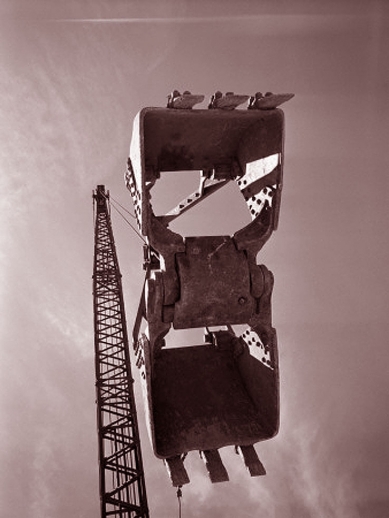
Not long after the U.S.S.R. successfully tested their first atomic bomb, the brass hats who work in the Pentagon saw fit to take the first step in preparing to fight an atomic war: they gave the order to create an isolated subterranean headquarters to house a military command and control center for the U.S. and her allies.

“The finished chamber, according to local observers, will be 3,100 feet long, contain four suites for the top brass (the Joint Chiefs of Staff, among others), and provide operational quarters for some 1,200 technicians in peacetime, or 5,000 if atomic bombing threatens the Washington command.”


Commonly known as “Site R”, it is located not terribly far from the presidential retreat, Camp David, and in the subsequent years since this article first appeared, the complex has grown considerably larger than when it was first envisioned. Today, Site R maintains more than thirty-eight military communications systems and it has been said that it was one of “undisclosed locations” that hosted Vice President Dick Cheney (b. 1941) shortly after the September 11th terrorist attacks.


We were startled to learn that the initial tunneling duties were not trusted to the Army Corps of Engineers, but rather the P.J. Healy Company; a construction firm that was highly praised at the time for having engineered the Lincoln Tunnel in New York City.


A related article can be read here…


Additional magazine and newspaper articles about the Cold War may be read on this page.

Read The Pentagon Prepared for W.W. III<br>(Pathfinder Magazine, 1951) for Free
Pentagon nuclear war HQ Raven Rock Pennsylvaniasite R nuclear war HQ Raven Rock PennsylvaniaPentagon Nuclear War preparationsDefense Information Systems Agency Site RPJ Healy Company created the Raven Rock atomic bomb shelter 1951atomic bomb-proof nuclear HQRRMC informationRaven Rock Complex was one of VP Dick Cheneys undisclosed locations after 9/11

''Site R'' Breaks Ground - Digging the Pentagon's Fall-Out Shelter

''Site R'' Breaks Ground - Digging the Pentagon's Fall-Out Shelter

Pentagon nuclear war HQ Raven Rock Pennsylvaniasite R nuclear war HQ Raven Rock PennsylvaniaPentagon Nuclear War preparationsDefense Information Systems Agency Site RPJ Healy Company created the Raven Rock atomic bomb shelter 1951atomic bomb-proof nuclear HQRRMC informationRaven Rock Complex was one of VP Dick Cheneys undisclosed locations after 9/11
Scroll to Top