



























47 Magazine Articles
Click Magazine Articles
Collier's Magazine Articles
Confederate Veteran Magazine Articles
Confidential Magazine Articles
Creative Art Magazine Articles
Current Literature Magazine Articles
Direction Magazine Articles
Film Daily Magazine Articles
Freedom's Triumph Articles
G.I. Joe Magazine Articles
Harper's Bazaar Magazine Articles
Harper's Weekly Articles
Hearst's Sunday American Articles
Ken Magazine Articles
La Baionnette Articles
Leslie's Magazine Articles
Liberty Magazine Articles
Life Magazine Articles
Men's Wear Magazine Articles
Newsweek Articles
Outing Magazine Articles
Outlook Magazine Articles
People Today Magazine Articles
Photoplay Magazine Articles
Pic Magazine Articles
PM Tabloid Articles
Punch Magazine Articles
Rob Wagner's Script Magazine Articles
Scribner's Magazine Articles
Sea Power Magazine Articles
Stage Magazine Articles
The American Legion Monthly Articles
The American Legion Weekly Articles
The Atlantic Monthly Articles
The Dial Magazine Articles
The Film Spectator Magazine Articles
The Flapper Magazine Articles
The National Park Service Articles
The New Republic Articles
The New York Times Articles
The North American Review Articles
The Saturday Evening Post Articles
The Saturday Review Articles
The Smart Set Articles
Theatre Arts Magazine Articles
Touchstone Magazine Articles
Trench Warfare Articles
Vanity Fair Magazine Articles
Vogue Magazine Articles

Education

In the 1920's It was Predicted that a ''Federal Department of Education'' Would Fail

• Literary Digest, 1921 •


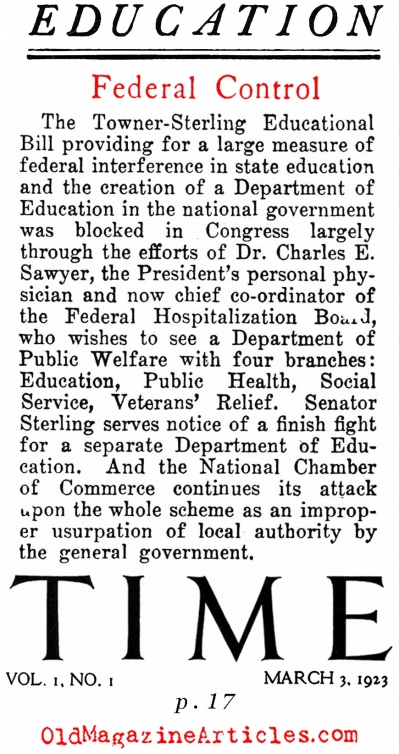
Judging by the attached article (on the right) that lists many of the arguments as to whether the states should accept education funding from the Federal Government, one is apt to suppose that our great-grandparents were clairvoyant.

The Smith-Towner Bill is the subject at hand in this column – a defeated piece of legislation that sought to create a federal department of education that was, among other matters, intended to defeat illiteracy (primarily among immigrants). Many of the arguments against the bill are still with us today; matters concerning religion and the power struggle between church and state. One Catholic organization recognized that a

“‘Secretary of Education and his subordinates will always have in view the possibility of using the educational system in furtherance of their own partisan interests. The public school system will become a vast political machine.”

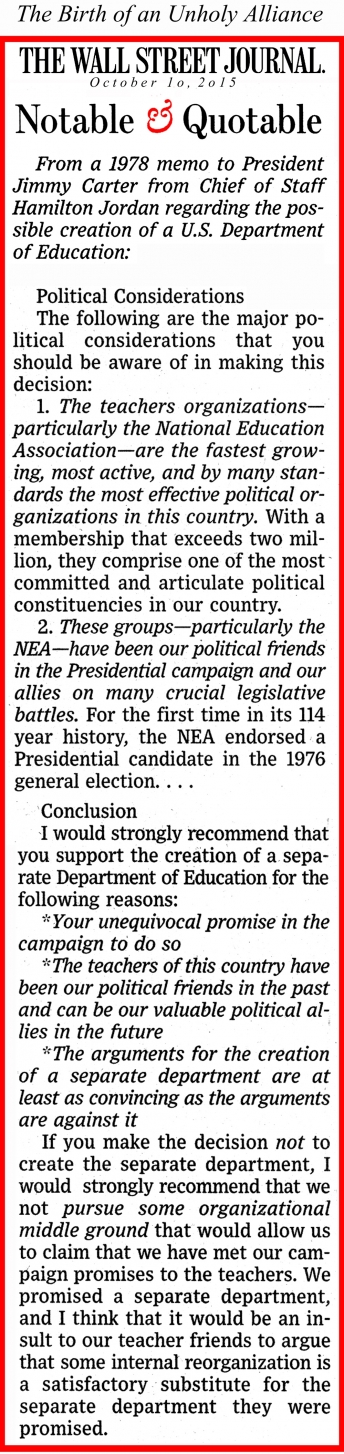
Backing the bill was the National Education Association – an interest group that has throughout the decades attempted to make the schools better, yet quite inadvertently, they have simply inspired large numbers of parents to withdraw their children from the schools entirely. Perhaps the most prophetic opinions came from a journalist at The New World who recognized that

“The Government does not attract the best minds, and a reign of low mediocrity would result.”

(American public-school students would be lucky if they were guaranteed a level of “low mediocrity” from their unionized teachers rather than what too many of them are getting today)
Read Should the Federal Government Fund Schools <i>at All?</i><br>(Literary Digest, 1921) for Free
US government funded education historyeducation magazine articleAmerican Education Funding debated in 1921disadvantages in federal funding for educationSmith-Towner Bill 19211921 education legislationNational Education Association magazine articlehistory of National Education Association

In the 1920's It was Predicted that a ''Federal Department of Education'' Would Fail

In the 1920's It was Predicted that a ''Federal Department of Education'' Would Fail

In the 1920's It was Predicted that a ''Federal Department of Education'' Would Fail

In the 1920's It was Predicted that a ''Federal Department of Education'' Would Fail

In the 1920's It was Predicted that a ''Federal Department of Education'' Would Fail

US government funded education historyeducation magazine articleAmerican Education Funding debated in 1921disadvantages in federal funding for educationSmith-Towner Bill 19211921 education legislationNational Education Association magazine articlehistory of National Education Association
Scroll to Top