Author name: editor

Andrew Higgins: He Made D-Day Possible (Click Magazine, 1942)
1942, Click Magazine, Weapons and Inventions

Andrew Higgins: He Made D-Day Possible
(Click Magazine, 1942)

During an informal conversation with his biographer, Stephen Ambrose, Dwight Eisenhower once remarked that it was Andrew Higgins (1886 – 1952) who had won the war for us. Knowing that such words do not flow from the lips of generals easily, Eisenhower went on to explain to Ambrose that if it were not for the creation of Higgin’s landing crafts, the architects of the Allied victory would have had to seize the existing, and well-fortified, harbors of Europe in order to unload their invasion forces – and who knows how the island-hopping war in the Pacific would been fought?


Attached is a five page photo-essay from the Fall of 1942 about the man and his early contributions.

The Birth of the M-1 Garand Rifle (American Legion Magazine, 1939)
1939, The American Legion Magazine, Weapons and Inventions

The Birth of the M-1 Garand Rifle
(American Legion Magazine, 1939)

This article was written by the war correspondent Fairfax Downey (1894 – 1990) for a magazine that catered to American veterans of W.W. I, and it seemed that he simply could not contain his enthusiasm for the U.S. infantry’s newest rifle: the M-1 Garand:

What a gun it is! Its nine pound weight swings easily through the manual of arms. The eight-round clip (three more shots than the we used to have with the ’03 Springfield) slips in easily and the breech clicks closed. The old range scale slide has vanished; range and windage adjustments are made simply by turning two knobs… The new semi-automatic means, among other things, that the fire power of troops armed with it has increased at least two and a half times over the old Springfield.


For further magazine reading about John Garand and his rifle, click here.

Advertisement

Use shortcode [oma_ad position="summary_top"] (or other position) in your theme or widgets to display OMA Promotions here.

1922 Review of Ulysses by James Joyce |
1922, Twentieth Century Writers

Ulysses by James Joyce
(NY Times, 1922)

Here is the 1922 review of Ulysses by James Joyce as it appeared in the NEW YORK TIMES:

Before proceeding with a brief analysis of Ulysses and comment on its construction and its content, I wish to characterize it. Ulysses is the most important contribution that has been made to fictional literature in the Twentieth Century.


An interview with Joyce can be read here…

Social Differences Among the Lighter Skinned and Darker Skinned Blacks (Literary Digest, 1922)
1922, African-American History, The Literary Digest

Social Differences Among the Lighter Skinned and Darker Skinned Blacks
(Literary Digest, 1922)

The varying degrees of color found among American Blacks has been, and still is, a sensitive topic and it was addressed in 1922 with some wit by an African-American journalist whose work is attached. Its a good read and speaks of a social structure that, we like to think, is gone with the wind; words appear in this article that seem queer in our era – there is much talk of


yellow gals
golden-skinned slave girls
tawny-skinned maids
midnight
stove-pipe

-all originating from African-American verse and popular song.


During the Second World War, hair dye was not simply used by women;
click here to read about the men who needed it, too.


Click here to read about black women who pass for white.


Click here to read a history of African-Americans between the years 1619 through 1939.
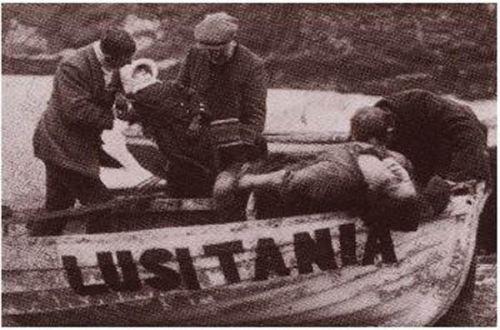
The Lusitania Attack and the Violation of Naval Traditions (Vanity Fair Magazine, 1915)
1915, Lusitania, Vanity Fair Magazine

The Lusitania Attack and the Violation of Naval Traditions
(Vanity Fair Magazine, 1915)

Attached is a Vanity Fair article printed a few months after the Lusitania sinking in which the journalist listed the many and myriad explanations as to why this event was such a departure from the traditions of naval warfare set in place by John Paul Jones, Admirals Nelson and Dewey.


Click here to read read a 1919 German condemnation of Admiral Von Tirpitz.

Advertisement

Use shortcode [oma_ad position="summary_top"] (or other position) in your theme or widgets to display OMA Promotions here.

How Was WW I Different From All Other Wars | Ellis Ashmead-Bartlett WW1 Article | Trench Warfare as Unconventional Warfare
1917, Hearst's Sunday American, World War One

A War Like No Other
(Hearst’s Sunday American, 1917)

An article by the admired British war correspondent Ellis Ashmead-Bartlett (1881 – 1931) concerning those aspects of the 1914 war that combined to make the entire catastrophe something unique in human history:

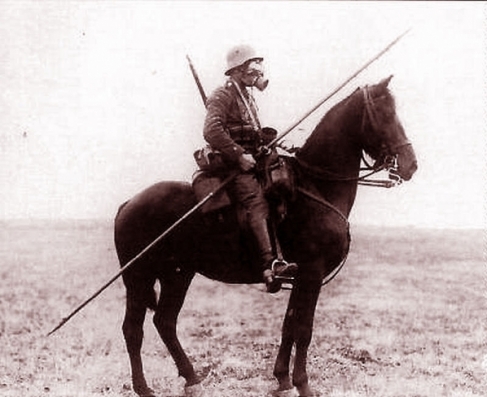
Everything has changed; uniforms, weapons, methods, tactics. Cavalry had been rendered obsolete by trenches, machine guns and modern artillery; untrained soldiers proved useless, special battalions were needed on both sides to fight this particular kind of war that, in no way, resembled the battles your father or grand-fathers had once fought.

A good read.


Click here to read about the fashion legacy of W.W. I…


To read about one of the fashion legacies of W.W. II, click here…

'Don't Listen to Europe'' (The New Republic, 1922)
1922, First Nations, The New Republic

‘Don’t Listen to Europe”
(The New Republic, 1922)

During his seven month-stay in New Mexico, D.H. Lawrence (1885 – 1930), pen-pushing British rhapsodist and highly lauded versifier in the 20th century’s republic of letters, was baffled to find that the Natives of America were held in total contempt and largely confined to isolated swaths of land. Arriving in Taos in September of 1922, it didn’t take him long to recognize the admirable qualities inherit within their culture and the injustices that had been done to them. His restrained response was expressed in these three brief paragraphs that appeared in The New Republic toward the middle of December of that year.

1941, Purges and Show Trials, The American Magazine

American Apologist For The Purges
(The American Magazine, 1941)

FDR’s second ambassador to Moscow, Joseph E. Davies (1876 – 1958), wrote this stunning article in which he makes clear that he was all in favor of Stalin’s purges and believed that the trials indicated the amazing far-sightedness of Stalin and his close associates. He believed every one of the trumped-up charges and swallowed them hook, line and sinker. He concluded the article by advising other liberty loving nations to follow Stalin’s example.

Advertisement

Use shortcode [oma_ad position="summary_top"] (or other position) in your theme or widgets to display OMA Promotions here.

National Recovery Administration News Paper Article
1934, National Recovery Administration, Pathfinder Magazine

The Blue Eagle
(Pathfinder Magazine, 1934)

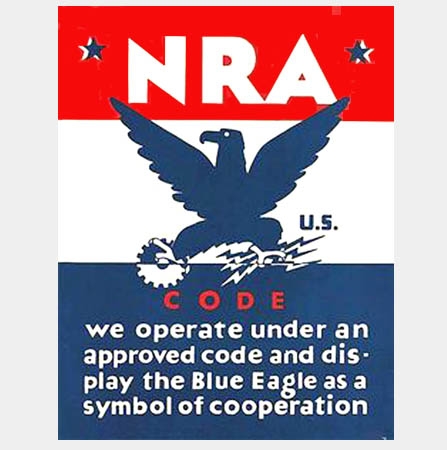
Blue Eagle, symbol of the National [Industrial] Recovery Act, is probably one of the best known figures in the country today. Gripping bolts of lightening and a cog wheel in its claws it now hovers over 95 percent of industrial America advertising the success of the first major move of the New Deal… With only one year behind it, it has brought about the cooperation of 2,300,000 employers and 60,000,000 consumers.


– so runs the introductory paragraph for this 1934 article that marked the first anniversary of the National Recovery Administration. This short-lived agency was the brainchild of FDR’s administration that was shot down by the Supreme Court in 1935. Although this article is filled with praise for the NRA, it would not be very long before the editors of PATHFINDER MAGAZINE assumed a more suspicious approach when reporting on this president’s efforts to repair the damaged economy.


More on NRA problems can be read here…

A Profile of Isadora Duncan (Vanity Fair, 1915)
1915, Dance Magazine Articles, Vanity Fair Hall of Fame

A Profile of Isadora Duncan
(Vanity Fair, 1915)

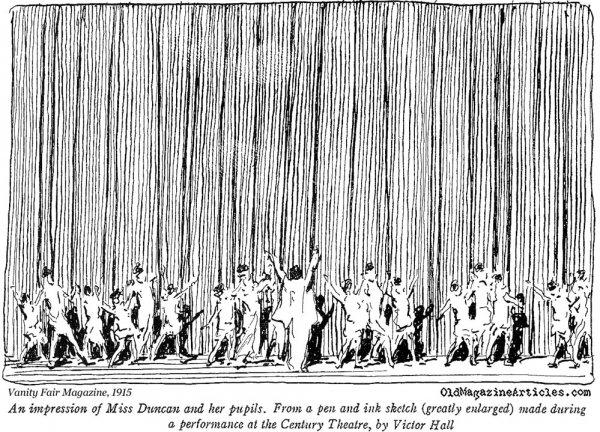
Isadora Duncan (1878-1927), said to be the birth mother of Modern Dance, is profiled in the attached VANITY FAIR MAGAZINE article written by Arthur Hazlitt Perry:

She is truly a remarkable woman. She never dances, acts, dresses, or thinks like anybody else. She is essentially the child of another age, a Twentieth Century exponent of a by-gone civilization. She missed her cue to come on, by twenty-three hundred years.

Advertisement

Use shortcode [oma_ad position="summary_top"] (or other position) in your theme or widgets to display OMA Promotions here.

Black Jesus Article Crisis Magazine 1914 |
1914, Faith, The Crises

Was Jesus Black?
(The Crises, 1914)

Chances are pretty slim that Jesus of Nazareth was a button-nose blondy – so pink of cheek, with eyes of blue – yet, time and again, this was the manner in which he was rendered by the Christians of the Gilded Age. When the African-American magazine The Crises began to run illustrated advertisements depicting Christ as anything but a white fellow you better believe there were some letters addressed to their editors on the issue. The attached article was their response to these outraged readers.

US Army General Allen W.Gullion Was In Charge of All American POW Camps During WW2 | Pre-Normandy Invasion Axis POWs
1944, POWs, The American Magazine

Boss Man
(The American Magazine, 1944)

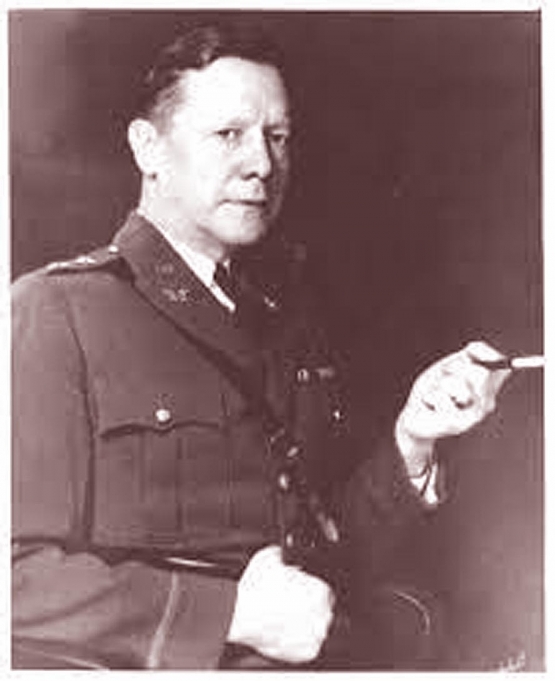
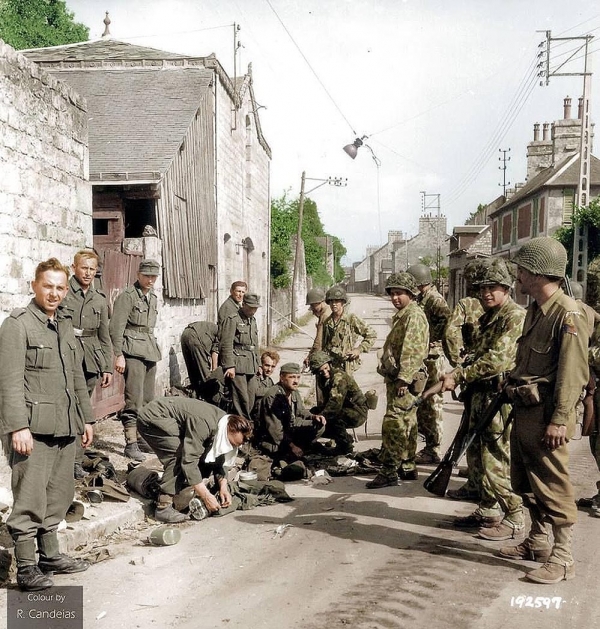
Here is a quick look at U.S. Army General Allen W. Gullion (1880 – 1946); he was in charge of every German, Italian and Japanese prisoner held by the American Army during the Second World war (At the time this article appeared there were about 150,000 Germans, 50,000 Italians and only a handful of Japanese).

Kangaroo Courts in American POW Camps 1945 | German POWs Executed in U.S. POW Camps | Vaterlandsverrater 1944
1945, Newsweek, POWs

The Murder of Grefreiter Kunz
(Newsweek Magazine, 1945)

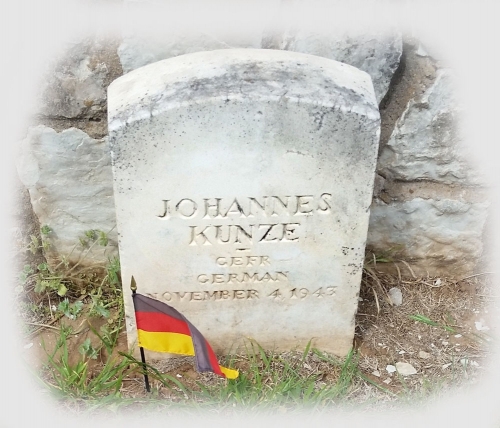
Accusing one of their fellow inmates of treason (Vaterlandsverrater), a Nazi kangaroo court located in the POW camp in Tonkawa, Oklahoma murdered him. The U.S. Army administrators who run the camp dutifully received the body as if justice had been served, and buried it in the camp graveyard. This article explains how all this came about.

Advertisement

Use shortcode [oma_ad position="summary_top"] (or other position) in your theme or widgets to display OMA Promotions here.

Tuskegee Airman Lt. Charles H De Bow | WW2 African-American Fighter Pilots | American Magazine Charles H DeBow
1942, African-American Service, The American Magazine

The First Black Fighter Pilots
(The American Magazine, 1942)

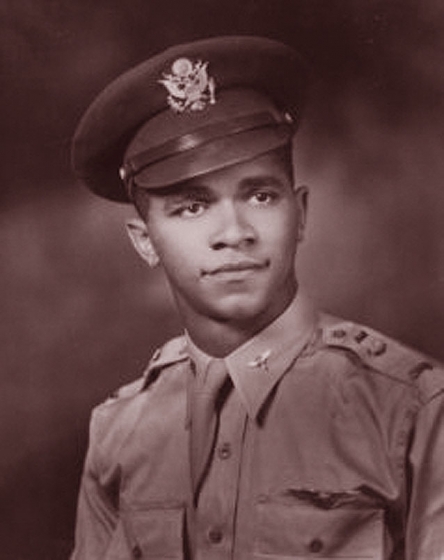
This article partially explains the excitement of being a Tuskegee Airman and flying the Army’s most advanced fighters and partially explains what it was like to be a black man in a segregated America:

I’m flying for every one of the 12,000,000 Negroes in the United States. I want to prove that we can take a tough job and handle it just as well as a white man.

Hollywood 10 Article | Hollywood Blacklisted Screenwriters 1948
1948, 48 Magazine, Blacklisting

‘Panic in Hollywood”
(’48 Magazine, 1948)

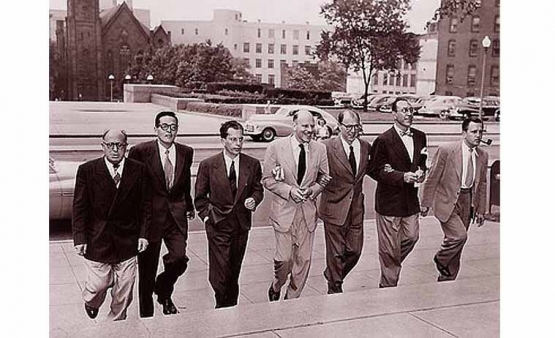
The years 1947 and 1948 was a rough patch for Hollywood – and journalist James Felton did a favor for all those geeky film historians yet unborn for documenting their myriad travails in the attached article. Aside from a major drop in box-office receipts, the most time consuming inconvenience involved U.S. Representative J. Parnell Thomas (1895 – 1970) and his cursed House Committee on Un-American Activities (HUAC) that threatened to reduce their profits to a further degree.

General de Gaulle Magazine Profile 1942 | General Charles de Gaulle Article 1942
1942, France, The American Magazine

The Leader of Free France
(The American Magazine, 1942)

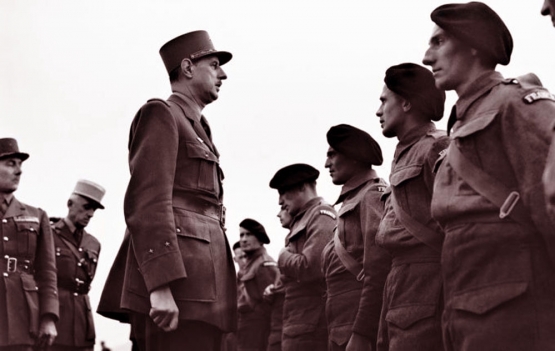
Almost literally,
he has built Free France from magnificent words. The miracle began on June 18, 1940, when he stepped before a London microphone with defiant, solemn appeal, beginning, ‘I, Charles de Gaulle, General of France’ – and ending superbly, ‘Soldiers of France, wherever you may be, arise!’.

The truth is that, to followers of de Gaulle, he is not a human being at all; he is a symbol, like the flag.

Advertisement

Use shortcode [oma_ad position="summary_top"] (or other position) in your theme or widgets to display OMA Promotions here.

Scroll to Top