Author name: editor

War Stories from the Second Armored Division in Normandy (Yank Magazine, 1944)
1944, D-Day, Yank Magazine

War Stories from the Second Armored Division in Normandy
(Yank Magazine, 1944)

An account relaying a bloody slice of life lived by the officers and men of the U.S. Second Armored Division. The story takes place on the tenth day following the D-Day landings as one armored battalion struggled to free themselves of the hedgerows, placate their slogan-loving general and ultimately make that dinner date in far-off Paris. Yank correspondent Walter Peters weaves an interesting narrative and the reader will get a sense of the business-like mood that predominated among front line soldiers and learn what vehicles were involved during an armored assault

The German Army's Official Report on D-Day (Dept. of the Army, 1945)
1945, D-Day, The Dept. of the Army

The German Army’s Official Report on D-Day
(Dept. of the Army, 1945)

Translated from German, labeled CONFIDENTIAL and printed in a booklet for a class at the U.S. Army Military Academy in 1945 was the attached German Army assessment of the D-Day invasion. Distributed on June 20, 1944, just two weeks after the Normandy landings, the report originated in the offices of Field Marshal von Rundstedt (1875 – 1953) and served to document the German reaction to the Allied Operations in Normandy.

Advertisement

Use shortcode [oma_ad position="summary_top"] (or other position) in your theme or widgets to display OMA Promotions here.

Weird WW II Invention | Weirde Japanese Invention | WW2 Ray Gun
1949, Quick Magazine, Weapons and Inventions

The Japanese Death Ray?
(Quick Magazine, 1949)

An odd dispatch from W.W. II appeared on the pages of a 1949 issue of QUICK MAGAZINE declaring that the weapons laboratories of Imperial Japan had been developing a ray gun throughout much of the war. When they realized that the jig was up they tossed the contraption in a nearby lake.


What worked considerably better than the Death Ray was hi-altitude hydrogen balloon-bombs that the Japanese let-loose on the Western states at the end of the war – click here to read about them…

Democracy vs The Melting Pot by Horace Kallen The Nation 1915 |
1915, Immigration History, Pamphlet Produced by the National Park Service

Anticipating Multiculturalism
(The Nation, 1915)

Horace M. Kallen (1888 – 1974) was a deep thinker who questioned the practice of Americanization (ie. assimilation). In this 1915 article, Kallen contended that although immigrants to American shores are required to develop allegiances to certain self-evident beliefs that are embraced throughout our republic – but outside of that, there is no reason that immigrants should not be able to maintain their own ethnic and cultural identities. In the Eighties, those who embraced this line of thinking preferred to call America a salad bowl as opposed to a melting pot.

Advertisement

Use shortcode [oma_ad position="summary_top"] (or other position) in your theme or widgets to display OMA Promotions here.

Battle of Okinawa Primary Source | Battle of Okinawa WW2
1945, World War Two, Yank Magazine

Contest On Okinawa
(Yank Magazine, 1945)

Writing about the bitter fighting on Okinawa some years after the war, Marine veteran Eugene Sledge remarked that he and his comrades had been reduced to Twentieth Century savages. Much of what he said is confirmed in the attached Yank article from 1945 that clearly illustrated the terror that was experienced by G.I.s and Marines on that island after the sun went down.

US Navy Admiral Forrest P Sherman Leadership 1950 | US Naval Operations During the Korean War 1950 - 1953
1945, Pathfinder Magazine, War at Sea

Assessing the U.S. Navy in W.W. II
(Pathfinder Magazine, 1945)

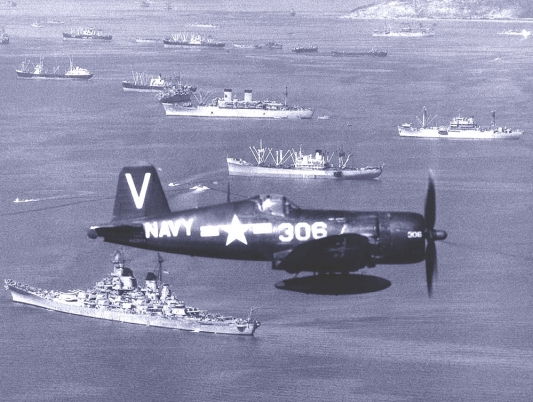
Some four months after VJ-Day U.S. Fleet Admiral Ernest King (1878 – 1956) gave a post-game summary of the Navy’s performance in his third and final report for the Department of War:


• Biggest factor in this victory was the perfection of amphibious landings


• Hardest Pacific battle: Okinawa invasion


• American subs sank at least 275 warships of all types


• Of the 323 Japanese warships lost, the U.S. Navy claimed 257 (figure disputed by Army Air Corps)


Read an article about the many faults of the
German Navy during the Second World War…

1930s American Communism | 1930s Daily Worker Magazine
1933, Magazines, New Outlook Magazine

The Daily Worker
(New Outlook, 1933)

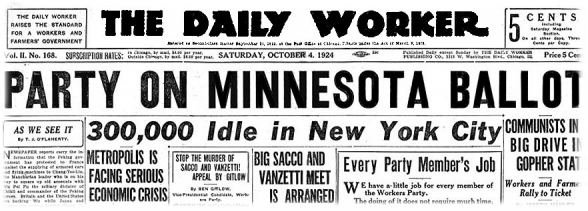
The revolution in America today supports about a dozen main propaganda organs. Chief among them is The Daily Worker it makes no pretense at impartiality. It is a revolutionary [newspaper] and nothing else, frankly admitted at every turn. For the genuine Red no such thing as an impartial newspaper exists… No one gets paid very much in the Red press. Salaries of twenty or twenty-five dollars a week are the maximum. One reason is political, we are told. Revolutionaries do not believe in high salaries.


In 1887 the The New York Times reviewed the first English edition of Das Kapital by Karl Marx, click here to read it…


Click here to read more about the American communists of the 1930s.

Advertisement

Use shortcode [oma_ad position="summary_top"] (or other position) in your theme or widgets to display OMA Promotions here.

Bette Davis Bio Collier's Magazine November 1955 | Career of Bette Davis Up To 1955
1955, Collier's Magazine, Hollywood History

Bette Davis Tells All
(Collier’s Magazine, 1955)

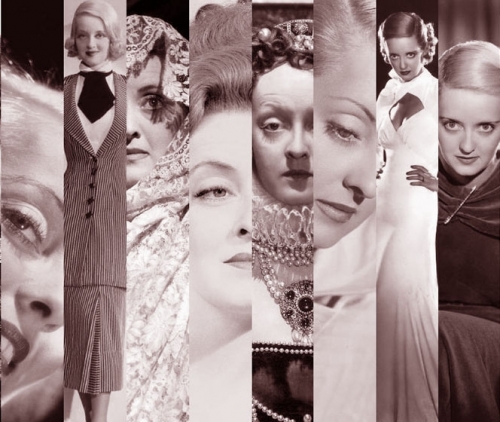
Those were the days when the talkies had taken over from the silent films and movie executives began a wholesale raid on the New York stage for promising young talent. It was fertile territory. In a comparatively brief period they signed Clark Gable, George Brent, Jimmy Cagney, Joan Blondell, Spencer Tracy Ginger Rogers, Humphrey Bogart, Francis Tone and a score of others. While I was in Broken Dishes I had been screen tested by Samuel Goldwyn for a feminine lead opposite Ronald Coleman…I reached Hollywood with my mother on December 13, 1930.

Advertisement

Use shortcode [oma_ad position="summary_top"] (or other position) in your theme or widgets to display OMA Promotions here.

James Forrestal: Secretary of the Navy (Collier's Magazine, 1944)
1944, Collier's Magazine, War at Sea

James Forrestal: Secretary of the Navy
(Collier’s Magazine, 1944)

It was a clear day on a fast track for James Forrestal (1892 – 1949) when the U.S. Congress passed the Two Ocean Navy Bill during the Summer of 1940. At that time both Europe and Asia were engulfed in war and it seemed certain to many that the U.S was not going to be able to avoid it. Serving as the Under Secretary of the Navy, with Frank Knox (1874 – 1944) presiding as his senior, Forrestal was charged with the duty of building the U.S. Navy into something far more dangerous than it already was, and build it he did.

1922, Cars, Current Opinion Magazine

How Many Americans Had Cars in the 1920s?
(Current Opinion, 1922)

The post-World War I American economy was humming along quite nicely when an inquisitive journalist took notice as to how many more cars there were on the streets (all told, there were 7.5 million). Perhaps there were no written studies documenting what we now call ‘the order of durable goods’ – that dependable yardstick we use to measure American opulence, and so this investigative journalist came up with a different way of figuring out just how many cars Americans could purchase -and we’re mighty glad he did!

Advertisement

Use shortcode [oma_ad position="summary_top"] (or other position) in your theme or widgets to display OMA Promotions here.

American Military Escalation 1965 | Vietnam War Got Bigger in 1965
1965, The Vietnam War

American Resolve Made Manifest
(U.S. News & World Report, 1965)

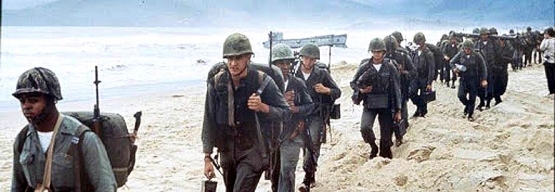
This article was published six weeks after 32,000 military personnel landed at Danang and the big unit war began:

A showdown with Communists in Asia is approaching fast. The U.S. offer of peace just got a short shrift from the Reds. Talk is not of peace , but a bigger war. The U.S. is determined to stand firm, no matter what. The strategy is to put more pressure on the enemy – making the cost unbearable. The hope is that the Reds will back off, but top U.S. officials are getting ready for the worst.

1950, Quick Magazine, The Korean War

The Start of the Korean War
(Quick Magazine, 1950)

On June 25, 1950 ten divisions of North Korean infantry invaded South Korea. In its narrowest sense, the invasion marked the beginning of a civil war between peoples of a divided country. In a far larger sense, it represented a break in tensions between the two dominant power blocs that had emerged from the Second World War. These well-illustrated pages appeared in Quick Magazine two weeks after the hostilities commenced and serves to summarize the events in Washington and at the United Nations. Within the first twelve hours of the war President Truman committed U.S. air and naval forces to the defense of South Korea and signed a bill to widen the draft pool.


The Korean War ended in 1953. Click here to read about the military results of that war.

The Birth of the Slip Dress (Quick Magazine, 1949)
1940s Fashion, 1949, Quick Magazine

The Birth of the Slip Dress
(Quick Magazine, 1949)

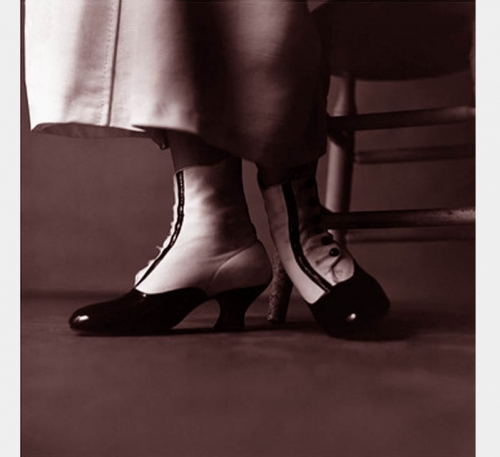
One Autumn evening in 1949, New York fashion model Anna-Lee Daniels and her gay boyfriend, Henry, took it upon themselves to demonstrate just how chic ladies’ undergarments were becoming. Recognizing that the latest slips were so minimal in their design – appearing much like the dresses flappers were often seen wearing back in the day It was soon decided that the two should step out for a night on the town – with young Anna-Lee sporting the slip – just to see if anyone caught on.

Advertisement

Use shortcode [oma_ad position="summary_top"] (or other position) in your theme or widgets to display OMA Promotions here.

Scroll to Top