The Rationing of Meat
(PM Tabloid, 1943)
Whale meat was not rationed…Click here to learn more about the American W.W. II home front…Read more …
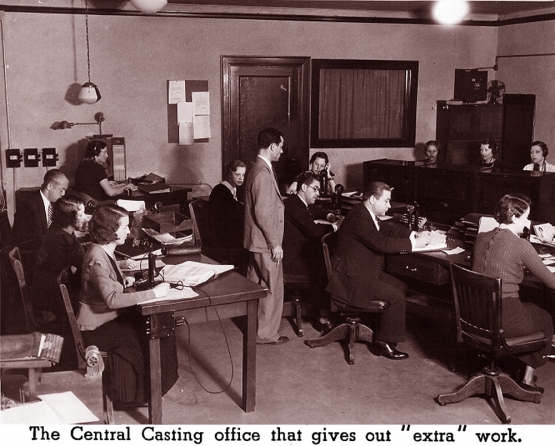
If you were planning to use your time machine to travel back to 1935 so you could work as a Hollywood extra – you might want to read this article about what a bad hand was dealt to that crowd back in the day. It was written by Campbell MacCulloch, General Manager of the Central Casting Corporation – and he knew all about it:
In Hollywood dwell some ten or twelve thousand misguided folk who cling tenaciously to a couple of really fantastic illusions…
Throughout much of the Twenties and Thirties the religious communities of the Western world looked at the nascent Soviet Union with some fascination: not only was it the first atheist government to be established, but it was the first government to be openly hostile to all religions alike.
An article about Chinese persecution of the Christian Church can be read here…
Click here to read about the Nazi assault on the German Protestant churches in 1935.

Some have said that America’s first introduction to Latin culture came with Ricky Ricardo; others say Carmen Miranda, Xavier Cugat, Charo or Chico and the Man. The dilettantes at OldMagazineArticles.com are not qualified to answer such deep questions, but we do know that for a bunch of unfortunate Nazis and their far-flung Japanese allies, their first brush with la vida loco Latino came in the form of Private Anibal Irizarry, Colonel Pedro del Valle and Lieutenant Manuel Vicente: three stout-hearted Puerto Ricans who distinguished themselves in combat and lived to tell about it.
In 1917 the U.S. Congress granted American citizenship rights to the citizens of Puerto Rico – but they didn’t move to New York until the Fifties. Click here to read about that…
Click here to read an article about Latinas in the WAACs.
This Yank Magazine article, written just after the Channel Islands liberation, tells some of the stories of the Nazi occupation of Jersey and Guernsey Islands.
Before the war the English Channel Islands – long known as a vacation spot for the wealthy – were wonderful places to ‘get away from it all.’
Then the Germans came to the islands after Dunkirk, and for five years 100,000 subjects of his majesty the King were governed by 30,000 Nazi officers and their men.
When the 20th Century Fox executive Joseph Schenk (1876 – 1961) opened his big fat pie hole and blathered-on about what he really thought of Hollywood extras, he soon discovered that this minority had champions in the press corps who would come to their aid when needed.
Illustrated with the images of shanties and tents that once surrounded Universal Studios, this article tells the sad story of Hollywood movie extras and the challenging lives they led during the Great Depression:
Tossed out of other work by the recent depression, attracted by the false stories of Hollywood’s squanderings and extravagances, excited by the thrill of living and working in the same town and the same industry with world famous personalities, they drifted to Hollywood and attached themselves to the motion picture industry. They registered with the Central Casting Bureau, and joined the great army of extras.
These people saw no glitter, no romance, no bright mirage of stardom. To them, it was hard work and serious work…
From Amazon: Hollywood Unknowns: A History of Extras, Bit Players, and Stand-Ins
The FBIS – short for Foreign Broadcast Intelligence Service – is the organization that listens to the world’s radios for Uncle Sam. It’s monitoring station in Washington has, besides editors and annalists, some sixty fantastic linguists on its staff – people who are fluent at anywhere from three or four – up to a couple of dozen, languages apiece. Their job is to intercept and translate the shortwave broadcasts of Rome, Berlin, Vichy and a score of lesser stations, which daily pour out Axis propaganda in more languages than were ever spoken in the Tower of babel.
For the believers in this world, it is very easy to see World War II as a spiritual conflict waged against the righteous by the evil forces of darkness. The atheist Nazis were truly having their way with the lukewarm Christians who filled the ranks of the European Armies – up until the arrival of a particular North American army whose motto is In God We Trust. Even to this day, the U.S. Military holds the record as having built more churches than any other institution (every base, fort and naval installation had one). This article reports that the U.S.Army did not simply deliver weaponry to our Chinese allies, they delivered millions of Bibles, too.
This writer, Banjamin B. Hampton (1875 – 1932), having heard so much hokum about Hollywood, decided to write an article about all he knew about the place – he was a film director and a producer, so he knew plenty. He was especially irked by the number of young women who arrived at the dream factory each month only to be bamboozled and find themselves on the street before too long.
With the unemployment level at an all-time high, many Americans heard that there were jobs to be had in Hollywood as movie extras; jobs that require one to simply walk back and forth, pantomime at a dinner table and wear nice costumes. With few other options available to them, thousands of people headed West only to find that there was very little work, sub-standard housing and too many sharks wishing to take advantage of them. This article tells their story and explains how FDR’s National Recovery Administration took it upon themselves to decide who could pursue this work and who could not.
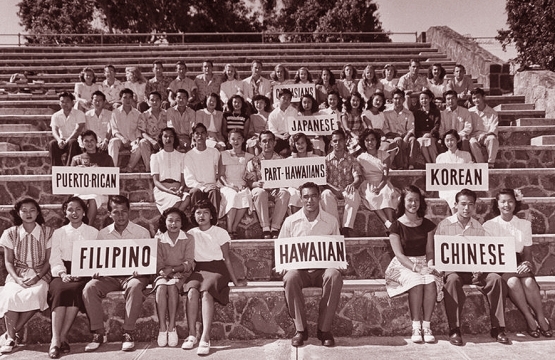
Like many Americans in the Twenties, the journalist who penned the attached article was totally irked by the concept of an American territory – bound for statehood – having a majority Asian population. He wrote at a time when the nation was deeply concerned about assimilating America’s immigrants and his indignation can clearly be sensed.
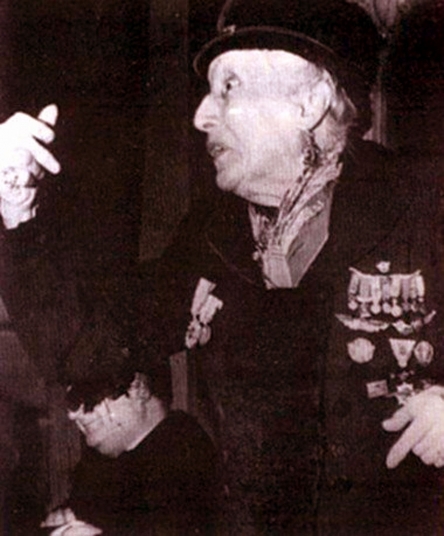
Well, Monsieur, did I ever tell you about the time I was a Doughboy in the Great war?
This is the story of Marie Marvingt (1875 – 1963), an amazing French woman who did indeed serve in the forward trenches disguised as a man during the Summer of 1917.
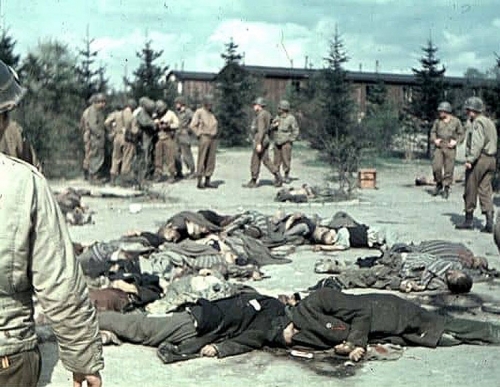
From time to time, it was the practice of the German military to separate American Jewish soldiers from their fellows and transfer them to concentration camps. The corpse of one of these men was found at the Nazi concentration camp in Ohrdruf, Germany.
Click here to read about the malnourishment and starvation of Allied prisoners of war…
Newton Wilson, a modest, quiet, somewhat academic man who never leaps before he looks through, in and around a situation, became the 20th Century innovator of precise recipes; a sort of Fanny Farmer of flying.
Click here to read about the earliest airline stewardesses…
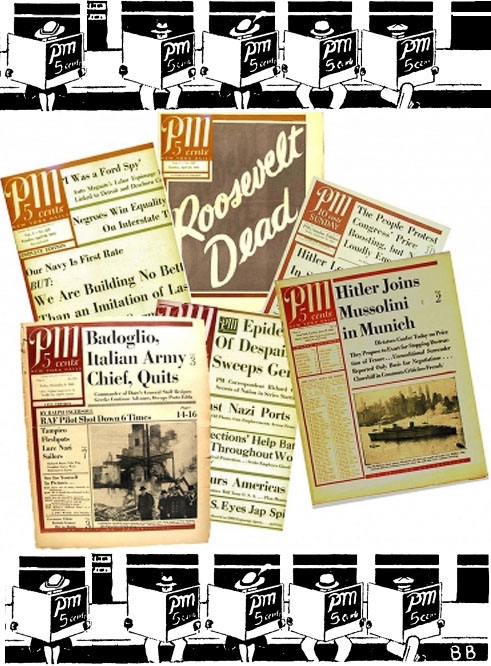
PM (1940 – 1948) was a left-leaning, New York-based evening paper that enjoyed some notoriety across the fruited plane on account of its founding editor, Ralph Ingersoll (1900 – 1985), who liked to believe that his steady mission was to create A tabloid for literates:
Contributors included Theodor Geisel (aka Dr. Seuss), I. F. Stone, Ad Reinhardt, J.T. Winterich, Leane Zug‐Smith, Louis Kronenberger and Ben Hecht; the photographs of Margaret Bourke‐White and Arthur Felig (aka Weegee) appeared regularly. Occasional contributors included Erskine Caldwell, Myril Axlerod, McGeorge Bundy, Saul K. Padover, Heywood Broun, James Thurber, Dorothy Parker, Ernest Hemingway, Eugene Lyons, Earl Conrad; Ben Stolberg, Malcolm Cowley.
Preferring to rely more on subscribers than advertisers, PM only lasted eight years.
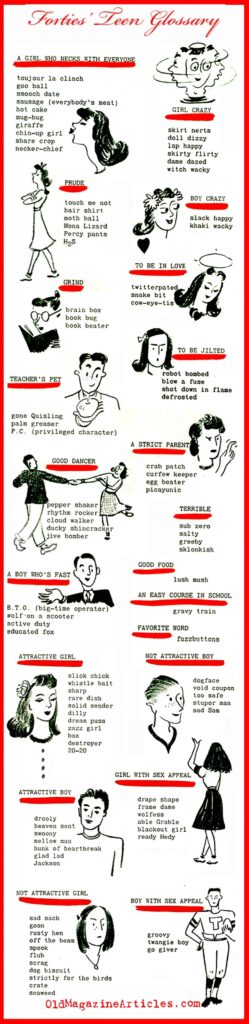
A 1945 Yank Magazine article concerning American teen culture on the W.W. II home front in which the journalist/anthropologist paid particular attention to the teen-age slang of the day.
Some of today’s teenagers —pleasantly not many — talk the strange new language of sling swing. In this bright lexicon of the good citizens of tomorrow, a girl with sex appeal is an able Grable or a ready Hedy. A pretty girl is whistle bait. A boy whose mug and muscles appeal to the girls is a mellow man, a hunk of heart break or a glad lad.
To read about one of the fashion legacies of W.W. II, click here…
Click here to learn how the Beatniks spoke.
Click here if you would like to read a glossary of WAC slang terms.
•Suggested Reading• Flappers 2 Rappers: American Youth Slang
Greta Garbo (1905 – 1990) was well known for keeping to herself and preferring to act on movie sets free of executives, pals and all sorts of other hangers-on and she was very famous for refusing to grant members of the press corps interviews. With that in mind, it is a wonder that Katherine Albert of PHOTOPLAY MAGAZINE was able to piece enough together for this 1930 article:
She has no place in the life of Hollywood. She has never adapted herself to it.
Garbo will continue to remain an enigma…
Click here to read about early cosmetic surgery in Hollywood.