Author name: editor

Battle of Guadalcanal News Report | Operation Watchtower Report 1942
1942, Newsweek, World War Two

Guadalcanal
(Newsweek Magazine, 1942)

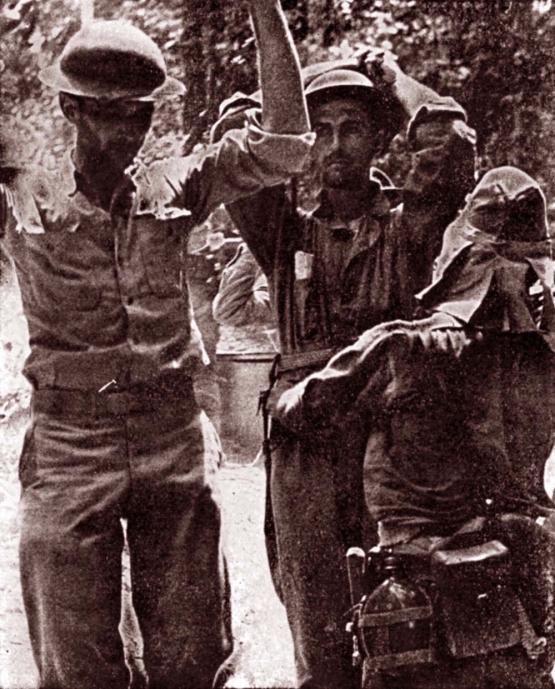
The Battle of Guadalcanal (August 7, 1942 – February 9, 1943) was the first major land offensive by Allied forces against the Japanese. When this article went to press, the American military presence on the island was exactly one month old; it was at this point that the Marines sought to outmaneuver the enemy by conducting an additional amphibious landing on the north side of the island where They found that except for a few snipers, the Japanese had scampered to the hills.

Advertisement

Use shortcode [oma_ad position="summary_top"] (or other position) in your theme or widgets to display OMA Promotions here.

President Eisenhower's Thoughts on Vietnam (Why Vietnam, 1965)
1965, The Vietnam War, Why Vietnam

President Eisenhower’s Thoughts on Vietnam
(Why Vietnam, 1965)

Here is a segment of the letter many historians tend to agree was the one document that lead to the American involvement in the Vietnam War. Written in the Spring of 1954 when the French military was in the throes of losing the Battle of Điện Biên Phủ, President Eisenhower reached out to the former British Prime Minister to express his concerns regarding the place of Vietnam within the strategic structure of the Pacific and openly wondered what a Communist Vietnam would mean in the balance of power.

If I may refer again to history; we failed to halt Hirohito, Mussolini and Hitler by not acting in unity and in time. That marked the beginning of many years of stark tragedy and desperate peril. May it not be that our nations have learned something from that lesson?…


In 1954 the French gave up on Vietnam and the U.S. accepted the challenge – click here to read about it…


Click here to read an article about American public opinion during the early Cold War years


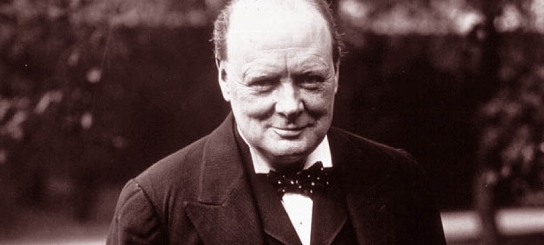
More about Winston Churchill can be read here.

The Emergence of a New World Power (The New Republic, 1922)
1922, Aftermath (WWI), The New Republic

The Emergence of a New World Power
(The New Republic, 1922)

Having studied the global power structure that came into place following the carnage of the First World War, British philosopher Bertrand Russel (1872 – 1970; Nobel Prize for Literature, 1950) was surprised to find that the most dominate nation left standing was not one of the European polities that had fought the war from start to finish – but rather the United States: a nation that had participated in only the last nineteen months of the war.

Advertisement

Use shortcode [oma_ad position="summary_top"] (or other position) in your theme or widgets to display OMA Promotions here.

The World After W.W. I (The Bookman, 1929)
1929, Aftermath (WWI), The Bookman

The World After W.W. I
(The Bookman, 1929)

The book review of Winston Churchill’s 1929 tome, The Aftermath:

All too frequently Mr. Churchill passes lightly over the story he alone can tell and repeats the stories that other men have told….[Yet] no one who wants to understand the world he lives in can afford to miss The Aftermath. Would that all contemporary statesmen were one-tenth as willing as Mr. Churchill to tell what they know.


More about Winston Churchill can be read here.


Read the thoughts of one W.W. I veteran who regrets having gone to war…
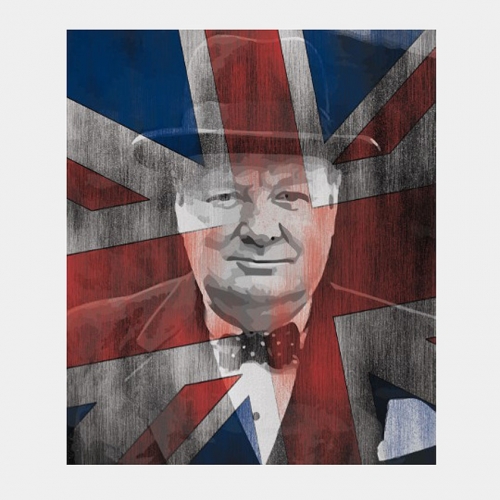
Prime Minister Winston Churchill TRIVIA | American People Gave Gifts to Winston Churchill 1941 | Winston Churchill Showered With Gifts from Americans 1941-1942
1942, Collier's Magazine, Winston Churchill

Americans ♥ Winston Churchill
(Collier’s Magazine, 1942)

Shortly after Japan’s attack on Pearl Harbor, British Prime Minister Winston Churchill made a solemn visit to the White House in order to plot the course of the war with FDR. The affect that the Prime Minister impressed upon the average American was profound and was soon made manifest in the form of innumerable gifts that began descending upon the White House addressed to him. An unsigned editorial in Collier’s Magazine noticed the event and remarked:

If we hadn’t liked Mr. Churchill immensely from the moment he arrived here, none of us would have sent him anything. The size and variety of this shower of gifts are the best measure of the terrific hit he made with all kinds and conditions of Americans.

WW1 Mistake Made by Churchill | WW I Failure Battle of Gallipoli | Churchill Removed as First Lord of the Admiralty WW I
1916, Vanity Fair Magazine, Winston Churchill

Winston Churchill Steps Down as First Lord of the Admiralty
(Vanity Fair, 1916)

After the British withdrawal from Gallipoli it was time for the architect of the disaster, Winston Churchill, First Lord of the Admiralty, to resign his office. Wishing to still play a part in the Great War, Churchill assumed the rank of Major with his old regiment, the Oxfordshire Hussars:

To have been ruler of the King’s Navy, and then to take a subordinate place in a trench in Flanders, involved a considerable change even for one whose life had been full of startling and dramatic moments.


Click here to read a review of Churchill’s remembrance of World War I .

Advertisement

Use shortcode [oma_ad position="summary_top"] (or other position) in your theme or widgets to display OMA Promotions here.

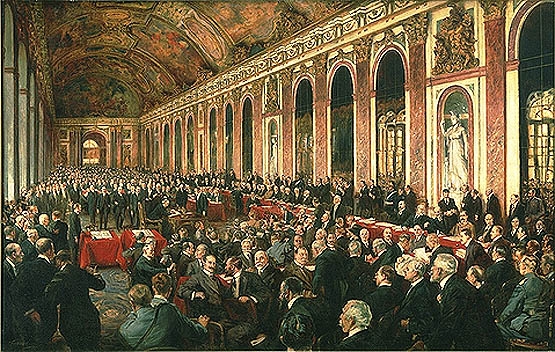
Wilson's Secretary of State and the Versailles Treaty (Current Opinion, 1922)
1922, Current Opinion Magazine, Versailles Treaty

Wilson’s Secretary of State and the Versailles Treaty
(Current Opinion, 1922)

Attached is the 1922 book review of Robert Lansing’s (1864 – 1928) book, Big Four, and Others of the Peace Conferencestyle=border:none. In this, Lansing’s follow-up to his earlier book, The Peace Negotiations: A Personal Narrativestyle=border:none, the author

shows us Clemenceau dominating the conference by sheer force of mind; Wilson outmaneuvered; Lloyd George clever, alert, but not very deep; and Orlando precise and lawyer like. This book confirms the popular belief that the general scheme of the treaty was worked out by the British and French delegations without material aid from the Americans. As a consequence, the American delegation lost prestige.

Wilson's Fourteen Points (Literary Digest, 1919)
1919, The Literary Digest, Versailles Treaty

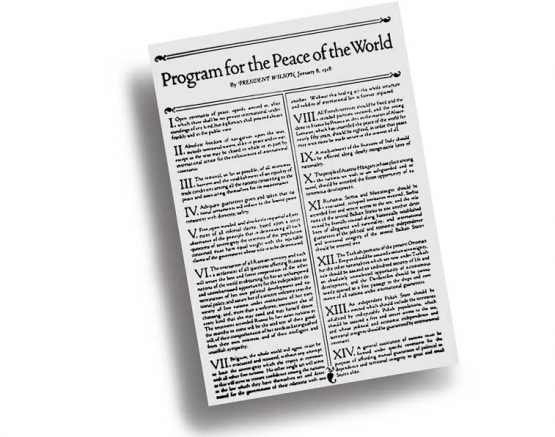
Wilson’s Fourteen Points
(Literary Digest, 1919)

Here is a very simple list of President Wilson’s Fourteen Points can be printed off of a PDF by clicking the title above.

Wilson’s Fourteen Points were ignored at Versailles and the United States withdrew it’s support for the historical conference in favor of two separate peace agreements made with Germany and Austria at a later date.


Click here to read more magazine articles about President Woodrow Wilson.

Read a 1936 article concerning Hitler’s Versailles Treaty violations.


The historian Henry Steele Commager ranked Woodrow Wilson at number 18 insofar as his impact on the American mind is concerned – click here to understand his reasoning…

Advertisement

Use shortcode [oma_ad position="summary_top"] (or other position) in your theme or widgets to display OMA Promotions here.

P.E. Foxworth N.Y. FBI Director Catches Nazi Spy |
1942, American Fascism, PM Tabloid

Bundist Arrested As Spy
(PM Tabloid, 1942)

Johannes Kroeger, ex-leader of the German-American Bund was picked up by the FBI in the Fall of 1942 for espionage. Employed as a bus driver on Long Island, New York, Kroeger would regularly carry the employees of the Republic Aviation Company to and from work. When pressed for details, the FBI remarked:

Workers in aviation plants talk too much.


Confessions of a Former Racist 1948 | 1940s Anti-Jim Crow Article
1948, African-American History, Coronet Magazine

How One Southerner Overcame His Racist Attitudes
(Coronet Magazine, 1948)

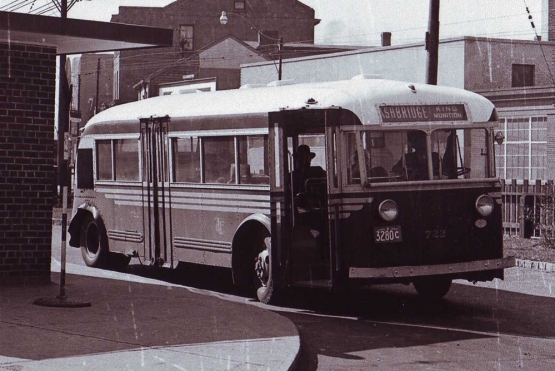
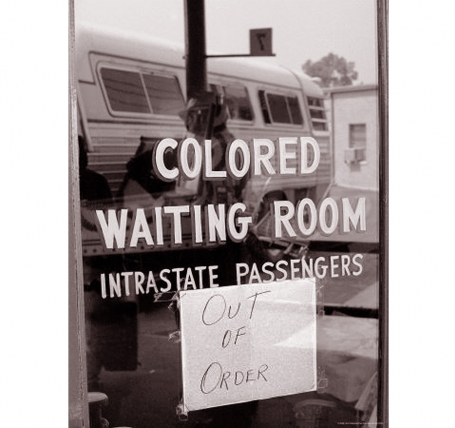
The attached is an historic article that explains the lesson that so many white Americans had to learn in order that America become one nation, indivisible, with liberty and justice for all. There can be no doubt that many ragged, dog-eared copies of this middle class magazine must have been passed from seat to seat in the backs of many buses; perhaps one of the readers was a nineteen year-old divinity student named Martin Luther King, Jr.?


Before the Atom Bomb came along, Joseph Stalin hatched a scheme to invade the U.S. and create two Americas, one black, one white – click here to read more

Advertisement

Use shortcode [oma_ad position="summary_top"] (or other position) in your theme or widgets to display OMA Promotions here.

The Rise of Oral Roberts (Coronet Magazine, 1955)
1955, Coronet Magazine, Faith

The Rise of Oral Roberts
(Coronet Magazine, 1955)

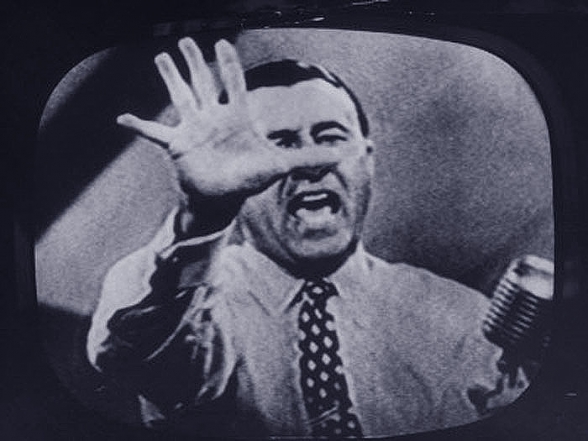
The editors at Coronet recognized that Oral Roberts was not your average minister, who was simply contented to preside over thirty full pews every week; they labeled him a businessman-preacher and subtly pointed out that the man’s detractors were many and his flashy attire unseemly for a member of clergy:


God doesn’t run a breadline…I make no apology for buying the best we can afford. The old idea that religious people should be poor is nonsense.

Paul Laurence Dunbar NY TIMES ARTICLE 1897 | Review of Lyrics of Lowly Life by Paul Laurence Dunbar 1897 | Literary Editor William Dean Howells on Paul Dunbar
1897, African-American History, The New York Times

‘A Negro Poet”
(NY Times, 1897)

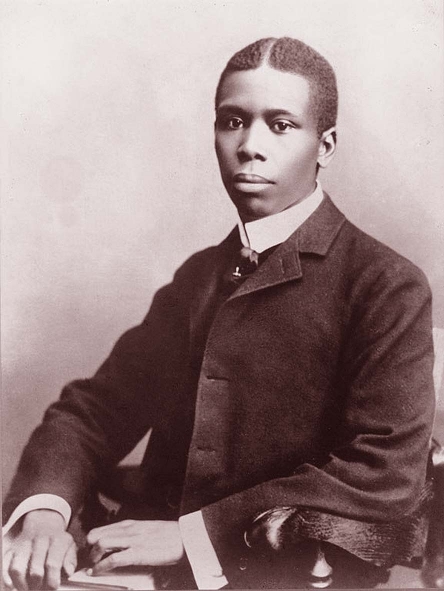
Here is the NY Times review of Lyrics of Lowly Life (1897) by Paul Laurence Dunbar (1872 – 1906), who was a distinguished African-American poet, novelist, and playwright of the late 19th and early 20th centuries. If Helen had the face that launched a thousand ships, then Dunbar had the poetry to launch at least twenty thousand schools – for it seems that is about how many there are named for him.

Advertisement

Use shortcode [oma_ad position="summary_top"] (or other position) in your theme or widgets to display OMA Promotions here.

Scroll to Top