Author name: editor

British Military Campaign Furniture (Mappin and Webb, 1915)
1915, Mappin and Webb Catalog, Recent Articles, Trench Warfare

British Military Campaign Furniture
(Mappin and Webb, 1915)

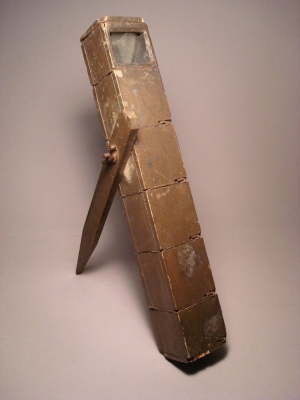
The furniture made available for private purchase to British officers during World War One was a far cry from that which their Victorian father’s enjoyed; however, the thought of going off to war without camp furniture at all was foreign to them. The page illustrates the simple, collapsible furniture that was approved by the British War Office for use in the field.

Advertisement

Use shortcode [oma_ad position="summary_top"] (or other position) in your theme or widgets to display OMA Promotions here.

The Reformed South Korean Military (Pathfinder Magazine, 1952)
1952, Pathfinder Magazine, Recent Articles, The Korean War

The Reformed South Korean Military
(Pathfinder Magazine, 1952)

By the close of 1952 it became evident to anyone who followed the events in Asia that the army of the Republic of Korea (ROK) had evolved into a competent and reliable fighting force; highly disciplined and well-lead, it was finally able to both take and hold ground while simultaneously inflicting heavy casualties on their the enemies. Gone from the mind was that South Korean army of 1950: that retreating mob that quickly surrendered their nation’s capital to the on-rushing Communists just three days into the war, leaving in their wake a trail of badly needed equipment.


After a year and a half of the most vicious combat, the ROK Army put in place the badly needed reforms that were demanded if the war was to be won. Relying on their own combat veterans as well as their United Nation’s allies, recruits were clearly schooled in what was required to survive in battle. As relieved as the many Western commanders were to see how effectively the South Koreans were able to create such a force, the liabilities of this army were still genuine and they are listed in this article as well.

Thomas Kensett Inventor of the Tin Can | Tin Can History
1945, Click Magazine, Miscellaneous, Recent Articles

The Tin Can
(Click Magazine, 1945)

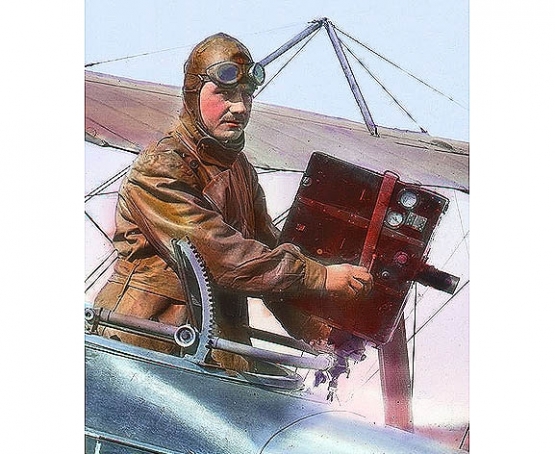
When this small piece was published there was a lot of talk concerning the blessings of the tin can. Recycling was in its infancy on the home fronts during the Second World War and tin played a big part for both the military (you can read about that here) and civilly (the home preservation of fruits and vegetables). This short article will tell you more about this helpful invention that aided in the allied victory.
Advertisement

Use shortcode [oma_ad position="summary_top"] (or other position) in your theme or widgets to display OMA Promotions here.

Decrease in Car Production 1930s | US Car Industry During the Great Depression 1932
1932, Pathfinder Magazine, The Great Depression

Motor City Takes It On The Chin
(Pathfinder Magazine, 1932)

By August of 1932, the Great Depression had finally caught up with the American automobile industry:

For the first time in history auto production has fallen off. Last year’s output was 700,000 cars [fewer than the number produced just two years earlier.]


The research has shown that between the Fall of 1929 and 1932 American automobile manufacturing had decreased by 70%.

1930, Pathfinder Magazine, The Great Depression

The Most Powerful American Men During the Depression
(Pathfinder Magazine, 1930)

In 1930 a seasoned diplomat and respected attorney by the name of James Watson Gerard (1867 – 1951) created quite a dust-up in Depression-era Washington when he took it upon himself to release his list of those Americans who he believed to have the most power on Capitol Hill. The reason his compilation turned as many heads as it did was because there wasn’t the name of a single elected official to be found on the list – not even President Hoover was mentioned (although his treasury secretary was, the millionaire industrialist Andrew Mellon).


Click here if you wish to read more on this subject and see Gerard’s list of the most powerful men in Cold War Washington.

The Social Value of the Car (Literary Digest, 1908)
1908, Cars, Recent Articles, The Literary Digest

The Social Value of the Car
(Literary Digest, 1908)

John Walter Edward Douglas-Scott-Montagu, 2nd Baron Montagu of Beaulieu (1866 – 1929), Member of Parliament, publisher of THE CAR and all-around advocate for the internal combustion engine gave an address in which he extolled the virtues of the automobile in societal evolution. Some of the virtues are just plain quaint while others touch upon elements of Edwardian life we would never consider. Lord Montagu innocently believed that motorists would play a part as unofficial ambassadors; traveling abroad, joyfully chatting with one and all and thereby decreasing the chances of a European war.

He would have been surprised to know what an active roll the automobile played throughout both world wars.

Advertisement

Use shortcode [oma_ad position="summary_top"] (or other position) in your theme or widgets to display OMA Promotions here.

A British Drawing of a German Trench Latrine (Royal Engineers, 1915)
1915, Notes of the Royal Engineers, Trench Warfare

A British Drawing of a German Trench Latrine
(Royal Engineers, 1915)

Attached, you will find a mechanical drawing made by the industrious souls assigned to the Royal Engineers in order to placate those busy-body brass-hats situated so far in the rear and having little better to do than wonder aloud as to how the Hun tended to deal with his bowel movements.


The author of
The Western Front Companionstyle=border:none is very informative on the topic of trench latrines and tells us that as the war progressed, latrines evolved into loitering centers for those wishing to read or enjoy some solitude. In order to remedy the situation officers decided to position their front-line trench latrines at the end of short saps, closer to the enemy; the reason being that a man was less likely to tarry and would return to duty that much quicker.

1914, Fall, Trench Warfare

A Color Photograph of One of the Very First Trenches
(1914)

This will give the viewer a good understanding of what the trenches looked like in the autumn of 1914, before the adjoining communication lines were dug and the years of rain and artillery would begin to create that landscape so famously depicted by the photographers, painters and writers of the First World War. In the distance beyond the haystack, the opposing German trenches can be seen.

Visions of the Trenches by Otto Dix (Artist's Portfolio, 1919)
1919, Trench Warfare

Visions of the Trenches by Otto Dix
(Artist’s Portfolio, 1919)

Attached are assorted W.W. I combat images by noted German Expressionist Otto Dix (1891 – 1969). Shortly after returning from the war, Dix threw away his uniform, locked himself in his print studio and began to diligently labor over a vast number of etching plates – all baring the dreadful images of trench warfare that had been burned into his memory during the course of living his beastly, troglodyte existence in the trenches of France.

Advertisement

Use shortcode [oma_ad position="summary_top"] (or other position) in your theme or widgets to display OMA Promotions here.

The U.S. Army Trench Knives (America's Munitions, 1919)
1919, America's Munitions, Trench Warfare

The U.S. Army Trench Knives
(America’s Munitions, 1919)

The American Army contracted two varieties of fighting knives throughout the First World War:


• the 1917 model trench knife with the nine inch triangular blade, and

• the 1918 Mark I trench knife with the 6.75 double-edged flat blade


The 1917 knife was the one that was carried during the war. The conflict had ended by the time it was decided to begin production on the second knife, which saw some use during W.W. II.


This article is illustrated with pictures of both and goes into some detail at to the manufacturers and the various matters that the Quartermaster Corps considered in weighing their decision as to what should be involved in designing such fighting knives.

'Cupid to Seal the Balkan Peace'' (Vanity Fair, 1913)
1913, European Royalty, Recent Articles, Vanity Fair Magazine

‘Cupid to Seal the Balkan Peace”
(Vanity Fair, 1913)

By the time this item appeared in print, the Balkan War (1912-1913), was over however some of the swells of Europe put their crowned heads together and collectively came up with the best Medeival plan they could think of in order to insure the promise of peace. The plan was to have:


• the Czar’s daughter, Grand Duchess Olga (1895 – 1918), would wed Serbia’s Crown Prince Alexander


• the Czar’s second daughter, Grand Duchess Tatiana (1897 – 1918), was promised to Rumania’s Crown Prince Charles (1893 – 1959)


• All concerned agreed that Rumania’s Pricess Elizabeth (1894 – 1956) and Crown Prince George of Greece (1890 – 1947) would make a simply splendid couple (they divorced in 1935).

Forgiveness Reigns at the Verdun Reunion (Literary Digest, 1936)
1936, Aftermath (WWI), The Literary Digest

Forgiveness Reigns at the Verdun Reunion
(Literary Digest, 1936)

The attached magazine article is for any sentimental sap who has never crossed the water to walk wander pensively upon that ground where the blood once flowed between the years 1914 and 1918. It concerns the July 14, 1936 reunion at Verdun where many of the old combatants of the Great War were:

Called together at historic Fort Douaumont, captured and retaken a score of times during those dark days of 1916, to swear a solemn oath to work for peace, the disillusioned survivors of their father’s folly found Verdun changed, yet unchanged and changeless.


Click here to read another article concerning peace-loving veterans of World War One.

Advertisement

Use shortcode [oma_ad position="summary_top"] (or other position) in your theme or widgets to display OMA Promotions here.

The Invention of Football's Lateral Pass (Literary Digest, 1927)
1927, Football History, The Literary Digest

The Invention of Football’s Lateral Pass
(Literary Digest, 1927)

A football article in which various wonks from 1927 muse wistfully about the earliest use of the lateral pass (1902) and how the game of football was forever changed as a result. Football coach and sportswriter, Sol Metzger (1880 – 1932) is quoted numerous times throughout as he is credited as the first offensive end in the history of football to catch a lateral pass (during the Thanksgiving Day game of 1902 between Cornell and Pennsylvania). The lateral pass is identified in this article as being the brainchild of Dr. Carl S. Williams, who was at that time the football coach of the University of Pennsylvania.
A diagram of the 1902 play is provided.

Get Used to Drinking Water (The New York World, 1920)
1920, Prohibition Cartoons

Get Used to Drinking Water
(The New York World, 1920)

One year into the noble experiment, cartoonist Rollin Kirby (1875 – 1952) penned this editorial gag which clearly indicated that the nation was being lorded-over by a bunch of prudes.


In the August, 1932, issue of VANITY FAIR MAGAZINE the Conde Nast editors sang high praise for Rollin Kirby while writing their ‘Hall of Fame’ nomination:

Because he is considered the finest political cartoonist in America; because he has thrice won the Pulitzer Prize; because he was once a successful magazine illustrator; because he invented the high-hatted Prohibition figure…


1920s Prohibition created a criminal climate that appealed to more women than you ever might have suspected…

Advertisement

Use shortcode [oma_ad position="summary_top"] (or other position) in your theme or widgets to display OMA Promotions here.

Scroll to Top