Author name: editor

James Beard on Cheese (Gentry Magazine, 1957)
1957, Food and Wine, Gentry Magazine, Recent Articles

James Beard on Cheese
(Gentry Magazine, 1957)

It can be soft, hard, sweet, sour, hot, cold, pungent or bland.

It comes in various shapes and many colors.

It can be inodorous or effuvious.

It is known in every country, to every tongue.

Whatever its shape, hue, scent or nationality it is one of the most ancient,
most honorable of foods and it is called cheese.

A wise man once said A Meal Without Cheese is Like a Beautiful Woman with One Eye.

Advertisement

Use shortcode [oma_ad position="summary_top"] (or other position) in your theme or widgets to display OMA Promotions here.

Sholem Asch Warsaw ghetto | 1930s European Jews
1937, Jews in the 20th Century, The Literary Digest

Polish Jews Face Dismal Future
(Literary Digest, 1937)

The old-style pogroms which made the life of Polish Jews a nightmare under the Czars have died out, yet the terror of Antisemitism still haunts their three million men, women and children, one-tenth of the country’s population.

Now they are a race apart, isolated, according to Sholem Asch (1880- 1957), a Yiddish writer who recently visited the country, like lepers. Young women in the Warsaw Ghetto look like dried skeletons, he says. Rickety children save scraps of bread from their free school lunches to feed their parents at night.

Advertisement

Use shortcode [oma_ad position="summary_top"] (or other position) in your theme or widgets to display OMA Promotions here.

Convicted Out of Her Own Mouth: The Record of German Crimes by H.W. Wilson
1917, H.W. Wilson, Poison Gas

Gassing as Crime
(H.W. Wilson, 1917)

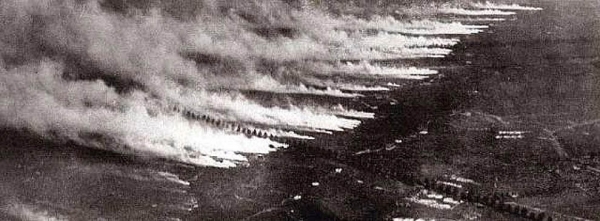
When the United States Congress declared war on Imperial Germany in April of 1917, the New York pamphleteer Halsey William Wilson (1868 – 1954) wasted little time in collecting a list of the numerous war crimes committed by the Germans up to that time in order to launch a mass printing of a 31 page pamphlet that would sell for five cents each. The heinous use of poison gas was listed on page nine.

Pro-Divorce Editorial by Rosalind Mae Guggenheim | Pro-Divorce Editorial by JANE BURR
1922, Miscellaneous, The English Review

‘Progressive Monogamy”
(The English Review, 1922)

In her 1922 essay, Marriage, Jane Burr (né Rosalind Mae Guggenheim, 1882 – 1958) refers to the modern marriage as progressive monogamy. She writes knowingly about the blessings and damnation of matrimony and believed that the institution has only improved since we entered an age where unions between man and woman can be so easily dissolved.


Over the civilized globe there hangs this tragedy of women and this tragedy of men – those who are free longing for bondage, those who are in bondage longing for freedom, everybody searching for the pure white flame, yet everybody compromising with sordidness that could be avoided, if only a new attitude could be legitimized.

Advertisement

Use shortcode [oma_ad position="summary_top"] (or other position) in your theme or widgets to display OMA Promotions here.

A Pill Box in the Hürtgen Forest (Yank Magazine, 1944)
1944, Recent Articles, World War Two, Yank Magazine

A Pill Box in the Hürtgen Forest
(Yank Magazine, 1944)

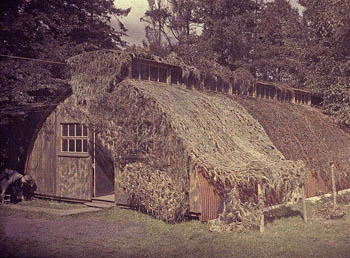
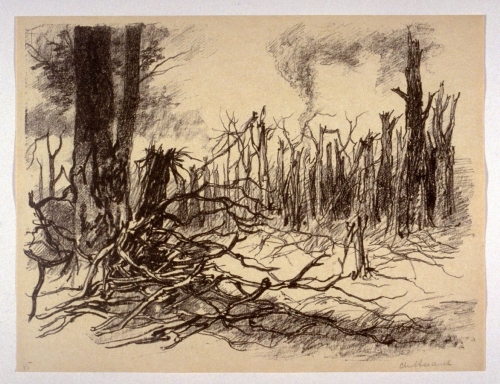
During the last miserable days of 1944 came this one page, first person account by a common American soldier marching through a shell-pocked German landscape. The fellow went to great effort to describe the general discomfort experienced by all those GIs privileged enough to be posted at the spearhead of that winter advance through the Hürtgen Forest. Halting in frozen rain and blinding winds, his platoon languished around a liberated Nazi pillbox where it was decided that each of them should enjoy a three hour respite inside to escape the cold. When it was our hero’s turn he explains how nice it was to be surrounded by four walls and a roof.


Click here to read about the mobile pill boxes of the Nazi army.

German Cavalry Memoir (Leslie's Weekly, 1915)
1915, Leslie's Weekly, Writing

German Cavalry Memoir
(Leslie’s Weekly, 1915)

Fritz Arno Wagner (1894 – 1958) is best remembered as a pioneering cinematographer from the earliest days of the German film industry, however before he could gain the experiences necessary to become the director of photography for such films as Nosferatu, and Westfront he had to first fulfill his obligations to the Kaiser. This article is an account of his brief stint in the Hussars (ie. lancers) that he gave to the editor’s of Leslie’s Illustrated Weekly Newspaper. Although the article only covers his training period, it does give the reader a sense of what life was like for an enlisted man serving in one of highly prized regiments in the Imperial German Army.

It is believed that this magazine article was written during his days with Pathe News in New York.

Click here to read about the U.S. Navy railroad artillery of W.W. I.

German Cavalry Memoir (Leslie's Weekly, 1915)
1915, Leslie's Weekly, Writing

German Cavalry Memoir
(Leslie’s Weekly, 1915)

Fritz Arno Wagner (1894 – 1958) is best remembered as a pioneering cinematographer from the earliest days of the German film industry, however before he could gain the experiences necessary to become the director of photography for such films as Nosferatu, and Westfront he had to first fulfill his obligations to the Kaiser. This article is an account of his brief stint in the Hussars (ie. lancers) that he gave to the editor’s of Leslie’s Illustrated Weekly Newspaper. Although the article only covers his training period, it does give the reader a sense of what life was like for an enlisted man serving in one of highly prized regiments in the Imperial German Army.

It is believed that this magazine article was written during his days with Pathe News in New York.

Click here to read about the U.S. Navy railroad artillery of W.W. I.

Advertisement

Use shortcode [oma_ad position="summary_top"] (or other position) in your theme or widgets to display OMA Promotions here.

The Kaiser Condemned (The Literary Digest, 1919)
1919, Aftermath (WWI), Recent Articles, The Literary Digest

The Kaiser Condemned
(The Literary Digest, 1919)

A brief article published some six months after the Armistice in which the editors collected various opinion pieces from assorted German newspapers that clearly stated the deep hatred many Germans felt for their former king. Also mentioned was the possibility that the dethroned Kaiser could possibly stand trial before the court of Nations.

The rotten branch on the Hohenzollern tree must be broken off, so that the tree may once more bloom and flourish. William II is superficial, frivolous, vain, and and autocratic; a lover of pomp; proud of his money, void of seriousness; a petty worshiper of his own petty self; without one trait of greatness, a poseur, an actor, and worst of all for a ruler: a coward.

Click here to read what the Kaiser thought of Adolf Hitler.

The Out of Date Red Navy (The Literary Digest, 1937)
1937, Soviet History, The Literary Digest

The Out of Date Red Navy
(The Literary Digest, 1937)

While strong on land and in the air, [the Soviet Union] is weak on the water. Most Russian ships are World War or pre-War in origin, and many of her best vessels are in the Baltic, facing Germany, or in the Far East, where Japan looms up.

The five-times divided Red Navy operates four 1911 battleships, seven cruisers, 35 destroyers, between 30 and 60 submarines, 60 gunboats, etc. Total tonnage: 200,000.


Click here to read about a Soviet submarine called the S-13

The Expansion of the Red Army (Literary Digest, 1935)
1935, Soviet History, The Literary Digest

The Expansion of the Red Army
(Literary Digest, 1935)

Premier Vyacheslav M. Molotov (1890 – 1986) pictured the Soviet Union as a lusty young giant strong enough to defend itself from both the East and the West in the keynote speech of the Seventh All Union Congress of Soviets, the Soviet Parliament.

In proof of this claim it was shown that in the last two years the Soviet Government had increased the strength of the Red Army from 562,000 men in 1932 to 940,000 in 1934.

Advertisement

Use shortcode [oma_ad position="summary_top"] (or other position) in your theme or widgets to display OMA Promotions here.

Stalin's Successor, Georgi Malenkov, Forced to Resign (Collier's Magazine, 1955)
1955, Collier's Magazine, Soviet History

Stalin’s Successor, Georgi Malenkov, Forced to Resign
(Collier’s Magazine, 1955)

Crocodile tears were shed for Georgi Malenkov (1902 – 1988), a buddy of Stalin’s who was forced to resign as Soviet premier a few weeks earlier on the grounds that he had failed to produce any memorable reforms in agriculture (Nikita Khrushchev had drawn up a laundry list of additional Malenkov failings as well). The author sweetly pointed out that the Premiere was not to blame; after all,the entire system of government had been schemed by a dreamer who intended his utopia to be built in Germany or Britain.


Click here to read about Stalin’s Five Year Plan.


Read an article explaining how the Soviets used early radio…

Marriner Stoddard Eccles on Cold War Economics (The Diamondback, 1950)
1950, Recent Articles, The Cold War, The Diamondback

Marriner Stoddard Eccles on Cold War Economics
(The Diamondback, 1950)

While serving as FDR’s Federal Reserve chairman between 1934 and 1948, Marriner Stoddard Eccles (1890 – 1977) put into play numerous policies that allowed the Federal Reserve to be sublimated to the interests of the Treasury; as a result, he is largely remembered as the patron saint of deficit spending. When he left that position during the Truman administration he went on the lecture circuit where he repeatedly condemned both the post-war economic policy as well as the Cold War policies of the State Department. The attached article summarizes a talk he gave at the University of Maryland in February of 1950.


Click here to read a Cold War editorial by Supreme Court Justice William O. Douglas.

The Policy Behind the Occupation of Germany (Yank Magazine, 1945)
1945, Aftermath (WWII), Recent Articles, Yank Magazine

The Policy Behind the Occupation of Germany
(Yank Magazine, 1945)

In the aftermath of World War II Germany found themselves occupied by four armies; in the attached article General Eisenhower explained what the policy of the German occupation was to be:

‘His idea is that the biggest job for right now is riding herd on the rehabilitation of Germany’s political and economic structure…We are working toward a government of Germany by the Germans under the supervision of the Allied General Control Council,’ he said. The government will pass more and more under German civil control. At first we’ll have to look down the German’s necks in everything they do.’

-To read more 1940s articles about General Eisenhower, click here.

Advertisement

Use shortcode [oma_ad position="summary_top"] (or other position) in your theme or widgets to display OMA Promotions here.

Scroll to Top