Author name: editor

The Big Band Scene (Yank Magazine, 1945)
1945, Big Band 1930s-1940s, Recent Articles, Yank Magazine

The Big Band Scene
(Yank Magazine, 1945)

In this article,YANK MAGAZINE correspondent Al Hine summed-up all the assorted happenings on the 1945 Big Band landscape:

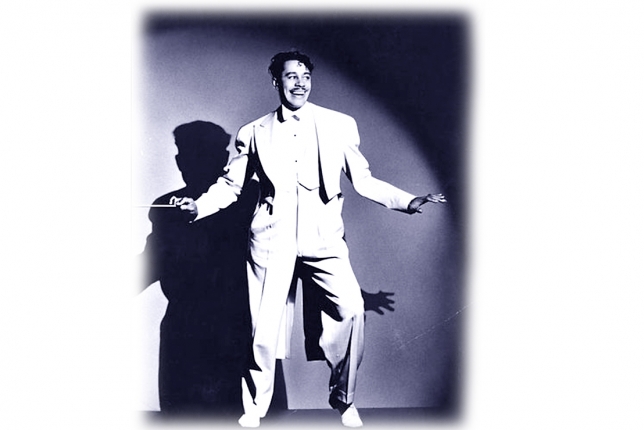
The leading big bands now are Woody Herman’s, Duke Ellington and Lionel Hampton’s. Benny Goodman, who broke up his own band for the umpteenth time, is a featured performer in Billy Rose’s super revue, ‘The Seven Lively Arts’, but the maestro is said to be thinking of turning over his Rose job to Raymond Scott and making another stab at the band business.

The Pajama Ascendency (Literary Digest, 1923)
1923, Men's Fashion, Recent Articles, The Literary Digest

The Pajama Ascendency
(Literary Digest, 1923)

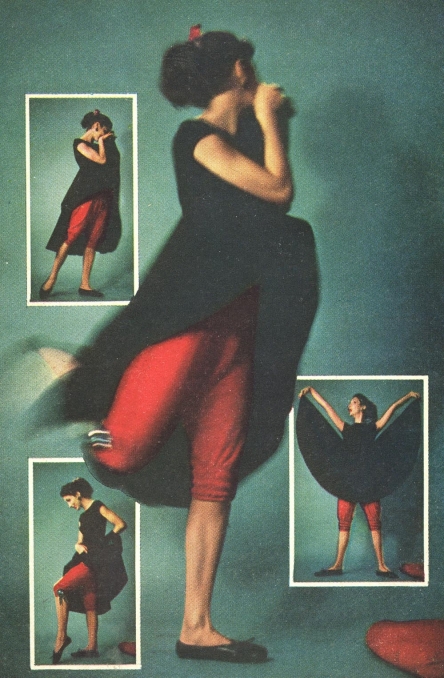
The pajama is ascending to glorified heights. Long the black sheep of polite private life, this garment has been elevated to the four hundred…Men are drugging their senses with batik designs in sleeping apparel and inhaling the stimulation of contrasting shades in underclothes.

What the well-dressed man will wear when going to bed is one of the burning topics of the immediate future…By and large, the thirst for color permeates the accessory field from linen to lingerie. The picture might be said to be complete. Man has achieved his zenith.


Read about a pajama fashion innovation that never quite caught on…

Jew - Gentile Relations 1922 (Literary Digest, 1922)
1922, Jews in the 20th Century, The Literary Digest

Jew – Gentile Relations 1922
(Literary Digest, 1922)

This article appeared at a time when Eastern European immigration levels had been drastically curtailed, Klan membership was at it’s peak, antisemitism in college admissions had been exposed, and the memory Leo Frank’s murder was in it’s seventh year. The article is about the chasm between the two groups and building the necessary bridges; Dr. Stephen S. Wise (1874 – 1949), columnist Walter Lippmann (1889 – 1974) and a cadre of others address the topic with the needed perspective. Dr. Wise remarked:

Whatever Christians may have taught…their duty in the present is clear as are the heavens in the noon hour; the duty of affirming that incalculable and eternal is the debt of Christians to Israel, of whose gifts Jesus is treasured as the chiefest.

Advertisement

Use shortcode [oma_ad position="summary_top"] (or other position) in your theme or widgets to display OMA Promotions here.

A Failure to Spread the Word (Coronet Magazine, 1951)
1951, Coronet Magazine, Recent Articles, VJ Day

A Failure to Spread the Word
(Coronet Magazine, 1951)

Here is a classic story about the failures in global communication during the pre-Twitter era. This article explains how there was a fifteen hour lag between the Japanese surrender and the time in which Tokyo heard that their offer had been accepted by the Allies.

In the midst of a routine radio-teletype conference between GHQ officers in Manila and the War Department in Washington, the teletype suddenly began printing:


‘Stand by for important message **** from Marshall to MacArthur ****you are hereby notified of Japanese capitulation ****’


It all centered on one skanky, bullet-pocked, bomb-damaged Radio Operations Room in Manila.

1960, Men's Fashion, Pageant Magazine, Recent Articles

That 1960 Look for Men
(Pageant Magazine, 1960)

Some call it the Mad Men Look, others may simply label it that late 50s/early 60s look – but either way high praise should be dolled out to costume designer Katherine Jane Bryant who so skillfully brought these fashions to the attention of millions of men through her work on the T.V. show Mad Men (AMC).


For those lads pursuing an advanced degree in pulling-off that look in their daily attire, we recommend this handy list of fashion’s Do’s & Don’ts from 1960.

Much Talk of White Waistcoats, Shoes and Shirts (Vanity Fair Magazine, 1921)
1921, Men's Fashion, Recent Articles, Vanity Fair Magazine

Much Talk of White Waistcoats, Shoes and Shirts
(Vanity Fair Magazine, 1921)

When the smoke cleared following the close of that dreadful unpleasantness that spanned the years 1914 to 1918, there remained much work to do; bodies to be buried, cities to be rebuilt. Men and nations prepared to face the new realities that came with the new social structure; many weighty subjects had to be addressed that had been ignored for so long a time. The most pressing of these topics was deciding which was the proper combination of white waistcoat and dinner jacket? In an age of industrial slaughter, which was more suitable: double-breasted or single-breasted? and what of ties, shoes and overcoats?

Advertisement

Use shortcode [oma_ad position="summary_top"] (or other position) in your theme or widgets to display OMA Promotions here.

WW I Lost Battalion Article | Major Charles Whittlesey the Lost Battalion Article | Lost Battalion Stars and Stripes Newspaper
1919, Recent Articles, Stars and Stripes Archive, The Stars and Stripes

Commander of the Lost Battalion
(The Stars and Stripes, 1919)

The following article presented a brief account of the deeds of Major Charles W. Whittlesey of the 308th Infantry Regiment ( Seventy Seventh Divisionstyle=border:none) and why he was nominated for the Congressional Medal of Honor. Shortly after the war Whittlesey would commit suicide.

In December of 1918, Lt. Colonel Whittelesey was highly praised in VANITY FAIR …

The Gun Barrel Fence on P Street (Pathfinder Magazine, 1920)
1920, Miscellaneous, Pathfinder Magazine

The Gun Barrel Fence on P Street
(Pathfinder Magazine, 1920)

When compared to the historic events that took place on numerous other street corners in Washington D.C, the intersection of 28th and P streets barely makes the list, but the residence that stands on the north-east corner there is a twofer. The attached article explains just why the front and side fence is so unique to Washington history – and in later years the house would be purchased by Cold War diplomat Dean Acheson.

Prohibition Killings (Pathfinder Magazine, 1929)
1929, Pathfinder Magazine, Prohibition History

Prohibition Killings
(Pathfinder Magazine, 1929)

Two sources have been combined on one printable page in order to assess the body count that was created as a result of the murders that the prohibition laws had wrought. The complete number is not here – just the last four years:


1933, the year Prohibition was rescinded, seemed to have been the bloodiest year in this study – with 12,123 people murdered (being 9.6 per 1000,000 souls). The numbers began to drop from there: 1934 through 1936 saw a steady decline in urban homicide.

Advertisement

Use shortcode [oma_ad position="summary_top"] (or other position) in your theme or widgets to display OMA Promotions here.

A Briton on American Prohibition (Current Opinion, 1921)
1921, Current Opinion Magazine, Prohibition History

A Briton on American Prohibition
(Current Opinion, 1921)

Alfred Charles William Harmsworth, 1st Viscount Northcliffe (1865 – 1922) was an influential soul back in the day who owned a string of widely-read newspapers. Just months prior to his death, he spent some time stateside and drew some conclusions regarding American Prohibition which were noteworthy:

While in our midst he made up his mind about Prohibition. In his opinion it is a failure… His reasons seem to be that he saw plenty of liquor everywhere he was entertained; that Prohibition encourages hypocrisy in the vision of the law, and that he did not like it anyhow… But America has taken it’s stand and will stick to it.

Theater Intermissions and Prohibition (Vanity Fair, 1919)
1919, Prohibition History, Vanity Fair Magazine

Theater Intermissions and Prohibition
(Vanity Fair, 1919)

Prohibition has been pretty rough on everybody, but there is no class of people which it has hit so hard as the theater-goers. The Federal Amendment has completely wrecked their evenings. It isn’t so bad while the show is going on; the blow falls between the acts. In happier times the intermissions were the high spots of the evening…

With pin-point accuracy, Vanity Fair was able to identify the new minority-victim class that emerged from America’s unfortunate experiment with Prohibition: Broadway theater enthusiasts (It might be argued that the real victims were American bar tenders, many of whom high-tailed it over to Europe where they established a number of American-style bars).

The attached page from the magazine can be classified as humor and is illustrated with six great sketches by Edith Plummer.

Read other articles from 1919.

Advertisement

Use shortcode [oma_ad position="summary_top"] (or other position) in your theme or widgets to display OMA Promotions here.

Samuel Goldwyn Article | Samuel Goldwyn Hollywood Founder
1944, Coronet Magazine, Hollywood History, Recent Articles

Samuel Goldwyn, Producer
(Coronet Magazine, 1944)

Screen scribe Sidney Carroll put to paper a serious column about the productive life of Samuel Goldwyn (1879 – 1974) and all that he had accomplished since he co-founded Hollywood (along with Cecil B. De Mille) in 1913:

He has done many remarkable things in 30 years. He has made as many stars as any man in the business; he was the first to make feature-length films; he was the first to bring the great writers to Hollywood… Goldwyn is the greatest maker of motion pictures ever to come out of Hollywood [with the exception of The Goldwyn Follies (1938)].

Advertisement

Use shortcode [oma_ad position="summary_top"] (or other position) in your theme or widgets to display OMA Promotions here.

letter from king george v to wwi american doughboys
Letters

Britain’s King Welcomes the Doughboys
(April, 1918)

A colored scan of the widely distributed seventy-word letter that Britain’s King George V wrote to all members of the American military who had stepped on British soil. The letter is dated April, 1918 and was made to appear as though it was from the King’s private stationery; the Windsor Castle letterhead is engraved in scarlet while the cursive body of the letter (in dark gray ink) is beautifully printed below in the conventional manner. It would seem that the California Doughboy who received this particular letter was not impressed; he simply turned it over and addressed a letter to his parents.

Advertisement

Use shortcode [oma_ad position="summary_top"] (or other position) in your theme or widgets to display OMA Promotions here.

Scroll to Top