Author name: editor

Camouflage: An Invention from Ancient Warfare (The Nation, 1918)
1918, The Nation Magazine, World War One

Camouflage: An Invention from Ancient Warfare
(The Nation, 1918)

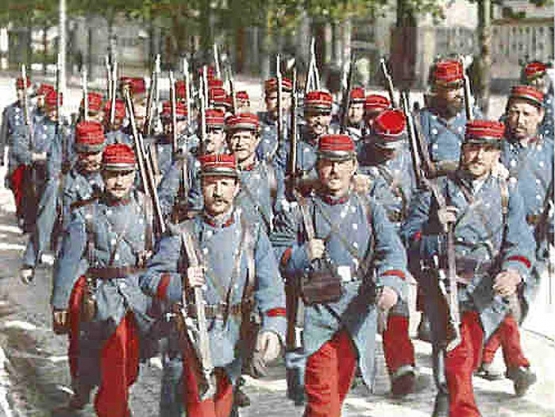
One of the most curious aspects of the Great War that generated a good deal of conversation among the civilian populations was camouflage. Many people believed that camouflage was one of many elements that made that war so terribly different from all other wars. One well-read reader from a respectable American magazine would have non of it: she composed a well researched letter explaining that the need for camouflage preceded the era of industrial warfare and was practiced by the ancient combatants of Greece and Rome as well.

The Aggressive (U.S. Army Study, 1919)
1919, Doughboys, The U.S. Army Study

The Aggressive
(U.S. Army Study, 1919)

An assortment of opinions gleaned from various interviews with German soldiers who all made remarks about the naked aggressiveness shared by the A.E.F.:

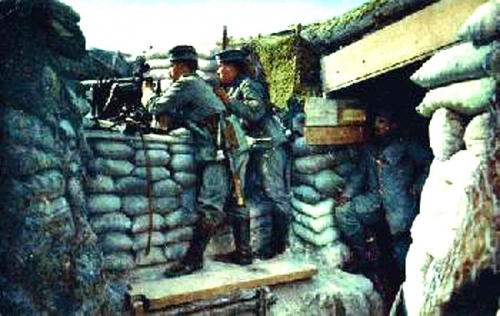
The French would not advance unless sure of gaining their objectives while the American infantry would dash in regardless of all obstacles and that while they gained their objectives they would often do so with heavy loss of life.

Advertisement

Use shortcode [oma_ad position="summary_top"] (or other position) in your theme or widgets to display OMA Promotions here.

Algernon Charles Swinburne, Reconsidered (Literary Digest, 1917)
1917, Miscellaneous, Recent Articles, The Literary Digest

Algernon Charles Swinburne, Reconsidered
(Literary Digest, 1917)

The 1917 publication of The life of Algernon Charles Swinburnestyle=border:none, by Edmund Gossestyle=border:none caused much discussion in the literary world:

A bombshell that struck literary England a little past that last mid-century has been re-echoing in the recently published ‘Life of Algernon Charles Swinburne’ by Edmund Gosse. The shell was the volume called ‘Poems and Ballads’ a cursory knowledge of which probably places it in many minds as one of the bad books of literature…

Electronic Teaching Tools | e-Learning History
1958, Education, Pageant Magazine, Recent Articles

E-Learning in the Fifties
(Pageant Magazine, 1958)

This article from the late Fifties refers to the educational benefits that existed in the form of tape recordings, television, films and slide shows and what a glorious discovery it was that they came along when they did to aid in the teacher shortages of the time. Today we have decades of studies that show what among these tools has been useful and what has failed.


In the 1940s Color TV was Anticipated as a Tool with Which Art Students Could Learn…

Advertisement

Use shortcode [oma_ad position="summary_top"] (or other position) in your theme or widgets to display OMA Promotions here.

Chez Poiret: the Hot Social Ticket in the Paris of 1919 (Vogue Magazine, 1919)
1919, Fashion, Recent Articles, Vogue Magazine

Chez Poiret: the Hot Social Ticket in the Paris of 1919
(Vogue Magazine, 1919)

The post-war publicity machine of French fashion designer Paul Poiret was in fine form when he saw to it that his minions invited the Paris-based correspondent from American VOGUE to his house for a grand fete, seated her comfortably, drink in hand, right on the fifty-yard line in order that she might be better able to report to her handlers back in New York that Paris was back.


The correspondent who was not invited was the fashion journalist from FLAPPER MAGAZINE; American flappers did not approve of Poiret one bit. Click here to read what they thought of him.

The Duke of Windsor Influences (Men's Wear, 1950)
1950, Men's Fashion, Men's Wear Magazine, Recent Articles

The Duke of Windsor Influences
(Men’s Wear, 1950)

MEN’S WEAR MAGAZINE printed a few paragraphs on the heavy hand that the Duke of Windsor had in the world of manly attire:

No one completely personified English qualities in attire than the Prince of Wales…Whatever he chose to wear was considered correct and in good taste and was accepted by millions of others in America and elsewhere. Following are a few of the styles that can be traced right back to the Duke of Windsor, either because he wore them first or was responsible for their spread…

-they include such fashion innovations as the Panama hat, the spread collar and brown buckskin shoes among others.

More articles about the Duke of Windsor can be found on these pages.

The Business End of Gas Warfare (Literary Digest, 1917)
1917, Poison Gas, Recent Articles, The Literary Digest

The Business End of Gas Warfare
(Literary Digest, 1917)

The attached article, How Well Our Chemical Industry Has Been Mobilized for War is an abstract from a 1917 issue of THE JOURNAL OF COMMERCE which discussed how readily American chemists embraced their roll after the United States committed itself to the war.


There is much talk of the procurement of potash, toluol and trinitrotoluol which were necessary elements in the manufacture of gas.

Advertisement

Use shortcode [oma_ad position="summary_top"] (or other position) in your theme or widgets to display OMA Promotions here.

1919 Russian Modern Artist David Burliuk | Jack of Diamonds Group article
1919, Modern Art, Vanity Fair Magazine

Russian Modernism After the Revolution
(Vanity Fair, 1919)

Art alone survives the earthquake shocks of revolution, and Russian art has been doubly secure because of it’s deep-rooted imagination and it’s passionate sincerity.


That was the word from Oliver M. Sayler writing from Moscow as it starved during the Summer of 1919. Sayler, known primarily for his writings on Russian theater from this period, wrote enthusiastically about the Russian Suprematist Casimir Malyevitch, Futurist David Burliuk and The Jack of Diamonds Group; believing deeply in the Russian Revolution, he wrote not a word about how the Soviets mistreated the modern artists of Russia.

About Paul Meltsner (Coronet Magazine, 1936)
1936, Coronet Magazine, Modern Art

About Paul Meltsner
(Coronet Magazine, 1936)

To listen to Paul Meltsner one would think that it was fun to be a painter. Looking at his pictures one is compelled to conclude that life is a grim business of industrial strife, with factories shut down or picketed…

A wise-cracker and a wit at the cafe table, Mr. Meltsner is a proletarian artist when he works, and he works hard, he says. Which is what a proletarian artist should do… He exhibits frequently. He sells lithographs when he isn’t selling paintings and is represented in a number of museum collections.


Click here to read a Paul Meltsner review from ART DIGEST.

Advertisement

Use shortcode [oma_ad position="summary_top"] (or other position) in your theme or widgets to display OMA Promotions here.

The Industrial Visions of Paul R. Meltsner (Art Digest, 1936)
1936, Modern Art, Recent Articles, The Art Digest

The Industrial Visions of Paul R. Meltsner
(Art Digest, 1936)

The artist Paul R. Meltsner (1905 – 1966) was one of many WPA artists given to depicting sweaty, mal-nourished proletarians laboring in the fore-ground of smoke-plagued, industrial cityscapes and his work can be found today in the vaults of every major American museum. This is a 1936 art review covering his one-man show at the Midtown Galleries in New York:

Meltsner builds his pictures everyday scenes of industrial life, dedicating them to labor and the machine…He gets broad vitality in his forms and force in his compositions, relieving at the same time the usual drabness of such scenes by a tonic of color.


Another 1936 article about Paul Meltsner can be read here.

WW I Graves of American Pilots | WW I Aviation Primary Source Article
1919, Cemeteries, Recent Articles, The Literary Digest

Finding the Graves of American Aviators
(Literary Digest, 1919)

The difficult task of wandering the war-torn countryside of Europe in search of fallen World War I American pilots fell to a U.S. Army captain named E.W. Zinn. A combat pilot himself, Zinn had roamed France, Belgium and Germany interviewing the local population to see what they knew of American crash sites:

Many times he has come upon a grave with a rude cross on which was scrawled:


‘Unidentified American Aviator’ or ‘Two Unidentified American Aviators’

Captain Zinn has found that in a great many cases American fliers were buried either by the Germans or by civilians with no mark of identification left on them.

Click here to read some statistical data about the American Doughboys of the First World War.

Advertisement

Use shortcode [oma_ad position="summary_top"] (or other position) in your theme or widgets to display OMA Promotions here.

The Nazis Hated These Guys (Yank Magazine, 1944)
1944, Recent Articles, World War Two, Yank Magazine

The Nazis Hated These Guys
(Yank Magazine, 1944)

The attached W.W. II magazine article tells the story of the hard-charging Goums – a detachment of French-Moroccan infantry who appeared to the American GIs as genuine curios (Wikipedia definition: Goumier is a term used for Moroccan soldiers, who served in auxiliary units attached to the French Army, between 1908 and 1956).

The Germans definitely don’t like the Goums. As for the Italians, they’re scared to death of them. In the Mateur and Bizerte sectors, where the Goums were attached to the Ninth Division, three Italian companies surrendered en masse as soon as they heard that the guys in front of them were Goums.

VJ Day in Honolulu (Yank Magazine, 1945)
1945, Recent Articles, VJ Day, Yank Magazine

VJ Day in Honolulu
(Yank Magazine, 1945)

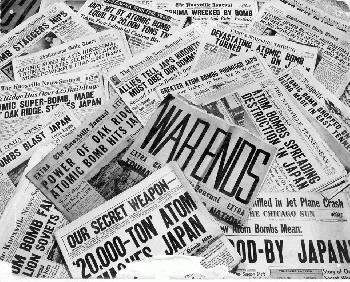
In Honolulu, where the war began for the U.S., the first news of it’s ending reached a sleepy-eyed Chinese-American radio technician shortly after 1200 hours (12:00 a.m.) when he had just finished making his regular weekly check on KGU’s station transmitter and was ready to leave for home.

Stand by for important news about the Potsdam ultimatum.

Flight nurse, WACs and GIs all streamed from their barracks and joined the howling procession…

Advertisement

Use shortcode [oma_ad position="summary_top"] (or other position) in your theme or widgets to display OMA Promotions here.

Scroll to Top