
Author name: editor

Winston Churchill Hitler Warning | Winston Churchill Cautioned Britain About Hitler | Winston Churchill 1936 Military Expansion
1936, The Literary Digest

The Military Buildup in France and Britain
(Literary Digest, 1936)

This 1936 magazine article reported that Germany had spent a considerable sum on munitions and armaments throughout much of the previous year and was not likely to stop anytime soon. In light of this fact, the French and British governments were moved to do the same:

Winston Churchill, a cherubic reddish-haired Cassandra, bobbed up in the House of Commons again last week to warn his countrymen of the ‘remorseless hammers’ of the world.

British Women Instructed to Tolerate American Men (Yank Magazine, 1943)
1943, World War Two, Yank Magazine

British Women Instructed to Tolerate American Men
(Yank Magazine, 1943)

Until recently we always seemed to think that all those pretty British girls during the war were genuinely captivated by that unique and sincere breed of American male called the G.I.. It seemed obvious to us that such a self-effacing, homespun, mud-between-the-toes kind of charm would naturally lead to thousands upon thousands of out-of-wedlock births and prove once and for all that the Anglo-American alliance was truly a necessary union and not merely a wartime contrivance. But after a careful reading of the attached headline from this 1943 Yank, it occurred to us that perhaps British girls were just doing their bit for king and country.

One British woman complained that the average American GI of World War II was substandard in the bedroom; to read the article, click here.

1914 Hollywood (American Legion Monthly, 1934)
1934, Silent Movie History, The American Legion Monthly

1914 Hollywood
(American Legion Monthly, 1934)

This is excerpt from a longer article about the goings-on in 1914 presented an interesting (if incomplete) list of Hollywood’s offerings for 1914:


• The most popular screen performers were Mary Pickford, John Bunny, Ethel Barrymore and May Irwin.

• The most popular films were The Peril’s of Pauline and an Italian film titled Cabiria (directed by Giovanni Pastrone, aka: Piero Fosco).

This reminiscence pays tribute to a stand-up comedian named Jack Gardner and his skit, Curse You Jack Dalton, in which he interacted with the performers on a movie screen, ordering them about, cracking wise and even having the audience believe that he had shot one of them.

Advertisement

Use shortcode [oma_ad position="summary_top"] (or other position) in your theme or widgets to display OMA Promotions here.

Home Front Culture and Men Without Uniforms (Yank Magazine, 1945)
1945, Home Front, Yank Magazine

Home Front Culture and Men Without Uniforms
(Yank Magazine, 1945)

…you think it’s easy for a guy my age not to be in the Army? You think I’m having a good time? Every place I go people spit on me…


So spake one of the 4-F men interviewed for this magazine article when asked what it was like to be a twenty-year-old excused from military service during World War Two. This article makes clear the resentment experienced at the deepest levels by all other manner of men forced to soldier-on in uniform; and so Yank had one of their writers stand on a street corner to ask the slackers what it was like to wear civies during wartime.


Read about the 4-F guy who creamed three obnoxious GIs.
Click here to read an article about a World War Two draft board.

Advertisement

Use shortcode [oma_ad position="summary_top"] (or other position) in your theme or widgets to display OMA Promotions here.

Re-Building of 1946 Germany | Anti-Nazi Germans
1946, Aftermath (WWII), The American Magazine

Anti-Nazi POWs Schooled in the Ways of Democracy
(American Magazine, 1946)

Counted among the hundreds of thousands of captured Nazi combatants during the war were thousands of anti-Nazi German draftees who were predictably alienated from the majority of German P.O.W.s in their respective camps. Subjected to kangaroo courts, hazings and random acts of brutality, these Germans were immediately recognized by their captors as a vital element that could prove helpful in the process of rebuilding Germany when the war reached an end.


And so it was early in 1944 when the U.S. Army’s Special Projects Division of the Office of the Provost Marshal General was established in order to take on the enormous task of re-educating these German prisoners of warstyle=border:none, all 360,000 of them, in order that they might clearly understand the benefits and virtues of a representative form of government. This article tells the story of their education within the confines of two special encampments that were established just for this purpose, and their repatriation to Germany, when they saw the all that fascism had willed to their countrymen.

ww1 Medics | WW1 Doctors
1915, Harper's Weekly, World War One

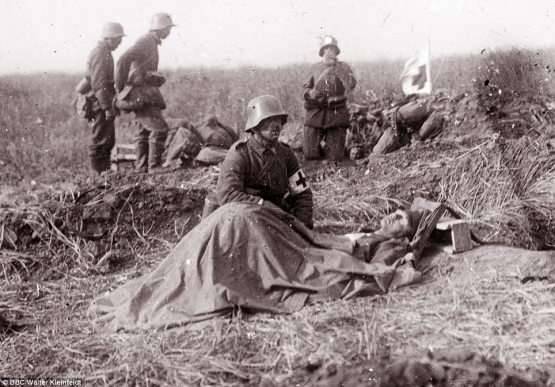
Trench Medicine
(Harper’s Weekly, 1915)

An informative article from World War I concerning the doctors of all the combatant nations and how they dealt with the filthy conditions of stagnant warfare and all the different sorts of wounds that were created as a result of this very different war:

This is a dirty war. Gaseous, gangrene, lockjaw, blood poisoning, all dirt diseases… Colonel G.H. Makins of the Royal Army Medical Corps longs for the clean dust of the Veldt, which the British soldier cursed in the Boer War.

The Talent for Sniping: Native Americans on the Western Front (The Stars and Stripes, 1919)
1919, First Nations, The Stars and Stripes

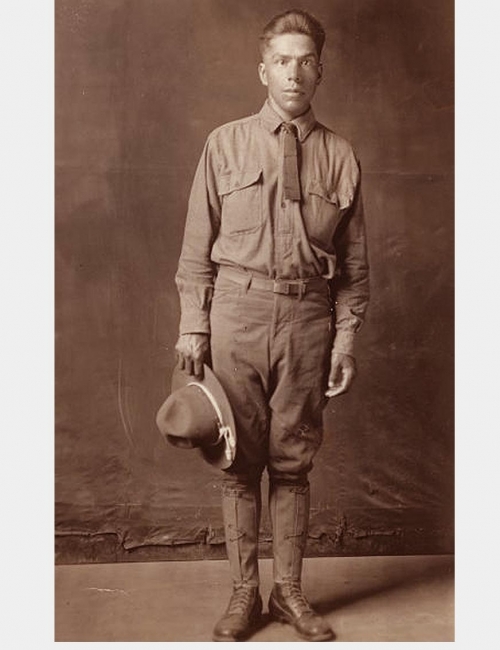
The American Indian as Sniper
(The Stars and Stripes, 1919)

You will see that during the First World War it was not beyond the editors of The Stars & Stripes to indulge in ethnic stereotyping from time to time and, to be sure, they exploited that privilege in the attached article (Yank Indian was Heap Big Help in Winning the War) yet regardless of this fact, the performance of the American Indian soldiers on the Western Front got high marks for a number of valued military skills from many of the French and British officers who came in contact with them. It was not simply their ability to shoot well that inspired the praise, but their nocturnal instincts while patrolling in the darkness of No-Man’s-Land as well as a unique sense of bravery.

The article is rich with a number of factoids that the Western Front reader will no doubt enjoy; among them, mention is made of German women serving in combat.

Advertisement

Use shortcode [oma_ad position="summary_top"] (or other position) in your theme or widgets to display OMA Promotions here.

The Great Native-American Athletes of the Early 20th Century (American Legion Magazine, 1940)
1940, First Nations, The American Legion Magazine

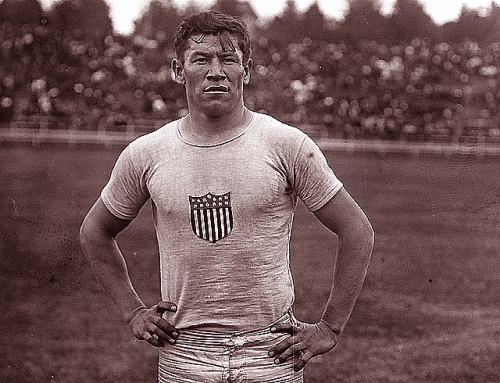
The Great Native-American Athletes of the Early 20th Century
(American Legion Magazine, 1940)

Idolized, publicized, dramatized, picturesque members of a fast diminishing aboriginal race, they were the white man’s heroes. But the white man’s adulations and his indulgences helped write ‘finis’ prematurely on the records of some of them even as his vices quickened the racial degeneration of their stock.

Sockalexis, Thorpe, Bender, Longboat and Meyers! There were scores of other notable Indian athletes from ’93 to 1915, but the names of those five were household words in the early days of the new century.

Advertisement

Use shortcode [oma_ad position="summary_top"] (or other position) in your theme or widgets to display OMA Promotions here.

Fashion Piracy (Coronet Magazine, 1960)
1960, Coronet Magazine, The New Look

Fashion Piracy
(Coronet Magazine, 1960)

Contrary to popular thought, the Fashion Police, so called, are not concerned with seemingly vulgar acts of dressing – mismatched colors, cheap accessories, gross fabrics, etc – but they do consider knocking-off the work of other designers as a serious violation – and when it comes to ripping-off the designs of Christian Dior or Pierre Balmain, that is when the Chambre Syndicale de la Haute Coutre and police inspector Jacques Besson step in.

Advertisement

Use shortcode [oma_ad position="summary_top"] (or other position) in your theme or widgets to display OMA Promotions here.

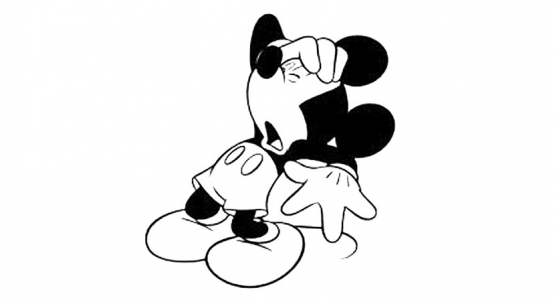
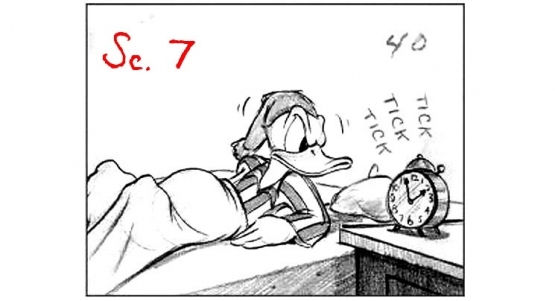
More Peer Adoration for Walt Disney (Stage Magazine, 1938)
1938, Stage Magazine, Walt Disney

More Peer Adoration for Walt Disney
(Stage Magazine, 1938)

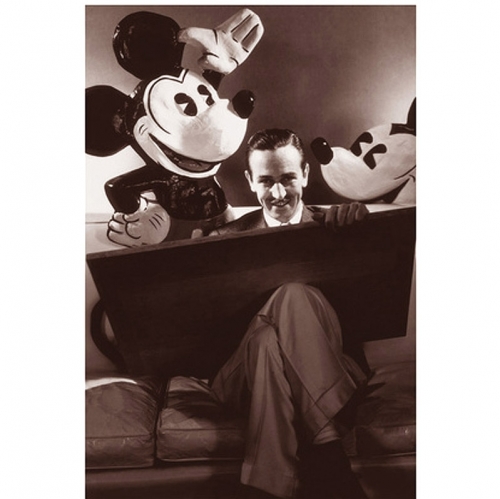
The attached article was first seen during a time when a Palm Award, granted by the editors of Stage Magazine, was a reliable form of social currency and would actually serve the highly favored recipients in such a grand manner as to allow them brief respites at dining tables found at swank watering holes as New York’s Twenty-One Club and El Morocco.

Today, a Palm Award, plus four dollars, will get you a medium-sized cappuccino at Starbucks. Walt Disney was awarded a Palm in 1938 for his achievement in producing Snow White and the Seven Dwarfs.

Advertisement

Use shortcode [oma_ad position="summary_top"] (or other position) in your theme or widgets to display OMA Promotions here.

Scroll to Top