
Author name: editor

Life in Sunny, Fascist Italy (Ken Magazine, 1938)
1938, Benito Mussolini, Ken Magazine

Life in Sunny, Fascist Italy
(Ken Magazine, 1938)

In Italy, every other man is wearing a uniform or just stepped out of one. Every other wife is about to become a mother again. Every boy is lugging a wooden gun and playing at soldier. So it sees to the eye, and amazingly, so it actually is. War, babies, self-sufficiency, poverty, persecution complexes, chest beating, magnetic pride and the most parrotty people in the world. This is the land determined to out-Caesar the greatest Roman of them all. The Italian’s thoughts, eyes, ears, destiny, morals, spaghetti, pocketbook and trigger finger are controlled completely by the whim of one man. And the Italians love him.


Click here to read about life in Hitler’s Germany during the same period…

Hollywood Immodesty | 1930s Hollywood Publicity Game
1937, Hollywood History, Pathfinder Magazine

The Hollywood Leg Gag
(Pathfinder Magazine, 1937)

Here is a 1937 article that reminds us that there wasn’t anything left to chance or improvisation under the old studio system:

One of the oldest newspaper publicity devices is the ‘leg display’. Resorted to chiefly by actresses whose press agents want them to break into print, it consists of nothing more than arriving in New York aboard an ocean liner and letting news photographers do the rest.


The adoration of the Feminine Leg began some twenty yeras earlier with the flappers; click here to read more on this topic…

Advertisement

Use shortcode [oma_ad position="summary_top"] (or other position) in your theme or widgets to display OMA Promotions here.

More Nasty Criticism About Silent Films (English Review, 1922)
1922, Silent Movie History, The English Review

More Nasty Criticism About Silent Films
(English Review, 1922)

This new form of illusion cannot be called an art. Without the magic of the human voice, without the reality of the human form, lacking in color sound and poetry the film is purely an ocular illusion, an effect of light.


Another anti-silent film article can be read here…


Click here to read a 1939 article about an alumni organization for the pioneers of silent films.

Differences Between Fascist Dictators and Communist Dictators
1937, Pathfinder Magazine

The Era of the Dictators
(Pathfinder Magazine, 1937)

If necessity can be called the mother of invention, then deep public dissatisfaction can be called the mother of the authoritarian or ‘totalitarian’ state. In Europe, the [First] World War resulted in post-war conditions that walked arm-in-arm with profound social change. The aftermath was a great political and economic headache that grew slowly in intensity until it lead people to embrace anything that promised a cure… In Europe there are no less than 11 nations operating under systems far removed from democracy as we know it in this country.

Life in Nazi Germany | 1930s Germany
1938, Ken Magazine, The Nazis

Gloom in Germany
(Ken Magazine, 1938)

But today there is no laughter in Germany. There are only smiles of disdain, contempt, conceit and strain. There is no humility, no pity, not much mercy. There is an odd sort of honor, an amazing egotism. But there is no will power nor need there be in a nation that knows but one man’s will.


CLICK HERE to read an article from 1923 about the abitious Adolf Hitler.

Advertisement

Use shortcode [oma_ad position="summary_top"] (or other position) in your theme or widgets to display OMA Promotions here.

Anti-New Deal Editorial Column 1934 | The Terrible New Deal Economy
1934, F.D.R., New Outlook Magazine

‘The House the New Deal Built”
(New Outlook, 1934)

Here is a short article that appeared a year and a half into the administration of President Roosevelt and it lays the nation’s economic short comings right upon the doorstep of 1600 Pennsylvania Avenue. The writer articulated how unrecognizable the nation had become in such a very short span of time. The president’s anti-competition policies were wreaking havoc on an already damaged economy.
Indian Sikhs Tell of Japanese Prison Camps (Yank Magazine, 1944)
1944, POWs, Yank Magazine

Indian Sikhs Tell of Japanese Prison Camps
(Yank Magazine, 1944)

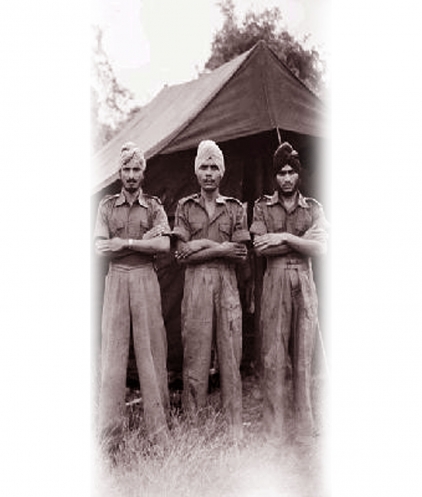
Captured in the fall of Singapore, 66 soldiers of the 5/11 Sikh Regiment of the Indian Army were freed by our troops. Used as slave laborers since their capture in February 1942, the Indians were building jetties on Los Negros Island when they were rescued.

Asked how they were treated by the Japanese, the Sikhs shake their heads sadly, smile and say, ‘Not very well.’

Advertisement

Use shortcode [oma_ad position="summary_top"] (or other position) in your theme or widgets to display OMA Promotions here.

Drawings of German POWs in America (Click Magazine, 1943)
1943, Click Magazine, POWs

Drawings of German POWs in America
(Click Magazine, 1943)

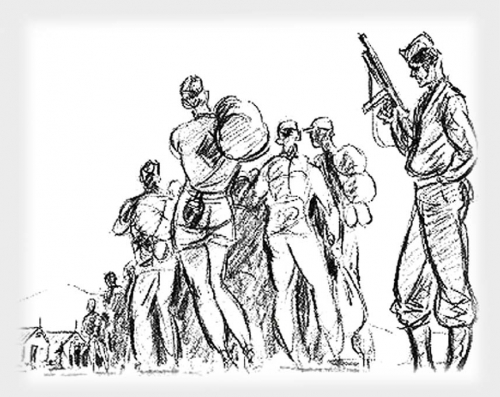
This account of life aboard a U.S. train carrying Nazi prisoners of war to prison camps is an authentic bit of after-the battle reporting by an army MP who was a civilian artist. That his eye missed no telling detail is evident from both his first-person story and his on-the-spot pencil sketches.

The Nazis are extremely curious about America, they gaze out of the windows constantly…War plants along our routes are the real eye-openers to the Nazis; those factories blazing away as we travel across America day after day. At first the prisoners look with mere interest and curiosity, then they stare unbelievingly, and before we reach the camps they just sit dumbfounded at the train windows.


Click here to read about Hitler’s slanderous comment regarding the glutinous Hermann Goering.

WW2 German Army Demanded Wool and Furs from Home Front 1941 | Military Shortages on Russian Front 1941
1949, Pathfinder Magazine, POWs

German Prisoners Resisted Soviet Coercion
(Pathfinder Magazine, 1949)

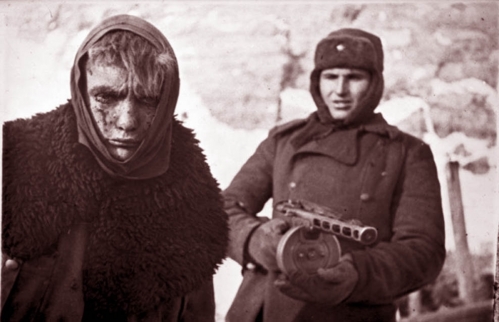
The article posted above pointed out that the American-held German P.O.W.s who participated in the U.S. Army’s Special Projects Division were all volunteers and willing participants in the program. These Germans had shown some enthusiasm and an interest to learn about democracy and little coaxing was needed. Contrast this with the column linked to the title above that illustrated the crude manner in which the unforgiving Soviet Army chose to propagandize the malnourished German P.O.W.s who fought at Stalingrad:

If communism provides the Utopia that Marx, Lenin and Stalin claim, why does Russia have to rule by the bayonet?


As many of you know, the U.S.S.R. did not release most of their German P.O.W.s until the death of Stalin in 1953.

Advertisement

Use shortcode [oma_ad position="summary_top"] (or other position) in your theme or widgets to display OMA Promotions here.

Gestapo General Anton Dunckern captured 1945 | Alsace-Loraine Gestapo commander Anton Dunckern
1945, POWs, Yank Magazine

The Surrender of a Gestapo General
(Yank Magazine, 1945)

Within the moldy, dank confines an abandoned brewery located within the walls of Metz, a troupe of exhausted GIs stumbled upon a German general who was earnestly hoping to avoid capture.

He turned out to be Major General Anton Dunckern, police president of Metz and Gestapo commander for Alsace-Lorraine. He’s the first big Gestapo man we’ve taken; he ranks close to Himmler and is one of the prize catches of the war.

Advertisement

Use shortcode [oma_ad position="summary_top"] (or other position) in your theme or widgets to display OMA Promotions here.

The Famous One: The Burberry Trench Coat (The Stars and Stripes, 1918)
1918, The Stars and Stripes, Trench Coats

Trench Coat by Barker
(The Stars and Stripes, 1918)

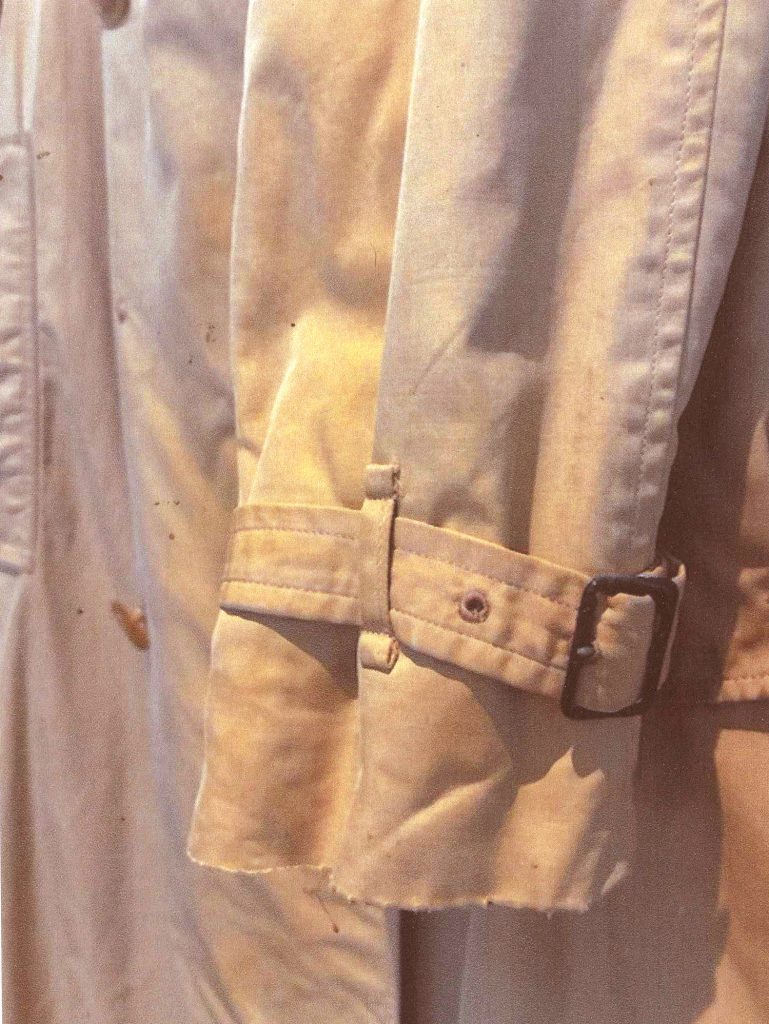
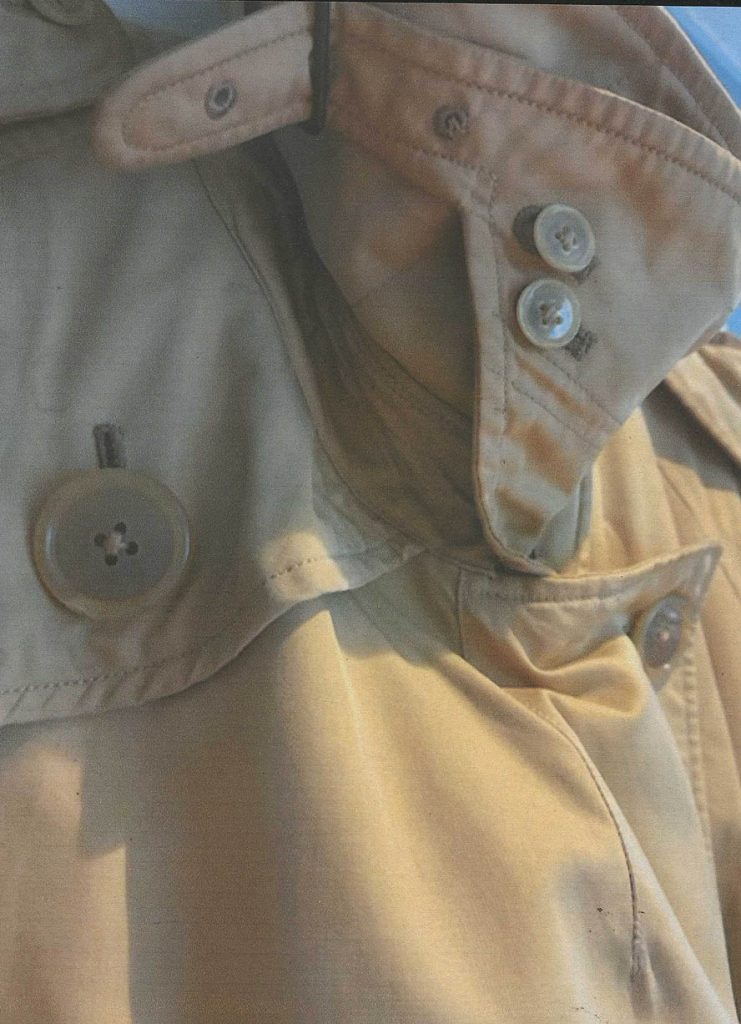
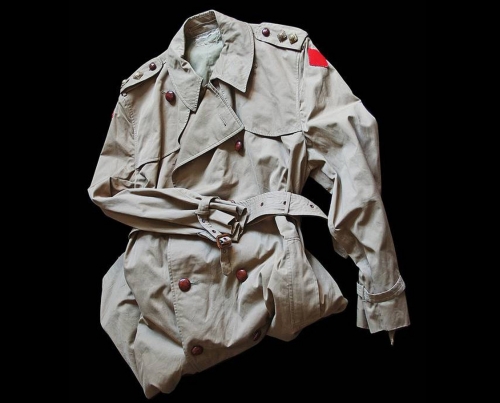
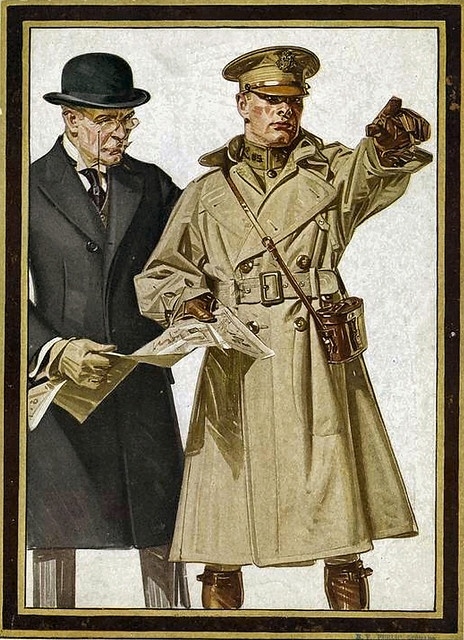
Yet another action-posed advertisement for an officer’s private purchase trench coat. The Great Military Outfitter, John Barker and Company, stepped up to the plate during the crises of 1914 and began to produce the famous ‘Kenbar’ trench coat:

Every detail so necessary for the most strenuous wear in the trenches is embodied in this excellent coat. The collar can be worn in four positions. The sleeves are made with reinforced elbows, and the skirt is cut full and fitted with cavalry gusset.

Trench Coat by Hitchinbrook (Army and Navy Stores, 1918)
Trench Coats

Trench Coat by Hitchinbrook
(Army and Navy Stores, 1918)

Similar to the coat worn by English officers. Cut very full presenting an unusual swagger effect. Made of double texture, tan cashmere with twill lining. An extra, detachable, fleece interlining affords further protection against the cold… Full belt with slide buckle, and belt rings to which accessories may be attached. Absolutely waterproof. 48 inches in length.

The GI Bill (Yank Magazine, 1944)
1944, World War Two, Yank Magazine

The GI Bill
(Yank Magazine, 1944)

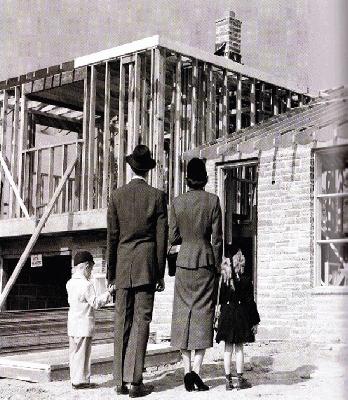
This tiny notice reported that the G.I. Bill of Rights was passed Congress, was now enacted into law. A list of all the original (1944) veteran’s benefits are listed for a quick read.The readers of YANK were the intended beneficiaries of this legislation and it seems terribly ironic that this news item was granted such a minute space in the magazine.


No matter how you slice it, few acts of Congress have left such a beneficial mark across the American landscape as this one.

Advertisement

Use shortcode [oma_ad position="summary_top"] (or other position) in your theme or widgets to display OMA Promotions here.

Scroll to Top