Author name: editor

Truce of Tanggu May 31 1933 | Tanggu Truce Newspaper Article | 塘沽协定
1933, Sino-Japanese Wars, The Literary Digest

The Truce of Tangku
(The Literary Digest, 1933)

This 1933 news piece concerned the cessation of hostilities that was agreed upon by both the Imperial Empire of Japan and China in the campaign that began two years earlier with the Japanese invasion of Manchuria.

When the withdrawal of Chinese troops is completed, the Japanese agree that their own troops will retire to the Great Wall, which the Japanese claim is the boundary of the state of Manchukuo.

Rudolf Kasztner and Adolf Eichman | Rudolf Kasztner Helped Hangarian Jews
1961, Coronet Magazine, Jews in the 20th Century

Rudolf Kasztner: Eichman’s Last Victim
(Coronet Magazine, 1961)

After reading this article I thought about how deeply Rudolf Israel Kasztner (1906 – 1957) probably longed for a quiet life as an anonymous journalist in his native Bucharest, but the Nazi invasion of Hungary put an end to any possibility of enjoying such a life. Recognizing what the occupying Nazis had in store for the Jews of Bucharest, Kasztner saw that there was no one about who was making any attempt to save them. Rather than close his eyes and hope for the best, Kasztner bravely made the decision to save as many Jews as he could by making deals with the horrible Adolf Eichman. Locating allies at home and abroad, Kasztner managed to save thousands while others died. Today, the descendants of the Jews he had saved number in the hundreds of thousands, but this meant little to the 15 year-old Israeli fanatic who labeled him a collaborator and shot him in 1957.

Advertisement

Use shortcode [oma_ad position="summary_top"] (or other position) in your theme or widgets to display OMA Promotions here.

Movie Exhibitors vs Movie Producers (Ken Magazine, 1938)
1938, Hollywood History, Ken Magazine

Movie Exhibitors vs Movie Producers
(Ken Magazine, 1938)

A 1938 magazine article pertains to a brawl that once existed between movie exhibitors and movie producers involving the Hollywood practice known as block-booking, which required theater owners to commit to movies they have never seen. The article refers to how Hollywood employed their biggest stars to fight legislation in Washington designed to overturn this scheme.


The bill was defeated.


Click here to read about Marilyn Monroe and watch a terrific documentary about her life.


More about the American film business in the 1940s can be read here…

Advertisement

Use shortcode [oma_ad position="summary_top"] (or other position) in your theme or widgets to display OMA Promotions here.

FDR Business Acumen |
1938, The Great Depression, The Literary Digest

FDR on Wage Reduction
(Literary Digest, 1938)

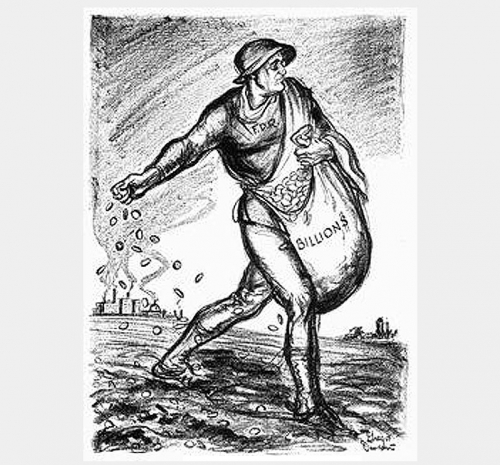
I am opposed to wage reductions – a statement made by President Roosevelt at a February press conference in 1938, compelled both economists and industrialists to ejaculate numerous multisyllabic words on the matter. In light of the fact that magazine editors are wage earners, the majority of selected quotes side with FDR.


Click here to read about the end of the Great Depression…
W.W. I Trench Fighting (The New Republic, 1915)
1915, The New Republic, World War One

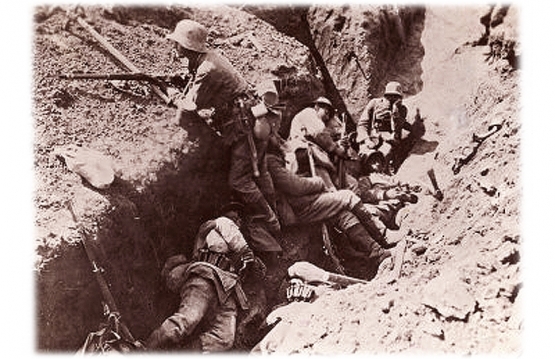
W.W. I Trench Fighting
(The New Republic, 1915)

The seasoned war correspondent from THE NEW REPUBLIC filed this essay some five months into the war in order to clarify for his American readers the exact nature of trench warfare. His observations are based upon the trench fighting that he witnessed both in France and during the Russo-Japanese War, some nine years earlier:

There is an illusion that the range and effectiveness of modern arms tend to keep armies far apart. On the contrary, there is more hand-to-hand fighting today than at any time since gunpowder was invented… at this rate the French will not drive out the Germans in months, but on the other hand a frontal attack, and every attack must now be frontal, even if successful would cost several hundred thousand men.


The article was written by Gerald Morgan; by war’s end he would serve as General Pershing’s press chief (ie.censor).


Baseball as a metaphor for war…

Advertisement

Use shortcode [oma_ad position="summary_top"] (or other position) in your theme or widgets to display OMA Promotions here.

China's Industrial Cooperatives (The Commonweal, 1941)
1941, China - Twentieth Century

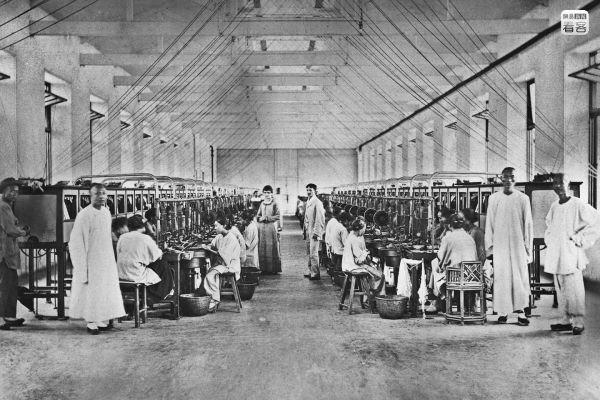
China’s Industrial Cooperatives
(The Commonweal, 1941)

A 1941 magazine article by Delbert Johnson that reported on the unprecedented success of Chinese Industrial Cooperatives during the earliest period of the Japanese occupation:

Industrial cooperation in China, which was no more than a paper plan three years ago, today is a nation-wide movement that has cast a blight upon Japan’s economic aspirations in Asia and is providing the people of China a new means of salvation against aggression.

The plan for the Indusco movement came into being during the dark days of the spring and summer of of 1938…Seemingly, China was doomed to economic strangulation if not to military defeat. But a handful of Chinese and foreign visionaries’ thought otherwise. They knew that time, area and population all would work to China’s advantage in any prolonged struggle.

Chiang Kai-Shek and Spies 1938 | Espionage Problem for Chiang Kai-Shek
1938, Ken Magazine, Sino-Japanese Wars

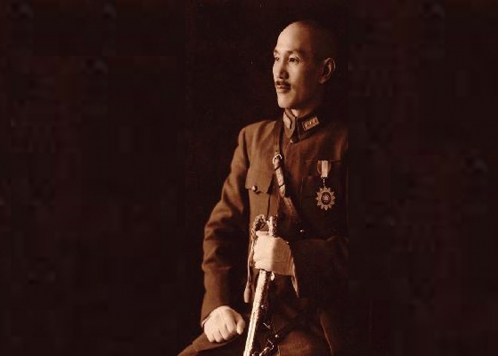
Eyes on Chiang Kai-Shek
(Ken Magazine, 1938)

Before the war was hours old, Chiang’s most secret plans were known to the Japs. Again and again Jap actions showed foreknowledge of Chiang’s movements and stratagems, as discussed and decided with his most trusted leaders. This explains many mysterious incidents, and makes China’s apparent ‘spy complex’ fully understandable.

Hermann Goering

Hermann Goering Builds His Air Force
(Ken Magazine, 1939)

Published four months before Germany’s attack on Poland, this article outlines Hermann Goering’s (1893 – 1946) efforts to build the Luftwaffe from scratch, the creation of various flight schools, the Luftwaffe collaboration with the Hitler Youth organization, and his aspirations to out-class the air forces of the United States and Britain.

It has taken Field Marshall Hermann Wilhelm Goering a little over six years to build the German Air Armada, one of the world’s most formidable offensive forces, out of a magnificent bluff.

By the time this magazine profile of Field Marshall Goering went to print, he had already made his entry on the world stage as the master-mind behind the 1937 bombing of the Basque city of Guernica during the Spanish Civil War (an event that was not mentioned at all in this article).

Advertisement

Use shortcode [oma_ad position="summary_top"] (or other position) in your theme or widgets to display OMA Promotions here.

Summing Up the Aisne-Marne Offensive (Dept. of the Army, 1956)
1956, The Dept. of the Army, World War One

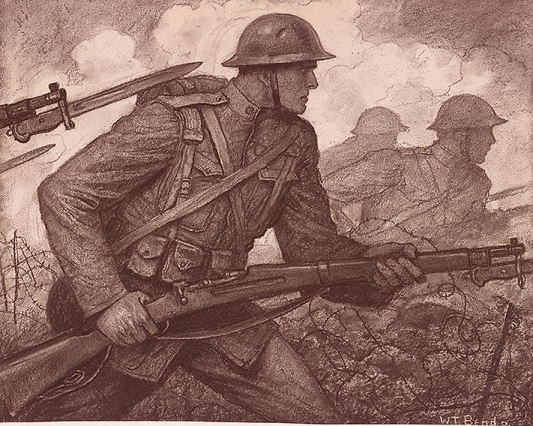
Summing Up the Aisne-Marne Offensive
(Dept. of the Army, 1956)

This printable page from an R.O.T.C. manual concerns the American military efforts in World War I.
Attached is a useful summation in three paragraphs of the Aisne-Marne offensive. The reader will learn which American and French units participated, the dates on which the battle raged and the German defense strategy.

The battle had numerous and far reaching results. It eliminated the German threat to Paris, upset Ludendorff’s cherished plan to attack the British again in Flanders, gave the Allies important rail communications, demonstrated beyond further doubt the effectiveness of American troops on the offensive, firmly established Allied unity of command…

Comrade Spy (Pathfinder Magazine, 1947)
1947, Pathfinder Magazine, Spies

Comrade Spy
(Pathfinder Magazine, 1947)

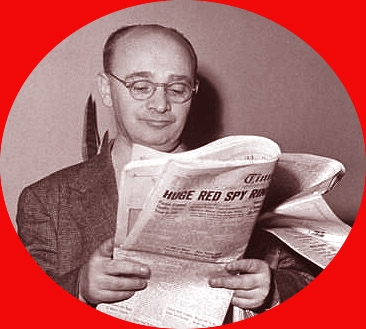
Fingered as the premier Soviet agent working in the United States by a former communist and editor of THE DAILY WORKER and PEOPLE’S WORLD, Gerhart Eisler (1897 – 1968) – was arrested in the Fall of 1947 and charged with espionage.


Standing before the House Committee on Un-American Activities, Eisler refused to take the oath, preferring instead to read a prepared statement. The committee refused to play along and the Justice Department soon leveled Eisler with additional charges. By 1949 things were looking dark for Eisler; jumping bail he made good his escape and secured passage across the Atlantic. Welcomed in East Germany as a hero, Eisler was soon named director of East German radio and became a prominent voice for the Communist government.

British Praise for General Grant (Literary Digest, 1897)
1897, General Grant, The Literary Digest

British Praise for General Grant
(Literary Digest, 1897)

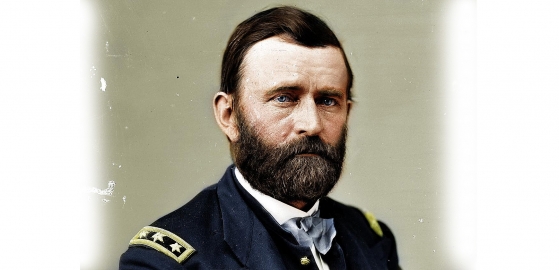
When the Grant Memorial in New York City was first presented to the public during the Spring of 1897, few could have guessed that one of the places most excited about the monument would be Great Britain. An American journalist posted to that distant isle filed the attached article, quoting from as many as eight British newspapers that saw fit to liberally sprinkle their pages with a variety of laudatory adjectives in praise of General Grant:

He sprang from the people, he was the son of a plain farmer, and had ‘driven team’ in his day. Yet he was also a trained soldier. But, from first to last, he was merely the citizen in arms, and with the mighty array he commanded, he resumed his position in civil life as soon as his work was done…The giants of the Civil War were probably the last of a great race.


Click here to read Grant’s recollection of the first time he met President Lincoln.

Advertisement

Use shortcode [oma_ad position="summary_top"] (or other position) in your theme or widgets to display OMA Promotions here.

Grant at Shiloh (Famous Events Magazine, 1913)
1913, Famous Events Magazine, General Grant

Grant at Shiloh
(Famous Events Magazine, 1913)

A summation of the 1862 Battle of Shiloh:

Bull Run, the first Southern victory of the war, was followed by others. Nor did the tide of battle turn in favor of the North until General Ulysses S. Grant won in Tennessee the hard fought struggle of Shiloh. This was in April of 1862. Grant first besieged and captured Fort Donelson, then advanced until he was suddenly assailed at Shiloh by the entire army which the Confederates had gathered in the West…

FERA Relief Benefits for Women and Children | 1930s Relief Benefits for Women and Children
1935, New Outlook Magazine, The Great Depression

Women on the Relief Rolls
(New Outlook Magazine, 1935)

It is illuminating to realize that more persons are receiving relief in the United States than there are individuals in such well-known countries as Romania (18,000,000), Mexico (16,500,000), Czechoslovakia (14,800,000) and Yugoslavia (14,000,000); over twice as many as Belgium (8,000,000) and Holland (7,920,000); about three times as many as in Sweden (6,140,000) and to cut theses comparisons short – almost seven times as many in all of Norway (2,800,000)… Clearly, it is not in the least inaccurate to speak of the relief population of the United States as a great nation within a nation… Women and children comprise as much as two thirds of the relief population.

Japan's Puppet (Literary Digest, 1936)
1936, Sino-Japanese Wars, The Literary Digest

Japan’s Puppet
(Literary Digest, 1936)

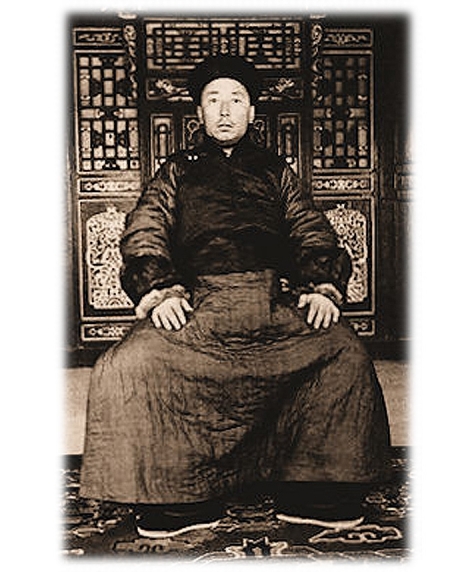
A brief notice reporting on Prince Teh Wang (Prince Demchugdongrub 1902 – 1966), ruler of Inner Mongolia, who, in an attempt to create an independent Mongolia, simply ruled as an appeaser of Imperial Japan:

While Prince Teh’s position, as a Japanese puppet, can scarcely be less comfortable than it was before , Japan has a grip on the bottle-neck controlling a vast, ill-defined hinterland of North China; and has as well a buffer State between her own influence and that of the Soviets.

Advertisement

Use shortcode [oma_ad position="summary_top"] (or other position) in your theme or widgets to display OMA Promotions here.

Scroll to Top