Author name: editor

Major Events in 1861 Civil War | War Between the States Chronology 1861
1867, Chronology, The Southern Rebellion

The Civil War in 1861
(The Southern Rebellion, 1867)

A printable chronology of the important events that occurred during the first year of the American Civil War: 1861.

In April of 1861 the first gallons of blood begin to pour and as December slowly rolled around, news spreads of a battle fought by one Native American tribe loyal to the Union against another tribe siding with the Rebels. For the next two years the great momentum of the war would be on the side of the Confederacy.


Click here to read about the heavy influence religion had in the Rebel states during the American Civil War.

The Lincoln - Douglas Debates Observed (The National Park Service, 1956)
1956, Abraham Lincoln, The National Park Service

The Lincoln – Douglas Debates Observed
(The National Park Service, 1956)

These four paragraphs first appeared on the pages of THE CHICAGO TRIBUNE and were written by a reporter named of Horace White at the conclusion of Lincoln – Douglas debates of 1858. The journalist did a fine job in describing the excitement at the debates and the spirit of the participating candidates.

Douglas ended in a whirlwind of applause…and Lincoln began to speak in a slow and rather awkward way. He had a thin tenor, or rather falsetto voice, almost as high pitched as a boatswain’s whistle.


The debates resulted in a close election that returned Douglas to the U.S. Senate and Lincoln to his law practice.

Advertisement

Use shortcode [oma_ad position="summary_top"] (or other position) in your theme or widgets to display OMA Promotions here.

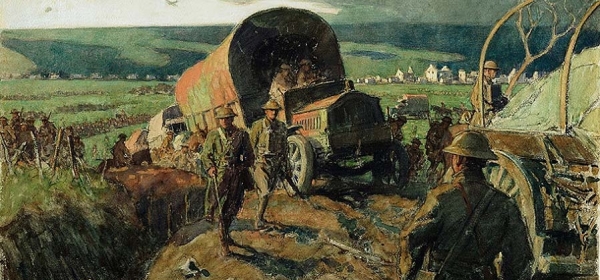
Chateau-Thierry: Setting the Record Straight (Literary Digest, 1919)
1919, The Literary Digest, World War One

Chateau-Thierry: Setting the Record Straight
(Literary Digest, 1919)

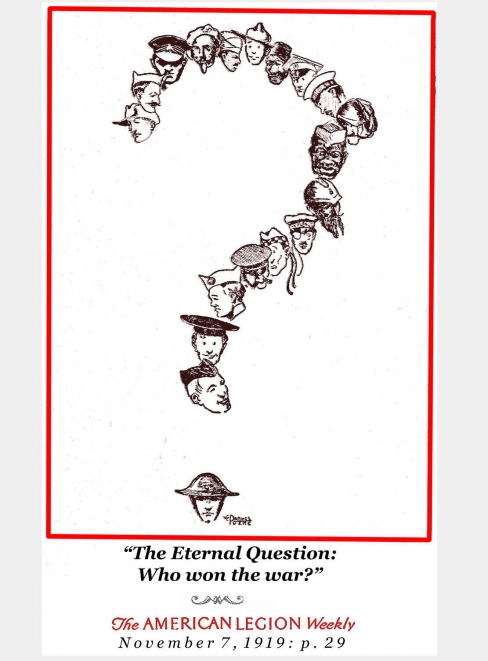
It has been said that when the U.S. Army’s senior staff officers had learned of the great victory that the U.S. Marines had achieved at the Bois de Belleau in the summer of 1918, one of them had remarked, Those head-line hunting bastards! When reading this next piece you will immediately get a sense that the army was fed-up with the folks at home believing that the same Marines were responsible for the Army’s success at Chateau-Thierry. The war was already over by the time this piece appeared, making it clear to all that Chateau-Thierry was a feather in the cap for the Army.

Click here to read an article about the American snipers in W.W. I France.
Click here to read about W.W. I art.

Baron Adolf de Meyer and the Paris Collections of 1922 (Harper's Bazaar, 1922)
1922, Fashion, Harper's Bazaar Magazine

Baron Adolf de Meyer and the Paris Collections of 1922
(Harper’s Bazaar, 1922)

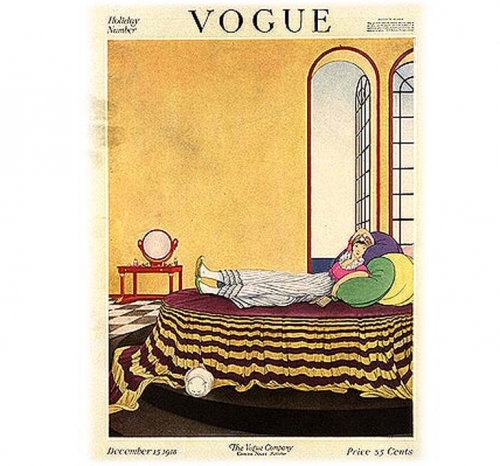
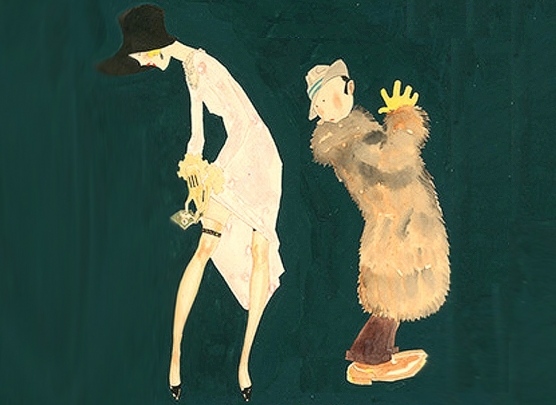
A Paris fashion review written by pioneering fashion photographer Adolph de Meyer
(1868 – 1949). His column is illustrated by six of his photographs illustrating the autumnal offerings from the houses Worth and Chanel. The collections generated by Maria Guy, Jean Lanvin, Marthe Collot, Doucet, Cheruit, Poiret and Patout were also addressed at some length.

Of course ‘collections’ must be seen by me. The round of all the big maisons de couture must be made. I must know what is worn and what I shall decide to present to the readers of HARPER’S BAZAAR.

Advertisement

Use shortcode [oma_ad position="summary_top"] (or other position) in your theme or widgets to display OMA Promotions here.

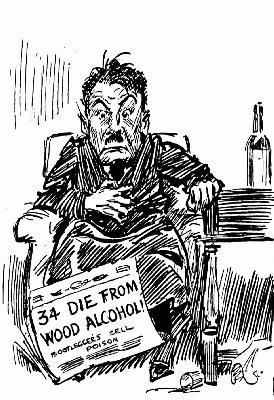
A Prohibition Cartoon by James Montgommery Flagg (Life Magazine, 1922)
1922, Life Magazine, Prohibition Cartoons

A Prohibition Cartoon by James Montgommery Flagg
(Life Magazine, 1922)

James Montgomery Flagg (1877 – 1960) was one of the most celebrated illustrators of this era. He had been a contributing cartoonist for the old LIFE MAGAZINE since he was fourteen years old and he, like many of his colleagues, had a grand old time with the subject of Prohibition.


To read a satirical essay written and illustrated by James Montgomery Flagg, click here..

Advertisement

Use shortcode [oma_ad position="summary_top"] (or other position) in your theme or widgets to display OMA Promotions here.

The Great Civil War Battles (Pageant Magazine, 1958)
1958, Civil War History, Pageant Magazine

The Great Civil War Battles
(Pageant Magazine, 1958)

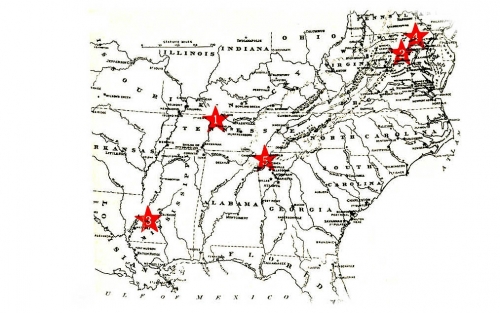
The second portion of Bruce Catton’s article (see above) concerning the necessary knowledge required in order to justifiably call your self a Civil War Buff was this short piece listing the greatest battles of the war. Accompanying the five brief thumb-nail summaries is a map of the South Eastern U.S., highlighted with red stars, which serve to identify where the blood poured.

Advertisement

Use shortcode [oma_ad position="summary_top"] (or other position) in your theme or widgets to display OMA Promotions here.

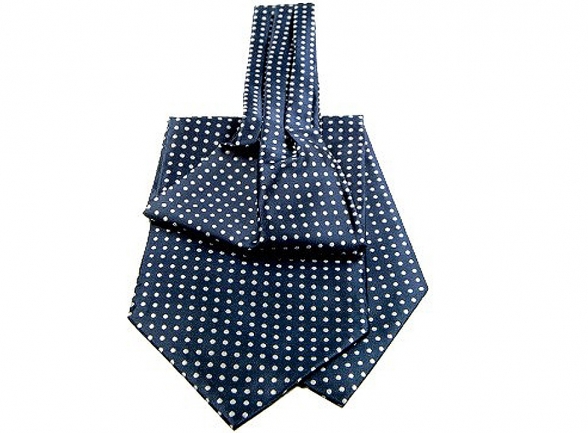
The Ascot (A Fashion Manual, 1906)
1906, Fashion Manual, Men's Fashion

The Ascot
(A Fashion Manual, 1906)

Illustrated herein are the five necessary steps needed to tie the perfect ascot knot.

Up until 1974, it was believed by many of the old salts in fashion history circles that the earliest surviving example of men wearing neck-cloths could be found on Trajan’s column (113 A.D.); but then the Terracotta Army (221 B.C.) was unearthed in China which altered much of the thinking as to how old tied neck cloths actually are. Our era is one in which the future of the tie is unknown, but the attached file dates from 1906 which serve to illustrate for the average Joe, how best to tie an ascot.

Emily Post on Society Language (Photoplay Magazine, 1939)
1939, Manners and Society, Photoplay Magazine

Emily Post on Society Language
(Photoplay Magazine, 1939)

At the tail-end of a very long interview concerning the problems with Hollywood movies, Emily Post (1872 – 1960), America’s high-priestess of good manners, was asked just one more question – this one involved the English language and here is Emily Post’s 1939 list of what to say and what not to say.


• Don’t say ‘brainy’ – say, ‘clever’.
• Don’t say ‘wealthy’, say ‘rich’.
• Don’t say ‘Charmed or pleased to meet you’, say ‘how do you do’.
• etc, etc, etc.
Emily Post had so many opinions…

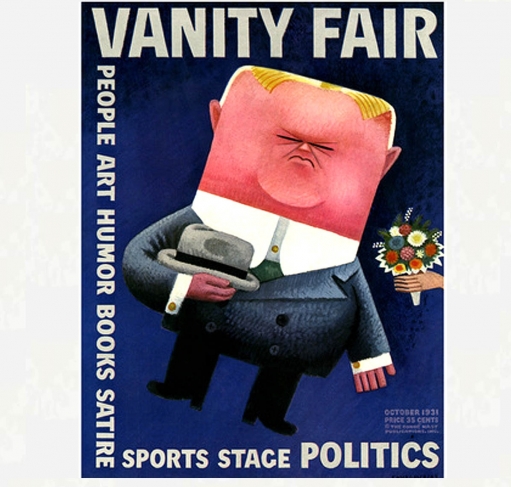
President Hoover's Farewell Address (Literary Digest, 1933)
1933, The Great Depression, The Literary Digest

President Hoover’s Farewell Address
(Literary Digest, 1933)

With FDR waiting in the wings, eagerly anticipating the start of his administration, the outgoing president, Herbert Hoover (1874 – 1964), made his farewell address to the cash-strapped nation:

Warning against the ‘rapid degeneration into economic war which threatens to engulf the world’ the President said that ‘the imperative call to the world today is to prevent that war.’ The gold standard, he said ‘is the need of the world,’ for only by the early reëstablishment of that standard can the barriers to trade be reduced.’


Read about the Great Depression and the U.S. auto industry during the last year of the Hoover presidency…

Advertisement

Use shortcode [oma_ad position="summary_top"] (or other position) in your theme or widgets to display OMA Promotions here.

Advertisement

Use shortcode [oma_ad position="summary_top"] (or other position) in your theme or widgets to display OMA Promotions here.

Scroll to Top