Author name: editor

Advertisement

Use shortcode [oma_ad position="summary_top"] (or other position) in your theme or widgets to display OMA Promotions here.

European Influences upon American Military Uniforms | Articles Regarding World War One US Army Insignia
1919, The Stars and Stripes, U.S. Army Uniforms of World War One

A.E.F. Uniform Insignia: Division Markings Barred From States
(Stars and Stripes, 1919)

This uniform regulation was printed for all home bound Doughboys to see early in 1919; the order was later rescinded, however, it seemed that the General who was placed in charge of all state-side Army units during World War One disliked the European style military fashions that the A.E.F. was affecting. He also wished to ban the trench coat, over-seas cap, puttees and the Sam Brown Belt.

Dogs Used in the Rescue of Downed Pilots (Collier's, 1945)
1945, Animals (WWII), Collier's Magazine

Dogs Used in the Rescue of Downed Pilots
(Collier’s, 1945)

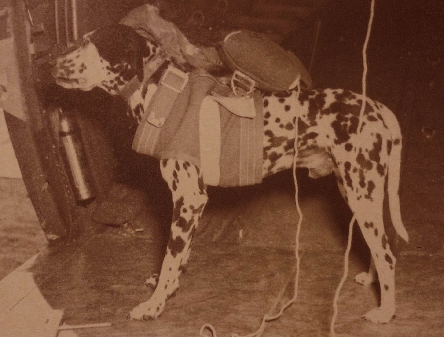
The use of animals in war is as old as war itself; but the concept of kicking dogs out of perfectly good aircraft so they might be able to parachute onto snowy hilltops and deliver aid to wounded combatants dates to World War II. This printable Collier’s Magazine article tells the story of the Parapups:

Completely G.I., the dogs have service records, serial numbers, enlistment papers and shots against disease. Sentimentalists along the Alaska Division even proposed that they be authorized to wear Parawings after five jumps.

Advertisement

Use shortcode [oma_ad position="summary_top"] (or other position) in your theme or widgets to display OMA Promotions here.

Comprehending the Flapper Revolt (Vanity Fair, 1921)
1921, Vanity Fair Hall of Fame, Women's Suffrage

The Post-War Change in Women
(Vanity Fair, 1921)

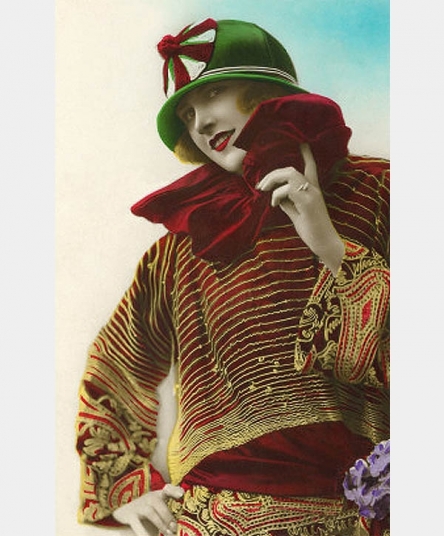
There were many social changes following the First World War which men had to struggle to understand; among them was the Modern Woman. The Italian novelist and lexicographer Alfredo Panzini (1863-1939) attempted to do just that for the editors of Vanity Fair.

She will be a stenographer, a school teacher, a movie actress. But She will not cook for you. She will not do your washing. She will not knit her own stockings.

'Dogs of Battle, Dogs of Mercy'' (Vanity Fair, 1916)
1916, Animals (WWI), Vanity Fair Hall of Fame

‘Dogs of Battle, Dogs of Mercy”
(Vanity Fair, 1916)

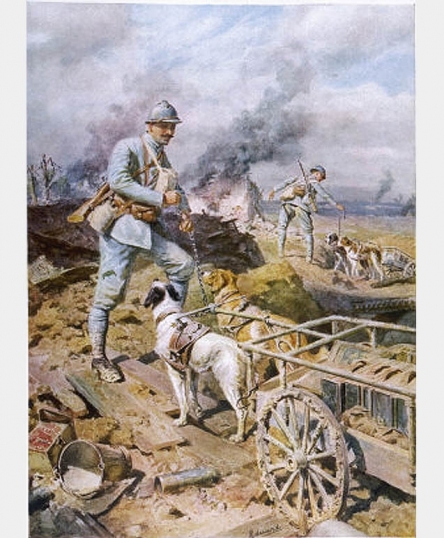
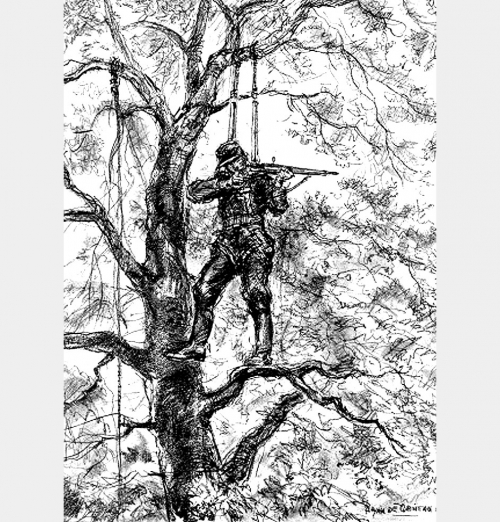
We are happy to say that in the course of performing our daily duties, the scanning and posting of historic magazine articles, no dogs were harmed in any way; but sadly no such boast can be made by any participant of the Great War. Published during the bloodiest year of that conflict, this VANITY FAIR MAGAZINE article lists a good many of the particular services dogs were trained to perform on behalf of their belligerent masters.

The French war dogs are divided into five classes, each of which performs a special type of work. There are sentinel dogs, patrol dogs, ambulance dogs, dispatch dogs and drought dogs. In all these departments of military activity they have proved their worth.
'Dogs of Battle, Dogs of Mercy'' (Vanity Fair, 1916)
1916, Animals (WWI), Vanity Fair Hall of Fame

‘Dogs of Battle, Dogs of Mercy”
(Vanity Fair, 1916)

We are happy to say that in the course of performing our daily duties, the scanning and posting of historic magazine articles, no dogs were harmed in any way; but sadly no such boast can be made by any participant of the Great War. Published during the bloodiest year of that conflict, this VANITY FAIR MAGAZINE article lists a good many of the particular services dogs were trained to perform on behalf of their belligerent masters.

The French war dogs are divided into five classes, each of which performs a special type of work. There are sentinel dogs, patrol dogs, ambulance dogs, dispatch dogs and drought dogs. In all these departments of military activity they have proved their worth.
Advertisement

Use shortcode [oma_ad position="summary_top"] (or other position) in your theme or widgets to display OMA Promotions here.

American Horses in the First World War (American Legion Monthly, 1936)
1936, Animals (WWI), The American Legion Monthly

American Horses in the First World War
(American Legion Monthly, 1936)

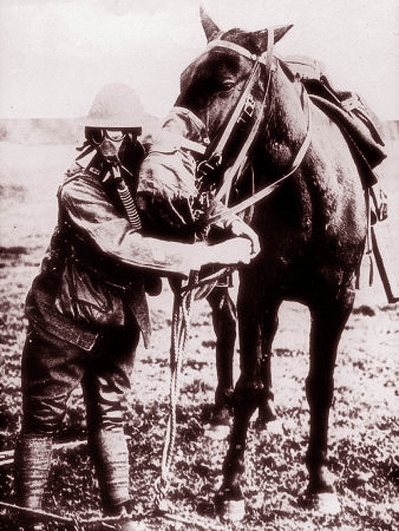
I have read many interesting stories about heroes of the war and interesting accounts of pigeons, and police dogs, etc., but very little about the horses that served…Many of them were taken prisoner by the Germans, taken back into Germany and exhibited in their American harnesses and equipment. After the war, immediate plans were made to return the American men to their native country, but the equine warriors were forgotten…


This article is about the 32 American horses that were captured in the war and never repatriated.

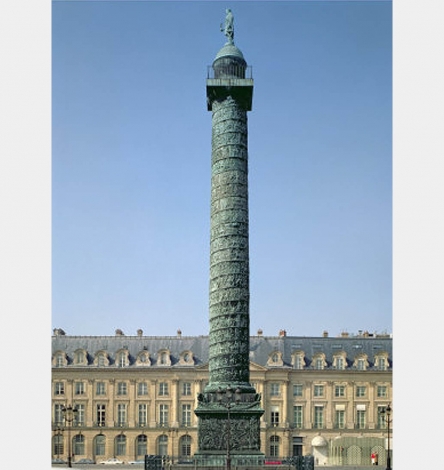
Revenge for Sedan | France Wanted War with Germany in 1914 | French vengeance for the War of 1870
1900, Prelude, The Literary Digest

The Need for French Military Glory
(Literary Digest, 1900)

Appearing on newsstands fourteen years prior to the outbreak of the First World War was this small piece from THE LITERARY DIGEST declaring that the thirst for military glory was woven into the very fiber of the French Republic:

Not within the memory of living men has France been the mistress of continental Europe; yet the memory of her military glory is still vivid among her people, and the expressions of many of her writers show that she has not given up her proud preeminence.
Revenge for Sedan is a sentiment necessary to our national existence.


Click here to read a 1912 article about the expansion of the Imperial German Navy.

Advertisement

Use shortcode [oma_ad position="summary_top"] (or other position) in your theme or widgets to display OMA Promotions here.

Tule Lake: How Many Women, How Many Men? (U.S. Government, 1944)
1944, Japanese-American Internment, The U.S. Government

Tule Lake: How Many Women, How Many Men?
(U.S. Government, 1944)

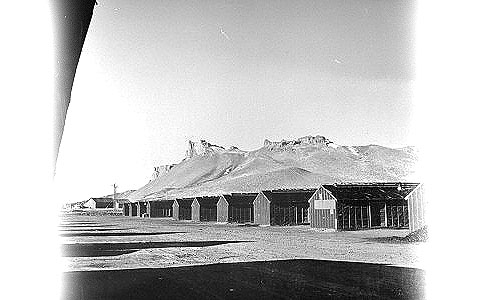
A 1944 report by the War Relocation Authority regarding the population of the Japanese-American Relocation Camp located at Tule Lake, California. The attached chart will allow the reader to understand the numbers within the population of that camp who were foreign born, U.S. born, their age and their gender.


From Amazon: The Train to Crystal City: FDR’s Secret Prisoner Exchange Program and America’s Only Family Internment Camp During World War IIstyle=border:none

Advertisement

Use shortcode [oma_ad position="summary_top"] (or other position) in your theme or widgets to display OMA Promotions here.

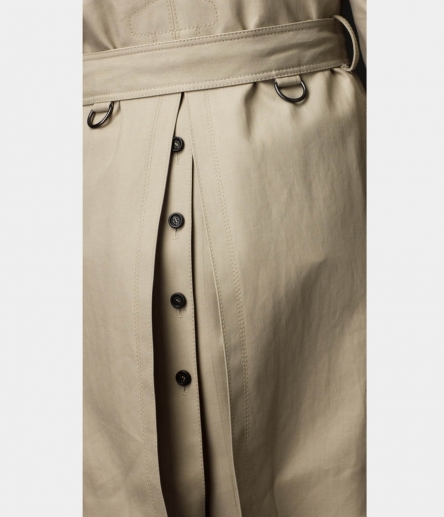
A Trench Coat for the Fashionable Ladies (Harper's Bazaar, 1918)
1918, Harper's Bazaar Magazine, Trench Coats

A Trench Coat for the Fashionable Ladies
(Harper’s Bazaar, 1918)

Attached, you will find one of the first elegant, elongated fashion figure drawings to depict the trench coat as an element of feminine mode. Although this drawing first appeared in a Harper’s Bazaar fashion editorial recommending the coat as one of the better private purchase uniform items that could be worn by an American woman in one of the auxiliary units, it is clear that the fashion potential of the garment was not lost on the magazine’s editors or anyone else on this side of the Atlantic. This particular one was produced in far nicer fabric than was made available for the men. The acquaintance between the trench coat and American fashion designers has remained a strong one ever since.


To see other examples of war’s influence on fashion, click here.

Major Events in 1863 Civil War | War Between the States Chronology 1863
1867, Chronology, The Southern Rebellion

The Civil War in 1863
(Southern Rebellion, 1867)

Here is a printable chronology of the important events that occurred during 1863, the most slaughterous year of the American Civil War.


The blood flowed deep in 1863 and the year proved to be a decisive one for the Union Army as the Rebels were driven out of Pennsylvania – at the same time the Confederate defense of Vicksburg (Mississippi) collapsed. General Sherman continued his march to the sea while the women of Mobile (Alabama) cried out for bread. In the North, President Lincoln suspended habeas corpus and draft riots broke out in Boston and New York City.

Major Events in 1862 Civil War | War Between the States Chronology 1862
1867, Chronology, The Southern Rebellion

The Civil War in 1862
(Southern Rebellion, 1867)

A printable chronology of the major events that took place during 1862, the second year of the American Civil War.

The high hopes that both sides enjoyed during the previous year had entirely vanished, and were replaced instead by a sense of grim determination as all concerned rolled up their sleeves and faced a war that had no end in sight. The year began with news of two Missouri Senators who were expelled from that body for their Rebel sympathies; among the many military engagements that marked that year, the most legendary were the battles of Shiloh, Fredericks burg and Antietam. Monitor and Merrimac had at it, General McClellan was replaced by General Halleck, and the year ended with Union General William Tecumseh Sherman occupying the city of Savannah.

Advertisement

Use shortcode [oma_ad position="summary_top"] (or other position) in your theme or widgets to display OMA Promotions here.

Scroll to Top